zenpundit.com » science

Archive for the ‘science’ Category

Creativity and Ennui

Friday, August 16th, 2013

[Mark Safranski a.k.a. “zen“]

Creativity is a subject that has  interested me, going back to the days long, long ago when I was an art student. Creativity is only mildly correlated with IQ, but like “intelligence”, the deeper you delve into the study of  creativity and creative thinking the more “creativity” looks like a multifaceted, multidimensional and diverse set of capacities, habits and circumstances than it does a single, universal, characteristic or ability.

Creativity has been studied from a neuroscientific, psychological, evolutionary,  behavioral, economic and social perspective but what of creativity”s opposite?  What about Ennui?

From a cognitive perspective, the two may be flip sides of the same coin, note the correlation between highly   creative  people and incidence of depression. It may also be a sign of overuse of certain brain functions, like adrenal exhaustion from an excess of physical and mental stress over a long period of time. Creativity, being in “the flow” is intoxicating but it usually involves peak exertion which accumulates weariness. Exemplary performance in one area can also come at the expense of penalties in another area.

Or perhaps ennui is the natural, cyclical ebb and flow between generative conceptual fertility and barrenness, the brain preparing itself for the next creative “surge” to come?

When are you creative and when are you not?

On two, one, seven plus or minus, and ten – towards infinity

Monday, July 29th, 2013

[ by Charles Cameron — a few quirky thoughts about graphs and analysis ]
.

Two eyes (heads, ideas, points of view) are better than one.

**

When I worked as senior analyst in a tiny think-shop, my boss would often ask me for an early indicator of some trend. My brain couldn’t handle that — I always needed two data points to see a pattern, and so I coined the mantra for myself, two is the first number. When the American Bankers Association during the Y2K scare wrote and posted a sermon to be delivered in synagogues, churches and mosques counseling trust in the banking system it was a curiosity. When the FBI, in response to the same Y2K scare, put out a manual for chiefs of police in which they provided input on the interpretation of the Book of Revelation, the two together became an indicator: they connected.

My human brain could see that at once — non-religious authority usurps theological function, times two.

For what it’s worth, the Starlight data-visualization system we used back then (1999) couldn’t put these two items together: I could and did.

**

To wax philosophical, in a manner asymptotic to bullshit:

One isn’t a number until there are two, because it’s limitless across all spectra and unique, and because it is its own, only context.

One isn’t a number unless there’s a mind to think of it — in which case it’s already an abstraction within that mind, and thus there are, minimally, two. At which point we are in the numbers game, and there may be many, many more than two — twenty, or plenty, or plenty-three, or the cube root of aleph null, or (ridiculous, I know) infinity-six…

Go, figure.

Two is the first number, because the two can mingle or separate, duel or duet: either way, there’s a connection, a link between them.

Links and connections are where meaning lies — in the edges of our graphs, where two nodes seamlessly integrate, much as two eyes or two ears give us stereoscopic vision or stereophonic sound, not by abstracting one from two by skipping the details that make a difference, but by incorporating the rich fullness of both to present a third which contains them fully via an added dimension of depth.

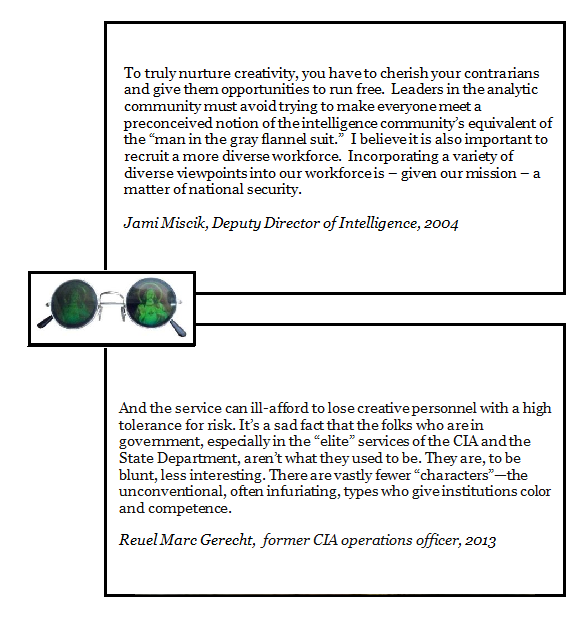
That’s the fundamental reason that DoubleQuotes are an ideal analytic tool for the human mind to work with: they’re the simplest form of graph — the dyad — populated with rich nodes and optimally rich associations between them.

**
**

Cornelius Castoriades wrote:

Philosophers almost always start by saying: “I want to see what being is, what reality is. Now, here is a table; what does this table show to me as characteristic of a real being?” No philosopher ever started by saying: “I want to see what being is, what reality is. Now, here is my memory of my dream of last night; what does this show me as characteristic of a real being?” No philosopher ever starts by saying “Let the Requiem of Mozart be a paradigm of being”, and seeing in the physical world a deficient mode of being, instead of looking at things the other way around, instead of seeing in the imaginary, i.e., human mode of existence, a deficient or secondary mode of being.

When I specified above “the simplest form of graph — the dyad — populated with rich nodes and optimally rich associations between them” I was offering a Castoriades-style reversal of approach, in which our choice of nodes is determined not by their abstraction — as single data points — but by their humanly intuited significance and rich complexity. Hence: anecdotes, quotes, emblems, graphics, snapshots, statistics — leaning to the qualitative side of things, but not omitting the quantitative. And their connection, intuited for the richness of the parallelisms and oppositions between them.

Often the first rich node will be present in the back of the mind — aviators wanting to learn how to fly a plane, but uninterested in how to land it — when the second falls into place — when a student asks a diving instructor to teach the diving technique, with no interest in learning to avoid the bends while coming back up. And bingo — the thing us understood, the pattern recognized, and an abstraction to “one way tasks” — including “one way tickets” established.

Let’s call that first node a “fly in the subconscious”. I’d love to have been a fly in the subconscious when SecDef Rumsfeld told a Town hall meeting in Baghdad, April 2003:

And unlike many armies in the world, you came not to conquer, not to occupy, but to liberate and the Iraqi people know this.

Because I could have chimed in cheerfully in the very British voice of General Sir Frederick Stanley Maude, in that different yet same Baghdad in 1917:

Our armies do not come into your cities and lands as conquerors or enemies, but as liberators…

Oh, the echo — the reverb!

**

The ideal number of nodes in the kind of graph I’m thinking of is found in terms of the human capacity to hold “seven plus or minus two” items in mind at the same time — thus, with a slight scanning of the eyes, a graph with eight to twelve nodes and twenty or so edges is about the limit of what can be comprehended.

The Kabbalistic Tree of Life, infinitely rich in meaning and instruction, has ten nodes and twenty-two edges. Once taken into the mature human mind, there is no end to it.

The value of a graph composed of such rich nodes and edges lies in the contemplation it affords our human minds and hearts.

**

Two, being the simplest number, will probably give you the richest graphs of all…
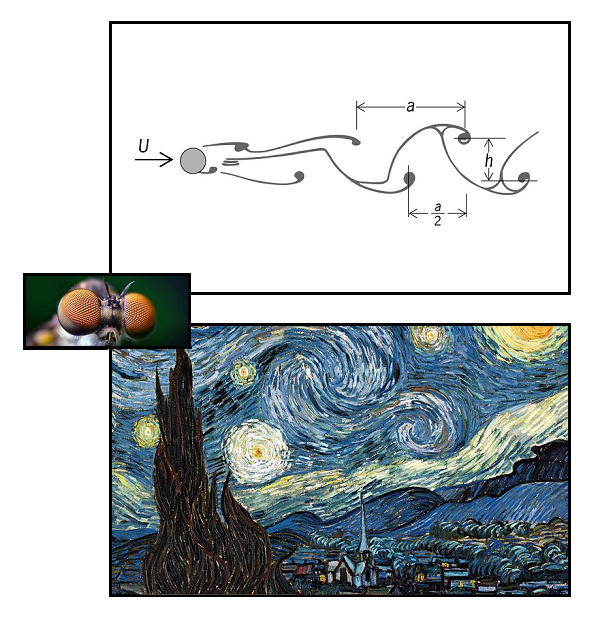
Art, in the person of Vincent Van Gogh, meet science, in the person of Theodore von Kármán.

A Sustainable National Security Posture?

Wednesday, May 22nd, 2013

[ by Charles Cameron — and what about climate change, Mike Mazarr? ]
.

Is there even a Cheney-esque one-percent possibility that 97% of climate scientists (NASA’s estimate) are right?
.


.

**

I just opened up Michael Mazarr‘s NDU Strategy Study Group report, Discriminate Power: A Strategy for a Sustainable National Security Posture. It’s quite far from my usual apocalyptic and more generally religious interests, but he and I once co-led a Y2K scenario role-playing game at the Center for Strategic and International Studies, so I have a friendly interest in what he’s up to.

What interested me next, though, was the overview to their report that Mazarr and company present in their Introduction. Their purview:

In the coming decade, the constraints on U.S. foreign and defense policy — fiscal, social, Geopolitical — are likely to intensify. At the same time, the security environment is evolving in ways that pose a more diverse array of risks, threats and opportunities. While foreign threats have dominated national security planning in the past, for example, future wars may more typically involve nontraditional foes and means threatening the homeland. This will change how we perceive and provide for national security, even as we confront new constraints.

This paper summarizes the work of a study group chartered to assess strategy under austerity for the next ten years. A core conclusion was that the United States is buying systems, forces and capabilities increasingly mismatched to the challenges, threats, and opportunities of the emerging environment. Military power, for example, cannot resolve many of the most complex and pressing challenges we confront — and yet our investments in national security remain vastly over-weighted to military instruments. The most likely threats to the U.S. homeland will come from nontraditional challenges such as biological pathogens, terrorism, cyber, and financial instruments, and yet resources for these issues remain minimal compared to traditional military instruments. At the same time, on our current trajectory, we will end up with a national security establishment dominated by salaries, health care, retirement costs, and a handful of staggeringly expensive major weapons systems. We are spending more and more to get less and less, in terms of relevant tools and influence.

There’s some ambiguity in here. There’s a segue from “foreign threats” to “future wars” without so much as a hiccup — but the actual threats our National Security strategy will need to address are presented as “nontraditional challenges such as biological pathogens, terrorism, cyber, and financial instruments”.

That’s a far broader array than “future wars” to be sure — but maybe still within the ambit of “foreign threats”. What I’m interested in, in the present context, however, is climate change. And unless my .pdf search function is deceiving me, I can find no mention of either “climate” or “warming” in the entire report.

**

Compare these Remarks by Tom Donilon, National Security Advisor to the President At the Launch of Columbia University’s Center on Global Energy Policy from a month ago:

The national security impacts of climate change stem from the increasingly severe environmental impacts it is having on countries and people around the world. Last year, the lower 48 U.S. states endured the warmest year on record. At one point, two-thirds of the contiguous United States was in a state of drought, and almost 10 million acres of the West were charred from wildfires. And while no single weather event can be directly attributed to climate change, we know that climate change is fueling more frequent extreme weather events. Last year alone, we endured 11 weather-related disasters that inflicted a $1 billion or more in damages – including Hurricane Sandy.

Internationally, we have seen the same: the first twelve years of this century are all among the fourteen warmest years on record.

Or the White House’s National Security Strategy of 2010:

Climate Change: The danger from climate change is real, urgent, and severe. The change wrought by a warming planet will lead to new conflicts over refugees and resources; new suffering from drought and famine; catastrophic natural disasters; and the degradation of land across the globe. The United States will therefore confront climate change based upon clear guidance from the science, and in cooperation with all nations — for there is no effective solution to climate change that does not depend upon all nations taking responsibility for their own actions and for the planet we will leave behind.

And given what WSJ SWJ calls the Obama administration’s strategic shift to the East — what about Navy Admiral Samuel J. Locklear III?

America’s top military officer in charge of monitoring hostile actions by North Korea, escalating tensions between China and Japan, and a spike in computer attacks traced to China provides an unexpected answer when asked what is the biggest long-term security threat in the Pacific region: climate change.

Harvard’s 2012 Climate Extremes: Recent Trends with Implications for National Security report?

Or the Council for Foreign Relations report, Climate Change and National Security: An Agenda for Action — from 2007?

**

I know, the CIA has (quietly) closed its Center on Climate Change and National Security, although as the NYT’s Green blog told us:

Todd Ebitz, a C.I.A. spokesman, said that the agency would continue to monitor the security and humanitarian challenges posed by climate change as part of its focus on economic security, but not in a stand-alone office.

But if you’re still interested, take a look at The Center for Climate & Security’s page On the Record: Climate Change as a Security Risk According to U.S. Administration Officials.

Their list is far more comprehensive than mine.

Okay. I know Mazarr’s report will have been written to fulfill certain criteria, specified or unspecified, and I’m not the one who set them — but isn’t climate change a part of the context that would need to be addressed, if “how we perceive and provide for national security, even as we confront new constraints” is the topic under discussion?

New Book: America 3.0 is Now Launched!

Tuesday, May 21st, 2013

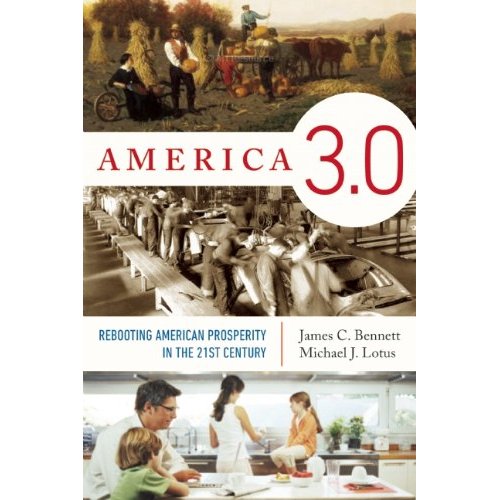
America 3.0: Rebooting American Prosperity in the 21st Century – why America’s Best Days are Yet to Come by James C. Bennett and Michael Lotus

I am confident that this deeply researched and thoughtfully argued book  is going to make a big political splash, especially in conservative circles – and has already garnered a strong endorsement from Michael Barone, Jonah Goldberg, John O’Sullivan and this review from  Glenn Reynolds in USA Today :

Future’s so bright we have to wear shades: Column 

….But serious as these problems are, they’re all short-term things. So while at the moment a lot of our political leaders may be wearing sunglasses so as not to be recognized, there’s a pretty good argument that, over the longer time, our future’s so bright that we have to wear shades.

That’s the thesis of a new book, America 3.0: Rebooting American Prosperity In The 21st Century.The book’s authors, James Bennett and Michael Lotus, argue that things seem rough because we’re in a period of transition, like those after the Civil War and during the New Deal era. Such transitions are necessarily bumpy, but once they’re navigated the country comes back stronger than ever.

America 1.0, in their analysis, was the America of small farmers, Yankee ingenuity, and almost nonexistent national government that prevailed for the first hundred years or so of our nation’s existence. The hallmarks were self-reliance, localism, and free markets.

At the end of the 19th century and the beginning of the 20th, people were getting unhappy. The country was in its fastest-ever period of economic growth, but the wealth was unevenly distributed and the economy was volatile. This led to calls for what became America 2.0: an America based on centralization, technocratic/bureaucratic oversight, and economies of scale. This took off in the Depression and hit its peak in the 1950s and 1960s, when people saw Big Government and Big Corporations as promising safety and stability. You didn’t have to be afraid: There were Top Men on the job, and there were Big Institutions like the FHA, General Motors, and Social Security to serve as shock absorbers against the vicissitudes of fate.

It worked for a while. But in time, the Top Men looked more like those bureaucrats at the end of Raiders Of The Lost Ark, and the Big Institutions . . . well, they’re mostly bankrupt, or close to it. “Bigger is better” doesn’t seem so true anymore.

To me, the leitmotif for the current decade is supplied by Stein’s Law, coined by economist Herb Stein: “Something that can’t go on forever, won’t.” There are a lot of things that can’t go on forever, and, soon enough, they won’t. Chief among them are too-big-to-fail businesses and too-big-to-succeed government.

But as Bennett and Lotus note, the problems of America 2.0 are all soluble, and, in what they call America 3.0, they will be solved. The solutions will be as different from America 2.0 as America 2.0 was from America 1.0. We’ll see a focus on smaller government, nimbler organization, and living within our means — because, frankly, we’ll have no choice. Something that can’t go on forever, won’t. If America 2.0 was a fit for the world of giant steel mills and monolithic corporations, America 3.0 will be fit for the world of consumer choice and Internet speed.

Every so often, a “political” book comes around that has the potential to be a “game changer” in public debate. Bennett and Lotus have not limited themselves to describing or diagnosing America’s ills – instead, they present solutions in a historical framework that stresses the continuity and adaptive resilience of the American idea. If America”s “City on a Hill” today looks too much like post-industrial Detroit they point to the coming renewal; if the Hand of the State is heavy and it’s Eye lately is dangerously creepy, they point to a reinvigorated private sector and robust civil society; if the future for the young looks bleak,  Bennett and Lotus explain why this generation and the next will conquer the world.

Bennett and Lotus bring to the table something Americans have not heard nearly enough from the Right – a positive vision of an American future that works for everyone and a strategy to make it happen.

But don’t take my word for it.

The authors will be guests Tuesday evening on Lou Dobb’s Tonight and you can hear them firsthand and find out why they believe “America’s best days are yet to come

Thinking outside the cocoon…

Thursday, May 16th, 2013

[ by Charles Cameron — on caterpillars, butterflies, psyche and the alephs of Georg Cantor, with a glance at the vertiginous idea it might be “boxes all the way up and down”… ]
.

Let’s get the science — which is quite fascinating — taken care of first. Here’s our best current visualization of how a caterpillar, after crafting its cocoon, prepares to become a butterfly:

**

Words can sometimes tell us some things that images can’t — or explain things to parts of us that simply cannot comprehend them visually — so here for parallel processing is an account of part of the same business from Scientific American:

How does a caterpillar rearrange itself into a butterfly? What happens inside a chrysalis or cocoon?

First, the caterpillar digests itself, releasing enzymes to dissolve all of its tissues. If you were to cut open a cocoon or chrysalis at just the right time, caterpillar soup would ooze out. But the contents of the pupa are not entirely an amorphous mess. Certain highly organized groups of cells known as imaginal discs survive the digestive process. Before hatching, when a caterpillar is still developing inside its egg, it grows an imaginal disc for each of the adult body parts it will need as a mature butterfly or moth—discs for its eyes, for its wings, its legs and so on. In some species, these imaginal discs remain dormant throughout the caterpillar’s life; in other species, the discs begin to take the shape of adult body parts even before the caterpillar forms a chrysalis or cocoon. Some caterpillars walk around with tiny rudimentary wings tucked inside their bodies, though you would never know it by looking at them.

Once a caterpillar has disintegrated all of its tissues except for the imaginal discs, those discs use the protein-rich soup all around them to fuel the rapid cell division required to form the wings, antennae, legs, eyes, genitals and all the other features of an adult butterfly or moth.

**

It’s just possible that the bear’s ability to “die” in the winter and “be reborn” in spring gave use the original cirumpolar bear cult — and more generally, a propensity to believe that resurrection from the dead might be a physical, existential human possibility.

Humans watch animals pretty diligently — my old friend and mentor Wallace Black Elk once told me:

We watch the deer, and when they’re sick they know which plant is their aspirin: they eat that green medicine, and drink water. So we have deer medicine. We don’t need the mass-produced kind.

I don’t have the exact quote, but he also observed somewhat wryly that scouts from pharmaceutical companies used to watch him and see what medicines he used, in much the same way…

And if there’s any natural process that humans have watched with equivalent metaphysical interest to that which they may have shown in observing the bear’s pattern of hibernation and return, it would have been the process of metamorphosis in butterflies — whose name in Greek, psyche, is also the word for soul.

**

WB Yeats had a sense of the butterfly transcending both day-to-day human logic and death itself, when he wrote in his poem Tom O’Roughley:

‘Though logic choppers rule the town,
And every man and maid and boy
Has marked a distant object down,
An aimless joy is a pure joy,’
Or so did Tom O’Roughley say
That saw the surges running by,
‘And wisdom is a butterfly
And not a gloomy bird of prey.

adding just a few lines later:

What’s dying but a second wind?

**

What I’d like to do here is to take us from the plodding science of linear thought to which Yeats was (among other forms of linearity) objecting, towards the science — and poetry — of complexity, of nuance.

And I’d like to do it by skipping a couple of thoughts like a stone across water, inviting you to watch the ripples…

These are the leaps that connect the dots.. the creative leaps. And some leaps, it seems to me, are bigger and more demanding than others.

**

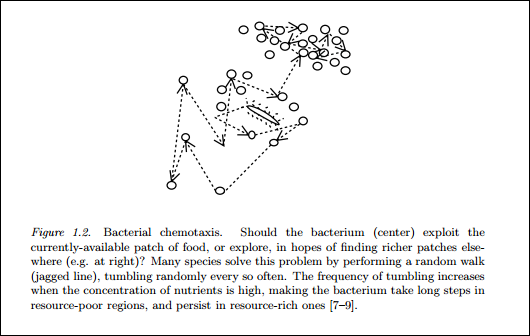
Is the leap from cocoon to butterfly in Hutching‘s quote really quite a huge leap? It certainly keeps some of our best scientists busy uncovering its hidden secrets. And the leap from butterfly to tornado, that Lorenz made? That would appear to me to be a larger leap, requiring a different mode of perception. And skipping from Hutchings to Lorenz, can we skim our stone of thought even further?

Putting two and two together is one thing: imagining “aleph null” for the first time, as Cantor did, that would be something else altogether. From two to four, I’m tempted to say, is a quantitative leap, while the imaginative leap from four, ten, or ten thousand to the alephs is qualitative.

How should we recognize and connect widely separated — yet deeply entangled — dots? What would prove to be the richest and most profound of creative leaps? Is there a move that will take us not just out of this box into the box it came in — but out of a whole matrioshka nest of boxes?

Those are the questions in my sandbox about now.

**

When we next meet, I’ll try to tie them in with this diagram that Adam Elkus recently pointed us to —

and with Hermann Hesse‘s Glass Bead Game for good measure.


Switch to our mobile site