zenpundit.com » blogosphere

Archive for the ‘blogosphere’ Category

Rofer on Blogging

Saturday, June 12th, 2010

Broadening the discussion on the state of blogging begun by Dr. James Joyner and Dr. Bernard Finel, blogfriend Cheryl Rofer at Phronesisaical delves into the stratification and attribution issues that have been wrought in the blogosphere by the MSM:

A Sketch of a Post on Blogging

….Once upon a time, the blogosphere was a sort of talent night, a talent 24/7, with entertainment for all. Much of that is still there, but some of the talent has gone pro; Kevin Drum, Ezra Klein, Matt Yglesias and others have joined the MSM or think tanks and link only to each other. Some days there is almost a perfect linking circle of Drum quoting Klein quoting Yglesias quoting Drum. Drum got linked from The Economist blog the other day, moving up one more notch. Stratification. The MSM, meanwhile, still doesn’t understand the idea of hyperlinks but provides something they call blogs at their sites. Some of these are actually blogs, like Ezra Klein’s at the WaPo. Some are more like newspaper columns with more depth or specialization, like Olivia Judson’s at the NYT. Some are sui generis, like the Gail and David show at the NYT. Others are clearly from reporters who have been told that they will produce a blog, probably not much more instruction provided.And then there’s the problem of the MSM simply stealing bloggers’ material (or those somewhere below them on the food chain) and not crediting it. I’ve seen this pretty unambiguously many times over the almost six years I’ve been blogging. And then there are situations where it’s not quite clear that material has been cribbed, but someone in the MSM says something that looks an awful lot like something I read days before in a blog. As a blogger friend said, “I think they call it research.” Or they don’t take it seriously enough. Today someone on The Oil Drum asked if the MSM was reading their threads, which have much more good information than anything I’ve seen on the BP Blowout in the MSM. Of course, it’s mixed, and there are some just plain dumb comments, but hey! that’s what the reporters get the big bucks to filter, right?

Read the rest here. 

Cheryl brings up a number of points about blogging from an information ecology standpoint I had not really considered when I reacted to Bernard’s post. I’ve noticed ideas or arguments that have been “liberated” from blogs I read in the media with some frequency in recent years and I think I first noticed a MSM outlet cribbing a paragraph, almost verbatim from me circa 2006. At the time, I laughed, but Cheryl’s considered point that attribution is important is not something peculair to the blogosphere – it’s actually the traditional standard for scholarship and journalism. Bloggers, reporters, academics, government officials – anyone writing in the public sphere – should hew to it.

When in doubt, adding the little quotation marks, a link or a hat tip is still the best course of action – it saves headaches down the road.

ADDENDUM:

Peter weighs in at The Strategist.

The Truth About Blogging

Thursday, June 10th, 2010

Dr. Bernard Finel reached a state that many bloggers find themselves in at one time or another:

Blogging

An interesting post over at OTB has me thinking about my blog.

I’ve been blogging very lightly recently.  The truth of the matter is that I am not sure that I want to continue doing it.  Basically, it comes down to a couple of interrelated issues.

(1) It gets me in a lot of trouble.  I work professionally in the same field that I often blog about.  Which would be fine if I were a congenital kiss-ass, but I’m not.  It isn’t so much that I don’t suffer fools gladly, as much as I think that idiotic arguments needs to be called out as such and not just subject to tepid criticisms couched in otherwise fulsome praise of the wisdom of the author in question.  Needless to say, this has not made me popular, and there is no doubt that I have severely harmed my future job prospects by pissing off a number of very powerful people in my field.
(2) Which would be okay if it was either opening up other doors or making me rich, but it isn’t.  What it comes down to is that my readership is really, really low.  High-quality, but small.  I am not looking to make money on the blog, but I’d like to think I could be influencing the debate through my posts, but really that is not the case.  Several possible reasons for that:

(2a) I don’t seem to be able to get posts out in a sufficiently timely fashion.  I usually prefer to mull things over for a day or two, and that is an eternity in the blogosphere.  By the time I weight in on most debates, everyone has moved on.

(2b) But more importantly.  I think I am not a very good blogger.  It isn’t like I haven’t gotten great links from excellent blogs.  James Joyner over at OTB has linked to me often.  The guys at Newshoggers do so as well. Fabius Maximus, Zenpundit, Schmedlap, Michael Cohen, and several others have linked to me often.  But if anyone is following those links, there are not impressed.  Which is fine, but my point, I guess is that despite some solid links, I’ve never really built a larger audience. 

I feel compelled to respond, point by point: 

1. Personally, I enjoy Dr. Finel’s posts because he’s straightforward with his views whether you are going to like them or not. Clarity in the discussion saves a great deal of time. Not everyone finds that quality charming though; particularly in the broad, public intellectual world of academia and think tanks there’s a lot of brittle egos with weighty credentials who are manning the last gates worth keeping – that of aristocratic sinecures to read and write. Sometimes it is not wise to blog the hand that feeds you. I could write absolutely excoriating posts about my profession, but I generally restrain myself and focus on areas of research interests instead, secure in the knowledge that no one I work with gives a rusty damn about Sun tzu vs. Clausewitz, globalized counterinsurgency or superempowered individuals.

2. I think Dr. Finel is being unrealistic as to traffic. The blogosphere has matured to the point that newbies cannot become “stars” unless they are already famous airhead celebrities (which means twitter is a better option for their vapid remarks) or are talented writer-personalities promoted by a major media platform site. If you can acquire a regular audience baseed on “class” as a part-time blogger, you have succeeded as much as you are going to do unless you can attract corporate sponsors or face time on MSM vehicles. Leverage your small but influential audience to get access to other venues.

2(a). Solo acts will never generate sufficient post velocity to compete with group blogs. Accept it. What small time bloggers can do is write posts that make a big splash periodically. Recognition will come.

2(b). Insert Malcolm Gladwell’s 10,000 hour rule here. Just because a person can write white papers or a novel, a biweekly column or a sonnet does not mean they will start out as a virtuoso blogger. Every medium has its own implicit rules that take time to master. Blogging well is deceptively hard to do and blogging poorly is tragically easy. If blogging is not an end in itself, then regard it as a tool for a specific purpose to keep in mind.

Here’s hoping that Dr. Finel chooses to keep at it!

Charles Cameron and the Strategist of Jihad

Friday, June 4th, 2010

My friend and guest-blogger Charles Cameron, a while back, posted a learned essay here at ZP and at Leah Farrall’s  All Things Counterterrorism, in response to the unusual dialogue that Farrall, a former Australian counterterrorism official, was having with  Abu Walid al-Masri, an Egyptian strategist of jihad, a sometime critic of al Qaida and an adviser to the Taliban. In other words, al-Masri is an influential voice on “the other side” of what COIN theorists like Mackinlay and Kilcullen call the “globalized insurgency”.

After some delay, al-Masri has responded to Charles, as Farrall describes:

Abu Walid al Masri responds to Charles Cameron

Abu Walid  has responded a letter from Charles Cameron. Abu Walid’s response  to Charles can be found here.  You’ll notice when following the link, that he has a new website.

It’s well worth a look. There is also an interesting comment from a reader below Abu Walid’s response to Charles; it’s from “one of the victims of Guantanamo”.

As you’ll see from his website Abu Walid is also engaging in a number of other interesting dialogues at the moment, which I am interested to read as they progress.

Charles wrote his letter in response to the dialogue Abu Walid and I had a little while back. For those of you new to the site, you can find this dialogue to the right in the page links section.  The letter from Charles can be found on my blog here.

….These letters may not change anything, but they are important because  in mass media sometimes only the most controversial and polarising views tend to make it into the news.

I think person to person contact, especially via mediums like this, can go some way to providing opportunities for all of us to discover or be reminded that there is more than one viewpoint and along with differences there are also similarities. Contact like this humanizes people, and in my book that’s never a bad thing.

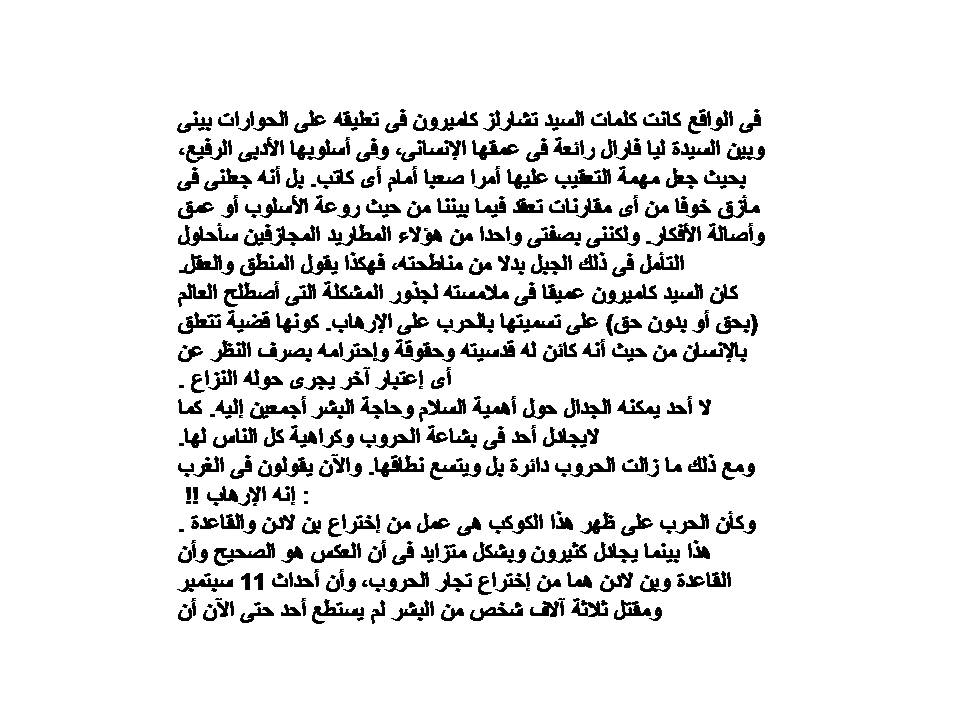
Farrall is working up a translation of al-Masri’s post  from Arabic ( I used Google which gives a very rough translation). Readers who are fluent are encouraged to read it in full and offer their thoughts. Here is a snippet:

al-masri.jpg

Google translation is fast and dirty but it is not the best source of translation, it garbles many words and phrases that require transliteration, which is how I read al-Masri’s response. With that caveat, my impression was that he did not know quite where to go with Charles’ essay, beyond acknowledging it and then retreating to some talking points. The remarkable aspect was that al-Masri felt the need to respond at all which has sent Charles thoughts bouncing around the radical Islamist online community.

Nice work, Charles!

Book Talk from Abu Muqawama

Tuesday, May 4th, 2010

Exum has some interesting reads on his desk and in his kindle that readers might find intriguing.

 Andrew is, it would seem, a closet linguist of the vanished, old-school, variety that study real languages instead of investigating the neurocognitive building blocks of language:

Traveling and Reading and Travel Reading

1. Someone sent me a complimentary paper copy of Greg Gause’s new book on the international relations of the Persian Gulf states, and I cannot think of a better introduction to the region. I have only met Gause once, back in 2007, and thought him both really smart and also kind of a smart-ass. So naturally, I liked him. I also have a reading packet prepared by the CSIS, which is leading this trip, crammed full with useful CRS reports and such.

2. I convinced the team here at CNAS to buy me a paper copy of Buying National Security: How America Plans and Pays for Its Global Role and Safety at Home, which readers of this blog will remember I’m excited about. Cindy Williams and Gordon Adams are both really smart and write about something — the national security budgeting process — that is rarely understood by policy geeks like me but really important.

3. I’m also about halfway through an advance copy of Megan Stack’s beautifully written new memoir, Every Man in This Village is a Liar: An Education in War. More on this book later.

4. On the Kindle, I have two new books on Lebanon written by two journalists I very much respect. Both David Hirst and Michael Young have taken the time to tutor me on occassion during my time in Lebanon, and I answered a few technical military questions for David when he was writing his book. Their two books are, respectively, Beware of Small States: Lebanon, Battleground of the Middle East and The Ghosts of Martyrs Square: An Eyewitness Account of Lebanon’s Life Struggle. You can read a glowing review of the former here and a glowing review of the latter here.

5. Also on the Kindle are two books that have nothing to do with the Middle East: Louis Begley’s Why the Dreyfus Affair Matters and Hilary Mantel’s Wolf Hall.

6. Finally, I downloaded the ESV Study Bible and Phil Ryken’s commentaries on Ecclesiastes alongside Tarif Khalidi’s new translation of the Qur’an. That may seem like an odd combination of books, but both Ryken and Khalidi have been mentors* of sorts through the years: Ryken was a pastor at the church I attended in college, and Khalidi is, well, my scholarly hero. Despite his wicked sense of humor and light-hearted spirit, Khalidi is the most intimidating intellectual I have ever met. His command of English, Arabic, Greek and Latin is simply awe-inspiring, especially for someone like me who struggles with all four, and his new translation of the Qur’an is a remarkable achievement. I’m not about to get into the different ways in which Protestant Christians and Muslims approach their respective holy texts, but I will say that I someday hope to approach at least the New Testament with the erudition with which Khalidi tackles the Qur’an. Really impressive. Khalidi’s humility** and interest in younger scholars also sets an example for others to follow.

Armstrong on Wikileaks

Monday, April 12th, 2010

Matt Armstrong has a must-read, incisive, take on the manipulatively edited propaganda popularly known as the “Wikileaks video”:

The true fiasco exposed by Wikileaks

….The Wikileaks release apparently caught the Defense Department flatfooted. Even today, three days after its release, there is largely silence from DOD, save a brief public comment and a link to documents and photos at http://www.centcom.mil/ (hidden in plain sight through the link labeled “Link to FOIA documents on July 2007 New Baghdad Combat Action“). Don’t bother going to http://www.defense.mil/ as that site, and hence the Pentagon, has nothing readily available either. The April 6 briefing pack did not include the explanatory imagery and there is no news release explanation the Department’s position. It’s as if nothing happened. When asked about the situation, senior official at DOD pointed me to the “great piece” in The New York Times explaining how trained soldiers view and operate in these events differently than civilians. This, however, misses the point.

Despite the vigorous discussion online and over the air whether there was a violation of the laws of war, the old belief that if you ignore a problem it will go away continues to dominate.

Read the rest here.


Switch to our mobile site
