zenpundit.com » economics

Archive for the ‘economics’ Category

New Book: America 3.0 is Now Launched!

Tuesday, May 21st, 2013
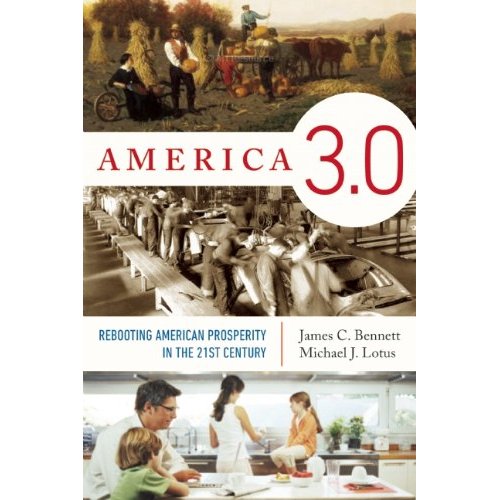
America 3.0: Rebooting American Prosperity in the 21st Century – why America’s Best Days are Yet to Come by James C. Bennett and Michael Lotus

I am confident that this deeply researched and thoughtfully argued book  is going to make a big political splash, especially in conservative circles – and has already garnered a strong endorsement from Michael Barone, Jonah Goldberg, John O’Sullivan and this review from  Glenn Reynolds in USA Today :

Future’s so bright we have to wear shades: Column 

….But serious as these problems are, they’re all short-term things. So while at the moment a lot of our political leaders may be wearing sunglasses so as not to be recognized, there’s a pretty good argument that, over the longer time, our future’s so bright that we have to wear shades.

That’s the thesis of a new book, America 3.0: Rebooting American Prosperity In The 21st Century.The book’s authors, James Bennett and Michael Lotus, argue that things seem rough because we’re in a period of transition, like those after the Civil War and during the New Deal era. Such transitions are necessarily bumpy, but once they’re navigated the country comes back stronger than ever.

America 1.0, in their analysis, was the America of small farmers, Yankee ingenuity, and almost nonexistent national government that prevailed for the first hundred years or so of our nation’s existence. The hallmarks were self-reliance, localism, and free markets.

At the end of the 19th century and the beginning of the 20th, people were getting unhappy. The country was in its fastest-ever period of economic growth, but the wealth was unevenly distributed and the economy was volatile. This led to calls for what became America 2.0: an America based on centralization, technocratic/bureaucratic oversight, and economies of scale. This took off in the Depression and hit its peak in the 1950s and 1960s, when people saw Big Government and Big Corporations as promising safety and stability. You didn’t have to be afraid: There were Top Men on the job, and there were Big Institutions like the FHA, General Motors, and Social Security to serve as shock absorbers against the vicissitudes of fate.

It worked for a while. But in time, the Top Men looked more like those bureaucrats at the end of Raiders Of The Lost Ark, and the Big Institutions . . . well, they’re mostly bankrupt, or close to it. “Bigger is better” doesn’t seem so true anymore.

To me, the leitmotif for the current decade is supplied by Stein’s Law, coined by economist Herb Stein: “Something that can’t go on forever, won’t.” There are a lot of things that can’t go on forever, and, soon enough, they won’t. Chief among them are too-big-to-fail businesses and too-big-to-succeed government.

But as Bennett and Lotus note, the problems of America 2.0 are all soluble, and, in what they call America 3.0, they will be solved. The solutions will be as different from America 2.0 as America 2.0 was from America 1.0. We’ll see a focus on smaller government, nimbler organization, and living within our means — because, frankly, we’ll have no choice. Something that can’t go on forever, won’t. If America 2.0 was a fit for the world of giant steel mills and monolithic corporations, America 3.0 will be fit for the world of consumer choice and Internet speed.

Every so often, a “political” book comes around that has the potential to be a “game changer” in public debate. Bennett and Lotus have not limited themselves to describing or diagnosing America’s ills – instead, they present solutions in a historical framework that stresses the continuity and adaptive resilience of the American idea. If America”s “City on a Hill” today looks too much like post-industrial Detroit they point to the coming renewal; if the Hand of the State is heavy and it’s Eye lately is dangerously creepy, they point to a reinvigorated private sector and robust civil society; if the future for the young looks bleak,  Bennett and Lotus explain why this generation and the next will conquer the world.

Bennett and Lotus bring to the table something Americans have not heard nearly enough from the Right – a positive vision of an American future that works for everyone and a strategy to make it happen.

But don’t take my word for it.

The authors will be guests Tuesday evening on Lou Dobb’s Tonight and you can hear them firsthand and find out why they believe “America’s best days are yet to come

The Boston Bombers and Superempowerment

Wednesday, May 1st, 2013

My friend Dave Schuler who blogs at the excellent The Glittering Eye and on foreign policy at Dr. James Joyner’s Outside the Beltway , queried me as to what I thought of the Boston Bombers in light of the concept of the Superempowered Individual.

For those not familiar with the concept, the term “superempowered individual” originated in phrase coined by Thomas Friedman and quickly gained traction and evolved in the .mil/strategy/defense blogosphere and communities of interest after 9/11 turned everyone’s attention to the potential reach of catastrophic terrorism. Many people, including myself have written on the topic and while no single, agreed upon, definition of SEI exists, there is a consensus around an individual having the capacity to multiply the scale of the harm they can cause by leveraging or disrupting complex systems, be they mechanical, social, cyber or some combination. I defined SEI’s this way:

To qualify as a superempowered individual, the actor must be able to initiate a destructive event, fundamentally with their own resources, that cascades systemically on a national, regional or global scale. They must be able to credibly, “declare war on the world”.  

Using that definition, Dzhokhar and Tamerlan Tsarnaev are far from superempowered individuals. They were not “super” anything and rather than being masters of complexity, they ginned up some primitive IEDs  and blundered miserably after their attack on the Boston Marathon. The younger of the two accidentally ran over his own brother with a car, killing him, which gives some idea of the operational amateurism of these culprits. If Islamist terrorism has a Darwin Award, the Brothers Tsarnaev are contenders

Yet the cost of their attack, the Boston bombing, allegedly tops $330 million dollars? Why?

I would argue that the US is systematically “superdisempowering” itself by VASTLY multiplying the costs of any given act of terrorism with absurd and outrageous levels of costly security theater and glitzy paramilitarization of law enforcement that continue to cascade and accumulate long after sorry nitwits like Richard Reid, Dzhokhar Tsarnaev or the amazingly incompetent Underwear Bomber have become obscure historical footnotes. It is incredibly counterproductive in every sense and has overwhelmingly negative effects that only add significantly to the costs of terrorism

Timothy McVeigh, in a much more heinous act of terrorism, blew up a Federal building and killed 168 people and injured 800 others with a massive truck bomb and America did not feel a need to dress our police officers like extras in Starship Troopers or it’s airport security like customs officials from a minor Fascist puppet regime. This is not a criticism of police officers who do a dangerous job with professionalism and bravery but of a national policy of paternalism and creeping authoritarianism that is slowly morphing them into asphalt soldiers.

The attacks on September 11 were thirty times worse and far more spectacular than McVeigh’s bombing, transfixing the attention of the whole world, but somehow we got along without President Bush declaring martial law and closing New York city and sending troops door to door to roust citizens in their homes without warrants or probable cause.

We need to take a healthy step back and put the brakes on our own policy and security responses to terrorism and dial them down to a rational minimum level required for investigative effectiveness. If not because these policies have become dangerously injurious to liberty and American democracy or because they are mostly wasteful government spending then we should do it because we have become so expert at making the costs of any act of terror extremely expensive by our own reaction that we are providing the enemy and itinerant crazies with a tremendous incentive to attack us more.

Seriously.

The only thing superempowered right now is own own lack of strategic sense.

The Apple II of 3 D Printing?

Thursday, February 28th, 2013

It may be 1977 all over again.

Check out the Form 1 Kickstarter page 

The Formlabs home page and their blog.

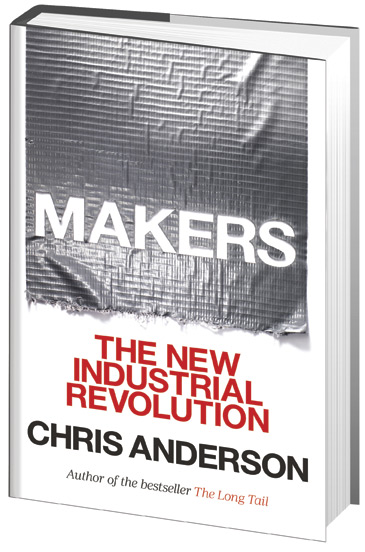
I recently reviewed Chris Anderson’s book Makers. What 3 D printing needs is the affordable, user-friendly, versatile device to move 3 D printing from the arcane realm of  techno-hobbyist geeks to the general population’s “early adapters”, which will put the next “consumer model” generation on everyone’s office desk; eventually as ubiquitous as cell phones or microwaves.

Formlabs should send one of these to John Robb and Shloky for a product review.

Hat tip to Feral Jundi


Robb on the Networked Age

Saturday, February 16th, 2013

John is en fuego today:

Life in a Networked Age

.….In the last thirty years, we’ve seen a shift in the technological substrate.  This new susbstrate is increasingly a family of technologies related to information networks.

As this new substrate begins to take control, we’re going to need new management forms.  Both bureaucratic and market systems are proving insuffient solutions to the challenges of a networked age.  

In both cases, the emergence of a global network is eroding the efficacy of bureaucracy and markets as solutions.  How?  One reason is scale.  

A global network is too large and complex for a bureaucracy to manage.  It would be too slow, expensive, and inefficient to be of value.  Further, even if one could be built, it would be impossible to apply market dyanmics (via democratic elections) to selecting the leaders of that bureaucracy.  The diversity in the views of the 7 billion of us on this planet are too vast.  

In terms of markets, a global marketplace is too unstable.   Interlinked, and tightly coupled markets are prone to frequent and disasterous failures.  Additionally, a global marketplace is easy for insiders to corrupt and rig, as we saw with the 2008 financial melt-down.   Given instability and unmitigated corruption, markets will fail as a decision making mechanism.  

So, what’s going to replace bureaucracy and markets?

Read the rest here.

In very strong agreement with John. I like markets and think they produce efficient and optimized results for many things ( not all things) but free markets currently face massive (and sadly bipartisan) efforts to rig them by the oligarchy here at home, much less in autocratic states where the  practice of state socialism, kleptocracy and government by mafia or tribal/sectarian minority is the norm.  People will seek work-around structures to adapt, thrive and evade extortionate schemes by elites that have hijacked the state.

Hat tip to Lexington Green

Book Mini-Review: Makers: the New Industrial Revolution by Chris Anderson

Wednesday, February 13th, 2013

Makers: The New Industrial Revolution by Chris Anderson 

This is a fun book  by the former editor-in-chief of WIRED , author of The Long Tail and the co-founder of 3D Robotics, Chris Anderson. Part pop culture, part tech-optimist futurism and all DIY business book, Anderson is preaching a revolution, one brought about by the intersection of 3D printing and open source “Maker movement” culture, that he believes will be bigger and more transformative to society than was the Web. One with the potential to change the “race to the bottom” economic logic of globalization by allowing manufacturing entrepreneurs to be smart, small, nimble and global by sharing bits and selling atoms.

Anderson writes:

Here’s the history of two decades of innovation in two sentences: The past ten years have been about discovering new ways to create, invent, and work together on the Web. The next ten years will be about applying those lessons to the real world.

This book is about the next ten years.

….Why? Because making things has gone digital: physical objects now begin as designs on screens, and those designs can be shared online as files…..once an industry goes digital in changes in profound ways, as we’ve seen in everything from retail to publishing. The biggest transformation, but in who’s doing it. Once things can be done on regular computers, they can be done by anyone. And that’s exactly what we’re seeing happening in manufacturing.

…..In short, the Maker Movement shares three characteristics,  all of which I’d argue are transformative:

1. People using digital desktop tools to create designs for new products and prototype them (“digital DIY”)

2. A cultural norm to share those designs and collaborate with others in online communities.

3. The use of common design file standards that allow anyone, if they desire, to send their designs to commercial manufacturing services to be produced in any number, just as easily as they can fabricate them on their desktop. This radically foreshortens the path from idea to entrepreneurship, just as the Web did in software, information, and content.

Nations whose entire strategy rests upon being the provider of cheapest labor per unit cost on all scales are going to be in jeopardy if local can innovate, customize and manufacture in near-real time response to customer demand. Creativity of designers and stigmergic /stochastic collaboration of communities rise in economic value relative to top-down, hierarchical production systems with long development lags and capital tied up betting on having large production runs.

Interesting, with potentially profound implications.


Switch to our mobile site