Archive for the ‘intellectuals’ Category
Thursday, November 10th, 2011

Storming the World Stage: The Story of Lashkar-e-Taiba by Stephen Tankel
PRAGATI, India’s National Interest Review magazine has published my review of Dr. Stephen Tankel’s book on Lashkar-e-Taiba, titled Storming the World Stage. The article is not yet online (I will add the link when it is released) but the issue digest PDF version is below:
pragati-issue56-nov2011-communityed.pdf
“Jihad for all seasons”
….Carnegie and RAND scholar Stephen Tankel has endeavored to demystify and deconstruct LeT in his meticulously researched book, Storming The World Stage: The Story of Lashkar-e-Taiba and bring into the light the complex relationships that entwine LeT with the Pakistani state and the subterranean universe of radical jihadi politics. Conducting extensive interviews with Islamist militants, Western and Indian intelligence officials, Pakistani politicians and ISI officers and buttressing his narrative with sixty-three pages of end-notes, Tankel has produced a portrait of Lashkar-e-Taiba that is accessible to the layman while remaining a methodical work of scholarship.
…. An organisation that, like Hezbollah, is state-sponsored but not controlled, Lashkar-e-Taiba is suited for waging what military analyst Frank Hoffman terms “Hybrid War”, but how LeT would play that role in an Indo-Pakistani War is left to the reader’s inference. LeT also demonstrated in Mumbai a fluid tactical excellence in its use of off-the-shelf technology, small arms and mobility to reap an enormous return-on-investment by attacking soft targets, much along the asymmetric lines advocated by warfare theorist John Robb. Tactics that are a critical threat to any open society by forcing it to take preventive measures which are ruinously expensive and contraindicated to keeping society free and democratic….
Will update post as matters develop.
Posted in 21st century, 4GW, academia, analytic, authors, book, extremists, foreign policy, geopolitics, ideas, illegal combatants, India, insurgency, intellectuals, islam.insurgency, islamic world, islamist, media, non-state actors, organizations, pakistan, primary loyalties, security, state terrorism, Tactics, terrorism, transnational criminal organization | 7 Comments »
Tuesday, November 8th, 2011

Lexington Green sent this extended profile/interview with Charles Hill by Emily Esfahani Smith. The tone of the article is somewhat hagiographic because Hill is a fellow at the Hoover Institution and….well…. this is in Hoover’s journal 😉 If you can get past that, it is a worthwhile read about a deep thinker and scholar of grand strategy.
Profile in Strategy: Charles Hill
….In diplomacy, literature is relied upon because, as he writes in “Grand Strategies,” “The international world of states and their modern system is a literary realm; it is where the greatest issues of the human condition are played out.” That is why Alexander the Great carried the Iliad with him on his conquests, and why Queen Elizabeth studied Cicero in the evenings. It is why Abraham Lincoln read, and was profoundly influenced by, Walt Whitman’s “Leaves of Grass,” and why Paul Nitze paged through Shakespeare on his flights to Moscow as America’s chief arms negotiator.
Hill, for his part, has always kept the “History of the Peloponnesian War” in his mind as the “manual of statecraft.”
Why Thucydides? He explains: “When you read the Peloponnesian War, you realize that Thucydides is moving from one set of problems to another, and you have to deal with them all-rhetorical problems, material problems, and moral problems. That’s the closest literary work related to statecraft that I can imagine.”
To understand world order-and those who manipulate it for their own aims-requires a literary education, the kind students were once able to find at such places as Yale, where Hill now teaches the humanities to freshman undergraduates.
This is a departure from his days at the State Department, where he helped orchestrate monumental events in the grand strategy of the Cold War. One of his first memories as a diplomat was of being seated behind Adlai Stevenson at the UN during the Cuban missile crisis, characteristically scribbling notes-in grand strategy, no detail can be lost. Later, Hill was a “China watcher” during that country’s Cultural Revolution. And when the Iran-Contra scandal nearly brought down the Reagan administration, Hill’s meticulous notes played an influential role in the Congressional investigations by shedding light on the chronology of then-Secretary of State George Shultz’s knowledge of the arms sale. Over the years, Hill has also served as confidante to Secretaries of State. For Henry Kissinger, Hill was speechwriter and policy analyst. For Shultz, Hill was an executive aide and trusted ally.
These days, Hill embodies grand strategy in a different way. After a long and distinguished career as a diplomat, Hill is now a heralded figure in academia. Beyond his appointment as a research fellow at the Hoover Institution, he is the Brady-Johnson Distinguished Fellow in Grand Strategy, a Senior Lecturer in Humanities, and a Senior Lecturer in International Studies at Yale. Alongside historians John Gaddis and John Kennedy [ sic] , he teaches one of Yale’s most legendary courses to a select group of elite students-future statesmen-the Grand Strategies course.
And yet, Hill tells me stoically, “There is no grand strategy in our time.” Turning his attention to the turmoil in the Middle East, Hill provides an example. “America’s lack of strategic outlook responding to the Arab Spring is really distressing.”
Hill retains the diplomat’s gift for understatement.
Read the rest here.
ADDENDUM:
Book Review: Grand Strategies by Charles Hill
Trial of a Thousand Years, by Charles Hill-a review
Posted in 21st century, academia, America, ancient history, cultural intelligence, culture, DIME, diplomacy, Epistemology, foreign policy, geopolitics, government, history, ideas, intellectuals, islamic world, literature, myth, national security, politics, reading, revolution, society, strategist, strategy, Strategy and War, synthesis, teaching, theory | 5 Comments »
Thursday, November 3rd, 2011
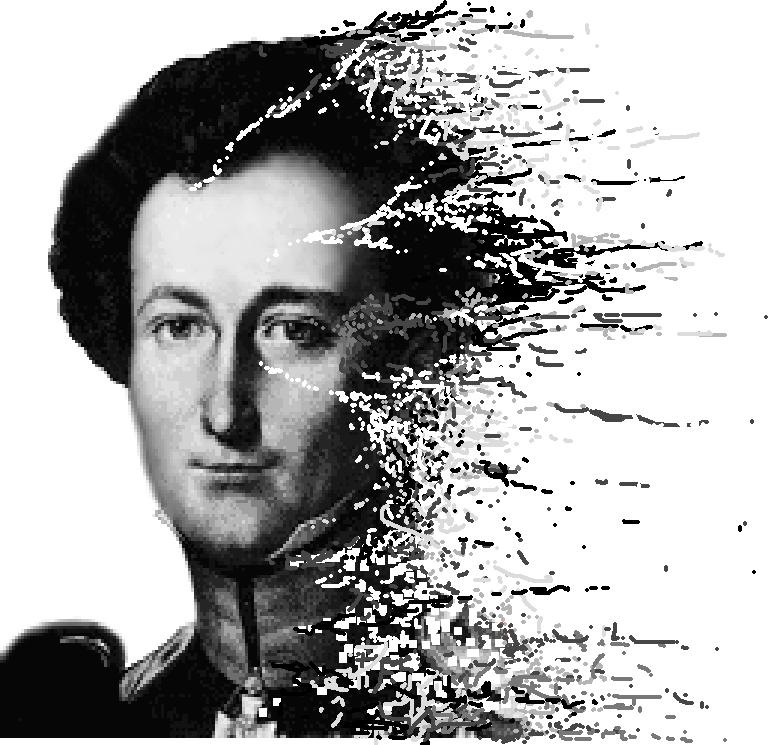
On War by Carl von Clausewitz has been the most influential book on strategy and war of all time.
We can say this because On War is the standard by which all other works of strategy are measured and only a few compared – notably Sun Tzu’s Art of War and The Peloponnesian War by Thucydides. The odd thing is that we can say this despite the fact that On War is more frequently shelved, cited or understood secondhand rather than read, even by military professionals. And furthermore, within the narrow demographic that reads Clausewitz seriously and critically, there can be heated dispute over what he meant, due to the difficulty of the text. Then there are the secondary effects, historical and military, of Clausewitz having been misunderstood, forgotten, ignored or at times, his strategic philosphy consciously rejected.
The shadow cast by On War is all the more remarkable given it’s circumstances of publication. Clausewitz died in 1831, at fifty-one, of 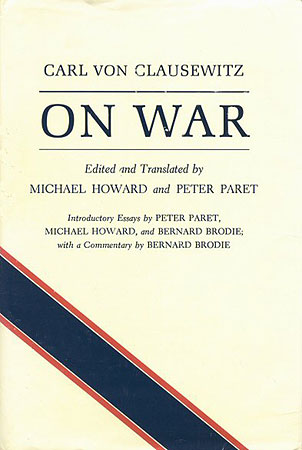 cholera, having finally risen to a military post his talents merited. He had been writing On War since 1816 and it was far from completed or refined to his satisfaction and it is highly unlikely, in my view, that Clausewitz would have consented to it’s publication in the condition in which he left it. His determined and intellectually formidible widow, Marie von Clausewitz, further shaped the manuscript of On War, guided by her intimate knowledge of her husband’s ideas and was likely the best editor Clausewitz could have posthumously had.
Nevertheless, to my mind On War remains a magnificent unfinished symphony.
What would On War have looked like if Clausewitz had lived another twenty-five or thirty some years? Assuming continued good health, Clausewitz would have seen, perhaps commanded in, the First Schleswig War and at least studied the Crimean War from afar. He would have had another quarter-century of reading and mature reflection on his subject. Clausewitz, who had a keen understanding of history, would have also witnessed the grand European upheaval of liberal revolution in 1848 that rocked the Hohenzollern monarchy to it’s core. What new insights might Clausewitz have gleaned or expanded upon? Would his later chapters On War have evolved to equal the first?
Having outlived Marie (who died in 1836), would Clausewitz have become a deeply changed man?
What I find it difficult to believe is that Clausewitz, with his creatively driven and philosophically exacting mind, would have been content to let the manuscript of On War rest where it stood in 1831. Or that we read today what Carl von Clausewitz ultimately intended.
Posted in 19th century, academia, analytic, book, Clausewitz Roundtable, Clausewitzian, counterintuitive, creativity, Evolution, history, ideas, intellectuals, literature, logic, military, military history, philosophy, Questions, reading, strategist, strategy, Strategy and War, theory, war, warriors, Writing | 9 Comments »
Sunday, October 30th, 2011
This SSI monograph by Dr. Andrew Mumford should stir some robust debate in the COIN community:
Puncturing the Counterinsurgency Myth: Britain and Irregular Warfare in the Past, Present, and Future
Most of Mumford’s points are valid criticisms but I need to quibble with Myth # 1 The British Military is an Effective Learning Institution:
MYTH #1: THE BRITISH MILITARY IS AN EFFECTIVE LEARNING INSTITUTION
According to John Nagl, the British succeeded in Malaya-in contrast to the American failure in Vietnam-because the British army had an organizational culture akin to a so-called “learning institution,” whereby the army quickly adapted to COIN conditions and changed tactics accordingly.2 The array of operational activity, ranging from limited to total war, that the British army has experienced has arguably led to a greater degree of pragmatism in its military outlook. A dogmatic adherence to rigid military doctrine has been absent, which, when compared to the generation-long postmortem on the failure of U.S. strategy in Vietnam, perhaps explains more than most other factors why an almost mythic reputation has descended upon the British. However, this does not explain, nor should it obscure, the languid application of appropriate irregular warfare tactics and the absence of swift strategic design. When it comes to COIN, the British are slow learners.
The early phases of nearly every campaign in the classical era were marred by stagnancy, mismanagement, and confusion. The military was 2 years into the Malayan Emergency before it conceived of a cohesive civil-military strategy in the form of the Briggs Plan. The crucial early years of the troubles in Northern Ireland were marked by displays of indiscriminate force and an inability to modulate the response.3
The Director of the United Kingdom (UK) Defence Academy also concedes that, in relation to Northern Ireland, “[I]t is easy in the light of the later success . . . to forget the early mistakes and the time it took to rectify them.”4 As Lieutenant General Sir John Kiszely rightly observes, the Malayan Emergency was, “a much lauded counterinsurgency campaign, but often overlooked is the fact that in the early years . . . the British Army achieved very little success.” In COIN terms, therefore, the British have been consistently slow to implement an effective strategy and achieve operational success. Moreover, the vast body of campaign experience has not translated into a cogent COIN lesson-learning process within the British military. The very need to re-learn COIN in the post-September 11, 2001 (9/11) conflict environment has undermined assertions as to the British military’s being an effective learning institution. Such amnesia has created an imperative for the armed forces now to hone their lesson-learning abilities while simultaneously adapting to the intricate challenges of sub-state and transnational post-Maoist insurgent violence in the third millennium.
What sort of time frame is reasonable for “organizational learning” – that is, transforming a large, hierarchical, bureaucratic entity’s conceptualization and understanding of a situation and reforming and adapting it’s practices in light of experience? How fast can this really happen? An org is not an individual, two years while under fire does not seem slow to me. Am I missing something in Mumford’s argument?
Furthermore, I infer from the third paragraph that Mumford expects evidence of learning were for the Brits to have arrived in Basra good-to-go on COIN doctrine. Learning, whether in a person or org, is not represented by doctrine (lessons frozen in time) but rather a capacity to adapt to new circumstances. Mumford is on firmer ground criticizing British general officers for their blind assumption that they had all the answers on counterinsurgency while the ragtag Mahdi Army bullied and ran circles around British units.
A monograph worth reading.
Hat tip to Lexington Green and SWJ Blog)
Posted in 21st century, academia, analytic, army, britain, COIN, cold war, counterinsurgency, counterpoint, ideas, insurgency, intellectuals, military, military reform, myth, Perception, reform, SSI, strategy, Strategy and War, Tactics, war | 3 Comments »
Thursday, October 20th, 2011
Here is something for the learned readership to chew on.
As you are probably all aware, in the hard sciences it is common for research papers to be the product of large, multidiciplinary, teams with, for example, biochemists working with physicists, geneticists, bioinformatics experts, mathematicians and so on. In the social sciences and humanities, not so much. Traditional disciplinary boundaries and methodological conservatism often prevail or are even frequently the subject of heated disputes when someone begins to test the limits of academic culture
I’m not sure why this has to be so for any of us not punching the clock in an ivory tower.
The organizer of the Boyd & Beyond II Conference, Stan Coerr, a GS-15 Marine Corps, Colonel Marine Corps Reserve and Iraq combat veteran, several years ago, developed a very intriguing analytical outline of thirty years of Afghan War, which I recommend that you take a look at:
The Eagle and the Bear: First World Armies in Fourth World Insurgencies by Stan Coerr
the-eagle-and-the-bear-11.pdf
There are many potential verges for collaboration in this outline – by my count, useful insights can be drawn by from the following fields:
Military History
Strategic Studies
Security Studies
COIN Theory
Operational Design
Diplomatic History
Soviet Studies
Intelligence History
International Relations
Anthropology
Ethnography
Area Studies
Islamic Studies
Economics
Geopolitics
Military Geography
Network Theory
I’m sure that I have missed a few.
It would be interesting to crowdsource this doc a little and get a discussion started. Before I go off on a riff about our unlamented Soviet friends, take a look and opine on any section or the whole in the comments section.
Posted in 20th century, 4GW, academia, Afghanistan, America, analytic, COIN, cold war, Communism, consilience, counterinsurgency, cultural intelligence, culture, DIME, diplomatic history, empire, extremists, feedback, foreign policy, Geography, geopolitics, government, history, IC, ideas, insurgency, intellectuals, intelligence, international law, IO, islam.insurgency, islamic world, islamist, military, military history, national security, network theory, networks, non-state actors, pakistan, politics, primary loyalties, reader response, russia, security, social science, soviet union, state failure, strategy, Strategy and War, synthesis, Tactics, terrain, terrorism, theory, totalitarianism, transnational criminal organization, tribes, USMC, war, warriors | 19 Comments »


