zenpundit.com » 21st century

Archive for the ‘21st century’ Category

It Seems the Oligarchs Distrust their own Creepy-state

Tuesday, July 10th, 2012

I previously made note of the emergence of an authoritarian Creepy-state element in American government, enjoying bipartisan popularity with this era’s predominantly Boomer elite politicians, CEOs and academic activists. Largely because this growing surveillance state is directed at controlling the rest of us and eroding the democratic and legal accountability of a self-imagined superclass.

Here’s a new (but unsurprising) wrinkle. The political-bureaucratic folks quietly building this incipient machinery of coercion already distrust and fear the men and women who are employed to run it. Evidently, the Rise of the Praetorian Class theory has been widely read.

US spy agency accused of illegally collecting personal data

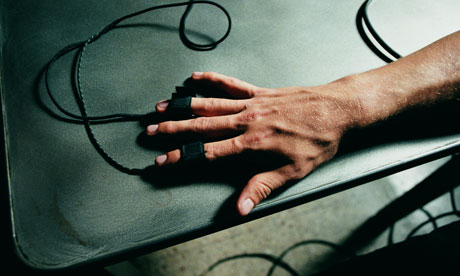
WASHINGTON — One of the nation’s most secretive intelligence agencies is pressuring its polygraphers to obtain intimate details of the private lives of thousands of job applicants and employees, pushing the ethical and legal boundaries of a program that’s designed instead to catch spies and terrorists.

The National Reconnaissance Office is so intent on extracting confessions of personal or illicit behavior that officials have admonished polygraphers who refused to go after them and rewarded those who did, sometimes with cash bonuses, a McClatchy Newspapers investigation found.

The disclosures include a wide range of behavior and private thoughts such as drug use, child abuse, suicide attempts, depression and sexual deviancy. The agency, which oversees the nation’s spy satellites, records the sessions that were required for security clearances and stores them in a database.

Even though it’s aggressively collecting the private disclosures, when people confess to serious crimes such as child molestation they’re not always arrested or prosecuted.

“You’ve got to wonder what the point of all of this is if we’re not even going after child molesters,” said Mark Phillips, a veteran polygrapher who resigned from the agency in late May after, he says, he was retaliated against for resisting abusive techniques. “This is bureaucracy run amok. These practices violate the rights of Americans, and it’s not even for a good reason.”

The agency refused to answer McClatchy’s questions about its practices. However, it’s acknowledged in internal documents that it’s not supposed to directly ask more personal questions but says it legally collects the information when people spontaneously confess, often at the beginning of the polygraph test.

Even though it is against the law as well as internal regulations, the NRO management have given themselves the green light in a self-investigation to keep doing it to their own employees and anybody going through a security clearance background investigation – a vast number of people, many of whom have or will someday have incredibly sensitive positions in the defense, intelligence and national security communities.

After a legal review of Phillips’ assertions, the agency’s assistant general counsel, Mark Land, concluded in April that it did nothing wrong. “My opinion, based on all of the facts, is that management’s action is legally supportable and corrective action is not required,” he wrote.

But McClatchy’s review of hundreds of documents – including internal policy documents, memos and agency emails – indicates that the National Reconnaissance Office is pushing ethical and possibly legal limits by:

-Establishing a system that tracks the number of personal confessions, which then are used in polygraphers’ annual performance reviews.

-Summoning employees and job applicants for multiple polygraph tests to ask about a wide array of personal behavior.

-Altering results of the tests in what some polygraphers say is an effort to justify more probing of employees’ and applicants’ private lives.

Read the rest here.
.
The charitable explanation is that all this is bureaucratic overreach motivated by tiny empire building and budget-padding in the age of  austerity, where cybersecurity is one of the few “growth” areas of discretionary spending for senior bureaucrats to pursue.
.
The cynical explanation is that these are blackmail files being compiled systematically and deliberately; to be used later to compel IC/DoD/DHS/DoJ employees to stick with an agency party line, intimidate and punish whistleblowers or use their official positions to engage in illegal misconduct to benefit politically influential VIPs. Like harassing American citizens or journalists critical of an agency or administration policy or special interests.
.
There’s few good reasons for the government to do this – and those few are all narrowly related to genuine and specific security concerns we have had to live with since WWII – but many bad ones.

SWJ: Casebooks on Insurgency

Tuesday, July 10th, 2012

This looks to be an invaluable resource. From SWJ:

Casebooks on Insurgency and Revolutionary Warfare 

US Army Special Operations Command and Johns Hopkins University/Applied Physics Laboratory National Security Analysis Department have put together a useful reference for small wars students and practitioners entitled “Casebook on Insurgency and Revolutionary Warfare Volume II:  1962-2009.”  The resource is available for download in PDF format here.  If you are wondering where Volume I is, that government document covers post-World War I insurgencies and revolutions up to 1962 and can be downloaded in PDF here.  The original was published by the Special Operations Research Office at The American University in 1962.

Volume II is broken down by conceptual categories as can be seen by the table of contents….

Read the rest here.


“It’s Tablet!”….”No, it’s a Coffee Table!”

Friday, June 29th, 2012

Starbuck gets at hat tip for this cool mash-up of furniture with a giant next-generation tablet:

Get Ready for the Smart Coffee Table

Computers started out as discrete objects to be placed on top of furniture — a PC on the desk, a laptop on the dining room table. An iPad on the kitchen counter. But the destiny of computing devices is to be built into our furniture. The desk itself will become a PC. The dining room table will be usable like a laptop. And the kitchen counter will work a lot like an iPad.

In computer science, the concept of computers built into everything is called ubiquitous computing, pervasive computing, ambient intelligence or, my favorite label: everyware.

The transition to intelligent furniture will also involve a reconsideration of the hierarchy of furniture. For example, the tables throughout your house exist in a functional ranking system. Today the king of tables, of course, is the dining room table. You spend more money on it than other tables, such as bedroom nightstands, the coffee table, the patio table, the workbench in the garage, the desk in your home office and so on. Its quality, appearance and placement are far more important than that of lesser tables.

When the dust settles on the transition to intelligent furniture, however, it’s likely that the lowly coffee table will usurp the crown and become the most important (and expensive) table in your house. The reason is that the current location and purpose of a coffee table as a table are peripheral to what’s important about your family’s life. But the intelligent coffee table of the future may be the central computing device in your home.

This is sort of an evolutionary half-step toward the internet of things, as is Google’s Daemon –type glasses. The step beyond that is networking the internet of things with our own brains. Can our brains handle this additional order of magnitude of continuous information flow? Most likely, as we adapted from pastoral life to high-tech civilization without any major evolutionary changes but our culture will definitely evolve – perhaps more than with the advent of literacy or the printing press. Without a depth of connection to others we would be at risk of cultivating a culture of isolation and self-absorbtion (I was going to write “introspection” but, well…we know that is not going to happen). With too much connection there is not enough focus to recognize or develop insights.

SUR40 COFFEE TABLE

The Russians are Not Coming….Nor are they Going Away

Monday, June 25th, 2012

Now that Vladimir Putin has resumed the Presidency of Russia, it merits looking at the defense discussion that appeared under his name in Rossiiskaya Gazeta. Virtually everyone agrees that the condition of the Russian Army is parlous and that Putin’s program of difficult military reform to transform the Russian military from a conscripted army to a modernized professional force has not borne fruit. Therefore it is interesting to look at how Putin’s regime articulates it’s defense challenges with a mixture of bravado and brutal strategic realism we would never hear from an American politician.

Excerpts of the article are in bold while my commentary is in normal text.

 Being Strong 

…..The world is changing, and the transformations underway could hide various risks, often unpredictable risks. In a world of economic and other upheaval, there is always the temptation to resolve one’s problems at another’s expense, through pressure and force. It is no surprise that some are calling for resources of global significance to be freed from the exclusive sovereignty of a single nation, and that this issue will soon be raised as a “matter-of-course.”

There will be no possibility of this, even a hypothetical one, with respect to Russia. In other words, we should not tempt anyone by allowing ourselves to be weak. 

While some of this is boilerplate, it does demonstrate Putin’s astute view of Western elite noises about “global governance” as an effort to erode historic Westphalian legal norms of sovereignty for a self-aggrandizing reasons.

I am including paragraphs here from different parts of the paper where President Putin deals with nuclear weapons, though the first one continues from where the last excerpt left off.:

It is for this reason that we will under no circumstances surrender our strategic deterrent capability, and indeed, will in fact strengthen it. It was this strength that enabled us to maintain our national sovereignty during the extremely difficult 1990s, when, lets’ be frank, we did not have anything else to argue with.

….I remember in 2002 when the Chief of the General Staff proposed liquidating a base for strategic ballistic missile submarines on the Kamchatka Peninsula. Understandably, this proposal was motivated by dire circumstances. This would have deprived Russia of its naval presence in the Pacific Ocean. I decided against this. Due to the lack of the required budgetary funding, we had to ask private companies for help. I would like to thank them for that. Both Surgutneftegaz and TNK stepped up to provide the required funding for the base’s initial reconstruction. Budgetary allocations were later disbursed. Today, we have a modern base in Vilyuchinsk where next-generation Borei class submarines will soon be deployed.

….We have greatly increased the capabilities of our early missile warning system. Tracking stations have been launched in the Leningrad and Kaliningrad Regions and in Armavir, and a similar facility is undergoing tests in Irkutsk. All aerospace defence brigades have been equipped with the Universal-1S automation systems, and the Glonass satellite group has been deployed.

The land, sea and air components of our Strategic Nuclear Forces are reliable and sufficient. The proportion of modern land-based missile systems has grown from 13% to 25% over the past four years. The rearmament of 10 missile regiments with the Topol-M and Yars strategic missile systems will be continued.  Long-range aviation will maintain the fleet of strategic Tu-160 and Tu-95MS bombers; work is underway to modernise them. They will be equipped with a new long-range cruise missile system. Russia’s strategic aviation resumed combat patrols in their zone of responsibility in 2007. A new aircraft is being designed for strategic long-range aviation.

New-generation Borei class strategic submarines are being put on combat duty. These include the Yury Dolgoruky and Alexander Nevsky which are undergoing state trials.

….In the coming decade, Russian armed forces will be provided with over 400 modern land and sea-based inter-continental ballistic missiles, 8 strategic ballistic missile submarines…. 

This does not sound  like Putin puts much stock in his predecessor’s endorsement of Global Zero or President Obama’s goal of eliminating nuclear weapons. Or that a drastic unilateral American cut in nuclear weapons proposed by Global Zero to “break the triad” contemplated by the Obama administration would be reciprocated by Russia. Or any other nuclear power state.

Given that Pakistan, India, North Korea, Israel and China are reportedly increasing and improving their nuclear arsenals, it begs the question of whether the Obama or the Putin administrations have the most realistic view about nuclear weapons and their currency in international relations. Or what the Obama administration would use as bargaining chips to negotiate reductions in foreign nuclear arsenals after making gratuitously slashing unilateral cuts. And if the paper was not clear enough, Putin was more blunt about the strategic situation two days ago:

“With regard to further steps in the sphere of nuclear weapons, these further steps should be of a complex character, and this time all the nuclear powers should be involved in this process. We cannot disarm indefinitely while some other nuclear powers are building up their arsenal. It is out of the question!” 

On the subject of Russia’s land forces:

….There are no undermanned units in the Russian armed forces any more. The Army has over 100 combined and special brigades. These are full-scale military units with the requisite personnel and equipment. Their alert reaction time is one hour and they can be deployed to a potential theatre of war within 24 hours.

In the past, it took up to five days to prepare for combat readiness. The deployment and equipment of all the armed forces to wartime conditions could take nearly a year, even though most armed conflicts now last from a few hours to several days.

Why have we chosen the brigade as the main tactical unit? First of all, we have relied on our own experience in the Afghan and other wars, where mobile combat and assault groups reinforced with air and other support units have proved  more efficient than regiments and divisions.

The new brigades are smaller than divisions in the number of personnel but have a bigger strike capability, better firepower and support, including artillery, air defence, reconnaissance, communications, and so on. Brigades can operate both autonomously and jointly with other units. I admit that the quality is not perfect in all instances. We need to achieve the required standards in the near future. 

A Russian Army brigade numbers slightly over 4000 soldiers (vs. 3000-5000 in American and NATO militaries) and moving to a brigade structure is intended to make the Russian Army more versatile, flexible, deployable and mobile. The US essentially did the same thing with the “modularity” reforms for a brigade team force structure. However, I find it dubious that the Russian version is anything other than an aspirational work in progress or that Russia today could muster a force remotely approaching 100 combat brigades on short notice or keep them in the field for more than thirty days.

The old Soviet Red Army in the 80’s at the peak of it’s power was a military long on officers and critically deficient in NCOs  and the 90’s cratered the main force quality of what remained of the Soviet armies. Russia will not have a deployable fighting army for anything other than brief Georgia type raids and SPETSNAZ operations until it builds a proportionate NCO corps and modernized logistical support system.

On future war and it’s strategic context:

….The probability of a global war between nuclear powers is not high, because that would mean the end of civilisation. As long as the “powder” of our strategic nuclear forces created by the tremendous efforts of our fathers and grandfathers remains dry, nobody will dare launch a large-scale aggression against us.

However, it should be borne in mind that technological progress in many varied areas, from new models of weaponry and military hardware to information and communications technology, has dramatically changed the nature of armed conflicts. Thus, as high-precision long-range conventional weapons become increasingly common, they will tend to become the means of achieving a decisive victory over an opponent, including in a global conflict.

The military capability of a country in space or information countermeasures, especially in cyberspace, will play a great, if not decisive, role in determining the nature of an armed conflict. In the more distant future, weapons systems based on new principles (beam, geophysical, wave, genetic, psychophysical and other technology) will be developed. All this will, in addition to nuclear weapons, provide entirely new instruments for achieving political and strategic goals. Such hi-tech weapons systems will be comparable in effect to nuclear weapons but will be more “acceptable” in terms of political and military ideology. In this sense, the strategic balance of nuclear forces will play a gradually diminishing role in deterring aggression and chaos.

We see ever new regional and local wars breaking out in the world. We continue to see new areas of instability and deliberately managed chaos. There also are purposeful attempts to provoke such conflicts even within the direct proximity of Russia’s and its allies’ borders.

The basic principles of international law are being degraded and eroded, especially in terms of international security. 

Here we see much of the same keen interest Western military experts have had in RMA/”transformation” but more as new domains in which to fight or weapons to fight with, but Putin’s assumptions about the roots of international conflict remain exceedingly traditional in Clausewitzian and Machiavellian realpolitik senses. There’s no idea here that war’s political nature is being transformed by technological advances or even that breakdowns in order in other nations flow primarily from indigenous social forces  than from strategic conspiracies and manipulations of foreign powers hell-bent on humiliating Russia.

This is a worldview of cynical realism salted with nationalism and a paranoia induced by the lessons of centuries of Russian history. International relations, it follows, hinge primarily on power in all it’s manifestations, a few rules that separate the law of nations from the law of the jungle and that states exert power to accomplish rational strategic objectives. Furthermore, in an echo of Tsarist Russia’s last modernizer, Petr Stolypin, what Putin has put forth as a political program for his domestic audience (sincere or not) is “a great Russia”.

The good news is that President Putin is, unlike his Soviet predecessors, is uninterested in grand ideological crusades that would destabilize the world order and that Russia currently would be incapable of carrying any out. The bad news is that Putin is a shrewd strategic thinker, one who views the US as a long-term adversary of Russia and one who is likely to be highly antagonized and partially misread (and thus miscalculate)  the tactical geopolitics of intervention pursued by America’s R2P moralizers.

From Putin’s perspective, we are currently crusaders rather than deal-cutters grounded in reality. America does not need to appease other power,s but we’d further our own interests faster if we spent a little time looking at the world through the eyes of others

Hat tip to Lexington Green
Messy Wars, Navigating Wicked Problems, and the Soul of American Foreign Policy

Monday, June 18th, 2012

Michael Few is a retired military officer and former editor of the Small Wars Journal: we are honored to offer our readers this guest post by a good friend of this blog.
.

This fall, I’m hoping to begin teaching high school social studies as well as an elective on Global Issues or Wicked Problems (WPs). WPs are those messy, seemingly intractable problems that seem to evade solutions from conventional planning and decision making methods — terrorism, poverty, water rights, etc… These types of courses are already being taught in the school system where I live, and my hope is that I will be able to become a force multiplier given my experience and background.

Eventually, if this elective course takes off, then I would like the final project to be a collection of TEDx talks, where the students describe a problem, discuss past failed efforts to tame the problem, and offer coping strategies or new solutions.

As I am doing my initial reconnaissance of the student demographics, the first striking data point is their age. The incoming freshman class would have been born in 1998, and the senior class born in 1995. A second surprise that I received is the socio-ethnic backgrounds. Along with the expected mix of white, black and Hispanic children, my school district has a significant first generation Indian population, whose parents teach or work in the Research Triangle Park or surrounding universities. Moreover, there is a minority of Burmese refugees who have found a safe home after fleeing a repressive regime.

How do they see and understand the world?

The attacks of 9/11 were but a faint memory; the Cold War is ancient history. Their childhoods were formed with the Iraq and Afghanistan wars in the background, and their pop-culture heroes are Navy Seal Team Six and Call to Duty video games. Drone strikes and the intervention in Libya are normal for them.

It is the way things are. We fight terrorists in other countries in order to protect our way of life. But what is a terrorist or an insurgent? Is it simply someone that disagrees with you?

These students have much bigger problems to solve than simply pacifying villages in the remote areas of modernity. By 2040, when these students are in the prime of their lives, the world population is expected to be nearing nine billion with increased competition for basic resources as the world passes through peak oil and peak fresh water.

If the United States is to remain strong, then these children are our hope. They will be tasked with leading the nation, finding new solutions to coming crisis, and developing innovation in technology, science, governance, and medicine.

As I am developing my teaching philosophy, I am using the same process that served me well as a commander in the military. My purpose is to help develop, mentor, and coach: 1. leaders of character, 2.involved citizens in the nation who understand that rights must be complimented by responsibilities, and 3. the individual self-confidence to pursue a good life respecting themselves and others.

Initially, I want to challenge them to rethink what they’ve been taught or think they know. I want my students to think for themselves and determine what right should look like.

First, I began studying Reinhold Niebuhr. Now, I’m spending some time reading Saint Augustine’s “City of God” and rethinking Just War Theory. If we zoom up from just drone strikes and look at our continued military action across the globe, do we still have the moral high ground? I don’t know. As Saint Augustine wrote,

Whoever gives even moderate attention to human affairs and to our common nature, will recognize that if there is no man who does not wish to be joyful, neither is there anyone who does not wish to have peace. For even they who make war desire nothing but victory — desire, that is to say, to attain to peace with glory. For what else is victory than the conquest of those who resist us? And when this is done there is peace. It is therefore with the desire for peace that wars are waged, even by those who take pleasure in exercising their warlike nature in command and battle. And hence it is obvious that peace is the end sought for by war.

When I quoted Saint Augustine in a comment here, Mark Safranski, the Zen of Zen, replied,

The high ground is in the eye of the beholder. Some people cheered 9/11, including a few American radicals. With multiple-audiences watching 24/7, some will disapprove of our merely existing and bitterly resent and deny the legitimacy of our fighting back because they prefer us defeated and dead. Other audiences are more fair-minded and these are a good barometer – if we are winning them over, securing their admiration and isolating our opponents, our moral behavior in the big picture is apt to be reasonably on track. If we are repelling them, isolating ourselves, driving others to the side of our enemies, then chances are fairly good that we are going astray.

Zen’s point is well-taken, but I disagree. Following a moral life is not based on how others feel about you. It is through living a life that subscribes to your believed philosophy, spiritual norms, and values and beliefs particularly when you have to make an unpopular decision.

John Arquilla, in his most recent “Cool War,” said it best,

’It is well that war is so terrible,’ Confederate General Robert E. Lee once said, ‘lest we should grow too fond of it.’ For him, and generations of military leaders before and since, the carnage and other costs of war have driven a sense of reluctance to start a conflict, or even to join one already in progress.

Caution about going to war has formed a central aspect of the American public character. George Washington worried about being drawn into foreign wars through what Thomas Jefferson later called ‘entangling alliances.’ John Quincy Adams admonished Americans not to ‘go abroad in search of monsters to destroy.’ Their advice has generally been followed. Even when it came to helping thwart the adventurer-conquerors who started the twentieth century’s world wars, the United States stayed out of both from the outset, entering only when dragged into them.

Today, war has become too easy and not too terrible. With our global hegemony in military strength, we can force our will at any time and any place.

But, what is the right thing to do?

What is the moral high ground?

These are some of the questions that my students will eventually have to answer.


Switch to our mobile site

