zenpundit.com » non-state actors

Archive for the ‘non-state actors’ Category

Is 4GW Dead?: Point-Counterpoint and Commentary

Tuesday, May 28th, 2013
4GW theory has always attracted overenthusiasts and  raging haters ever since the concept emerged way back in 1989, so debates about the merit of 4GW are nothing new; in fact, the arguments became so routine that they had largely gone sterile years ago.  After T.X. Hammes published his excellent  The Sling and the Stone and John Robb  went to the next level with Brave New War , it seemed that  little new was left to be said. In the late 2000’s, intellectual energies shifted to arguing the nuances and flaws of Pop-centric COINwhich proved in time to be even more bitter than those about 4GW.

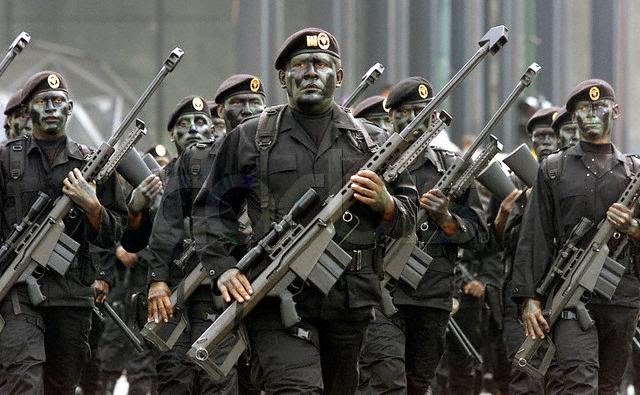
Generations of War Theory Visualized by Chet Richards

What is different recently is that the person taking the affirmative on the question “Is 4GW dead?” was Dr. Chet Richards, who for years ran the premier but now defunct 4GW site, D-N-I.net, now archived here by the Project on Government Oversight.  Richards is no Clausewitzian true-believer or Big Army MBA with stars, but a former collaborator with John Boyd and a leading thinker of the 4GW school who had written several books with that strategic theme.

Therefore, not a critic to be dismissed lightly. Here’s Chet:

Is 4GW Dead? 

….The first thing to note is that 4GW is an evolution from 3GW, which they equate to maneuver warfare and the blitzkrieg as defined in MCDP 1 and Boyd’s Patterns of Conflict. These are styles of warfare conducted by state armies against other state armies, although the paper does invoke the notion of transnational terrorists near the end.

At some point in the late 1990s, the theory bifurcated. Bill Lind and Martin van Creveld began to emphasize the decline of the state and focus on transnational guerrilla organizations like al-Qa’ida. Tom Barnett called this the “road warrior” model. T. X. Hammes, on the other hand, characterized 4GW as “evolved insurgency” and envisioned the techniques described in the paragraphs above as also useful for state-vs-state conflicts.

….The 9/11 attacks, by a transnational guerrilla movement, seemed to confirm 4GW in both of its forms. In the last few years, however, everything has gone quiet. Transnational insurgencies, “global guerrillas” as John Robb terms them, have not become a significant factor in geopolitics. “Continuing irritation” might best describe them, whose primary function seems to be upholding national security budgets in frightened western democracies. The state system has not noticeably weakened. So it might be fair at this point to conclude that although 4GW was a legitimate theory, well supported by logic and data, the world simply didn’t develop along the lines it proposed.

A prominent critic of 4GW, Antulio J. Echevarria, may have been correct:

What we are really seeing in the war on terror, and the campaign in Iraq and elsewhere, is that the increased “dispersion and democratization of technology, information, and finance” brought about by globalization has given terrorist groups greater mobility and access worldwide. At this point, globalization seems to aid the nonstate actor more than the state, but states still play a central role in the support or defeat of terrorist groups or insurgencies.

Why? I’ll offer this hypothesis, that the primary reason warfare did not evolve a fourth generation is that it didn’t live long enough. The opening of Sir Rupert Smith’s 2005 treatise, The Utility of Force, states the case….

Chet’s post spurred a sharp rebuttal from William Lind, “the Father of Fourth Generation Warfare”:

4GW is Alive and Well 

So “the world simply didn’t develop along the lines it (4GW) proposed”? How do you say that in Syriac?

The basic error in Chet Richards’ piece of April 19, “Is 4GW dead?” is confusing the external and internal worlds. Internally, in the U.S. military and the larger defense and foreign policy establishment, 4GW is dead, as is maneuver warfare and increasingly any connection to the external world. The foreign policy types can only perceive a world of states, in which their job is to promote the Wilsonian nee Jacobin, follies of “democracy” and “universal human rights.” They are in fact, 4GW’s allies, in that their demand for “democracy” undermines states, opening the door for more 4GW.

In most of the world, democracy is not an option. The only real options are tyranny or anarchy, and when you work against tyranny, you are working for anarchy. The ghost of bin Laden sends his heartfelt thanks.

Third Generation doctrine has been abandoned, de facto, if not de jure, by the one service that embraced it, the U.S. Marine Corps. The others never gave it a glance. The U.S. military remains and will remain second generation until it disappears from sheer irrelevance coupled with high cost. That is coming much sooner than any of them think.

….In many of these cases, including Egypt and Pakistan, the only element strong enough to hold the state together is the army. But the “democracy” crowd in Washington immediately threatens aid cut-offs, sanctions, etc., if the army acts. Again, the children now running America’s foreign policy are 4GW’s best allies.

Fourth generation war includes far more than just Islamic “terrorism,” and we see it gaining strength in areas far from the Middle East. Gangs have grown so powerful in Mexico, right on our border, that I predict the state will soon have to make deals with them, as the PRI has done in the past. Invasion by immigrants who do not acculturate is a powerful form of 4GW, more powerful than any terrorism, and that is occurring on a north-south basis (except Australia) literally around the world. Remember, most of the barbarians did not invade the Roman Empire to destroy it. They just wanted to move in. In fact, most were invited in. Sound familiar?

What should concern us most is precisely the disconnect between the internal and external worlds. Externally, 4GW is flourishing, while internally, in the US government and military, it does not exist. This is the kind of chasm into which empires can disappear….

Fabius Maximus – who is a both a pseudonymous blogger and a group blog, also responded:

Update about one of the seldom-discussed trends shaping our world: 4GW 

One of the interesting aspects of recent history is the coincidence of

  1. the collapse of discussion about 4GW in US military and geopolitical circles,
  2. victories by insurgents using 4GW methods over foreign armies in Iraq and Afghanistan, &
  3. most important, the perhaps history-making victory by Bin Laden’s al Qaeda.

The second point is important to us, but the usual outcome since WW2 (after which 4GW became the dominate form of military conflict; see section C below).  The third point is the big one. Based on the available information, one of Bin Laden’s goals was to destabilize the US political regime. Massive increase in military spending (using borrowed funds). The bill of rights being shredded (note yesterday’s House vote to tear another strip from the 4th amendment). Our Courts holding show trials of terrorists — recruited, financed, supported by our security services. Torture and concentration camps.

….We — the Second American Republic — have engaged in a war with nationalistic, Islamic forces using 4GW.  So far we are losing.  For various reasons we are unable to even perceive the nature of the threat. In DoD the hot dot is again procurement of high-tech weapons — new ships, the F-35, the hypersonic cruise missile, etc.  All useless in the wars we’ve fought for the past 50 years, and probably in those of the next 50 years….. 

A few comments.

4GW has been heavily criticized – and accurately so – for making selective use of history, for unsupported maximal claims, for an excessively and ahistorically linear argument and for shifting or vaguely defined terms. Presented rigidly, it is relatively easy for critics to poke holes in it simply by playing “gotcha” (some of the criticism of 4GW did not get beyond ad hominem level garbage, but more intellectually serious detractors made very effective critiques of 4GW’s flaws).

That said, there were a number of useful elements or insights in the body of 4GW writings that retain their utility and I think are worth recalling:

  • Whatever one thinks of 4GW as a whole, the school drew attention to the threat of non-state irregular warfare, failed states and the decline of state vs. state warfare and did so long before it was Pentagon conventional wisdom or trendy Beltway talking head spiels on Sunday morning news programs.
  • While the state is not in decline everywhere in an absolute sense, it sure is failing in some places and has utterly collapsed elsewhere. Failed, failing and hollowed out states are nexus points for geopolitical problems and feature corruption, black globalization, insurgency, tribalism, terrorism, transnational criminal organizations and zones of humanitarian crisis. Whether we call these situations “irregular”, “hybrid”, “decentralized and polycentric”, “LIC”, “4GW” or everyone’s favorite, “complex” matters less than using force to achieve political aims becomes increasingly difficult as the interested parties and observers multiply. Some of the advice offered by the 4GW school regarding “the moral level of war”, de-escalation and the perils of fighting the weak in such a conflict environment are all to the good for reducing friction.
  • The emphasis of the 4GW school on the perspective of the irregular fighter and their motivations not always fitting neatly within state-centric realpolitik, Galula-ish “Maoist Model” insurgency, Clausewitzian best strategic practice or the Western intellectual tradition, were likewise ahead of their time and contrary to S.O.P. Even today, the effort to see the world through the eyes of our enemies is at best, anemic. Red teams are feared more than they are loved. Or utilized.
  • The bitter criticism the 4GW school lodged of the American political elite being allergic to strategic thinking and ignorant of strategy in general was apt; that American strategy since the end of the Cold War has been exceedingly inept in thought and execution is one of the few points on which the most rabid 4GW advocate and diehard Clausewitzian can find themselves in full agreement.

The lessons of 4GW will still be relevant wherever men fight in the rubble of broken societies, atomized communities and failed states.

Are Insurgencies “Antifragile”?

Thursday, May 16th, 2013

I have been reading Nassim Nicholas Taleb’s latest book,  Antifragile . It’s a highly intriguing book and I will give it a full review soon, but Taleb’s core concept of antifragility is important  and lends itself to wide application. Here’s Taleb on what constitutes “antifragility” – things that gain or improve with disorder – which he was careful to distinguish not just from “fragility” but also from “robustness” and “resilience”:

Almost all people answer that the opposite of “fragile” is “robust”, “resilient” , “solid”, or something of the sort. But the resilient, robust (and company) are items that neither break nor
improve, so you would not need to write anything on them – have you ever seen a package with
“robust” stamped on it? Logically, the exact opposite of a “fragile” parcel would be a package on which one has written “please mishandle” or “please handle carelessly”. It’s contents would not just be unbreakable, but would benefit from shocks and a wide array of trauma. The fragile is the package that would be at best unharmed, the robust would at best and at worst unharmed. And the opposite of fragile is therefore what is at worst unharmed. [31]

Italics in original.

Taleb uses a number of metaphors – the Phoenix, the Hydra – as well as examples to get across the point that an antifragile entity overcompensates in reaction to stress/damage/disorder by becoming better, growing stronger, more powerful, adaptively improving itself. Think of the effects of weight training in building muscle or a wildfire spurring bountiful growth in an ecosystem. There’s more to Antifragile than this but the gist is sufficient for now.

Which brings me to the question, “Are insurgencies antifragile?”

The study of insurgency, terrorism and revolution, while important and useful tend to suffer from several drawbacks. One is compartmentalization and academic specialization. As Robert Bunker pointed out in Narcos Over the Border,  a problem like “criminal-insurgency” attracts very different reactions from Law enforcement, intelligence analysts, the military, counter-terrorism officials and other experts (to say nothing of politicians) which makes consensus over a common analytic framework very difficult. Sometimes even defining the problem across domains is frustrating. As a result, many studies are too narrow and the few admirably ambitiously broad ones are deeply stamped in the political lens of the era in which they were researched and written – i.e. imperialist Small Wars, the Cold War, the War on Terror, Pop-centric COIN of Iraq and Afghanistan wars etc.  It is a subject that requires both more (and more intellectually creative) scholarship and a greater degree of synthesis.

In the meantime, I’d like to offer some speculation in an effort to answer the question:

  • The characteristics of “antifragility” in terms of at least some kinds of insurgency bears a striking resemblance to that of “wicked problems“, which has also been used to categorize some enduring irregular conflicts. Particularly in the sense of not having natural stopping points , manifesting complex interdependencies and resistance to simple, silver bullet solutions that could destroy it.
  • Moreover, most successful insurgencies are not, contrary to Maoist theory, autochthonous  – they draw many resources from external sources – black globalization, foreign patrons, legitimate trade, fundraising – and from the very state waging counterinsurgency warfare against them. The Afghan Taliban would be a much poorer military force without the vast amount of American aid passing through the hands of Pakistan and the Karzai regime
  • An insurgency’s claim to being “antifragile” may rest as much or more upon the general political and socioeconomic environment being relatively chaotic than on the nature of the insurgent organization itself.  The Chinese, Russian and Lebanese civil wars, Mexico’s narco-insurgency, West Africa and Afghanistan in the 1990’s, the Congo basinand Iraq in the 2000’s all had polycentric and disorderly environments that allowed  irregular groups to rapidly rise and fall on a local and regional basis. By contrast, “bilateral” insurgency vs. state dynamics can stabilize conflict for decades
  • An insurgent organization may lose antifragility as it restructures itself over time to become either more robust (ex. –Hezbollah) subnational entity or to accept greater fragility in order to acquire state-like hierarchical advantages ( political discipline and specialization). Note that “fragile” does not mean “weak”, it means “vulnerable”. States can be very strong and concentrating massive amounts of resources and coercive force, yet be strangely vulnerable to internal coups, popular uprisings, economic collapse, strategic myopia or even natural disasters. One of the great dangers today are complex systems that combine epic power with extreme fragility – small disruptions by irregulars yield huge ROIs.
  • States might be able to seek a strategic advantage over insurgencies by improving their robustness and smother the relatively ineffectual kinetic attacks of guerrillas or terrorists with inertia, refusing to “feed” the growth of an antifragile insurgent opponent, starving them of material resources and political oxygen. India has trucked along with something like seventeen ongoing insurgencies and episodic acts of major terrorism for decades without the Indian state remotely being in jeopardy of being overthrown by, say, the Naxalites, Sikh extremists or Kashmiri Islamists. Compare that with the rapid collapse or retreat of the state in places like Somalia, Yemen, Libya, Mali, Syria and so on.
  • The effects of globalization and information technology, the ability to have  John Robb’sopen source” decentralized, fast-evolving, insurgencies, give an an impetus to insurgencies becoming antifragile. At a minimum, it improves the odds.
Comments welcomed

The Boston Bombers and Superempowerment

Wednesday, May 1st, 2013

My friend Dave Schuler who blogs at the excellent The Glittering Eye and on foreign policy at Dr. James Joyner’s Outside the Beltway , queried me as to what I thought of the Boston Bombers in light of the concept of the Superempowered Individual.

For those not familiar with the concept, the term “superempowered individual” originated in phrase coined by Thomas Friedman and quickly gained traction and evolved in the .mil/strategy/defense blogosphere and communities of interest after 9/11 turned everyone’s attention to the potential reach of catastrophic terrorism. Many people, including myself have written on the topic and while no single, agreed upon, definition of SEI exists, there is a consensus around an individual having the capacity to multiply the scale of the harm they can cause by leveraging or disrupting complex systems, be they mechanical, social, cyber or some combination. I defined SEI’s this way:

To qualify as a superempowered individual, the actor must be able to initiate a destructive event, fundamentally with their own resources, that cascades systemically on a national, regional or global scale. They must be able to credibly, “declare war on the world”.  

Using that definition, Dzhokhar and Tamerlan Tsarnaev are far from superempowered individuals. They were not “super” anything and rather than being masters of complexity, they ginned up some primitive IEDs  and blundered miserably after their attack on the Boston Marathon. The younger of the two accidentally ran over his own brother with a car, killing him, which gives some idea of the operational amateurism of these culprits. If Islamist terrorism has a Darwin Award, the Brothers Tsarnaev are contenders

Yet the cost of their attack, the Boston bombing, allegedly tops $330 million dollars? Why?

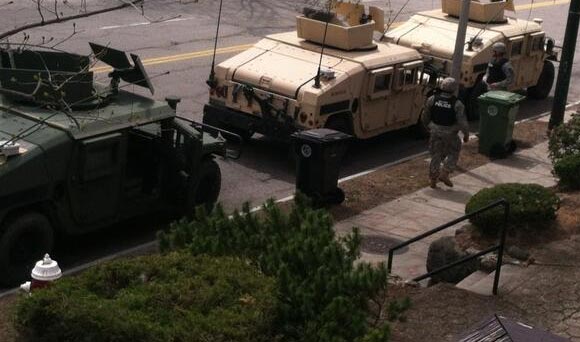
I would argue that the US is systematically “superdisempowering” itself by VASTLY multiplying the costs of any given act of terrorism with absurd and outrageous levels of costly security theater and glitzy paramilitarization of law enforcement that continue to cascade and accumulate long after sorry nitwits like Richard Reid, Dzhokhar Tsarnaev or the amazingly incompetent Underwear Bomber have become obscure historical footnotes. It is incredibly counterproductive in every sense and has overwhelmingly negative effects that only add significantly to the costs of terrorism

Timothy McVeigh, in a much more heinous act of terrorism, blew up a Federal building and killed 168 people and injured 800 others with a massive truck bomb and America did not feel a need to dress our police officers like extras in Starship Troopers or it’s airport security like customs officials from a minor Fascist puppet regime. This is not a criticism of police officers who do a dangerous job with professionalism and bravery but of a national policy of paternalism and creeping authoritarianism that is slowly morphing them into asphalt soldiers.

The attacks on September 11 were thirty times worse and far more spectacular than McVeigh’s bombing, transfixing the attention of the whole world, but somehow we got along without President Bush declaring martial law and closing New York city and sending troops door to door to roust citizens in their homes without warrants or probable cause.

We need to take a healthy step back and put the brakes on our own policy and security responses to terrorism and dial them down to a rational minimum level required for investigative effectiveness. If not because these policies have become dangerously injurious to liberty and American democracy or because they are mostly wasteful government spending then we should do it because we have become so expert at making the costs of any act of terror extremely expensive by our own reaction that we are providing the enemy and itinerant crazies with a tremendous incentive to attack us more.

Seriously.

The only thing superempowered right now is own own lack of strategic sense.

Syria is Not Rwanda

Monday, April 29th, 2013

Anne-Marie Slaughter had a short but bombastic WaPo op-ed on Syria and chemical weapons use that requires comment:

Obama should remember Rwanda as he weighs action in Syria 

….The Clinton administration did not want to acknowledge that genocide was taking place in Rwanda because the United States would have been legally bound by the Genocide Convention of 1948 to intervene to stop the killing. The reason the Obama administration does not want to recognize that chemical weapons are being used in Syria is because Obama warned the Syrian regime clearly and sharply in August against using such weapons. “There would be enormous consequences if we start seeing movement on the chemical-weapons front or the use of chemical weapons,” he said. “That would change my calculations significantly.”

….But the White House must recognize that the game has already changed. U.S. credibility is on the line. For all the temptation to hide behind the decision to invade Iraq based on faulty intelligence about weapons of mass destruction, Obama must realize the tremendous damage he will do to the United States and to his legacy if he fails to act. He should understand the deep and lasting damage done when the gap between words and deeds becomes too great to ignore, when those who wield power are exposed as not saying what they mean or meaning what they say.

This is remarkably poorly reasoned advice from Dr. Slaughter that hopefully, President Obama will continue to ignore.
.
The President, on the basis of advice very much in the spirit of this op-ed, drew a public “red-line” about chemical weapons use for Bashar Assad, or some variation of that, on six occasions, personally and through intermediaries. On the narrow point, Slaughter is correct that this action was ill-considered, in that the President wisely does not seem to have much of an appetite for jumping into the Syrian conflict. Bluffing needlessly is not a good practice in foreign policy simply to pacify domestic critics, but it is something presidents do from time to time. Maybe the POTUS arguably needs better foreign policy advisers, but doubling down by following through with some kind (Slaughter fails to specify) military intervention in Syria is not supported in this op-ed by anything beyond mere rhetoric.
.
First, as bad as the Syrian civil war is in terms of casualties it does not remotely approximate the Rwandan Genocide in scale, moral clarity, military dynamics or characteristics of the major actors. This is a terrible analogy designed primarily to appeal to emotion in the uninformed. Syria is engaged in civil war, not genocide.
.
Secondly, the “credibility” argument has been lifted by Slaughter from it’s Cold War historical context where the United States capacity to provide a nuclear umbrella and effective deterrent for allied states was tied to the perception of our political will to assume the appropriate risks, which in turn would help avoid escalation of any given conflict to WWIII. This psychological-political variable of “credibility” soon migrated from the realm of direct US-Soviet nuclear confrontation in Europe to all manner of minor disputes (ex. –Quemoy and Matsu, civil unrest in the Dominican Republic) and proxy wars. It was often misapplied in these circumstances and “credibility” assumed a much greater exigency in the minds of American statesmen than it it did in our Soviet adversaries or even our allies, to the point where American statecraft at the highest level was paralyzed by groupthink in dealing with the war in Vietnam. By 1968, even the French thought we were mad.
.
Absent the superpower rivalry that kept the world near the brink of global thermonuclear war, “credibility” as understood by Johnson, Rusk, Nixon and Kissinger loses much of it’s impetus. If “credibility” is the only reason for significant US intervention in Syria it is being offered because there are no good, hardheaded, reasons based on interest that can pass a laugh test.
.
The historical examples President Obama should heed in contemplating American intervention in Syria is not Rwanda, but Lebanon and Iraq.

Red lines and the credibility arms race

Friday, April 26th, 2013

[The views and opinions expressed here are solely the responsibility of Lynn C. Rees. They may not necessarily reflect the official views or opinions of Zenpundit] 

To deter, Barack Obama has publicly drawn a red line between tolerable and intolerable. We now watch to see and (perhaps) learn if open signaling of red lines has deterrent effect.

Open red lines intended to stave off the intolerable without ending in blows are as ancient as territorial instinct. Red frequents coloration of animals who’ve evolved warning signals embedded in their anatomy. Lines, though marked more by scent or suggested by signal, are also abundant among Man and nature.

“Bear”, my brother’s late Shar-Pei, vociferously defended my brother’s chain-linked fence line. All his toing and froing facing down suspicious pedestrians even wore a second line into the front lawn that paralleled the fence. His vigorous bark emerged from wolven ancestors to draw lines red in tooth and claw in wolven mind so it didn’t come to lines red in tooth and claw in wolven reality. 

But, if bluffs are called and barks prove to have more volume than bite, a red line will prove only as substantial as the bite and fight beyond it. If warning is not credibly conveyed and things fall apart, nothing may remain except bite and fight.

Bear’s bark proved a poor red line. While it sounded loud and formidable, when you opened the front gate and entered the yard, Bear would casually mosey up, sniff you, and promptly return to the barking line. Shar Peis are renowned for even-tempers. Bred as guard dogs in China, they often had to be brutalized or drugged into fight and bite. Bear was neither brutalized nor drugged so he lacked credible fierceness.

There is no certain calculus in drawing red lines. My calculus teacher wisely taught that variables have only one invariable certainty: they tend to vary. Man is not only variable, he is contrary. His contrariness not only votes present, it votes with real impact. If it were otherwise, you’d have a sort of Clausewitzian “red line by algebra: tally up one side of a red line in one column and tally the other side in another column. Then, when clearly displayed in public, those on either side would be forced to agree on how substantial the red line was and openly acknowledge its deterrent psychology.

Politics, the division of power, varies most in the intensity in which its division of power escalates confrontation toward violence. Some political contestants’ escalation is too hot. Others’ escalation is too cold. For others, their escalation will be just right. Some draw red lines and aggressively escalate political intensity based on broken red line theory: one small crack in your red line, like someone publicly urinating on it, means the entire red line will be stripped down to its bare chassis overnight if small infractions aren’t predictably and promptly punished. Others use them to draw folks along, perhaps as bait, perhaps as stalling tactics, while they do something else somewhere else. Some red lines are implicitly understood by all as being for entertainment purposes only.

Unfortunately, we’re armed with only a few rules of thumb to guide us in drawing and escalating red lining, most centered on creating intrinsic credibility:

  • …every power ought to be commensurate with its object…
  • …the means ought to be proportioned to the end…
  • …there ought to be no limitation of a power destined to effect a purpose, which is itself incapable of limitation…
  • A government ought to contain in itself every power requisite to the full accomplishment of the objects committed to its care, and to the complete execution of the trusts for which it is responsible, free from every other control but a regard to the public good and to the sense of the people.
  • As the duties of superintending the national defense and of securing the public peace against foreign or domestic violence involve a provision for casualties and dangers to which no possible limits can be assigned, the power of making that provision ought to know no other bounds than the exigencies of the nation and the resources of the community.
  • As revenue is the essential engine by which the means of answering the national exigencies must be procured, the power of procuring that article in its full extent must necessarily be comprehended in that of providing for those exigencies.
Beyond that, it’s a matter of converting intrinsic credibility into fully mobilizable and then field-deployable credibility. Angelo M. Codevilla writes:

John Quincy Adams, a student as well as a practitioner of statesmanship, believed that governments understand their own and others’ interests quite well. His involvement in diplomacy, which lasted from 1778 to the end of his presidency in 1829, convinced him not that negotiations are superfluous, but rather that they ratify the several parties’ recognition of existing realities regardless of agreements or lack thereof. Diplomacy can make it more comfortable to live with reality by clarifying mutual understanding of it. On the other hand, Adams’ magisterial notes on his 1823 recommendation that America spurn the invitation to join Britain in a declaration disapproving any attempt to recover Spain’s American colonies—that jointness would have added nothing to the reality of parallel British and U.S. opposition to such a venture—underlines the central fact about diplomacy: though it conveys reality, it does not amend it.

In 1968, Fred Ikle published How Nations Negotiate, which is used by diplomatic academies around the world. Too many graduates, however, forget its central teaching, which is that the diplomat’s first task is to figure out whether agreement is possible on the basis of “the available terms”—in short, whether both sides’ objectives, though different, are compatible. Only if they are can negotiations proceed according to what Ikle calls “rules of accommodation”—making sincere proposals, honoring partial agreements, etc. If the objectives are incompatible, the diplomats may choose to walk away, or to “negotiate for side effects”—to use the negotiations to undermine the other side’s government, sow dissention among its allies, deceive it, pocket partial agreements and renege on commitments, buy time, gather intelligence, etc. Disaster looms when one side follows the rules of accommodation while the other negotiates for side effects. The essence of Ikle’s teaching is that the negotiator’s primordial job is to judge correctly whether the other side is negotiating for “available terms” or is waging war through diplomatic means, and hence to choose whether to negotiate for agreement, walk away, or treat the diplomatic table as a battlefield. That choice is “perpetual,” he writes, because human motives are variable.

When the president publicly drew his red line:

Michelle and I have used a strategy when it comes to things like tattoos — what we’ve said to the girls is, ‘If you guys ever decide you’re going to get a tattoo, then Mommy and me will get the same exact tattoo in the same place,'” he said. “And we’ll go on YouTube and show it off as a family tattoo. And our thinking is that it might dissuade them from thinking that somehow that’s a good way to rebel.

He’s made his “primordial job” as a parent public. Under public scrutiny, he has to “judge correctly” whether Maliah or Sasha are negotiating for “available terms’ or “waging war” through tattooed means. He has to publicly choose whether to negotiate for agreement, walk away, or treat tattoos as a battlefield. As a parent, his choice is “perpetual”.

His credibility in deterring tattooed rebellion does have some fight and bite behind it. The Christian Science Monitor observes:

They’re still kind of young. Malia is 14 and Sasha is 11. They’re not marching into any tattoo parlor near Sidwell Friends School in upper northwest DC. First, there aren’t any – they can’t afford the rents there. Second, you’ve got to be 18 to get a tat in the city, we believe. The City Council approved that move recently.

This move may represent sufficient “provision for casualties and dangers to which no possible limits can be assigned” coupled with “the power of making that provision”. But whether tattoos escalate to where parent-child disagreement knows “no other bounds than the exigencies of the nation and the resources of the community” is the other half of Maliah and Sasha’s measure of President Obama’s credibility amd the deterrent quality of YouTubed shame over their coming teens.

The CSM doubts it. Conceding the president’s stratagem is “sort of based on assured mutual deterrence. Or preemption – you could call it that, too” and that it’s “interesting, in the sense that it’s a fairly coherent and intellectualized way to approach this common parental problem”, it observes:

…the real reason the preemption strategy probably appeals to the Obamas right now is that their daughters still listen to them. They can process cause and parental reaction and weigh options. They haven’t entered that period where common sense gets suspended, and they focus mostly on their own needs and wants, because that’s what teenagers do…

Once they are 18, they will be away from daily parental authority and tattoos might seem like a better idea. At that age, they don’t really think about long-term consequences, so they might get body art just to spite their parents. Or because they forgot their parents’ we-will-do-it-too vow. Or because they don’t care. Or just because… 

And then what happens? The president of the United States will probably feel obligated to get a tattoo of a butterfly at the base of his neck, because he vowed he would; and if he does not follow through, opponents will doubt his strength of will, or something like that.

I disagree. Rather than being “obligated”, the president retains his God-given agency. America’s greatest strategic thinker of the last fifty years will give him some advice:

You got to know when to hold ’em, know when to fold ’em,
Know when to walk away, know when to run.
You never count your money when you’re sittin’ at the table,
There’ll be time enough for countin’ when the dealin’s done

His choices as a parent are there “because human motives are variable”. As such, they will tend to vary, moment by moment, place by place, tattoo by tattoo. The president should carefully consider where and when he draws red lines, especially in public and especially when publicity is a key component of his red line’s hypothetical deterrent effect. Better to learn to gauge when to hold ’em and when to fold ’em now before the sarin calls of adolescence come around. Only then maybe there will be time enough for counting when the teenage years are done.


Switch to our mobile site