zenpundit.com » counterintuitive

Archive for the ‘counterintuitive’ Category

Expanding the Antilibrary

Wednesday, May 19th, 2010

Posts have been slow here lately because my real-life workload has temporarily increased. Irrationally, I’ve attempted to compensate for my lack of blogging by ordering yet more books; perhaps I should order more free time instead!

 In any event, esteemed readers, @cjschaefer and @CampaignReboot have requested a full accounting of what is new and here it is:


 Blood and Rage: A Cultural History of Terrorism by Michael Burleigh

Koran, Kalashnikov and Laptop by Antonio Giustiozzi

The Collapse of Complex Societies by Joseph Tainter

Street Without Joy by Bernard Fall


The Third Reich at War by Richard J. Evans

The War Lovers by Evan Thomas

The Death and Life of the Great American School System by Diane Ravitch

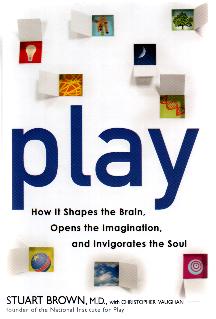
Play: How it Shapes the Brain, Opens the Imagination and Energizes the Soul by Stuart Brown


Rewired by Larry D. Rosen

The Human Factor: Inside the CIA’s Dysfunctional Intelligence Culture by “Ishmael Jones

Coupled with what was leftover from last year, my 2010 summer reading list is set.

Tweaking Cascio’s Futurist Bibliography

Friday, April 30th, 2010

At Fast Company, Jamais Cascio unveiled a short bibliography for the general reader on Futurist thinking.

Futures Thinking: A Bibliography

As you probably picked up from earlier entries in the Futures Thinking series, foresight work is intensely information-based. If you’re going to make grounded projections of future possibilities, you have understand both what has led us to the point we’re at today, and what kinds of issues seem to be shaping up as emerging drivers. A few pieces to trigger some creative thoughts can help, too.

As I suggested in Futures Thinking: Scanning the World, a good deal of the reading you’ll be doing will be in the form of websites and journals. This isn’t surprising; part of the service provided by foresight workers is sensitivity to early warnings of big changes. It will be tempting to focus on science and technology materials, in part because there tends to be an overlap between people interested in futures work and people interested in new tech toys, and in part because the pace and pattern of change is easier to see in science and technology than it is in many other realms. It’s not necessarily more “objective,” but it’s perceived as less ambiguous.

That was the introduction, you can read the rest here. Now on to Cascio’s recommendations:

Practice

These two books are good resources for understanding methodologies of futures work. Schwartz co-founded Global Business Network, and Johansen is a Distinguished Fellow at the Institute for the Future. (Disclosure: I’ve worked with Peter, and currently work with Bob.)

  • Art of the Long View, Peter Schwartz
  • Get There Early, Bob Johansen

History

Foresight is anticipatory history. These three books offer very different perspectives on how to think about the past — which, in turn, help to shape how we should think about the future. Polanyi is a classical theorist, looking at ideas and states; Zinn is a populist, looking at the lives of regular people; Diamond is an ecologist, looking at the intersection of culture and environment. I end up mixing these three approaches in my own work.

  • The Great Transformation, Karl Polanyi
  • A People’s History of the United States, Howard Zinn
  • Collapse, Jared Diamond

Analysis

Easily the largest section of my personal library, I could have made the list of Analysis books ten times longer. The ones I’ve picked here, however, offer for me a set of cogent insights into how we live with the tools we make. The ideal result from reading a book in this category should be an epiphany moment where you can see all sorts of links from the book’s ideas to other books/ideas you’ve encountered. All of these books gave me that kind of moment.

  • Smart Mobs, Howard Rheingold
  • The Death and Life of Great American Cities, Jane Jacobs
  • Everyware, Adam Greenfield
  • Plan B, Lester Brown
  • Radical Evolution, Joel Garreau
  • Brave New War, John Robb
  • No Logo, Naomi Klein

Inspiration

The highest compliment I can give a science fiction book is that it’s “plausibly surreal” — it manages to feel like a relentless extrapolation from today even as it overwhelms with unexpected consequences of that extrapolation. I’ve read each of these are books multiple times, and I still get a giddy feeling of discovery every time.

  • Accelerando, Charlie Stross
  • Transmetropolitan series, Warren Ellis & Darrick Roberts
  • Holy Fire, Bruce Sterling
  • The Bohr Maker, Linda Nagata
  • Rainbows End, Vernor Vinge
  • Red Mars/Green Mars/Blue Mars trilogy, Kim Stanley Robinson

I am not familiar with all of these books. The Art of the Long View is considered to be a classic and I will give a very strong recommendation to Brave New War and Smart Mobs.

What would I add to this list?:

Practice:

Pearl Harbor: Warning and Decision by Roberta Wohlstetter

The Next Two Hundred Years: A Scenario for America and the World by William Morle Brown and Herman Kahn

History:

From Dawn to Decadence: 500 Years of Western Cultural Life 1500 to the Present by Jacques Barzun

A History of Knowledge: Past, Present, and Future by Charles van Doren

Analysis:

Masks of the Universe: Changing Ideas on the Nature of the Cosmos by Edward Robert Harrison

Consilience: The Unity of Knowledge by Edward O. Wilson

Powershift: Knowledge, Wealth, and Violence at the Edge of the 21st Century by Alvin Toffler

I’m not a frequent enough consumer of science fiction to have noteworthy recommendations for “Inspiration”. There are obvious authors who come to mind – Asimov, Dick, Heinlein, Gibson, Clarke – but I’ll leave it to readers here to nominate titles in the comments section.

Thinking With a Fresh Mind

Wednesday, April 21st, 2010

A brief anecdote.

Today, a student came to me with a question that their science instructor could not answer (the curriculum is mostly intro to chem with some classical physics). I am in no way, shape or form, a scientist or even a teacher of science, but the students know I’m interested in many odd things and like to reason through intriguing problems with them. The student asked:

“How can a photon – which has 0 mass – have 0 kinetic energy even though it is moving? If it does have mass, how can a photon go the speed of light?”

Now, I knew that the answer had to be explained via quantum mechanics and was fuzzily certain it was because particles did not behave as particles should in this scenario, but the ability to give a coherent and scientifically accurate explanation that related to the student’s current knowledge base was beyond me. I do not have a good enough grasp of the basics of quantum physics to lead the student to particles and waves through a series of questions. So, after complimenting him on his insightful question, I said I would contact an expert, Dr. Von, and get him a concise, equation-free, answer, which Von helpfully provided.

The point here, however, is not the answer (Newtonian physics is invalid at this scale and momentum is redefined in relativity theory which leads to particle-wave duality, uncertainty and other aspects of quantum mechanics) but the excellence of the student’s thinking that went into the question.

The student knew very little about physics except what was presented in the course – essentially, some laws of Newtonian physics, basic constituent parts of matter, simple atomic models etc. Given that information and having – this part is critical – no prior assumptions, having understood the “rules”, in a few minutes he identified a contradiction or paradox that undermined the authority of an elegantly constructed system of great explanatory power, conceived by the greatest genius to ever walk the Earth.

Not too shabby for a younger American teen-ager. Remember him the next time some loudmouthed fool opines how worthless kids are today or how they learn nothing at school.

Obviously, my student is quite bright, but his reasoning was also not polluted with the preconceptions we all pick up as we gain ever greater depth of mastery of a field. It was fundamentally new to him, so he did not yet have the kind of blind confidence in “the rules that everyone knows to be true” possessed by most adults and nearly all experts. He was still skeptical. Few content domain experts are innovaters for this reason. They are mostly overconfident masters with answers – not makers who create or discover the novel by asking questions. They are not skeptics, they are guardians of received knowledge.

We all need to step back, periodically, from the rush of life and our own pride and try to look at the things we think we know with a fresh mind.

More Mackinlay – On Why the USG Doesn’t “Get” AQ as a “Global Insurgency”

Monday, April 19th, 2010

I continue to be impressed with Dr. John Mackinlay‘s  The Insurgent Archipelago . You might not agree with everything Mackinlay has to say on insurgency or COIN theory but his book is deeply thought-provoking the way The Pentagon’s New Map, Brave New War or The Genius of the Beast are thought-provoking books. As a reader, you highlight. You underline. You scribble praise, condemnation or some relevant factoid in the margins.

This is going to be an influential text.


In Mackinlay’s view, America and the West have failed to adequately understand what and whom they are fighting in the War on Terror. The phenomenon that has eluded them is that alongside older, Maoist iterations of guerrilla warfare, the cutting edge of insurgency has evolved up into a decentralized, networked, partly virtual, Post-Maoism. General staffs, intelligence services, national security officials and diplomats remained hypnotized by the Maoist model that was so frequently aped in the 60’s and 70’s by secular leftists and Third World Marxists in Vietnam, Algeria and subsaharan Africa.

Some excerpts, followed by my analysis, which you are free to disagree with or just put in your own two cents about in the comments section:

Mackinlay writes [p. 164]:

….NATO governments and a majority of their security staff did not recognize post-Maoism as a form of insurgency either. Although they lived in a post-industrial era and directly experienced its social consequences, they dealt with post-9/11 insurgent phenomenon from a Maoist perspective; they neither saw it nor engaged it as a global movement that involved a greater array of dispersed supporters. They also failed to recognize it as an insurgency.

Very true. Even though if the organizational behavior of al Qaida and its affiliated movements had taken place within one nation-state, Cold War era graybeard officials and international law NGO activists of 2001-2004 vintage would have called them a guerilla movement; that al Qaida’s activities took place across many international borders seriously confounded them in an intellectual sense. Obviously, they must be common criminals, no different than junkies who stick-up a 7-11, to be properly mirandized! Call the FBI and have OJ’s dream team ready when we make an arrest! Or Osama is a state-sponsored terrorists of Saddam! No, wait, of Iran!

And so it went, and still goes on to this day as the USG contorts itself into a legal pretzel  in order to never have proper war crimes trials or execute convicted war criminals. Or even admit they are “Islamists” motivated by a reified ideology (Mackinlay’s term “Post-Maoist” may soon come in to vogue at the NSC).

America is like the Gulliver of COIN, bound fast by the cords of politically correct nonsense.

….Because few academics had explained insurgency as a multidisciplinary, as opposed to a narrowly military, process they failed to see how their own populations were vulnerable to insurgent movements, and that when it happened to them it would not look like its classic Maoist antecedent. Countering insurgency required a counterintuitive effort and making this intellectual leap was problematic when military planners had such an idee fixe of insurgency as eternally Maoist form.

I interpret this paragraph as Mackinlay blending the Euro-Anglo-American state of affairs, but it does not apply equally to all, in my view.

Humanities and social science academics are simply not as good at or as intellectually comfortable with true multidisciplinary thinking as are their counterparts in the hard sciences. Nor are the social science faculty particularly friendly, in most universities, toward the US national security and intelligence communities or the Pentagon (though I suspect the situation in 2010 is better than in 2000 or 1990). Nor are American universities oversupplied with military historians or scholars of strategic studies.

Academia, however is not at fault as much as Mackinlay indicates. Even if we had Clausewitz collaborating with Ibn Khaldun and Marshall Mcluhan to write our white papers, the USG interagency process is fundamentally broken and could not execute their recommendations. State is grossly underfunded, institutionally disinclined to turn out FSO’s in the mold of Errol Flynn and is in need of a systemic overhaul. USIA and USAID need to be reborn as heavyweight players. The CIA has problems almost as severe as does State and does not play well with others, including the DNI. There is no “whole of government” approach present that could approximate an “operational jointness”, so presidents increasingly rely on the military as the hammer for all nails ( the military may not do the right thing but at least it does something, as the saying goes).

Mackinlay writes [p. 164-165]

….By 2008 the most up-to-date doctrine was still stuck in expeditionary form, in other words focused on a campaign epicentre that lay in a particular overseas territory and its traditional, or at best modernising, society. The following characteristics that distinguished post-Maoism had not been engaged:

  • The involvement of multiple populations which challenged the concept of a center of gravity
  • Mass communications and connectivity
  • The migration factor
  • The virtual factor
  • The centrality of propaganda of the deed in the insurgent’s concept of operations
  • The bottom-up direction of activist energy
  • Absence of plausible end-state objectives in the insurgent’s manifesto

Mackinlay gets much right here but some things wrong – and what is incorrect is arguably quite important – but as an indictment of the failure of the West to adequately address globalized insurgency, it is spot on in many respects.

First, in regard to Mackinlay’s attack on Clausewitzian theory, I am not persuaded that a “center of gravity” for our enemies does not exist or apply so much as its form is not a particularly convenient one (i.e. -easily targetable) or politically comfortable for our elites to acknowledge.

We could conceive of al Qaida’s CoG being Bin Laden’s inner circle hiding somewhere in Pakistan – probably Rawalpindi – that we do not yet dare to strike. Or we could say that the CoG is al Qaida’s “plausible promise” that the “far enemy” of radical Islamism, the US, can be brought down, as was the USSR, by being bled to death by drawing America into endless and expensive wars. Or that the CoG is al Qaida’s peculair, Qutbist-inspired, takfiri, revolutionary Islamist ideology. Our elites recoil from openly confronting any of those possible scenarios but that does not mean that a CoG is not present, only that we lack the will to attack their CoG head-on.

US COIN doctrine is expeditionary – essentially internal COIN for America ended with the Compromise of 1877 and the end of three centuries of “Indian Wars”. Political correctness, not doctrinal rigidity, precludes recognizing Islamist lone wolf terrorists like Maj. Hasan as anything other than mentally ill spree killers, no different from the school shooters at Columbine or Andrew Cunanan. The USG would not recognize an insurgency in the states as an insurgency even if it had flags, a government-in-exile, an air force and armored divisions. Even the capture of verified and admitted members of al Qaida inside the United States, who are covered by a properly authorized AUMF, causes an epidemic of pants-wetting among the elite, if we proceed to try them with military tribunals or commissions.

We do not have a political elite as a national leadership who are prepared to entertain the full strategic ramifications of the existence of a “globalized insurgency”. They do not ignore it completely – the COIN doctrine articulated best by David Kilcullen and John Nagl is to de-fang al Qaida as a strategic threat by isolating it from the “Accidental Guerrilla” groups whose Islamist concerns are parochial and national in character rather than global. So, al Qaida is seen by the American national security community as a de facto globalized insurgency with a reach that extends everywhere – except of course inside the United States. Unless we intercept foreign Islamist terrorists crossing the border or boarding a plane, any violent actions committed here resembling terrorism are purely a law enforcement issue and must be wholly unrelated to Islamist extremism.

It’s a bizarrely illogical strategic worldview – and I fear its’ ostrich-like mentality has already spread from War on Terror policy to matters related to the empirically demonstrable, but continuously downplayed, spillover effects of Mexico’s growing narco-insurgency, where high officials prohibit unvarnished “truth telling” from practitioners in the field from reaching the ears of key decision-makers. It’s no way to run a war – or a country – unless the intent is to lose the former by systematically crippling the ability to respond of the latter.

Mackinlay’s characteristics of “Post-Maoism” strike directly and the political and methodological nerve clusters of a Western elite whose power and status are invested in hierarchical, bureaucratic, institutional structures that are defended from urgent demands to reform, in part, by their ideology of political correctness.

Creativity in the IC – Or the Lack of It

Sunday, March 28th, 2010

A great article in World Politics Review by Josh Kerbel, a 14-year veteran of the U.S. Intelligence Community ( Hat tip to Col. David Maxwell)

For the Intelligence Community, Creativity is the New Secret

It’s no secret that the increasing complexity of the international system — and in particular, its growing interconnectedness, integration, and interdependence — is eroding the fundamental business models of an ever-growing range of industries. Nowhere is this more evident than in the information industries, such as journalism, broadcasting, publishing, music and film, among others. More than a few entities have been swept to the brink of, or in some cases over, the precipice of irrelevance. And every information industry, it seems, is in some peril.

The U.S. intelligence community’s traditional model is similarly threatened by these transformations, but like so many cia.jpgother besieged industries, the IC is hesitant to deviate from it. In general terms, the IC’s model is a secret “collection-centric” one that:

– prizes classified data, with classification often directly correlated to value and significance;
– is driven by data availability, while analytical requirements remain secondary;
– is context-minimal, with analysis staying close to the collected data and in narrow account “lanes”;
– is current-oriented, since there are no collectable facts about the future;
– is warning-focused, emphasizing alarm-ringing;
– is product-centered, measuring success relative to the “finished intelligence” product provided to policymakers, rather than its utility or service.

This model ends up being highly “reductionist,” since secret collection leads to classification, compartmentalization and, inevitably, reduced distribution. Such a system, in which everything is constantly subdivided, was designed for the “complicated” — but not really “complex” — strategic environment of the Cold War. In that more linear environment, it was possible to know exactly where to look — namely, the USSR; access was severely restricted, making secret collection vital; the context of hostile intent and opposing alliances was well-understood; and the benefits of being forewarned, especially of imminent military action, was paramount.

Today’s complex strategic environment is vastly different. Now, there is no single focal point, as a threat or opportunity can emerge from almost anywhere; access is largely unrestricted, since the world is wide-open and information-rich; and context is much more ambiguous, because intent and relationships are fluid. In this more dynamic, non-linear strategic environment, reductionist approaches are, by themselves, a veritable recipe for systemic (i.e., strategic) surprise.

In practical terms, this means that it is no longer sufficient to just reactively collect data on how certain parts of the international system are acting in order to extrapolate discrete predictions. Rather, it’s crucial that such reductionist approaches be complemented by more “synthetic” approaches that proactively think about how the various parts of the larger system could interact, and consider how the synthesized range of possible threats and opportunities might be respectively averted or fostered. In other words, it is no longer enough to just monitor already identified issues. It is also necessary to envision potentially emergent ones. In short, it is time for the IC to use its imagination.

Read the rest here.

Comments, in no particular order of importance:
 
First, the underlying root problem is “political”. The IC is “collection-centric” primarily because the key “customers” for IC products have an implicit expectation of good intel as a higher level analytical journalism, just salted with some real-time “secrets” outside normal public purview. And some of them – George Schultz when he was SECSTATE is an example – want to be their own analyst, and are quick to complain about speculative,”edgy” analysis that clashes with their preconceptions. So IC senior managers are inclined to give the customer what they demand – current information which has a short shelf-life in terms of value. Educate the intel-consumer class of what the IC might be able to do given different tasks and they might start asking that new tasks be done.
 
Secondly, if the IC employed more programs that involved an investment in long-term “clandestinity” – it would both collect information of strategic, long-term value and offer the US opportunities to shape the responses of others through established networks of agents of influence. This is where imagination, speculation and synthesis would have greater play because of the need to create and seize opportunities rather than placing a premium on mitigating risk and avoiding failure.
 
The problem with analytical-reductionist culture in hierarchical institutions ( anywhere, not just the IC) runs deeper than a top-down, enforced, groupthink. Perceptive members of the org, even when compelled to parrot the party line “officially”, will often mock it privately and exchange more authentic critiques informally. The real problem is the extent to which this risk-averse, paralyzing, culture is psychologically  internalized by individual analysts to the point of creating lacunae. As individuals rise in the org they carry their lacunae with them and begin actively imparting them authoritatively upon their subordinates.
 
Ideally, a quality liberal education would be imparting a reflexive skepticism, a tolerance for uncertainty and a greater meta-cognitive self-awareness that would check the excessive certainty generated by an excessive reliance on the methodology of analytical-reductionism. Unfortunately, the emphasis upon academic specialization has been pushed down so hard in undergraduate and even high quality secondary public school education ( AP courses are the worst offenders) that generating good, insightful, questions is a cognitive skill that has been abandoned in favor of deriving “right answers” using “approved methods”.
 
Scenario-building
is an  effective tool for breaking  analytical-reductionist  frameworks and freeing up our ability to synthesize and construct solutions. However, to be useful, scenarios require at least an internal logic or realism even if they represent improbable “blue sky” or “black swan” outcomes and they require more cognitively diverse inputs ( from “outsiders”, “amateurs” and “heretics”) to challenge what data the received culture considers significant.


Switch to our mobile site