zenpundit.com » authors

Archive for the ‘authors’ Category

Senator’s Son

Wednesday, February 17th, 2010
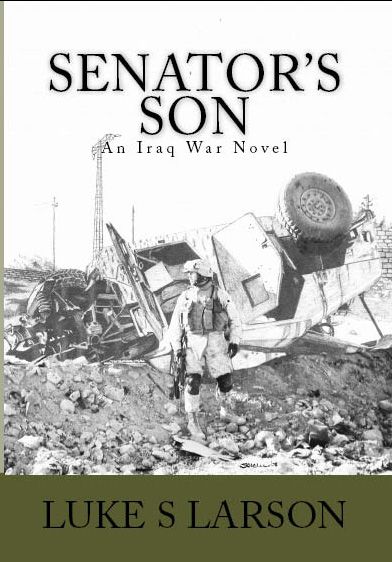
larson.jpg

Senator’s Son: An Iraq War Novel  by Luke S. Larson

Just received a review copy of new author Luke Larson’s novel Senator’s Son. I can probably count on the fingers of one hand the number of works of fiction that I have reviewed at ZP, but two things caught my attention about Senator’s Son:

First, the novel is historical realism with a theme of COIN. Secondly, the author Luke Larson is a decorated Marine officer with two tours in Iraq under his belt. Flipping the pages reveals a gritty, sometimes humorous, staccato writing style and military/strategy/policy issues that are discussed here, or at SWJ or Abu Muqawama come to life through the eyes of still learning practitioners. I’m looking forward to reading Senator’s Son and reviewing it in full in late February or early March ( need to finish Carr’s Inside Cyber Warfare first).

Setting aside the book itself, something else occurred to me – that we have reached the point where the war is now appearing not as news, but as literature; Iraq and Afghanistan are proving to be culturally transformative wars for America in ways that the Gulf War or the Korean War were not.

If you consider WWI, the Great War represented an existential crisis for Western Civilization that found expression in the Lost Generation and, in Germany, the polar opposite novels All Quiet on the Western Front and Storm of Steel as well as Hemingway’s A Farewell to ArmsThe Spanish Civil War electrified international opinion, foreshadowing as it did the ideological death-match of the 20th century, and yielded Orwell’s Homage to Catalonia. WWII and the Vietnam War have generated an ocean of histories down to the minutest detail, as well as their share of novels, short stories and movies. It is noteworthy, that most of the time, literature and history followed the conclusion of peace, be it in victory or defeat.

In our time, the books on the war in Iraq, or Afghanistan or against terrorism are arriving while the conflict is still in full throttle, in time to shape the perceptions of policymakers and the public to an unprecedented extent. Something is happening out there, an inchoate need for answers or reassurance that writers are attempting to answer. Most of these books so far have been non-fiction, journalistic instant histories salted with examples of policy analysis and war memoirs.

Senator’s Son marks a new turn toward a wave of fiction addressing the crucible of America’s current wars. Literature can shape a nation’s psyche more profoundly than even the most soberly researched work of history.

Daemon

Wednesday, February 3rd, 2010

Daemon by Daniel Suarez

I was not entirely happy with the amount of book reading that I accomplished in 2009 and this year I am going to shoot for both a larger number of books as well as more books that are fiction or relate to science. In this instance, both.

I picked up Daemon because of the exceptionally high praise given to Suarez’s new book, Freedom
TM
by John Robb and Shlok Vaidya (Freedom is the sequel to Daemon and Robb has a blurb on the book jacket). They were right. Suarez is good. As in William Gibson good. Orson Scott Card good. Philip K. Dick good. You get the idea.

Book Review: The Forty Years War

Tuesday, February 2nd, 2010

The Forty Years War: The Rise and Fall of the Neocons, from Nixon to Obama by Len Colodny and Tom Shachtman

I mentioned this book previously, expressing some serious skepticism of the authors’ core argument of a struggle between President Richard Nixon and the Neocons. Nevertheless, I ordered a copy and found The Forty Years War to be an absorbing read; for those with an interest in the administration of Richard Nixon, the history of the late Cold War period or the politics of American foreign policy, this book is a must read. I have a good working knowledge from my own research of primary and secondary source material related to Richard Nixon and his battle to re-shape American foreign policy and national strategy; yet I can say that and Colodny and Shachtman, working with newly transcribed archival material, demonstrated that we still have much to learn about the inner workings of the Nixon administration.

The authors have three important themes in The Forty Years War:

1. The intellectual legacy of militarist- moral idealism of Fritz G.A. Kraemer, the German-born Defense Department geopolitical theorist who was a mentor, adviser or ally to a glittering constellation of policy makers including Henry Kissinger, Alexander Haig, James Schlesinger, Fred Ikle, Andrew Marshall, Paul Wolfowitz, Donald Rumsfeld and others. Shachtman and Colodny call Kraemer:

“….the unacknowledged godfather of the George W. Bush administration’s ways of relating the United States to the rest of the world – more so than the philosophies of the university of Chicago’s Leo Strauss or those Trotskyites turned conservatives who founded the neocon movement”

2. That there has been a “forty years war” for the control over U.S. foreign policy not between Left and Right or Hawks and Doves but between foreign policy “Pragmatists” in the mold of Richard Nixon and “Neocons” or more broadly (and accurately in my view), “Hardliners” adhering to the rigid moralism and supreme confidence in military supremacy of Fritz Kraemer.

3. That Watergate, contrary to the orthodox historiography (argued by historians like Stanley I. Kutler and Robert Dallek), was exploited and aggravated by Kraemerites and proto-Neocons, especially General Al Haig, specifically to bring down Richard Nixon in an attempt to smash detente and institute more aggressive U.S. posture in the Cold War. Haig emerges as a central villain in the Watergate conspiracy in The Forty Years War and Nixon’s ability to inspire disloyalty in his closest aides is breathtaking.

While illuminating and deeply provocative, The Forty Years War is a quirky book, almost two different books with the first half devoted to the Nixon era and the second half sailing from Gerald Ford to Barack Obama. In a sense, this is unavoidable because it is the Nixon administration docs that are being rapidly declassified and subsequent administrations will not be releasing similar material for years or decades. Equal depth of treatment for every administration would also have swelled the number of pages to a staggeringly unmanageable size for authors and readers alike.

I am also not comfortable with the authors’ casual use of the label “Neocon” to describe a range of policy makers on the right, some of whom are not at all neoconservatives in a tight or ideological sense of the term. Toward the end of The Forty Years War, Colodny and Shachtman draw more nuanced distinctions that I think, is a more precise rendering of the positions of various figures in Republican administrations or Congress.

The Forty Years War is a book that deserves to have a much higher public profile as Colodny and Shachtman are marshalling new evidence to challenge conventional interpretations of late Cold War political history and foreign policy.

Strongly recommended.

Books For a Near Future Review

Thursday, January 21st, 2010

Complicit: How Greed and Collusion Made the Credit Crisis Unstoppable by Mark Gilbert

Inside Cyber Warfare: Mapping the Cyber Underworld by Jeffrey Carr

Received courtesy review copies of two books that will serve to “stretch” my knowledge base and increase my cognitive map.

Mark Gilbert is a financial columnist and bureau chief for Bloomberg News in London and he has written a hard hitting deconstruction of the great credit collapse and crisis bail-out of 2008-2009. Gilbert is telling a story of breathtaking risk assumption, regulatory capture, academic hubris, central bankers as naked emperors and unrepentant banksters who have learned nothing and forgotten nothing from the crisis. My personal background in credit issues is rooted solidly in the dustily agrarian economic history of the 19th century and the painful transition from yeoman “book debt” to gold standard dollars, so I look forward to broadening my understanding of modern financial systems from reading Complicit.
I will probably review Complicit in a cross-blog conjunction with Lexington Green, who also has a copy in his possession.

Jeffrey Carr is the CEO of GreyLogic and a researcher, presenter and consultant on issues related to cybersecurity, hacking, cyberterrorism and asymmetric conflicts in virtual domains. Carr offers a cohesive and compact look at the major problems and players in the uncertain crossroads of national security and cyberspace. Non-geeks (like myself) will appreciate Carr’s focus in Inside Cyber Warfare on the connection to the worlds of intelligence, law enforcement, international law and military operations and doctrine. As an added bonus, the foreword is by Lewis Shepherd, another blogfriend and the former Senior Technology Officer of the DIA.

Originally, I had wanted to review Inside Cyber Warfare before last Christmas, so now that I have the book, I will move it to the top of my titanic reading pile.

Adding to the Towering Antilibrary Pile

Thursday, December 31st, 2009

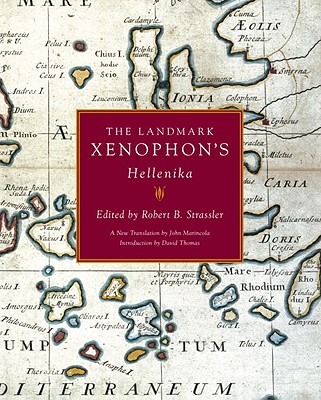
The Landmark Xenophon’s Hellenika by Xenophon. Edited by Robert Strassler

Strassler’s “Landmark” series are gems. After enjoying this year’s Xenophon Roundtable at Chicago Boyz, I was glad to see Hellenika newly released. A little pricey though in hardcover.

I am adding more books to my Antilibrary, keeping in the spirit of  Nassim Nicholas Taleb, from his book The Black Swan: The Impact of the Highly Improbable:

….The writer Umberto Eco belongs to that small class of scholars who are encyclopedic, insightful, and nondull. he is the owner of a large personal library ( containing thirty thousand books), and separates vistors into two categories: those who react with ‘Wow! Signore professore dottore Eco, what a library you have! How many of these books have you read?’ and others – a very small minority- who get the point that a private library is not an ego boosting appendage but a research tool. Read books are far less valuable than unread ones. The library should contain as much of what you do not know as your financial means, mortgage rates, and the currently tight real estate market allow you to put there. You wil accumulate more knowledge and more books as you grow older, and the growing number of unread books on the shelves will look at you menacingly. Indeed, the more you know, the larger the rows of unread books. Let us call the collection of unread books an antilibrary.

While the real estate markets are no longer “tight”, the substance still applies. Here’s what else I just picked up:


After the Ice: A Global Human History 20,000-5000 BC  by Steven Mithen

Panzer Leader by General Heinz Guderian

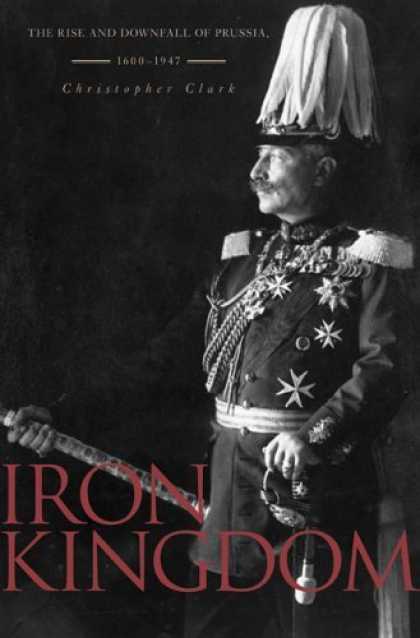
Iron Kingdom: The Rise and Downfall of Prussia, 1600-1947 by Christopher Clark

Strategy by B.H. Liddell Hart

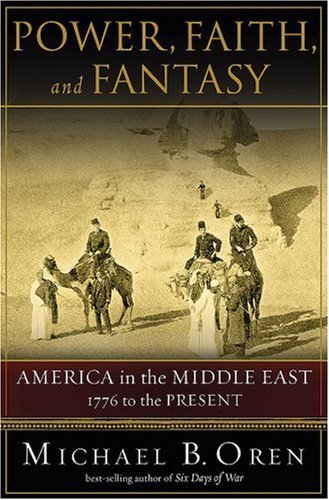
Power, Faith, and Fantasy: America in the Middle East, 1776 to the Present by Michael Oren

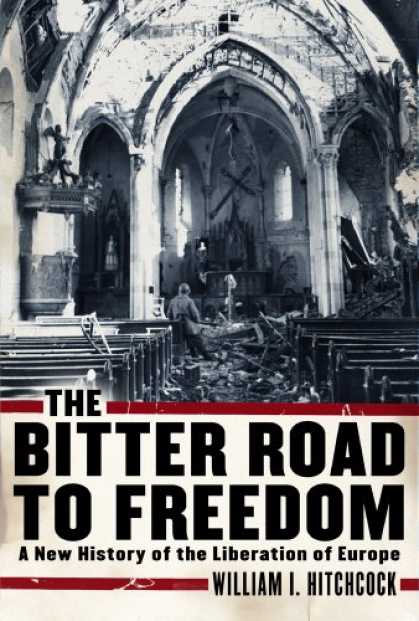
The Bitter Road to Freedom: A New History of the Liberation of Europe by Wiliam Hitchcock

This last was an Xmas gift from my scientific amigo, Dr. Von


Switch to our mobile site