zenpundit.com » government

Archive for the ‘government’ Category

More Commentary on COIN is Dead

Friday, November 25th, 2011

SWJ Blog – COIN is Alive: Know When to Use it!

In his opinion piece, COIN is Dead:  U.S. Army must put Strategy Over Tactics published November 22 in World Politics Review, Colonel Gian Gentile appears to base his argument on the premise that COIN is not a strategy, but rather a collection of methods and tactics. Given his extensive combat experience and his impressive academic accomplishments, it is clear why his analyses of recent operations carry significant weight with leaders at all levels of our Army. However, I am unconvinced that his desire to reduce COIN from doctrine to a collection of methods and tactics is prudent at a time when we appear to be on the cusp of a scientific understanding of what fuels violent group behavior and the establishment of a strategic framework to determine when and where COIN may be best applied.

The scientific approach to the study of war has resided in the backwaters of military theory since the years immediately following the First World War. However, recent advances in evolutionary biology led by Harvard sociobiologist E.O. Wilson are providing insights to what generates warlike behavior within, between, and among groups of the social species, including our species Homo sapiens. Today, evolutionary behavior can be rudimentarily characterized by adaptations that are considered either beneficial toward the individual and their kin, or to a larger group or even a species….

Rethinking Security –COIN-Ish Thoughts

….First, it is a bit too soon for us to hail or mourn the death of COIN. What this represents is the end of COIN as practiced and theorized by elements within the Army and Marine Corps from 2006-2010, just as the Kennedy-era idea of counterinsurgency within elements of the US defense establishment died with Vietnam. The United States has faced insurgencies, terrorists, armed rebellions, guerrillas, partisans, and irregular raiding forces since the early days of colonization. It will continue to do so in the near future as long as American allies, clients, and proxies face irregular threats, although the shape of the response will vary.

Second, COIN, for all of the heat and noise about it, is still rather poorly understood in Iraq and Afghanistan. So much of the debate is weighted down with external baggage, mainly because it was never entirely about Iraq or Afghanistan. Rather, the COIN debate was often a proxy for many different political, professional, interdepartmental, and other battles within the United States political and defense establishments. Ollivant’s paper, and newer research highlights significant uncertainty to cause and effect in both sides of the COIN debate that will likely not be definitely settled soon.

Colin Clark (AOL Defense) –U.S. Military To Scrap COIN; Focus on Pacific, Says Vice Chairman

Omaha: The United States, which rushed to replace and rebuild its ability to wage counter insurgency warfare over the last decade, must plan for a new future in the Pacific and leave COIN behind.

“We are not likely to have as our next fight a counterinsurgency,” he said. While America has been teaching its troops Arabic and other regional languages, training them how to win friends and influence people at the village and provincial levels, “the world has changed,” Winnefeld said. America’s enemies and competitors are “coming up with new asymmetric advantages. They’ve been studying us closely…,” he said. So, “we need to avoid the temptation to look in our rear view mirror.”

Our future conflicts, the vice chairman said, will probably occur “in a far more technically challenging environment.” As he described it, the fight will be much closer to a conventional military conflict, characterized by “intense electronic warfighting,” swarm attacks and cyberwar.

All this is occurring as 20th century’s warfare, characterized by state clashes over “nice bright Westphalian borders” fades to black. Now, “borders are simply fading away,” with cyber best exemplifying this trend. “The border between near and far…has been obliterated by the Internet…,” the admiral said. The border between public and private is fading, as is the divide between companies and countries, with “some companies acting as countries” and some individuals being used by countries as “proxies.”

It is extremely difficult to free military bureaucracies, which are budget-centric, turf-conscious and institutionally track career incentives to the former, from the tyranny of either-or thinking. Bureaucracies as complex organizations are sustained and steered culturally by cherishing and reinforcing simple narratives.

A very few astute individual leaders can shape changes in the organization’s outlook while counterintuitively using the reforms a career accelerant. CIA Director General David Petraeus is both widely admired and bitterly disparaged for having pulled off this rare neat trick with re-establishing COIN within the US Army while rising to four stars, theater and combatant command and Washington “player” status.

Normally, institutional change-agents are like Colonel John Boyd, mavericks, who opt to do something important at the career cost of being somebody important. They try to create something new, sometimes do, but metaphorically perish in the process.

Most members of any organization, civilian or military, simply go with the flow and color within the lines they are given.
The Forum and The Tower, a review

Sunday, November 20th, 2011

[by J. Scott Shipman]

the-forum-and-the-tower.jpeg

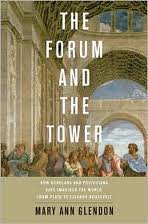
The Forum and The Tower by Mary Ann Glendon

“The relationship between politics and the academy has been marked by mutual fascination and wariness since the time of Plato.”

The first sentence on the flap of the dust jacket of this very good and informative small book. Professor Glendon, who is the Learned Hand Professor of Law at Harvard Law school, set out to write a book for her students that would answer ageless questions such as:

“Is politics such a dirty business, or are conditions so unfavorable, that couldn’t make a difference? What kinds of compromises can one make for the sake of getting and keeping a position from which one might be able to have influence on the course of events? What kinds of compromises can one make for the sake of achieving a higher political goal? When does prudent accommodation become pandering? When should one speak truth to power no matter what the risk, and when is it acceptable, as Burke put it, to speak the truth with measure that one may speak it longer? When does one reach the point at which one concludes, as Plato finally did, that circumstances are so unfavorable that only the reasonable course of action is to “keep quiet and offer up prayers for one’s own welfare and for that of one’s country”?”

Professor Glendon answers these questions and more through brief examinations of the lives and works of some of history’s most important figures:

Plato

Cicero

Justinian, Tribonian, and Irnerius

Machiavelli

Thomas Hobbs and Edward Coke

John Locke

Jean-Jacques Rousseau

Edmund Burke

Tocqueville

Max Weber

Oliver Wendell Holmes

Eleanor Roosevelt and Charles Malik

All in all, I believe Professor Glendon has provided a uniquely valuable book to help her students and other readers to answers those questions. In short but focused chapters of about 20 pages each, she provides mini-biographies of the subjects above and how they answered the some of the questions both in their lives and in their philosophy. Some of her subjects were thinkers lacking the abilities for the public square, Plato, for instance, but were enormously influential just the same. Rare were those like Cicero and Burke who were equally comfortable in the political arena or the academy.

My favorite chapters were on Plato, Cicero, Machiavelli, and Burke—mostly because I’ve read a respectable amount of their work. That said, I have not read Plato’s The Laws—and Professor Glendon suggests it is much better than The Republic—which I have read and did not much enjoy. Not surprisingly, The Laws will be on my list for this winter.

The inclusion of Eleanor Roosevelt and Charles Malik was something of a surprise, but Professor Glendon is weaving a sub-story through each chapter and illustrating how Roosevelt and Malik’s work on the Universal Declaration of Human Rights was something of culmination and extension of over 2,000 years of thinking and political action—not in the context of human progress towards a utopia of sorts, which she wisely rejects,  but rather a reflection the common threads of political thought throughout history.

While this is not criticism, I would have liked to have seen a chapter on John Adams and Thomas Jefferson, and a chapter on Karl Marx, whom she frequently mentions.

This is a book that is approachable and readable, and in our tumultuous domestic and global political climate, important.

She closes with this illuminating sentence:

“If one message emerges from the stories collected here, it is that just because one does not see the results of one’s best efforts in one’s own lifetime does not mean those efforts were in vain.”

Professor Glendon is to be commended for a job “well done!”

The book comes with my highest recommendation and may be the best book I’ve read this calendar year. Add this book to your must read list.

.
Referenced works you may find of interest (some of these works are out of print and expensive—for simplicity I’ve used Amazon links): 

The Laws of Plato, translated by Thomas Pangle

Cicero: The Life and Times of Rome’s Greatest Politician, by Anthony Everitt

Cicero, A Portrait, by Elizabeth Rawson (Glendon praised this book.)

A Panorama of the World’s Legal Systems, John Henry Wigmore

The Life of Nicolo Machiavelli, Roberto Ridolfi

The Prince, translated by Harvy Mansfield

Machiavelli, by Quentin Skinner

The Lion and the Throne, Catherine Drinker Bowen

The Spirit of Modern Republicanism, by Thomas Pangle

Statesmanship and Party Government, by Harvy Mansfield

The Great Melody, A Thematic biography of Edmund Burke, by Conor Cruise O’Brien (I read this wonderful book in 1992 when it was released: highly recommended.)

Hoover on Charles Hill and Hill on Grand Strategy

Tuesday, November 8th, 2011

Lexington Green sent this extended profile/interview with Charles Hill by Emily Esfahani Smith. The tone of the article is somewhat hagiographic because Hill is a fellow at the Hoover Institution and….well…. this is in Hoover’s journal 😉  If you can get past that, it is a worthwhile read about a deep thinker and scholar of grand strategy.

Profile in Strategy: Charles Hill

….In diplomacy, literature is relied upon because, as he writes in “Grand Strategies,” “The international world of states and their modern system is a literary realm; it is where the greatest issues of the human condition are played out.” That is why Alexander the Great carried the Iliad with him on his conquests, and why Queen Elizabeth studied Cicero in the evenings. It is why Abraham Lincoln read, and was profoundly influenced by, Walt Whitman’s “Leaves of Grass,” and why Paul Nitze paged through Shakespeare on his flights to Moscow as America’s chief arms negotiator.

Hill, for his part, has always kept the “History of the Peloponnesian War” in his mind as the “manual of statecraft.”

Why Thucydides? He explains: “When you read the Peloponnesian War, you realize that Thucydides is moving from one set of problems to another, and you have to deal with them all-rhetorical problems, material problems, and moral problems. That’s the closest literary work related to statecraft that I can imagine.”

To understand world order-and those who manipulate it for their own aims-requires a literary education, the kind students were once able to find at such places as Yale, where Hill now teaches the humanities to freshman undergraduates.

This is a departure from his days at the State Department, where he helped orchestrate monumental events in the grand strategy of the Cold War. One of his first memories as a diplomat was of being seated behind Adlai Stevenson at the UN during the Cuban missile crisis, characteristically scribbling notes-in grand strategy, no detail can be lost. Later, Hill was a “China watcher” during that country’s Cultural Revolution. And when the Iran-Contra scandal nearly brought down the Reagan administration, Hill’s meticulous notes played an influential role in the Congressional investigations by shedding light on the chronology of then-Secretary of State George Shultz’s knowledge of the arms sale. Over the years, Hill has also served as confidante to Secretaries of State. For Henry Kissinger, Hill was speechwriter and policy analyst. For Shultz, Hill was an executive aide and trusted ally.

These days, Hill embodies grand strategy in a different way. After a long and distinguished career as a diplomat, Hill is now a heralded figure in academia. Beyond his appointment as a research fellow at the Hoover Institution, he is the Brady-Johnson Distinguished Fellow in Grand Strategy, a Senior Lecturer in Humanities, and a Senior Lecturer in International Studies at Yale. Alongside historians John Gaddis and John Kennedy [ sic] , he teaches one of Yale’s most legendary courses to a select group of elite students-future statesmen-the Grand Strategies course.

And yet, Hill tells me stoically, “There is no grand strategy in our time.” Turning his attention to the turmoil in the Middle East, Hill provides an example. “America’s lack of strategic outlook responding to the Arab Spring is really distressing.”

Hill retains the diplomat’s gift for understatement.

Read the rest here.

ADDENDUM:

Book Review: Grand Strategies by Charles Hill 

Trial of a Thousand Years, by Charles Hill-a review

Major General Fuller is Right

Saturday, November 5th, 2011

Major General Peter Fuller lost it yesterday and committed an unpardonable political sin – spontaneously telling the truth to reporters:

US general fired from Afghan training job

….Referring to Karzai’s recent assertion that Afghanistan would side with Pakistan if Pakistan got into a war with the U.S., Fuller was quoted as calling the comments “erratic,” adding, “Why don’t you just poke me in the eye with a needle! You’ve got to be kidding me . I’m sorry, we just gave you $11.6 billion and now you’re telling me, I don’t really care?”

Fuller said the Afghans have at times made unreasonable requests for U.S. assistance.

“You can teach a man how to fish, or you can give them a fish,” Fuller was quoted as saying. “We’re giving them fish while they’re learning, and they want more fish! (They say,) ‘I like swordfish, how come you’re giving me cod?’ Guess what? Cod’s on the menu today.”

Fuller also said the Afghans don’t understand the extent to which the U.S. is in economic distress or the “sacrifices that America is making to provide for their security.” He said the Afghans are “isolated from reality.”

Allen said the “unfortunate comments” don’t represent the solid U.S. relationship with the Afghan government….

 The relationship of the Karzai’s regime to the United States is a lot like that of a 32 year-old drug-addict living in his parent’s basement. The parents keep muddling through life, hoping their son will suddenly wake up one morning and decide to clean up his act, get a job, move out, get married and have 2.5 kids, a dog and a house with a white picket fence. The parents cling to that hope and cherish it but the reality is that the son staggers out of bed every day, sometime in the afternoon, only to go find their dealer, score some heroin and get high.

Karzai’s egime has less chance of governing Afghanistan effectively than the average heroin addict does of kicking their habit. And the reason is a) far and away Hamid Karzai and, secondarily b) Most Afghans fear a strong central government. The US has managed to do two things at the strategic level that a nation should never do in fighting a counterinsurgency war – support a government  that will not take sensible measures even in the interest of it’s own survival and permit insurgents a sanctuary and third country sponsorship.

General Fuller’s career is now effectively over. Too bad we cannot say the same for Mr. Karzai.

Beware of Greeks Spurning Gifts…..

Wednesday, November 2nd, 2011


This has some possible geopolitical implications:

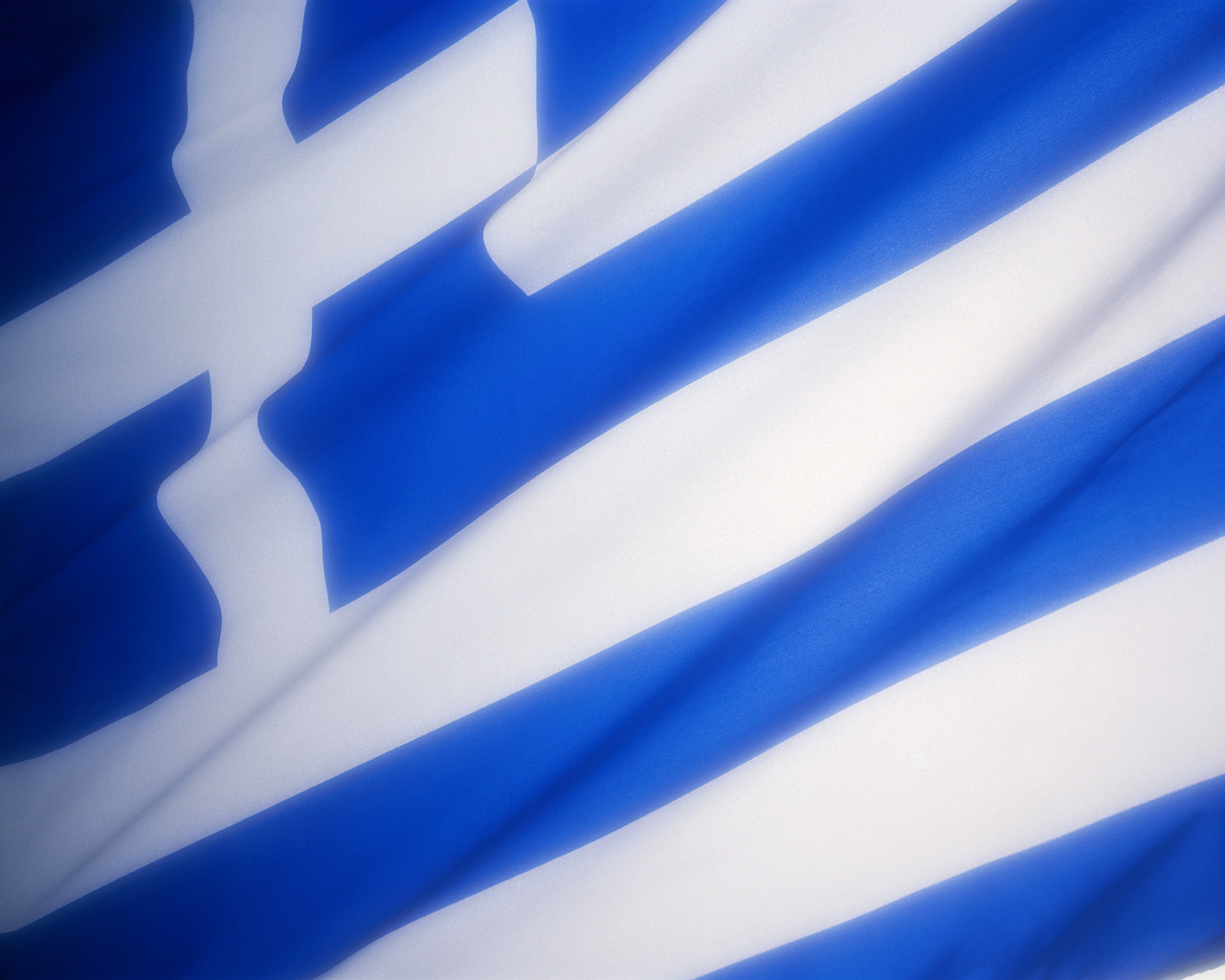
Greek government in chaos with debt deal in doubt

ATHENS, Greece (AP) – The Greek government teetered and stock markets around the world plummeted Tuesday after a hard-won European plan to save the Greek economy was suddenly thrown into doubt by the prospect of a public vote.

One day after Prime Minister George Papandreou stunned Europe by calling for a referendum, the ripples reached from Athens, where some of his own lawmakers rebelled against him, to Wall Street, where the Dow Jones industrial average plunged almost 300 points.

Papandreou convened his ministers Tuesday night, and a spokesman said the prime minister was sticking to his decision to hold the referendum, which would be the first since Greeks voted to abolish the monarchy in 1974. Papandreou has also called a vote of confidence in his government, to be held midnight Friday.

“The government is not falling,” said Angelos Tolkas, a deputy government spokesman.

….A Greek rejection of the second rescue package could cause bank failures in Europe and perhaps a new recession in Europe, the market for 20 percent of American exports. It could also cause Greece to leave the alliance of 17 nations that use the euro.

European leaders made no secret of their displeasure.

“This announcement surprised all of Europe,” said a clearly annoyed French President Nicolas Sarkozy, who has been scrambling to save face for Europe before he hosts leaders of the Group of 20 major world economies later this week.

“Giving the people a say is always legitimate, but the solidarity of all countries of the eurozone cannot work unless each one consents to the necessary efforts,” he said.

French lawmaker Christian Estrosi was even more direct. He told France-Info radio that the move was “totally irresponsible” and reflected “a wind of panic” blowing on Papandreou and his party.

“I want to tell the Greek government that when you are in a situation of crisis, and others want to help you, it is insulting to try to save your skin instead of assuming your responsibilities,” Estrosi said.

Sarkozy and German Chancellor Angela Merkel, who have been at the forefront of Europe’s efforts to contain national debt, talked by phone and agreed to convene emergency talks Wednesday in Cannes, France. Papandreou will also attend.

Merkel also spoke by telephone Tuesday with Papandreou, his office said.

The response was brutal in the international financial markets, especially in Europe. Greece’s general price index plunged to close down 6.92 percent, while in Germany the Dax index, the major stock market average, lost 5 percent – the equivalent of about 600 points on the Dow.

The French stock market closed down 5.4 percent, the Italian 6.7 percent and London 2.2 percent.

“Talk about your all-time bonehead moves,” said Benjamin Reitzes, an analyst at BMO Capital Markets….

While it is likely that the EU will muddle through this latest Greek crisis, I have to wonder if the EU will exist at all in five years? Or perhaps as a rump Northwest European confederation? This will not be the last debt crisis.

Our unlamented and departed Soviet adversaries used to talk about what they called “the contradictions of capitalism”. In the current crisis we are seeing the contradictions of technocratic governance as practiced by European elites. It seems that lacking the political ability to coerce Southern member states into genuinely accepting austerity programs, or alternatively spur their less developed economies to higher growth rates, the EU structure is both the raison d’etre and the obstacle to a solution.

An essentially undemocratic elite project, the EU is stymied by the residual democratic capacity of national citizenry to resist. Ordinary Greeks are not inclined to accept financial castor oil spooned by foreigners to please the international markets and I suspect the tolerance of German taxpayers for footing more than their share of the EU bills is wearing dangerously thin.

Either power will increasingly flow to the EU nations still writing the checks, making the EU even more unrepresentative, but more economically rational in political decision-making, or there will be a rush for the exit door.

ADDENDUM:

Greek Prime Minister abruptly sacks military chiefs


Switch to our mobile site