zenpundit.com » 9/11

Archive for the ‘9/11’ Category

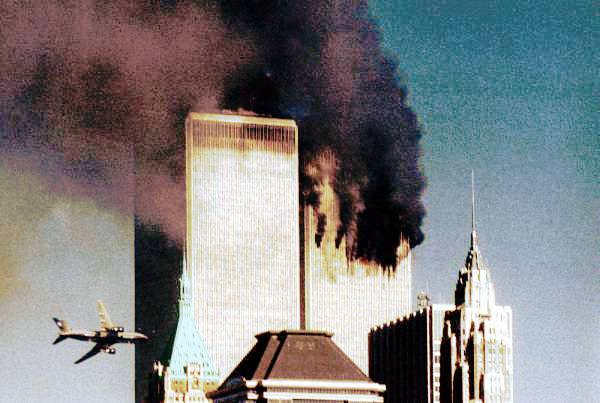
In Memoriam 9/11

Tuesday, September 11th, 2012

“It’s getting bad, Dad—A stewardess was stabbed—They seem to have knives and Mace—They said they have a bomb—It’s getting very bad on the plane—Passengers are throwing up and getting sick—The plane is making jerky movements—I don’t think the pilot is flying the plane—I think we are going down—I think they intend to go to Chicago or someplace and fly into a building—Don’t worry, Dad— If it happens, it’ll be very fast—My God, my God……”

The last words of Peter Hanson, passenger on United Flight 175, spoken to his father Lee Hanson, on his cell phone, 9:03 am, Septermber 11, 2001.

The Twilight War—a review

Monday, July 23rd, 2012

[by J. Scott Shipman]

The Twilight War, The Secret History of America’s Thirty-year Conflict with Iran, by David Crist

When President Obama made a heartfelt opening, a smug Iranian leadership viewed it as a ruse or the gesture of a weak leader. Iran spurned him. Obama fell back on sanctions and CENTCOM; Iran fell back into its comfortable bed of terrorism and warmongering. Soon it may no longer be twilight; the light is dimming, and night may well be approaching at long last. [emphasis added]

Thus concludes senior government historian David Crist’s The Twilight War, and be assured Crist’s language is not hyperbole. Crist masterfully details the tumult of U.S.-Iranian relations from the Carter administration to present day. Using recently released and unclassified archived data from principals directly involved in shaping and making American foreign policy, Crist provides the reader an up-front view of “how the sausage is made;” and, as with sausage, the view often isn’t pretty for either side. Crist’s access wasn’t limited to U.S. policy makers, as he conducted interviews with principles on the other side as well, for instance, he had secret meetings/interviews with pro-Iranian Lebanese officials in south Beirut. In all, Crist estimated he interviewed over “four hundred individuals in the United States and overseas.”

Crist begins his story with the Shah of Iran in the last days of his leadership, as popular sentiment was turning against both his regime, as well as his American enablers. He reveals the Carter administration’s fleeting notion of military intervention following the fall of the Shah, and includes details how the clerics reigned in professional Iranian military members, purging the “unreconstructed royalists.” From the start, the U.S. learned how difficult, if indeed impossible, relations were going to be with the new Iranian leadership. One State Department report summed up the situation:

It is clear that we are dealing with an outlook that differs fundamentally from our own, and a chaotic internal situation. Our character, our society are based on optimism—a long history of strength and success, the possibility of equality, the protection of institutions, enshrined in a constitution, the belief in our ability to control our own destiny. Iran, on the other hand has a long and painful history of foreign invasions, occupations, and domination. Their outlook is a function of this history and the solace most Iranians have found in Shi’a Islam. They place a premium on survival. They are manipulative, fatalistic, suspicious, and xenophobic.

While I am certain the writer of this report was not intending to be prophetic, as it turns out this paragraph captures the essence of our conflict. Each American president has thought himself equal to the challenge and each has thus far failed.

The Twilight War includes the birth of Hezbollah, accounts of the Marine barracks bombing in 1983 (from the men who were there), and the details of the Kuwaiti request for American protection of their tanker fleet from the Iranians. From this decision, the U.S. committed military force to protect Middle East oil—a difficult and at times, contentious decision. This decision resulted in continued sporadic confrontations between the U.S. and Iranian forces in the Persian Gulf.

Crist’s book is an illustration writ-large of a book previously reviewed here at Zenpundit.com; Derek Leebaert’s Magic and Mayhem, The Delusions of American Foreign Policy—as both “magic” and “mayhem” figure large in our on-going relationship with Iran. Most U.S. administrations when dealing with Iran came to rely on the “magic, ” and often divorced, or worse, ignored the realities.

At 572 pages, the fast paced narrative is a must read for anyone wanting insight into the origins and issues that remain in the ongoing U.S.-Iran conflict. The Twilight War is exhaustively sourced.  Crist says in the Notes his book was twenty-years in the making and it shows. Further, this book comes with excellent maps, so keeping up with the geography is made easier.

Tom Ricks said, “this is the foreign policy book of the year, perhaps many years,” and Ricks may be right. The Twilight War is an important and timely book on a vital topic, and comes with my strongest recommendation.

Postscript:

A copy of The Twilight War was provided to this reviewer by the publisher.

Messy Wars, Navigating Wicked Problems, and the Soul of American Foreign Policy

Monday, June 18th, 2012

Michael Few is a retired military officer and former editor of the Small Wars Journal: we are honored to offer our readers this guest post by a good friend of this blog.
.

This fall, I’m hoping to begin teaching high school social studies as well as an elective on Global Issues or Wicked Problems (WPs). WPs are those messy, seemingly intractable problems that seem to evade solutions from conventional planning and decision making methods — terrorism, poverty, water rights, etc… These types of courses are already being taught in the school system where I live, and my hope is that I will be able to become a force multiplier given my experience and background.

Eventually, if this elective course takes off, then I would like the final project to be a collection of TEDx talks, where the students describe a problem, discuss past failed efforts to tame the problem, and offer coping strategies or new solutions.

As I am doing my initial reconnaissance of the student demographics, the first striking data point is their age. The incoming freshman class would have been born in 1998, and the senior class born in 1995. A second surprise that I received is the socio-ethnic backgrounds. Along with the expected mix of white, black and Hispanic children, my school district has a significant first generation Indian population, whose parents teach or work in the Research Triangle Park or surrounding universities. Moreover, there is a minority of Burmese refugees who have found a safe home after fleeing a repressive regime.

How do they see and understand the world?

The attacks of 9/11 were but a faint memory; the Cold War is ancient history. Their childhoods were formed with the Iraq and Afghanistan wars in the background, and their pop-culture heroes are Navy Seal Team Six and Call to Duty video games. Drone strikes and the intervention in Libya are normal for them.

It is the way things are. We fight terrorists in other countries in order to protect our way of life. But what is a terrorist or an insurgent? Is it simply someone that disagrees with you?

These students have much bigger problems to solve than simply pacifying villages in the remote areas of modernity. By 2040, when these students are in the prime of their lives, the world population is expected to be nearing nine billion with increased competition for basic resources as the world passes through peak oil and peak fresh water.

If the United States is to remain strong, then these children are our hope. They will be tasked with leading the nation, finding new solutions to coming crisis, and developing innovation in technology, science, governance, and medicine.

As I am developing my teaching philosophy, I am using the same process that served me well as a commander in the military. My purpose is to help develop, mentor, and coach: 1. leaders of character, 2.involved citizens in the nation who understand that rights must be complimented by responsibilities, and 3. the individual self-confidence to pursue a good life respecting themselves and others.

Initially, I want to challenge them to rethink what they’ve been taught or think they know. I want my students to think for themselves and determine what right should look like.

First, I began studying Reinhold Niebuhr. Now, I’m spending some time reading Saint Augustine’s “City of God” and rethinking Just War Theory. If we zoom up from just drone strikes and look at our continued military action across the globe, do we still have the moral high ground? I don’t know. As Saint Augustine wrote,

Whoever gives even moderate attention to human affairs and to our common nature, will recognize that if there is no man who does not wish to be joyful, neither is there anyone who does not wish to have peace. For even they who make war desire nothing but victory — desire, that is to say, to attain to peace with glory. For what else is victory than the conquest of those who resist us? And when this is done there is peace. It is therefore with the desire for peace that wars are waged, even by those who take pleasure in exercising their warlike nature in command and battle. And hence it is obvious that peace is the end sought for by war.

When I quoted Saint Augustine in a comment here, Mark Safranski, the Zen of Zen, replied,

The high ground is in the eye of the beholder. Some people cheered 9/11, including a few American radicals. With multiple-audiences watching 24/7, some will disapprove of our merely existing and bitterly resent and deny the legitimacy of our fighting back because they prefer us defeated and dead. Other audiences are more fair-minded and these are a good barometer – if we are winning them over, securing their admiration and isolating our opponents, our moral behavior in the big picture is apt to be reasonably on track. If we are repelling them, isolating ourselves, driving others to the side of our enemies, then chances are fairly good that we are going astray.

Zen’s point is well-taken, but I disagree. Following a moral life is not based on how others feel about you. It is through living a life that subscribes to your believed philosophy, spiritual norms, and values and beliefs particularly when you have to make an unpopular decision.

John Arquilla, in his most recent “Cool War,” said it best,

’It is well that war is so terrible,’ Confederate General Robert E. Lee once said, ‘lest we should grow too fond of it.’ For him, and generations of military leaders before and since, the carnage and other costs of war have driven a sense of reluctance to start a conflict, or even to join one already in progress.

Caution about going to war has formed a central aspect of the American public character. George Washington worried about being drawn into foreign wars through what Thomas Jefferson later called ‘entangling alliances.’ John Quincy Adams admonished Americans not to ‘go abroad in search of monsters to destroy.’ Their advice has generally been followed. Even when it came to helping thwart the adventurer-conquerors who started the twentieth century’s world wars, the United States stayed out of both from the outset, entering only when dragged into them.

Today, war has become too easy and not too terrible. With our global hegemony in military strength, we can force our will at any time and any place.

But, what is the right thing to do?

What is the moral high ground?

These are some of the questions that my students will eventually have to answer.
Book Review: The Hunt for KSM

Monday, May 14th, 2012

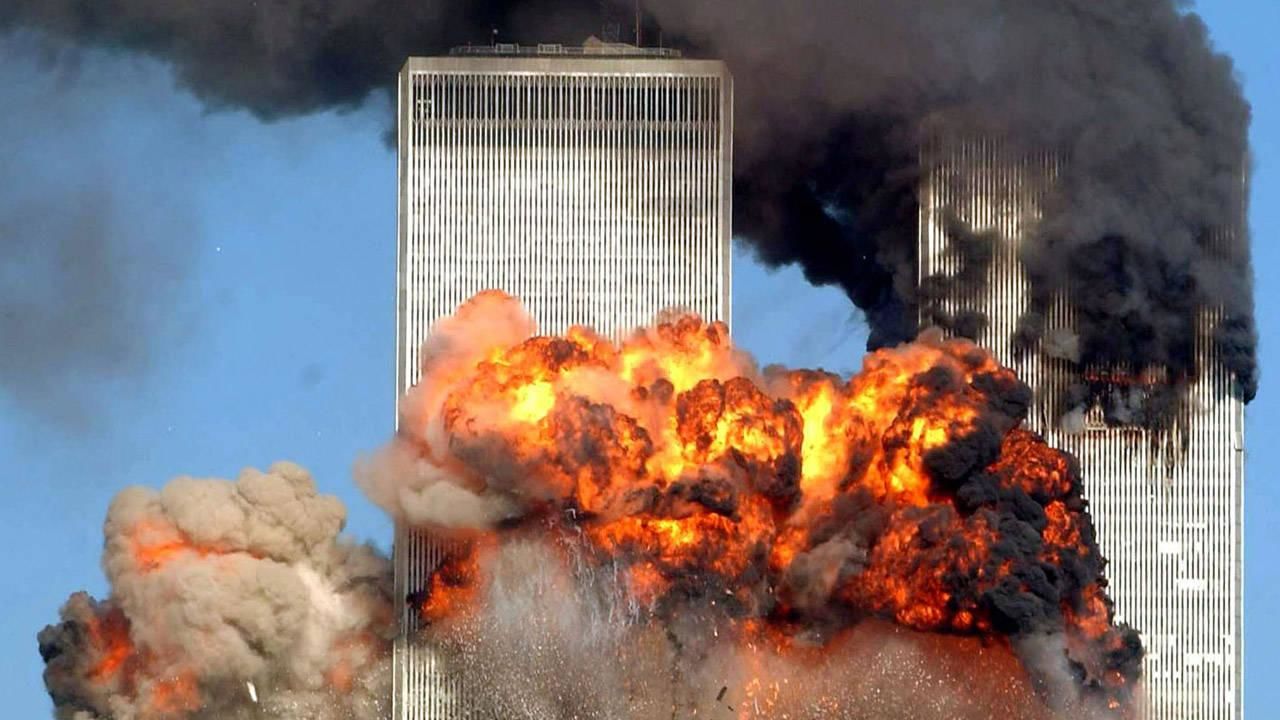
The Hunt for KSM: Inside the Pursuit and Takedown of the Real 9/11 Mastermind by Terry McDermott and Josh Meyer 

I received a review copy of The Hunt for KSM from  Hachette Book Group and was pleased to see that the authors, Terry McDermott and Josh Meyer, are investigative journalists, one of whom, Meyer, has extensive experience reporting on terrorism, while McDermott is also the author of the 9-11 highjackers book, Perfect Soldiers. So, I was looking forward to reading this book. My observations:

  • In the matter of style, McDermott and Meyer have opted to craft a novel-like narrative of their research, which makes The Hunt for KSM a genuine page-turner. While counterterrorism wonks used to a steady diet of white papers may become impatient with the format, they already know a great deal about operational methods of Islamist terror groups and the general public, who are apt to be engaged by the story, do not. While enjoying the yarn about Khalid Sheikh Mohammed, the villain behind 9-11 and his downfall, the general reader picks up a great deal of important information.
  • McDermott and Meyer deserve kudos for their fair and balanced handling of Pakistan – and I say this as a severe critic of the Pakistanis. While pulling no punches about the perfidy of Pakistan’s elite, the ties of the ISI and their religious extremist parties to terrorist groups including al Qaida, they give credit where credit is due to Pakistanis who made the difference in assisting the United States and it’s investigators in tracking down KSM and his AQ associates . “Colonel Tariq” of the ISI, in particular stands out as a courageous and sympathetic figure.
  • Khalid Sheikh Mohammed emerges in the story as a master adversary, part Bond villain, part sinister clown, who confounded the efforts of the FBI and the CIA for years with his prodigious ability to organize and orchestrate geographically diverse terrorist networks, fundraising, logistical support, bombings and murder like a one-man KGB while remaining as elusive as a ghost. His abilities, daring, good fortune and defiant resilience in captivity are impressive enough in McDermott and Meyer’s telling that they unfortunately tend to overshadow the fact that KSM is an enthusiastic mass-murderer. A facet that comes out to it’s true ghastly extent only in their description of KSM personally beheading kidnapped reporter Daniel Pearl.
  • The bureaucratic bungling and stubborn infighting of the FBI and CIA, with assistance from the DoD and Bush administration on particularly stupid decisions related to the interrogation and reliance upon torture while excluding AQ experts and experienced KSM case investigators from talking to KSM, makes for a profoundly depressing read. It contrasts poorly with the dedication and sacrifice demonstrated by law enforcement agents Frank Pellegrino, Matt Besheer, Jennifer Keenan and those who aided them.

The Hunt for KSM closes with Khalid Sheikh Mohammed as he is at the present time, on trial at Guantanamo Bay, a story with a climax but not yet an epilogue.

Well written, concise yet dramatic, The Hunt for KSM is warmly recommended.

History Will Judge Only if We Ask the Right Questions

Wednesday, April 18th, 2012

Thomas Ricks of CNAS recently had a historically-minded post at his Best Defense blog at Foreign Policy.com:

What Tom would like to read in a history of the American war in Afghanistan 

I think I’ve mentioned that I can’t find a good operational history of the Afghan war so far that covers it from 2001 to the present. (I actually recently sat on the floor of a military library and basically went through everything in its stacks about Afghanistan that I hadn’t yet read.)

Here are some of the questions I would like to see answered:

–What was American force posture each year of the war? How and why did it change?

–Likewise, how did strategy change? What was the goal after al Qaeda was more or less pushed in Pakistan in 2001-02?

–Were some of the top American commanders more effective than others? Why?

–We did we have 10 of those top commanders in 10 years? That doesn’t make sense to me. 

–What was the effect of the war in Iraq on the conduct of the war in Afghanistan?

–What was the significance of the Pech Valley battles? Were they key or just an interesting sidelight?

–More broadly, what is the history of the fight in the east? How has it gone? What the most significant points in the campaign there?

–Likewise, why did we focus on the Helmand Valley so much? Wouldn’t it have been better to focus on Kandahar and then cutting off and isolating Oruzgan and troublesome parts of the Helmand area?

–When did we stop having troops on the ground in Pakistan? (I know we had them back in late 2001.) Speaking of that, why didn’t we use them as a blocking force when hundreds of al Qaeda fighters, including Osama bin Laden, were escaping into Pakistan in December 2001?

–Speaking of Pakistan, did it really turn against the American presence in Afghanistan in 2005? Why then? Did its rulers conclude that we were fatally distracted by Iraq, or was it some other reason? How did the Pakistani switch affect the war? Violence began to spike in late 2005, if I recall correctly — how direct was the connection?

–How does the war in the north fit into this?

–Why has Herat, the biggest city in the west, been so quiet? I am surprised because one would think that tensions between the U.S. and Iran would be reflected at least somewhat in the state of security in western Afghanistan? Is it not because Ismail Khan is such a stud, and has managed to maintain good relations with both the Revolutionary Guard and the CIA? That’s quite a feat. 

Ricks of course, is a prize winning journalist and author of best selling books on the war in Iraq, including Fiasco and he blogs primarily about military affairs, of which Ricks has a long professional interest and much experience.  Ricks today is a think tanker, which means his hat has changed from reporter to part analyst, part advocate of policy. That’s fine, my interest here are in his questions or rather in how Ricks has approached the subject.

First, while there probably ought to be a good “operational history” written about the Afghan War – there’s a boatload of dissertations waiting to be born – I think that in terms of history, this is the wrong level at which to begin asking questions. Too much like starting a story in the middle and recounting the action without the context of the plot, it skews the reader’s perception away from motivation and causation.

I am not knocking Tom Ricks. Some of his queries are important – “What was the effect of the war in Iraq on the conduct of the war in Afghanistan?”  – rises to the strategic level due to it’s impact and the light it sheds on national security decision making during the Bush II administration, which I suspect, will not look noble when it is revealed in detail because it almost never is, unless you are standing beside Abraham Lincoln as he signs the Emancipation Proclamation.  Stress, confusion, anger and human frailty are on display. If you don’t believe me, delve into primary sources for the Cuban Missile crisis sometime.  Or the transcripts of LBJ and NIxon. Exercise of power in the moment is uncertain and raw.

But most of the questions asked by Ricks were “operational” – interesting, somewhat important, but not fundamental. To understand the history of our times, different questions will have to be asked in regard to the Afghan War. Here are mine for the far off day when documents are declassified:

What was the evolution of the threat assessment posed by Islamist fundamentalism to American national security by the IC from the Iranian revolution in 1979 to September 11, 2001?  Who dissented from the consensus? What political objections or pressures shaped threat assessment?

What did American intelligence, military and political officials during the Clinton, Bush II and Obama administrations know of the relationship between the ISI and al Qaida and when did they know it?

What did American intelligence, military and political officials during the Clinton, Bush II and Obama administrations know of the relationship between Saudi intelligence, the House of Saud and al Qaida and when did they know it?

What did American intelligence, military and political officials during the Clinton, Bush II and Obama administrations know of the relationship between the Taliban and al Qaida and when did they know it?

In the aftermath of 9-11, how did Saudi leverage over global oil markets effect American strategic decision making?

In the aftermath of 9-11, how did Pakistani nuclear weapons effect American strategic decision making?

In the aftermath of 9-11, how did the “Iraq problem”  effect American strategic decision making?

In the aftermath of 9-11, how did nuclear terrorism threat assessments effect American strategic decision making?  Did intelligence reports correlate with or justify the policy steps taken?

Who made the call on tolerating Pakistani sanctuaries for al Qaida and the Taliban and why?

Was there a net assessment of the economic effects of a protracted war in Afghanistan or Iraq made and presented to the POTUS? If not, why not?

Why was a ten year war prosecuted with a peacetime military and a formal declaration of war eschewed?

How did the ideological convictions of political appointees in the Clinton, Bush II and Obama impact the collection and analysis of intelligence and execution of war policy?

Who made the call for tolerating – actually financially subsidizing – active Pakistani support for the Taliban’s insurgency against ISAF and the Government of Afghanistan and why?

What counterintelligence and counterterrorism threat assessments were made regarding domestic Muslim populations in the United States and Europe and how did these impact strategic decisions or policy?

What intelligence briefs or other influences caused the incoming Obama administration to radically shift positions on War on Terror policy taken during the 2008 campaign to harmonize with those of the Bush II administration?

What discussions took place at the NSC level regarding the establishment of a surveillance state in the “Homeland”, their effect on our political system and did any predate September 11, 2001 ?

What were the origins of the Bush administration’s  judicial no-man’s land policy regarding “illegal combatants” and “indefinite detention”, the recourse to torture but de facto prohibition on speedy war crimes trials or capital punishment?

The answers may be a bitter harvest.


Switch to our mobile site