zenpundit.com » intelligence

Archive for the ‘intelligence’ Category

Dems Proposing Bad Covert Ops Oversight Rules to Make Leaking Easier

Saturday, July 11th, 2009

The left wing of the left wing of the Democratic Party has long been hostile to America’s intelligence community, a position that goes back to the Cold war and is rooted in political opposition to American foreign policy, particularly anticommunist policies. The latest feuding between Speaker Nancy Pelosi and the CIA are the distracting and meaningless atmospherics that cover the substantive manuvering that goes on behind closed doors over the direction of American foreign policy.

Democrats are now moving, through the use of proposed changes to the technical language on the statute governing executive branch notification of covert operations, to tie the hands of the president and move that power to every member of the two intelligence committees ( vastly enlarging the number of people who know the details of highly sensitive, ongoing, covert operations). This proposal was initiated by Chairman of the House Permanent Select Committee, Rep. Silvestre Reyes (D-TX), a close political ally of Speaker Pelosi: 

Sensitive Covert Action Notifications: Oversight Options for Congress

Legislation enacted in 1980 gave the executive branch authority to limit advance notification of especially sensitive covert actions to eight Members of Congress-the “Gang of Eight”-when the President determines that it is essential to limit prior notice in order to meet extraordinary circumstances affecting U.S. vital interests. In such cases, the executive branch is permitted by statute to limit notification to the chairmen and ranking minority members of the two congressional intelligence committees, the Speaker and minority leader of the House, and Senate majority and minority leaders, rather than to notify the full intelligence committees, as is required in cases involving covert actions determined to be less sensitive.In approving this new procedure in 1980, during the Iran hostage crisis, Congress said it intended to preserve operational secrecy in those “rare” cases involving especially sensitive covert actions while providing the President with advance consultation with the leaders in Congress and the leadership of the intelligence committees who have special expertise and responsibility in intelligence matters. The intent appeared to some to be to provide the President, on a short-term basis, a greater degree of operational security as long as sensitive operations were underway. In 1991, in a further elaboration of its intent following the Iran-Contra Affair, Congressional report language stated that limiting notification to the Gang of Eight should occur only in situations involving covert actions of such extraordinary sensitivity or risk to life that knowledge of such activity should be restricted to as few individuals as possible.In its mark-up of the FY2010 Intelligence Authorization Act, the House Permanent Select Committee on Intelligence (HPSCI) eliminated the Gang of Eight statutory provision, adopting instead a statutory requirement that each of the intelligence committees establish written procedures to govern such notifications. According to Committee report language, the adopted provision vests the authority to limit such briefings with the committees, rather than the President. In approving the provision, the Committee rejected an amendment that would have authorized the Committee Chairman and Ranking Member to decide whether to comply with a presidential request to limit access to certain intelligence information, including covert actions. The rejected provision stipulated that if the Chairman and Ranking Member of each of the intelligence committees were unable to agree on whether or how to limit such access, access would be limited if the President so requested. (Emphasis added by AT)

With Congress considering a possible change, this memorandum describes the statutory provision authorizing Gang of Eight notifications, reviews the legislative history of the provision, and examines both the impact of such notifications on congressional oversight as well as options that Congress might consider to possibly improve oversight.

[emphasis mine] 

The point behind this move is to deter the executive branch from using overt ops in the first place, which suits the objectives of members of Congress philosophically opposed to the IC and historic US foreign policy, but it does not actually *improve* Congressional oversight of the IC. The recent and future loud charges by House Democrats against the CIA are designed to justify this quiet power grab.

These proposed changes are designed to create a situation of arbitrary, conflict-ridden, uncertain yet expanded oversight of covert operations as the House and Senate Committees are likely to write different rules for their members and to disagree on breadth of notification. More people would have knowledge of very sensitive operations (we have to add staffers and key aides told by MoC against disclosure rules) with far less of the accountability for leaks by keeping notification to the “gang of eight”.

It will be much easier for any one member to kill any operation they disapprove of by leaking it with little fear of being caught and needing to make a political defense of their position on the covert operation. Even if a member of Congress is identified as having leaked information about a secret intelligence operation, the chances of being disciplined by the House or Senate are minimal unless the member is highly unpopular with their own party leaders or is enmeshed in another scandal and, thus, disposable. Forget being prosecuted, that will never happen.

No good intentions here, which is why this change was shrouded in committee obscurity by liberal Democratic House leaders rather than shouted by them at a high profile press conference.

Hat tip to AnalyticType.
Strategic Communication, Science, Technology

Wednesday, July 8th, 2009

Blogfriend Matt Armstrong had an important post regarding The Strategic Communication Science and Technology Plan, April 2009. An excerpt:

The plan describes current efforts within the Department of Defense, the military services, the combatant commands and other agencies on SC. In total, these efforts could be linked together to form the foundation of an S&T thrust area for strategic communication. The report also includes a macro-analysis of capability gaps not being addressed by ongoing initiatives and lays out potential areas for future S&T investment.

While the request for the plan itself represents recognition from Congress that SC plays a critical role in the public and private response to current and emerging threats, it also highlights that there is much research and development already underway and many tools available to increase the government’s effectiveness in global engagement. The rub today is the need for strong leadership and coordination to ensure: 1) awareness of the long list of capabilities; 2) incorporating these capabilities into plans; and 3) participation by stakeholders across the US government, NGO’s, industry, and private citizens.

The S&T plan sorts current efforts into the following categories:

  • Infrastructure: Enabling and facilitating access to information from news to markets to vocational
  • Social Media: Knowledge Management, Social Media, and Virtual Worlds
  • Discourse: Analysis of radical and counter-radical messages and ideas
  • Modeling and Forecasting: Gaming and anticipating adversarial messages and ideas as well as our counters and pre-emptive measures
  • Collaboration: Increasing collaboration and training across and beyond Government
  • First Three Feet: Empowering, Equipping, Educating, and Encouraging media and others to exist and freely report on events for what they really are
  • Understanding: Develop country, culture, and regional expertise, including polling
  • Psychological Defense: Planning and capacity building for dealing with critical strains on society in peacetime and wartime

The interesting thing here for me is that “strong leadership” is lacking because the people spread across and outside government who have the shared awareness of technology, social media and national security at a level of sophistication where they could actually craft a strategic communication policy, are usually many levels removed from the appointee policy deciders for whom these variables are (usually) fuzzily understood.

To use an analogy, the chefs are valet parking cars outside while trying to get the manager of the restaurant to acknowledge their recipes. Or, maybe that there should be cooking going on in the kitchen if they want to have any customers. Or that the business is, in fact, a restaurant and not a nicely organized room full of tables.

Now Using the POINT of the Spear….

Thursday, May 21st, 2009

My esteemed colleague, Michael Tanji, goes knuckles over Think Tank 2.0.

Tanji has my 100 % endorsement.

Strangling OSINT, Weakening Defense, Censoring Criticism: The Pentagon

Wednesday, April 29th, 2009

banned.jpg

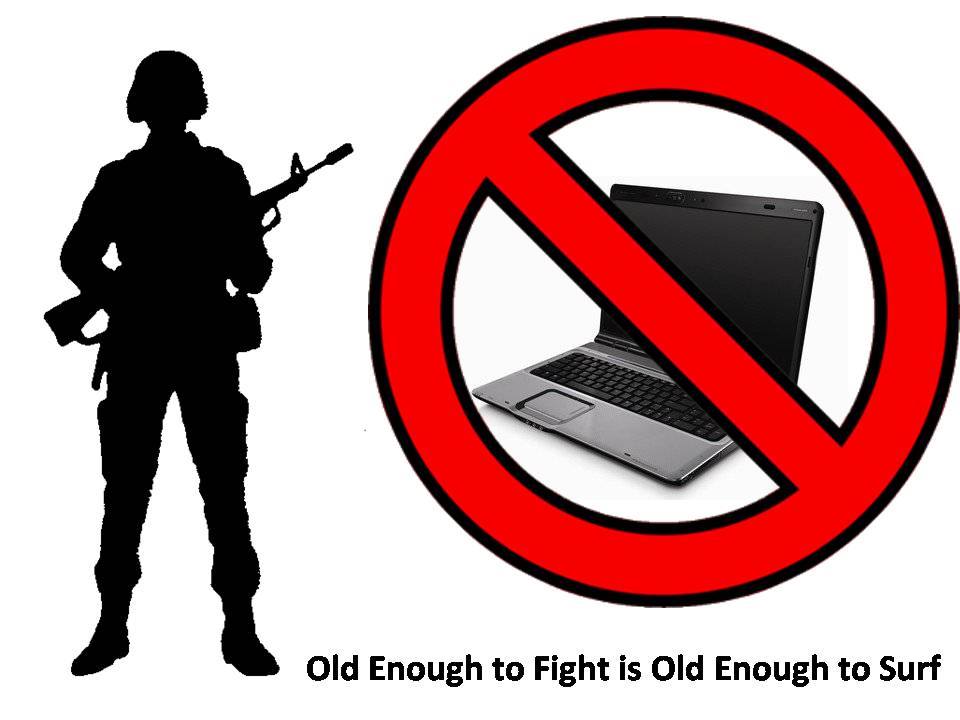
William Lind has a new post up at Defense and The National Interest that addresses the issue of the IT restrictions on the use of the internet by military personnel. This topic has been touched on previous by others such as at the SWC, SWJ Blog, Haft of the Spear, Hidden Unities and many milbloggers, intel and cyberwonks but previously, IT policy varied across services and from command to command. That appears to be changing – for the worse.

On War #302: Blinders

At the height of the Cold War, a U.S. army corps commander in Europe asked for information on his Soviet opposite, the commander of the corps facing him across the inter-German border. All the U.S. intelligence agencies, working with classified material, came up with very little. He then took his question to Chris Donnelly, who had a small Soviet military research institute at Sandhurst. That institute worked solely from open source, i.e. unclassified material. It sent the American general a stack of reports six inches high, with articles by his Soviet counterpart, articles about him, descriptions of exercises he had played in, etc.

What was true during the Cold War is even more true now, in the face of Fourth Generation war. As we have witnessed in the hunt for Osama, our satellite-photo-addicted intel shops can’t tell us much. But there is a vast amount of 4GW material available open-source: websites by and about our opponents, works by civilian academics, material from think-tanks, reports from businessmen who travel in areas we are interested in – the pile is almost bottomless. Every American soldier with access to a computer can find almost anything he needs. Much of it is both more accurate and more useful than what filters down through the military intelligence chain.

Or at least he could. In recent months, more and more American officers have told me that when they attempt to access the websites they need, they find access is blocked on DOD computers. Is al Qaeda doing this in a dastardly attempt to blind American combat units?
Sadly, no. DOD is doing it. Someone in DOD is putting blinders on American troops.

I do not know who is behind this particular bit of idiocy. It may be the security trolls. They always like to restrict access to information, because doing so increases their bureaucratic power. One argument points to them, namely an assertion that the other side may obtain useful information by seeing what we are looking for. That is like arguing that our troops should be given no ammunition lest muzzle flashes give away their positions in a fire-fight.

But the fact that websites of American organizations whose views differ from DOD’s are also blocked points elsewhere. It suggests political involvement. Why, for example, is access to the website of the Center for Defense Information blocked? CDI is located in Washington, not the Hindu Kush. Its work includes the new book on military reform America’s Defense Meltdown, which has garnered quite a bit of attention at Quantico.

The goal of the website blockers, it seems, is to cut American military men off from any views except those of DOD itself. In other words, the blockaders want to create a closed system. John Boyd had quite a bit to say about closed systems, and it wasn’t favorable.

Read the rest here

What is disturbing to me is that Lind indicates that the previous policy, which left IT restrictions up to commanders, seems to be coalescing behind one of systemic, tight, restrictions on access for all uniformed personnel to all kinds of blogs or websites that do not jeopardize information security. Or may even be useful to the conduct of their mission. The previous excuse by DoD bureaucrats was “conserving bandwidth” but it’s hard to see how esoteric sites like the Center for Defense Information or some university PDF on Islamist madrassas in Pakistan clog up a combatant command’s skinny pipes.

Intel and cyber experts in the readership are cordially invited to weigh in here.

ADDENDUM:

Professor Sam Liles offered up this manifesto on cyberthreats and cybersecurity.

ADDENDUM II:

Fabius Maximus, Ubi war and Wings Over Iraq took a similar view ( Wings though, added “Curse you Zenpundit!”).

ADDENDUM III THE COUNTERPOINT:

Galrahn says Bill Lind does not understand the legitimate cybersecurity aspect that causes blogs and websites to be blocked and then offers some practical advice to the blocked bloggers (such as myself):

….but I’d bet at least 5 shots of Canadian Whiskey (I’m a Crown Royal fan until summer gets here) that the problem that triggered his rant doesn’t originate in the DoD or any government entity, rather the private sector.

But I will say this. There are several legitimate reasons why websites, blogs, and other forms of social media sites on the web are blocked. If your website or blog is blocked, please understand you can do something about it besides whine.

Use Feedburner, or some other form of syndication software to distribute your content, including by email. Organizations including the military may block Blogger but typically they do not block syndication service sites because from an IT perspective, syndication services like Feedburner is a better way to manage bandwidth for larger enterprises. If an organization is blocking syndication sites too, then your organization has a very strict IT policy, BUT if your favorite websites are distributing content by email, problem solved

I used Feedburner previously with my old blogger site when Feedburner was in beta but when it was purchased or absorbed by Google, that account went dormant. I think I will ressurect it and then look into Galrahn’s other suggestions.

A Mexican Standoff with Reality

Sunday, March 29th, 2009

WASHINGTON, DC –  Flanked by the embattled President of Mexico, Felipe Calderon and the Secretary of Homeland Security Janet Napolitano, a weary looking President Barack Obama used a press conference to angrily denounce as “Alarmist and inflammatory” a recent report issued by the conservative Heritage Foundation that declared the massive chain of UN administered Mexican Refugee camps in Arizona, New Mexico and Texas as “a bottomless well for narco-insurgency” and “a threat to the territorial integrity of the United States”. The camps, home to at least 2.5 million Mexican nationals, are dominated by the “Zetas Confederales”, a loose and ultraviolent umbrella militia aligned with the feuding Mexican drug cartels that now control upwards of 80 % of Mexico.

President Obama’s political fortunes have been reeling recently in the wake of high profile incidents that include the kidnapping of his Special Envoy for Transborder Issues, former New Mexico governor Bill Richardson, and the car bombing assassination of popular California Governor Arnold Schwarzenegger that killed 353 people in Sacramento last month. Both events have been tied directly to factions of Zetas “hardliners” who operate with impunity on both sides of the US-Mexican border. President Obama used the conference to point to the “clear and hold” COIN strategy that has recently restored order and even a degree of tourism to Las Vegas, once the scene of bloody street battles between Zetas, local street gangs and  right-wing American paramilitary groups, as a sign of the success for his administration.  Democratic leaders on Capitol Hill remain skeptical and say that it is likely that President Obama will face a primary challenge next year from Senator Jim Webb (D- Va), a former Secretary of the Navy in the Reagan administration, who called the president’s COIN strategy “The right course of action” but ” Two years too late”….

That fictional scenario above is offered as a thought experiment.

Thursday, in a statement that was issued in part for public diplomacy purposes, DNI Adm. Dennis Blair, dismissed any strategic implications regarding the strength of Mexico’s drug cartels that the Mexican government is struggling to suppress:

Mexico is in no danger of becoming a failed state. [Let me] repeat that. Mexico is in no danger of becoming a failed state. The violence we see now is the result of Mexico taking action against the drug cartels. So it is in fact the result of positive moves, which the Mexican government has taken to break the baneful influence that many of these cartels have had on many aspects of Mexican government and Mexican life.

While it might be tempting to ask what the good Admiral is smoking, Blair is neither a naif nor a fool but a very experienced and saavy intelligence manager who is engaged in pushing a political line of the Obama administration, in deference to the wishes of the government of Mexico. The line is being peddled on many fronts; Homeland Security Secretary Janet Napolitano has just declined offers for increased appropriations for improving border security in favor of “surging” Federal agents on a temporary basis (i.e. a political show that will accomplish nothing). Here is SECSTATE Hillary Clinton on the same subject on the same day as Adm. Blair while on an official visit to Mexico:

On Thursday, Mrs. Clinton noted that no official of the Obama administration had ever used the phrase “failed state.” She said Mexico faced a “public safety challenge,” likening it to the surge of drug violence in American cities in the 1980s. And she lavished praise on the Mexican president, Felipe Calderón, for taking strong measures against the drug cartels.

This line that Mexico is fundamentally sound, while helpful to President Calderon’s political standing when expressed in public, is analytically speaking, sheer nonsense, and if enforced in private, counterproductive to having sober USG interagency planning sessions to make certain that worst case scenarios, like the one imagined above, never come close to materializing. Such politicized groupthink also interferes with effective cooperation with Mexico to address a 4GW type problem that has already mestastasized to a dangerous degree into American territory. Earlier, while still free of Mexican diplomatic and political pressure, the U.S. military accurately assessed the potential threat of Mexico devolving into a failed state in this JFCOM planning document (we won’t be seeing anything like this in public again, barring leaks):

In terms of worst-case scenarios for the Joint Force and indeed the world, two large and important states bear consideration for a rapid and sudden collapse: Pakistan and Mexico.

….The Mexican possibility may seem less likely, but the government, its politicians, police, and judicial infrastructure are all under sustained assault and pressure by criminal gangs and drug cartels. How that internal conflict turns out over the next several years will have a major impact on the stability of the Mexican state. Any descent by Mexico into chaos would demand an American response based on the serious implications for homeland security alone.

Banning terminology like “failed state” or admission of adverse data points from Mexico or the Southwestern U.S. (!) into an integrated analytical picture because the self-absorbed and greedy oligarchy that rules Mexico heatedly objects, is a recipe for policy failure and “snowballing” interrelated problems as each new development is inadequately addressed for political reasons. This new eggshell to tread carefully upon is going to be added to our longstanding, politically determined, refusal to contemplate our own drug policy honestly in light of it’s effect on our national security interests (We are turbocharging guerillas, Islamist insurgents, terrorists and criminal networks all over the globe with billions of American narco-dollars and corrupting and demoralizing our own allies in the process).

If the current situation in Mexico existed anywhere else in the world, our national security elite would already be discussing the potential for a mass exodus of refugees at given levels of escalating violence. The United States government conceives of the border in terms of an economic immigration problem not as a political mass-migration problem; such an event, spilling over into the hot deserts of the American border states, would very likely overwhelm the capacity for adequate humanitarian response. A Katrina moment in the cacti.

Recall the difficulties the Carter administration had with the relatively minor refugee influx in 1980 known as the Mariel Boatlift when 120,000 Cubans were permitted by Fidel Castro to flee the Communist paradise for life in the United States, along with imprisoned criminals and mental patients whom Castro deported along with the boatlift. A full blown civil war in Mexico could generate 20 to 30 times that number of refugees, among whom narco-guerillas or terrorists or independent bad actors could operate freely, much as refugee camps elsewhere in the world have been breeding grounds for militias, criminal organizations and terrorists.

SECSTATE Clinton, at least, should know all of this very well. The handling of the Marielitos issue by Jimmy Carter probably cost her husband the governorship in Arkansas and led him later as President to enforce a very tough line against Haitian refugees, fearing a deluge of desperately poor Haitians fleeing dictatorship and internecine political violence. It would be far better to prioritize Mexico as a national security issue today, than let it evolve into a transnational powder keg tomorrow. There are, I must observe, far more Mexicans than Haitians in this hemisphere.

But proper response requires empirical investigation and analytical clarity, followed by sensible and determined policy designed to short-circuit negative trends, not empty political assertions designed to tread water, obfuscate and delay action. We have time, but not unlimited time.

(Special thanks to Morgan, Pundita and John Robb for their insights, concerns and/or suggested links yesterday on this issue which were helpful in clarifying my thoughts).

ADDITIONAL LINKS:

State of Siege: Mexico’s Criminal Insurgency (Full PDF Article)   Stratfor reports on Mexico, news ignored by our mainstream media

Latest Academic Mexico Trip Report    “Mexico: On the Road to a Failed State?”    Mexico’s Instability Is a Real Problem

Mexico – Failed State/Failed Policies?   Among top U.S. fears: A failed Mexican state  Why Vicente Fox is going straight to Hell 

MEXICO’S BAZAAR OF VIOLENCE   What if A State Failed and Nobody Cared?   American Narcotics: $10 Billion In Mexico

Mexico: Growing Terror and Close to Collapse    The effects of our drug war in Mexico

Mexico is not a poor country   Assessing the threat at our southern border    Mexico’s Columbian Exchange    State of War

 Look who’s sneaking into the country using known drug routes   Mexico plagued by myriad interlaced netwars – a TIMN analysis

SWC Thread (Slapout) w/ Links    Mexico’s Struggle with ‘Drugs and Thugs’ (Full PDF Article) 

Sites Linking to this Post:

Soob Top shelf analysis of Mexico’s civil war and the looming cross border nightmare NEW!

Newshoggers.com (Hynd) – Is Mexico A National Security Threat? NEW!

TDAXP Recommended Reading  NEW!

Fausta’s Blog The “Who painted it?” Carnival of Latin America and the Caribbean 

RBO – Zenpundit: A Mexican Standoff with Reality 

MountainRunner It sure is quiet around here… a few links and musings during the silence 

Threatswatch.org (Schippert) – Exposición Perro y Caballo de la Administración Obama 

John Brown’s Public Diplomacy – March 30 

Peace Like a River – Cables, dispatches and memoranda 

SWJ BLog A Mexican Standoff with Reality…

Committe of Public SafetyCartel War Zen

PunditaWashington continues to plays ostrich about Mexico (Riehl World ViewViva la Revolucion ; Wretchard – Our Southern Neighbor)

HG’s WorldZenpundit Channels Orson Wells in War of the Narco-Cartels

Chicago BoyzA Mexican Standoff with Reality

More as they develop….


Switch to our mobile site

