zenpundit.com » Strategy and War

Archive for the ‘Strategy and War’ Category

The al-Masri Dialogue

Tuesday, February 9th, 2010

Charles Cameron, in his latest guest post here, penned a beautiful essay regarding the ongoing exchanges between Australian counter-terrorism scholar Leah Farrall and Abu Walid al-Masri, an adviser to the Taliban and an experienced strategist of Islamist insurgency. Farrall has translated and posted this dialogue on her blog, All Things Counter Terrorism, which has received much attention, commentary and criticism in the blogosphere and on private listservs and quasi-official bulletin boards.

Generally, I leave this sort of subject to Charles, since he has the academic expertise to drill down to a granular level of Islamic theology and Islamist ideology, but al-Masri is an intriguing figure and his public conversation with Farrall is a novelty worth investigating. It would be hard to imagine during the Cold War, an open media debate between a Western CI official and a Soviet spymaster still engaged in espionage in the field ( Kim Philby hurled public jermiads it is true, but that was in retirement in Moscow and only after his long-suffering KGB handlers had managed to get his severe alcoholism under control). In that spirit, I want to offer a few observations.

While there is artifice present, as al-Masri is consciously speaking to a multiplicity of audiences in his remarks, the idea that we should therefore dismiss the dialogue with Farrall, as some suggest, is an error. There is also posturing in purely intra-Islamist-debates on which we eavesdrop and, frankly, within our own arguments inside government and out. We learn from what people do and do not do, from what they say and what is left unsaid. Being able to speak to multiple audiences is a constraint, as well as an advantage, as it shapes the parameters of the premises to be employed and the extent to which the underlying logic can be permissably extrapolated. To quote a Zen saying, if you wish to fence in a bull, give him a large meadow. 

The constraints, if correctly discerned, are illuminating and are analytically useful in constructing our own tactical responses and message strategy (assuming someone can convince the State Department bureaucracy that IO and public diplomacy are important and persuade Congressional leaders to fund such activities with more than pocket change). They are also useful in helping to understand the worldview and governing paradigms of our opponents in more complex and nuanced manner than reflexively saying “they hate our freedoms”. Well, many jihadi types do in fact, viscerally hate our freedoms or deny that democracy is a legitimate form of government in an abstract sense, much the same way they casually disparage Hindus as “cow worshippers” or Thais as “crazy Buddhists”; however those loose attitudes and spasms of hostility are not akin to operational principles or strategic doctrines.

For that, we have to dig deeper into the politico-religious motivations of violent Islamists and listen closely to what our enemies are saying – particularly when they are making an effort to speak to us directly, as al-Masri is doing, his determination to score propaganda points in his little elicitation dance with Farrall notwithstanding. Americans are not very good at listening and our elites are deeply uncomfortable with the entire subject of religion, tending to view pious expressions of Christianity with contempt and Islam as a completely taboo subject. There is a strong preference in government and academia for analytical models of terrorism or insurgency that dwell on DIME spectrum variables because these fit in the personal comfort zones and the educational, social and professional experiences of the American elite. This would be a perfect approach if al Qaida’s leadership were composed of Ivy League alumni and Fortune 500 CEOs.

Economics and military force are always factors in geopolitical conflict, the war of terror included, but until Islamist extremists oblige us by becoming secular Marxist revolutionaries waving little red books, it would behoove us to look with greater scrutiny at the curiously reified religious ideology with which they justify or eschew courses of action to themselves. Our own strategies might be more focused and effective if the operators across our intelligence, military, diplomatic and law enforcement agencies had something approaching a shared understanding of violent Islamism and if they could communicate this understanding along with the benefit of their experience and current intelligence to help political leaders shape American policy.

Guest Post: Cameron on “A Response to a Most Remarkable Conversation”

Saturday, February 6th, 2010

Charles Cameron, my regular guest blogger, is the former Senior Analyst with The Arlington Institute and Principal Researcher with the Center for Millennial Studies at Boston University. He specializes in forensic theology, with a deep interest in millennial, eschatological and apocalyptic religious sects of all stripes.

Response to a most remarkable conversation

by Charles Cameron

i

Some time back, I posted here about the conversation between Leah Farrall, until recently a senior analyst with the Australian Federal Police and their subject specialist for al-Qaida, and Abu Walid al-Masri, long time mujahid, writer and strategist, friend and frequent critic of bin Laden, and the first foreigner to give bayat to Mullah Omar. Leah is presently writer her doctoral dissertation on al-Qaida, Abu Walid is under house arrest in Iran. Their online conversation continues, as Leah has described in an article for The Australian, and I believe this in itself is a significant even in online discourse, as I suggest in a post on Howard Rheingold’s SmartMobs blog.

Leah has been posting Abu Walid’s responses to her questions on her blog, first in Arabic and then as time permits in English, for some time now. Most recently, she posted her own detailed responses alongside Abu Walid’s questions to her — and the topic of their conversation accordingly shifted from issues of the structure and history of Al-Qaida and the Taliban (Leah’s academic interests) to issues of the morality of warfare, and of the jihad and war on terror in particular (Abu Walid’s concerns).

Leah has graciously invited me to respond to this new phase of the discussion, which cuts very close to my own heart.

ii

Abu Walid’s questions, as Adam Serwer has noted at The American Prospect, are largely focused on issues of due process:

Al Masri asks why the U.S. imprisons people based on secret evidence, why all detainees don’t get fair trials, and why the U.S. has tortured detainees. He brings up secret prisons and bounty hunters. He also alludes to America allowing “security departments in the underdeveloped world to do their dirty work, such as severe torture,” which I assume refers to extraordinary rendition.

Leah, who knows a great deal about these things, has responded to each of these points in detail. And Abu Walid and Leah are not alone in reproving such things — they have many critics, not least in the United States, some of whom have tracked these issues with a far closer eye than I have. Scott Horton, writing in Harper’s and elsewhere, knows far more about these practices, their justifications under recent Presidents, and their relation to US and international law than I do, and one of the reasons I find the western democratic tradition powerfully appealing is the fact that he can openly criticize his Presidents in the public media on such topics.

The topic of our behavior in time of war concerns me deeply, because it is fundamentally a topic about the gift of human life, how we should use it and how we should respect it. Islam, and before it Judaism, both declare that to take one human life is to extinguish a world, and that somewhat poetic statement is a brilliant summary of why the means of peace should be preferred to those of war.

This view, that every human life is of extraordinary worth, applies not only to the killing of humans, in war or elsewhere, but also to their mistreatment — what the New York Times has described as “dark-of-night snatch-and-grabs, hidden prisons and interrogation tactics that critics condemned as torture”.

So let me say directly that I too am opposed to torture, to beheadings, to attacks that cause civilian casualties, to the capture or killing of humanitarian aid workers, to extraordinary renditions.

My own hope is that the United States will not allow the tragic consequences of terror attacks to diminish the kind of freedom that allows people like Scott Horton to do the research, and to publish their findings freely. I find myself agreeing here with Benjamin Franklin, who wrote, “Those who would give up Essential Liberty to purchase a little Temporary Safety, deserve neither Liberty nor Safety.”

My prayers are for an end to war, and until that time, for moderation in its practice.

iii

This post, then, is more a response to the fact of an emerging dialog between Abu Walid and Leah Farrall than it is to the specifics of their discussion. After reading Leah’s responses to Abu Walid, I find I have very little to add to what she has said.

What touches me most deeply, in fact, is neither the issue of the structure of Al-Qaida nor the rights and wrongs of the conflict, but the simple fact of dialog between these two persons. It is not a facing off between opposing sides, in which so often each side demonizes the other, that attracts me here — but the reaching out from both sides to find early signs of a shared humanity, a shared possibility of peace. And in order to clarify that response, I think I should say something more about my own history, and the way in which I arrived at my own views.

John Adams, the second President of the United States, wrote in a widely-quoted letter to his wife:

I must study politics and war that my sons may have liberty to study mathematics and philosophy. My sons ought to study mathematics and philosophy, geography, natural history, naval architecture, navigation, commerce and agriculture in order to give their children a right to study painting, poetry, music, architecture, statuary, tapestry, and porcelain.

I am the son and grandson of warriors, so it has been my privilege to study philosophy and poetry — bur neither poetry nor philosophy allows me to overlook war entirely.

I understand that there are injustices and brutalities in the world that cry out for redress, and that force of arms may at times be necessary. My own father was a naval officer, who fought Hitler’s navy in the grueling waters of the Arctic, and died young because of it. I honor him for it. My first great mentor was a priest who worked to end the brutalities of the apartheid regime in South Africa, because he saw all people, regardless of skin color, as the children of God. Explaining himself, he wrote:

My responsibility is always and everywhere the same: to see in my brother more even than the personality and manhood that are his. My task is always and everywhere the same: to see Christ himself.

My mentor was an extraordinary man who was known for his abhorrence of violence, and yet was willing to approve “defensive violence and armed struggle as a last resort against the oppressor”. So I was raised by a courageous warrior and an extraordinary man of peace, and the issue of human violence has been a topic of lifelong meditation for me: I do not see it as simple in any way.

We all must choose where we shall expend our efforts, and my cause is that of religion: the astonishing generosity and compassion it can call forth in people, and the terrible consequences that follow when it is used to provide a sanction for killing.

iv

To be honest, I detest war.

I detest earthquakes.  As I say that, I do not intend to blame God, nature, or any human agency for them — I understand that earthquakes happen, that we live in what might be described as a ‘violent” universe, that galaxies collide, stars explode, worlds and cultures come into existence and are snuffed out, people live and die. 

What I mean to say is that I am saddened by the needless brutality that befalls humans and other creatures trapped in earthquakes, those who lose their limbs or sight, or who live for days in hope of rescue, buried under fallen masonry, and those others who survive, and are now widows, orphans, childless — because those they loved were in some other room, or some other part of town, or some other land when the quake hit.

I can acknowledge such things happen, but I cannot take joy in them, and I would not wish them on anyone.

In the course of war, many of the same effects are found — people die, lose their limbs, are buried under fallen masonry, blinded, orphaned, widowed — but on these occasions they are brought about by the hands of other humans, by human decision and choice.

If, as I say, I detest earthquakes, how shall I not also detest war?

v

And yet I feel kinship. I have a clan background: my father, and his father, and his father’s father were Scotsmen, all of them military men.  I understand the honor that is due to one’s forebears, and I salute them.

I was born and raised in England. I love and honor the country of my birth, its sweet hills and trees and rivers, and there is a quality to those gently rolling hills that I will never forget, which is home to me.  I studied in Oxford, in one of the great halls of learning, and it allows me to feel kinship with all those who have studied in the great universities and monasteries, from Oxford to Kyoto. I have lived for much of my life in America, and love, too, my adopted country. 

And thus I understand what it is to be on one side of a dispute, not because that side is perfectly right and just in all matters, but because one belongs with that land or those people: they are one’s own.

My father, when I was a boy, told me the story of how another clan became in 1692 the enemy of our clan. It seems they accepted the hospitality of our clan allies, then rose in the night to slaughter their hosts.  They thereby defiled their own honor by abusing the principle of hospitality — for, as a Scottish historian put it, “the Highlander, like the Arab, attached an almost sacred importance to the guest participating in his bread and salt”. 

I have passed down to my own eldest son the same story, but I have also made it clear to him that I hold no continuing grudge nor enmity against that other clan, and that I do not believe my father did either.

vi

Here, then, is the crux of the matter as I understand it, in Leah’s words:

Regardless of whether someone is our enemy or not, they are still, at the end of the day, human. They still have families, and in their milieu are probably viewed as good and decent people. Much the same way that we view ourselves. Somehow, in conflict this gets lost. That may be okay for fighting, but it isn’t when it comes to trying to bring an end to conflict. 

We seem, thank God, to have arrived at the point where the idea of resolving the terrible conflict in Afghanistan is at last recognizably on the horizon.  Secretary Gates said recently that “political reconciliation ultimately has to be a part of settling the conflict” — which seems to me to bode well for a dialog of this sort, preliminary though it is.

But I do not see the possibility of fruitful dialog just as a means to some form of political solution — to me it is more than that.

When the people of Israel escaped by night from captivity in Egypt, they were at first pursued by the army of Pharaoh. When they arrived at the Red Sea, God parted it so that they could make their escape.  The sea then closed on Pharaoh’s army and drowned them, and the Israelites rejoiced, singing a song of thanks.  In the Jewish lore of the Talmud, it is recorded that on that night the angels too wished to sing, and that God refused to hear their song of praise, rebuking them with the words, “my creations are drowning in the sea, and you will sing songs?”

vii

Vengeance dies hard, though, doesn’t it? 

If I kill your soldier I have killed an enemy — but you have lost a father, a brother, a son, and left a widow, an orphan: your grief is then greater than my satisfaction, your thirst for revenge keener than my fear of it, and so you strike down one of mine, thinking you have killed an enemy — but losing me a father, a brother, a son, leaving me a widow, an orphan — and so the plague rolls on.  You have visited anguish on me, I shall visit anguish on you.

Gandhi said it: An eye for eye, and soon the whole world is blind.

I choose, personally, to follow the principle of forgetting in such matters.  Injustices are legion, and the roots of today’s struggles can in many cases be traced back across centuries, even millennia. Both perpetrators and victims are human.

viii

There will be some who ask if this does not make a “moral equivalence” between one side and the other, and is not one side — “ours” — righteous, and the other evil? 

I am reminded of Abraham Lincoln’s magnificent Second Inaugural here.  He notes that in the American Civil War, both sides “pray to the same God; and each invokes His aid against the other” and although it is clear where his own allegiance lies, he continues, “let us judge not, that we be not judged. The prayers of both could not be answered – that of neither has been answered fully.”

I too have my preferences: what saddens me most of all, perhaps — for I am before all else a “lover of the lovers of God” — is the way in which religious feeling is used to provide sanction for killing.

But I think the issue cuts deeper even than that, and as I contemplate friend and foe alike — and indeed this dialog between, as Abu Walid puts it, “the (terrorist) and (counter-terrorist)”– I find the need to remember first my own humanity.  In the words of Aleksandr Solzhenitsyn, who suffered enormous wrongs in the Soviet Archipelago:

Gradually it was disclosed to me that the line separating good and evil passes not through states, nor between classes, nor between political parties either – but right through every human heart – and through all human hearts. This line shifts. Inside us, it oscillates with the years. And even within hearts overwhelmed by evil, one small bridgehead of good is retained. And even in the best of all hearts, there remains … an uprooted small corner of evil.

I too am human: the line runs through my heart, too — and in the final analysis, my response to this dialogue, like the dialogue itself, reaches beyond the issues that divide us, toward our common humanity, and toward peace.

Spinney on the QDR

Friday, February 5th, 2010

Boyd Acolyte Franklin “Chuck” Spinney writing on the QDR ( Hat tip to Kev Hall).

The Pentagon Goes Intellectually AWOL

….Even by the dismal intellectual standards of Pentagon bureaucracy, the QDR and the FY 2011 budget, taken together, establish a new standard of analytical vacuity, psychological denial, and just plane meaningless drivel. I will keep this short by using just one important case to prove my allegation. Judge for yourself if it is necessary and sufficient to make the point.

First, I must bore you with a little background: The Pentagon has been producing FYDPs since 1962. But these FYDPs have been repeatedly criticized for producing defense budgets that were disconnected from the national military strategy — and because the dollar allocations made in any budget determine what any government’s policy really is, the critique was logically equivalent to saying there was no strategy. The congressional legislation in the mid 1990s that established the QDR was only the most recent attempt to deal with this long standing criticism. The aim of that legislation was to require the Pentagon to lay out an intellectual framework for matching its military strategy and ambitions to the resource constraints shaping those ambitions, especially budgetary constraints, but also constraints relating to people, the limitations imposed by available technologies, etc.

The new FY 2011 budget and its accompanying FYDP, therefore, are supposed to attach budgetary and programmatic meat to the strategic skeleton that is the QDR, both of which were completed at the same time and made public on 1 February — itself a somewhat illogical sequence, given that one is supposed to precede the other. In theory, these documents should permit an analysis of the strengths and weaknesses implicit in the matchup between resources and strategy. Therefore, these documents should enable the Secretary of Defense to send the President and the Congress a comprehensive set of priorities, opportunity costs, and risks associated with his strategic plan. This information would then become the grist for a rational national debate by linking strategic considerations to the inevitable compromises made in the sausage making factory that is Congress. Moreover, as this is President Obama’s first budget, and because it represents $700+ billion that Mr. Obama just put off limits in the coming national debate over whether or how to shrink the federal deficit, it was crucially important for the Pentagon to get the QDR and the accompanying FY 2011-2015 FYDP right in a logically consistent and transparent manner.

If we apply this standard to the Pentagon’s recently completed handiwork, only one conclusion is possible: the Pentagon flunked the test by being intellectually absent without leave.

Read the rest here.

Defense acquisitions and budgeting process arcana are not my forte, but Spinney is not the only defense analyst giving the QDR a thumbs down for being insufficient on important issues. If the process is rigidly determinative of the kinds of outcomes generated and if that process is dysfunctional or broken, then even a talented top DoD civilian staff armed with an ocean of money and a deep reservoir of political capital will not be able to translate our national security priorities into concrete military results.

“Methods are the masters of masters.” – Talleyrand

The Post-COIN Era is Here

Monday, January 25th, 2010

Learning to Eat Soup with a Spoon Again……

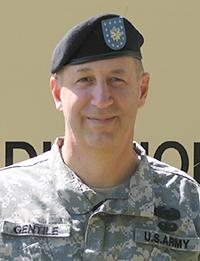
There has been, for years, an ongoing debate in the defense and national security community over the proper place of COIN doctrine in the repertoire of the United States military and in our national strategy. While a sizable number of serious scholars, strategists, journalists and officers have been deeply involved, the bitter discussion characterized as “COINdinista vs. Big War crowd” debate  is epitomized by the exchanges between two antagonists, both lieutenant colonels with PhD’s, John Nagl, a leading figure behind the U.S. Army/Marine Corps Counterinsurgency Field Manual and now president of the powerhouse think tank CNAS , and Gian Gentile, professor of history at West Point and COIN’s most infamous arch-critic.

In terms of policy and influence, the COINdinistas ultimately carried the day. COIN advocates moved from a marginalized mafia of military intellectuals who in 2004 were just trying to get a hearing from an  indifferent Rumsfeld Pentagon, to policy conquerors as the public’s perceptions of the “Surge” in Iraq (masterminded by General David Petraeus, Dr. Frederick Kagan, General Jack Keane and a small number of collaborators) allowed the evolution of a COIN-centric, operationally oriented, “Kilcullen Doctrine” to emerge across two very different administrations.

Critics like Colonel Gentile and Andrew Bacevich began to warn, along with dovish liberal pundits – and with some exaggeration – that COIN theory was acheiving a “cult” status that was usurping the time, money, talent and attention that the military should be devoting to traditional near peer rival threats. And furthermore, ominously, COIN fixation was threatening to cause the U.S. political class (especially Democrats) to be inclined to embark upon a host of half-baked, interventionist “crusades“in Third world quagmires.

Informed readers who follow defense community issues knew that many COIN expert-advocates such as Nagl, Col. David Kilcullen, Andrew Exum and others had painstakingly framed the future application of COIN by the United States in both minimalist and “population-centric” terms, averse to all but the most restrictive uses of “hard” counterterrorism tactics like the use of predator drones for the “targeted assassinations” of al Qaida figures hiding in Pakistan.

Unfortunately for the COINdinistas, as George Kennan discovered to his dismay, to father a doctrine does not mean that you can control how others interpret and make use of it. As the new Obama administration and its new commander in Afghanistan, General Stanley McChrystal conducted its internally contentious review of “AfPak” policy in 2009 on what seemed a geological time scale, the administration’s most restless foreign policy bigwig, the Talleyrand of Dayton, proposed using COIN as nation-building on steroids to re-create Hamid Karzai’s Afghanistan as the secure, centralized, state that it has never been.  Public reaction to this trial balloon was poor and the administration ultimately pared down General McChrystal’s troop request to 30,000 men, hedging a COIN based strategy toward policy suggestions made by Vice-President Biden.

So, COIN still reigns supreme, albeit with trimmed sails?

No.

We are forgetting something important about the ascendancy of COIN. It was not accepted by a reluctant Pentagon and the Bush administration because COIN is a very effective operational tool in the right strategic context – although that is certainly true. Nor was it because the advocates of COIN were brilliant policy architects and advocates – though most of them are. COIN became the order of the day for three reasons:

1) The  “Big Army, fire the artillery, fly B-52’s and Search & Destroy=counterinsurgency” approach proved to be tactically and strategically bankrupt in Iraq. It failed in Mesopotamia as it failed in the Mekong Delta under Westmoreland – except worse and faster. Period.

2) The loudest other alternative to COIN at the time, the antiwar demand, mostly from Leftwing extremists, of immediately bugging-out of Iraq, damn the consequences, was not politically palatable even for moderately liberal Democrats, to say nothing of Republicans.

3) The 2006 election results were a political earthquake that forced the Bush administration to change policy in Iraq for its’ own sheer political survival. COIN was accepted only because it represented a life preserver for the Bush administration.

We have just had another such political earthquake. The administration is now but one more electoral debacle away from having the president be chased in Benny Hill fashion all over the White House lawn by enraged Democratic officeholders scared out of their wits of losing their seats next November.

Republican Scott Brown, the winner in a stunning upset in Massachusett’s special election for Senator, certainly had no intention of undermining President Obama’s commitment to Afghanistan. To the contrary, he is for it in a far more muscular manner than was his hapless Democratic opponent. But that’s irrelevant. What matters is that in all the recent elections, Democrats have been clobbered by a “Revolt of the Moderates” – socially liberal, fiscally conservative, independent voters who came out in 2008 for Obama and are now shifting radically away from him. For the next year, politicians of both parties will be  competing hard for this bloc which means “deficit hawks” will soar higher than defense hawks.

America’s nine year drunken sailor spending spree is officially over.

Defense experts have long known that the post-9/11, record DoD budget expenditures were not going to be politically sustainable forever and that either a drawdown of combat operations or cancellation of very big, very complicated and supremely expensive weapons platforms or some combination of both would eventually be needed. That eventuality is here and will increase in intensity over the next five years, barring an unexpected economic boom. Spending $60 billion annually on Afghanistan, a nation with a GDP of roughly $ 20 billion, for the next 7 years, is not going to be in the cards. Not at a time of 10 % unemployment, when the Congress will be forced to cut Medicare, education, veteran’s benefits, eliminate COLA’s on Social Security or raise the retirement age and income taxes. Who is going to want to “own” an ambitious “nation-building” program at election time?

There is a silver lining here. Really.

COIN is an excellent operational tool, brought back by John Nagl & co. from the dark oblivion that Big Army partisans consigned it to cover up their own strategic failures in Vietnam. As good as COIN is though, it is not something akin to magic with which to work policy miracles or to substitute for America not having a cohesive and realistic grand strategy. Remaking Afghanistan into France or Japan on the Hindu Kush is beyond the scope of what COIN can accomplish. Or any policy. Or any president. Never mind Obama, Superman, Winston Churchill and Abe Lincoln rolled into one could not make that happen.

Association with grandiosely maximalist goals would only serve to politically discredit COIN when the benchmarks to paradise ultimately proved unreachable. Austerity will scale them back to the bounds of reality and perhaps a more modest, decentralized, emphasis. COIN will then become a normal component of military capabilities and training instead of alternating between pariah and rock star status inside the DoD.

Austerity may also force – finally – the USG to get serious about thinking in terms of comprehensive and coherent DIME-integrated national strategy (Ok – this is more of a hope on my part). Instead of having every agency and service going off in its own direction with strategic nuclear arms reductions being proposed out of context from our conventional military obligations and urgent security threats we might stop and look at how the two fit together. And how these should be in sync with our fiscal and monetary policies and our need to deeply invest in and improve our unsteady economic position in a very competitive, globalized world. The latter is of much greater strategic importance to national security than Afghanistan or whether or not Israel and Hezbollah fight another mini-war.

We are all COINdinistas now. Instead of being controversial, COIN having a secure place in our operational arsenal of ideas has become the new “conventional” wisdom; it is past time to look at some of the other serious challenges America has ahead.

ADDENDUM I:

First, I wanted to thank everyone for their lively responses, both comments as well as email. The critiques are very helpful, as are the large number of PDFs and links to related material. I am trying to catch up on my replies but first, I wanted to feature a link to Andrew Exum ‘s related but inside baseball article up at Boston Review:

The Conflict in Central Asia will likely mark the end of the current era of Counterinsurgency 

 ….Whether or not the United States and its allies are successful in Afghanistan, the conflict in Central Asia will likely mark the end of the Third Counterinsurgency Era. Counterinsurgency warfare has its roots in the colonial experiences of France and the United Kingdom as well as the pseudo-colonial experiences of the United States in the Philippines and Latin America. In the First Counterinsurgency Era, nineteenth-century French colonial military commanders such as Hubert Lyautey, Thomas-Robert Bugeaud, and Joseph Gallieni devised rudimentary “hearts and minds” campaigns that were—though often just as brutal as the conventional warfare of the time—at odds with then-contemporary thought on the employment of military force. 

….Michael Semple —with two decades experience working in Afghanistan and Pakistan—believes that it is, and that the Taliban and its allies cannot win. The balance of power, he argues, has shifted toward the Taliban’s natural enemies, and the Taliban hides this reality by dressing their civil war in the clothes of an insurgency being fought against Western powers. If this assessment is right, there may yet be hope for U.S. and allied efforts in Afghanistan. Because President Obama has pledged to begin a withdrawal from Afghanistan in eighteen months, time may be too short to execute a comprehensive counterinsurgency campaign. But there may be sufficient time to build up key Afghan institutions and allow Afghans to fight a civil war that will no doubt continue after the United States and its allies begin to withdraw.

ADDENDUM II – LINKS To This Post:

Most of these bloggers have extended the discussion into new dimensions or aspects. I will put a short, explanatory tag next to each where warranted.

RBO (Pundita)The cavalry has arrived: Mark Safranski takes on COIN; Pundita takes on Pakistan  Extensive examination of Pakistan

In Harmonium (Dr. Marc Tyrell)Is the post-COIN era here?  The conceptual-perceptual-cognitive implications of this debate

Shlok VaidyaZen is right  Constraints and innovation….and a great post title!

Newshoggers (Dave Anderson)COIN’s coins; political constraints on COIN  COIN = Clausewitzian disconnect

Wings Over IraqLink of the morning is here…  And the bonus Nagl/Gentile mash-up graphic!

SWJ BlogThe Post-COIN Era is Here  Comments on link excerpt have begun……

Elkus on Science, Defense and Strategy

Friday, January 8th, 2010

My amigo Adam Elkus has an excellently constructed and well researched article up at OpenSecurity where he advances a Boydian critique for what ails us:

Science, defence and strategy

…Contemporary American strategic problems flow from the fact that we cannot adjust the ossified thinking of Washington D.C. to the constantly shifting observed reality of the outside world. A failure to match concepts to observed reality has amplified the already formidable entropy of the American political system. The corresponding failure to make strategy results in a search further inward towards the “science” of war.  Better strategy will come about only when the process by which strategy is made becomes supple, flexible, and less dominated by sacred cows and special interests.

Critics of American foreign policy often undermine their own case with conspiracy theorizing about the “military-industrial complex.” The real problem, however, is not James Bond villain-style secret plans and hidden agendas but basic human frailty. A largely homogenous group of people is not going to have all the answers to questions of war and peace because they are necessarily limited by their experience, specialization, and biases.

Nice work by Adam, read the whole thing here.

We face a number of problems when it comes to formulating strategy and grand strategy. Not least is that, whatever the shortcomings on that score within America’s officer corps, there is a yawning gap of comprehension between the senior brass and most of the civilian “influencer” elite in and out of government. Most of the latter tend to think in terms of a few simple paradigms into which they force-fit each new foreign policy problem – generally, everything is conceived either as appeasement at Munich or the quagmire of Vietnam. This tiresome dichotomy is the strategizing of simpletons.

The arch-Clausewitzians in the national security community fall down here. It is not enough to think of strategy in purely military terms. America is not Sparta or even the Roman Republic where politicians vied for a chance field command. The civilians here are masters of policy and the military are its servants – and are but one kind of servant among many in the DIME spectrum. Statesmen and general officers need to be speaking with a common vocabulary and have a shared understanding of what strategy is if we are to formulate effective ones.

There is a deficit of knowledge among the class of officials and staff members with the authority to make or not make the most critical decisions in matters of peace and war. It cannot be remediated by an uncertain and unhealthy dependency on the Pentagon’s advice and a frustrating dialogue where civilian and soldier talk past one another.

ADDENDUM:

Adam gets a nod from our friends on the Left at Newshoggers.com


Switch to our mobile site
