zenpundit.com » Perception

Archive for the ‘Perception’ Category

Descent into Barbarism

Wednesday, August 10th, 2011

London burns for four days as UK authorities dealt timidly and uncertainly with semi-organized swarms of brazen thugs, causing rioting to spread to other cities. What have we seen so far?

* The British government and police acted with moral uncertainty in the face of violent challenge from swarming tactics by “underclass youth” rioters.  The BBC was filled with interviews of victimized citizens complaining about how police were unwilling to intervene to stop acts of looting, assault and arson. Police behavior fed the cycle of rioting and encouraged fence-sitters to join in and swell the ranks of the mob, as did early talking head comments in the British media that argued that the rioters were “justified”

* The British government was politically paralyzed by the crisis and needed three days and a Cabinet meeting to begin to organize an effective anti-riot strategy, distribute proper equipment, summon additional manpower, change police ROE and marshal a rhetorical narrative against the rioters.  All the halmarks of excessive top-down control by out of touch technocrats and politicians.

 John Robb summed up this kind of anti-leadership beautifully in his review of Rebecca Solnit’s A Paradise Built in Hell  :

…In contrast to the people on the ground, she shows that the only people that actually do panic during disasters are the elites — from those with wealth to those running the government’s response (I’m not talking about the first responders actually on the ground doing good work).  They panic over the loss of control a disaster brings.  This often results in extreme actions that only serve to make things worse: from martial law authorized to use deadly force against looters (often just people trying to survive the situation) to arbitrarily hearding people into locations that aren’t able to support large groups of people.  

What This Means

The lesson here is that during an extreme disaster, the people you may most need to fear are those in charge, particularly if their motives are focused on protecting elite interests put at risk by the disaster

* The Cameron government’s legitimacy is at risk, being currently blamed for everything connected to the riot from the underlying “root causes”, to their initial total lack of interest in defending ordinary Britons to the bad impression made of having senior ministers being on vacation while the capitol of the UK was ablaze. Earnest and repeated assertions by government officials that no political or racial motives were behind the rioting conflicted with the reality being broadcast live by the government’s own news service in the first hours and days of the riot.

Handling a riot properly is state power 101. The Prime Minister has about two days to turn this situation and the political perceptions created around or he will begin an irreversible downward spiral to an early retirement.

War, the Individual, Strategy and the State

Sunday, July 31st, 2011


One of the nicest things about ZP is the quality of the commenters. In a post by Charles Cameron, 2083 – Breivik and the Qur’an, deception and warfare, there was this exchange between Joseph Fouche and Seydlitz89 after the latter disputed the utility of looking at the Norwegian mass-murderer Anders Breivik through the lens of strategy:

Joseph Fouche:

From Clausewitzian perspective, Breivik’s actions are the conjunction of the three poles of the Trinity, two of which have nothing to with Breivik’s rationality. If CvC can’t be applied to madmen, criminals, mass murderers of children, or men trapped in their own little world, then Van Creveld’s contention that the actions of madmen can’t be considered political (in noted Clausewitzian Christopher Bassford’suse of the word) is correct. War would be “nontrinitarian“.

The words and ideas of murderous stooges have consequences as well as their actions. CvC can shine as much light on them as he can on any other field of human conflict.

Can Breivik’s actions can be considered war? Can an individual wage war? By his own sinister lights, Breivik considered himself at war, the Pied Piper of a host of other Breiviks born and unborn, even if that host only existed in his fevered imagination.

Can an individual have a strategy? Or can an individual only have a strategem? Breivik had a plan that had a tactical expression and apolitical effect (as here we comment on the doings of an otherwise obscure Norwegian). Does the jumbled mass of tissues that connect his evil ends with his evil means rise to the level of strategy?

In her recent book The Evolution of Strategy, noted CvC scholarBeatrice Heuser examines the modern history of the word strategy since Guibert revived it in the mid-eighteenth century. Even the core understanding of the word, the art of connecting political ends with (operational or tactical) military means, has shifted since CvC as the scale and ambitions of campaigns increased. Heuser herself chooses to refer to strategy as understood by Clausewitzians (connecting political ends with military means) with a capital S to differentiate [it] from other current uses.

In that light, was Breivik a Strategist or a strategist? Where do we put the raid on Harpers Ferry or the Beer Hall Putsch, two events that were equally ridiculous and equally consequential? What’s the cutoff point between crime and war? What’s the cutoff point between Strategy and strategy? John Brown’s 21? Herr Hitler’s 100? Or Breivik’s one?

Fouche, who it must be said, is no fan of eminent Dutch-Israeli military historian Martin van Creveld, is referering to MvC’s theory of the decline of the state and “non-trinitarian” warfare of non-state or non-Westphalian entities that van Creveld articulated in The Transformation of War, The Rise and Decline of the State and other books and articles since the 1990’s.  The 4GW school adopted van Creveld’s ideas of state decline and to significantly varying degrees, his critical attitude toward Clausewitzian theory (van Creveld’s own assessment of Clausewitz also seems to vary in his works).

Seydlitz89, himself a noted Clausewitzian, responded:

You’re mixing apples and oranges.  Clausewitzian strategic theory pertains to collectives, all concepts pertain to collectives – victory, defeat, strategy, tactics . . . and a very particular collective at that – political communities.  “War” does not consist of one individual fighting against a political community, that is criminality, and always has been.  This is the very definition of what being a criminal, an outcast, or a traitor is all about .  .  . “War” on the other hand is organized violence within or between political communities which involves once again collectives.  These collectives would have to enjoy both moral and material cohesion within them which in turn allows them to use violence as an instrument in their political actions.  The Nazis, as repugnant as they were, did gain “legitimacy” (yet another collective concept) over time and formed a political community around them of Germans dissatisfied with the “system” of their time, and their political takeover did constitute a revolution. 

ABB is all about ABB and nothing more.  Assuming that his “message” or rather mad rant is going to draw an audience and a following is an assumption, based on what exactly?  Great knowledge of how “Europeans” feel about immigration?  Define “Europeans” and how this act is going to mobilize concerted action against immigrants, draw a political community around it?

Even if he did appeal to a selection of alienated loners who bought his sorry soap, that would not constitute them as a political community nor make their struggle war.

If ABB is a “warrior” fighting a “war”, than so was Charles Manson.     

[ Sidebar: Seydlitz has, BTW, previously undertook a formal two-part paper at the old DNI site on this subject, one very much worth reading, that serves as a Clausewitzian rebuttal to van Creveld :The Decline of Strategic Theory – the Influence of The Transformation of War  and part II. The Continued Existence of the State: The Clausewitzian Concept of Cohesion ]

The discussion of whether or not an individual can wage “war” is interesting because it takes place largely at the level of fundamentals. Politics, polities, policy, the State, war. All terms with somewhat different meanings depending on the philosophical tradition brought to the table. Or lack thereof. Strategic discussions are frequently impoverished because of the extinction of systematic education in the Western canon in this country, it is almost dead, even at the university level, which means that those interested in matters of strategy and diplomacy need to dedicate themselves to personal programs of professional reading and reflection.  Some things need to be read firsthand and more than once to be understood.

Can an individual “wage war”? Can they have ” a strategy”? Some very meandering thoughts from me on the subject [Joseph Fouche and Seydlitz are cordially invited to guest-post here in response, if they so desire]:

Historically, this was usually a moot point. The ability of private individuals to use violence that could have a strategic effect on a whole political community was virtually nil – with one exception – assassination. While seldom fully successful, tyrannicide or regicide was celebrated and feared in the ancient world because in highly personalized polities with absolute rulers, such a decapitation attack could paralyze a society as heirs of the ruler struggled for succession or plunge it into anarchy and civil war. Walter LaQueur devotes the first part of his Voices of Terror to examples of ancient assassination for this reason.

Assassination, it should be said, is still more likely to be associated with personal grievance, mental illness or political protest than strategic intent. Brutus and Cassius and their fellow conspirators had a strategic intent in assassinating Julius Caesar, namely reversing the fortunes of civil war as well as the political intent of ending Caesar’s Dictatorship as a regime and restoring the Republic under the dominance of patrician Optimates. By contrast, Charles Guiteau who assassinated President Garfield was merely insane, while Soghomon Tehlirian’s motive for killing Talaat Pasha was vengeance for the Armenian Genocide.

However, as the potential for using assassination at a strategic level exists, then the possibility that an individual may do so of their own accord, instead of as an agent of a state or out of personal grievance, also exists. It’s just quite rare once a society ascends from the Hobbesian hunter-gatherer stage of development to true chiefdoms or kingdoms because two things change: first, a chiefdom or kingdom is a political community that creates and enforces all kinds of constraints, incentives, rules and specialization of tasks related to warfare on individuals in the tribe. Secondly, the scale of society in a chiefdom or kingdom or state vs. a hunter-gatherer band makes an individual’s one-man war impractical. Society has grown far too large. Even if the head is willing, the reach exceeds the grasp.

Now, this truism of war being a collective endeavor, which Seydlitz rightly identifies as being the case and has been so for thousands of years, is now in jeopardy with the acceleration of technological capabilities and ever cheaper productions costs disseminating them into many hands. This is the theory of  the “superempowered individual“, that technology that can permit one person to inflict damage on an enormous scale was becoming too common, as is information about where such technology could be leveraged to best effect. We are not quite there yet, but we have had some serious foreshadowing of SEIs with Ted Kaczynski, the unknown Anthrax mail terrorist and the partially successful WMD terrorist efforts of the Aum Shinrikyo cult. Right now, it is still collectives that are the likeliest culprits for waging a mass casualty attack but those collectives have gotten uncomfortably small in size. Nation-states are far more dangerous and versatile entities, if slow moving and obvious, but they are no longer required if your intent is to inflict strategic damage and eventually, all you will need is one unusually resourceful and intelligent individual.

With individuals and, more commonly, very small substate groups waging war, the nature of warfare will change from the culture of warfare that typified the era of Westphalian nation-states with their centralizing hierarchical bureaucracies, mobilized industrial economies, conventional armed forces and populations bristling with nationalism. Smaller entities that lack the vast resources of states are going to be idiosyncratic in their approach to warfare because their capacity to sustain conflict, what motivates them to stand, fight and die, how they conceive their “Ends” differs from that of states.

Can you use Clausewitz’s general theory to  analyze them? Sure, Clausewitz proposed, after all, a general theory of war, but if you operate with the implicit assumption that the non-state adversary will “do strategy”just  like a state your analysis is likely to be off. The utility of van Creveld’s theory is his emphasis on their non-Westphalian characteristics of these combatants and their blurring of war with crime, religion, culture and politics which goes to the heart of what might be the nature of warfare in this epoch; where the irregulars are no longer marginal players but represent the new normal and interstate conventional war among great powers is the outlier.

Chet on TEMPO….Rao on OODA

Tuesday, July 26th, 2011


At Fabius Maximus, Dr. Chet Richards reviews TEMPO by Dr. Venkat Rao, enjoying the book as much as I did, if not more. Chet has some particularly incisive comments, positive and critical, in his review, which I suggest you read in full:

Book Review: Tempo

…Rao draws on Boyd in several places, as well on sources ranging from the topical, such as Gladwell and Taleb, to the foundational (e.g., Camus and Clausewitz), to the downright obscure – know anything about The Archeology of Garbage? Do the words wabi and sabi ring a bell?

The result is a synthesis, what Boyd called a “snowmobile,” that combines concepts from across a variety of disciplines to produce a cornucopia of new ideas, insights and speculations. You may be confused, challenged, outraged, and puzzled (some of the language can be academic), but you’ll rarely be bored because every chapter, often every page, has something you can add to the parts bin for building your own snowmobiles.

Let me highlight just a couple, of special interest to folks familiar with Boyd’s concepts. Near the end of the book, Rao introduces an expanded version of “legibility”:

A piece of physical reality is legible if it is obviously the product of coherent human agency, a deliberate externalization of a mental model. When human and natural sources of order are harder to tease apart, you get greater illegibility (p. 133 – and I warned you about the academic language).

Then a couple of paragraphs later, he claims that:

Used with adversarial intentions, Boyd’s OODA can be understood as a deliberate use of illegibility to cause failure.

At first, this seems silly. Boyd only considers conflict between groups of human beings (Patterns of Conflict, 10), so all uses of his strategic concepts would seem to be prima facia examples of legible phenomena. On the other hand, and this is an example of what makes Rao’s little book so valuable, some commentators, such as Stalk and Hout in 1990’s Competing Against Time, point out that victims of a Boyd-style attack can rarely identify the cause of their problems – often blaming bad luck or incompetent, self-serving and treacherous idiots in their own organizations. Boyd made this clear in his own work, such as in Patterns of Conflict, 132, when he suggested that his victims would exhibit a variety of traumatic symptoms including confusion, disorder, panic, chaos, paralysis and collapse – indicating unrelenting attack by forces outside the scope of their own mental models…

Chet concludes with a suggestion for Venkat (with which I concur):

…As for where to go from here, Rao might write more about tempo. This will seem strange to him, I’m sure, but pages go by with hardly a mention of the concept. This means that we need another book from him. I’d suggest expanding on some of the concepts that he raises but doesn’t find space to develop. Here are three ideas: […]

But you will have to go over to Fabius Maximus to read the rest. Venkat, in turn responded to Chet over at his blog, Ribbonfarm:

Chet Richards’ Review of Tempo on Fabius Maximus

….Overall, Chet comes to the conclusion that Tempo resonates with the Boydian spirit of decision-making. I don’t entirely get out of jail free though:

Perhaps his unfamiliarity with the original briefings, however, led him to  make one characterization that is incorrect, although widely believed:

The central idea in OODA is a generalization of Butterfly-Bee: to simply operate at a higher tempo than your opponent. (118)

Guilty as charged. I didn’t spend enough time exploring how OODA gets beyond merely “faster tempo” to “inside the adversary’s tempo.” That’s something I hope to explore in a more nuanced way in a future edition. Over the last 6-8 months, I think I’ve come to understand the subtleties a lot better, and the challenge is to now spend more time thinking through clear definitions and examples….

I think everyone who has explored the OODA Loop concept, including John Boyd himself, initially gravitated to the aspect of cycling “faster” than one’s oponent because it is a natural assumption that resonates with our own experiences. We have all seen competitions where one player or athlete was “quicker” in reading situations and arriving at the right intuitive decision – usually most of us have been both the faster as well as the slower and more hesitant person. It’s the first scenario that springs to mind and being “faster” gives an obvious comparative advantages. Obvious does not mean “only” though.

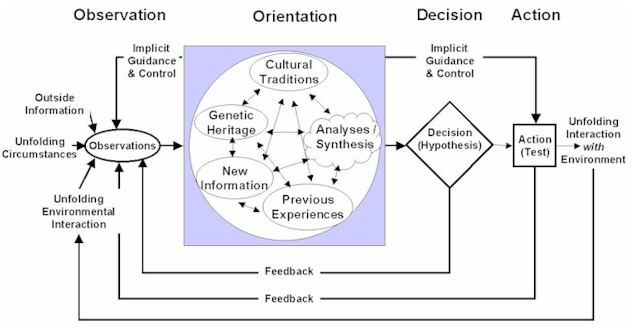
What made the “faster” interpretation of OODA Loop really stick in the culture though, IMHO, was this unfortunate but easily understood graphic:

NOT THE REAL OODA LOOP

As a result, we get critical arguments that the OODA Loop is really something germane only to binary situations similar to the high pressure aerial combat that Boyd experienced in the Korean War or as a tactical fighter pilot instructor (or Musashi’s sword fighting) and not something generally useful in military strategy. An odd argument, given that Clausewitz liked to use binary metaphors to describe the nature of war.

The next graphic, which better illustrates the simultanaeity and dynamic nature of the OODA Loop, with other potential avenues of exploitation than just going “faster” (which will swiftly hit diminishing returns in any event) does not lend itself as easily to nearly instant comprehension:

THE ‘OFFICIAL” OODA LOOP:

With these cognitive relationships operating continuously, mostly subconsciously with automaticity and in an iterative fashion, a different set of meanings to the phrase “inside your oponent’s OODA Loop” than just going “faster”, like a formula one race car zooming around a track.

The Said Symphony: move 12

Thursday, July 21st, 2011

[ by Charles Cameron – extended analytic game on Israeli-Palestinian conflict — continuing ]

.

I am titling my next move “Moral Equivalence?” with the question mark as the crux of the title, and I am posting it separately since it (a) raises a central question with regards to the entire project and (b) plunges us directly into the twin narratives of Palestinian and Israeli… in parallel, in counterpoint… perhaps in…

Move 12: Moral Equivalence?

move-12.gif

Move Content:

In President Obama‘s address at Cairo University on June 4, 2009, the President presents the two narratives, Israeli and Palestinian, side by side:

America’s strong bonds with Israel are well known. This bond is unbreakable. It is based upon cultural and historical ties, and the recognition that the aspiration for a Jewish homeland is rooted in a tragic history that cannot be denied.

Around the world, the Jewish people were persecuted for centuries, and anti-Semitism in Europe culminated in an unprecedented Holocaust. Tomorrow, I will visit Buchenwald, which was part of a network of camps where Jews were enslaved, tortured, shot and gassed to death by the Third Reich. Six million Jews were killed — more than the entire Jewish population of Israel today. Denying that fact is baseless, it is ignorant, and it is hateful. Threatening Israel with destruction — or repeating vile stereotypes about Jews — is deeply wrong, and only serves to evoke in the minds of Israelis this most painful of memories while preventing the peace that the people of this region deserve.

On the other hand, it is also undeniable that the Palestinian people — Muslims and Christians — have suffered in pursuit of a homeland. For more than 60 years they’ve endured the pain of dislocation. Many wait in refugee camps in the West Bank, Gaza, and neighboring lands for a life of peace and security that they have never been able to lead. They endure the daily humiliations — large and small — that come with occupation. So let there be no doubt: The situation for the Palestinian people is intolerable. And America will not turn our backs on the legitimate Palestinian aspiration for dignity, opportunity, and a state of their own.

For decades then, there has been a stalemate: two peoples with legitimate aspirations, each with a painful history that makes compromise elusive. It’s easy to point fingers — for Palestinians to point to the displacement brought about by Israel’s founding, and for Israelis to point to the constant hostility and attacks throughout its history from within its borders as well as beyond. But if we see this conflict only from one side or the other, then we will be blind to the truth: The only resolution is for the aspirations of both sides to be met through two states, where Israelis and Palestinians each live in peace and security.

Insult #3 in Nile Gardiner‘s piece, “Barack Obama’s top ten insults against Israel,” from the Telegraph blog of April, 2010, consists of the comment:

In his Cairo speech to the Muslim world, President Obama condemned Holocaust denial in the Middle East, but compared the murder of six million Jews during World War Two to the “occupation” of the Palestinian territories, in a disturbing example of moral equivalence:

followed directly by the third paragraph above from Obama’s speech.

The question raised by this move is that of “moral equivalence”. Specifically, I am raising the question of whether Obama’s four paragraphs do indeed contain “a disturbing example of moral equivalence”. More generally, I am asking whether juxtaposition — which is one of the central features of analogical thought, and thus of this game – implies equivalence.

Link claimed:

To Bob Dylan, “One too many mornings” and the lines “You’re right from your side / I’m right from mine” – juxtaposing them like that, is there a moral equivalence implied?

Dylan’s overview doesn’t sound too optimistic about the possibility of any kind of reconciliation of the opposites: “We’re both just one too many mornings / An’ a thousand miles behind…”

Accordingly, this may be an appropriate point at which to note that Edward Said thought the conflict between Israelis and Palestinians was asymmetrical and irreconcilable.

In the interview from which I borrowed Said’s notion of a “symphonic” reading of the conflict, the question and answer immediately following that paragraph reads thus:

Q: Is this a symmetrical conflict between two peoples who have equal rights over the land they share?

A: There is no symmetry in this conflict. One would have to say that. I deeply believe that. There is a guilty side and there are victims. The Palestinians are the victims. I don’t want to say that everything that happened to the Palestinians is the direct result of Israel. But the original distortion in the lives of the Palestinians was introduced by Zionist intervention, which to us – in our narrative – begins with the Balfour Declaration and events thereafter that led to the replacement of one people by another. And it is continuing to this day. This is why Israel is not a state like any other. It is not like France, because there is continuing injustice. The laws of the State of Israel perpetuate injustice.

This is a dialectical conflict. But there is no possible synthesis. In this case, I don’t think it’s possible to ride out the dialectical contradictions. There is no way I know to reconcile the messianic-driven and Holocaust-driven impulse of the Zionists with the Palestinian impulse to stay on the land. These are fundamentally different impulses. This is why I think the essence of the conflict is its irreconcilability.

Comment:

Are the two narratives symmetrical? Is there a moral equivalence between them?

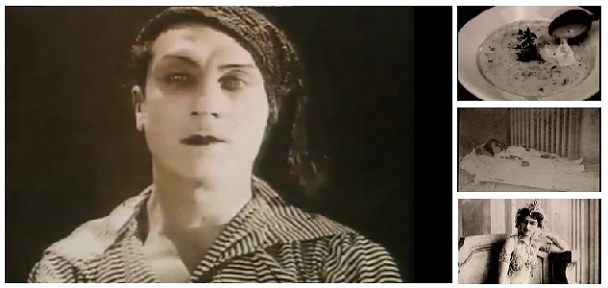
The great early Russian film director Sergei Eisenstein wrote that “the juxtaposition of two shots by splicing them together resembles not so much the simple sum of one shot plus another — as it does a creation.”

mosjukhin.jpg

His colleague Vsevolod Pudovkin goes further:

Kuleshov and I made an interesting experiment. We took from some film or other several close-ups of the well-known Russian actor Mosjukhin. We chose closeups which were static, and which did not express any feeling at all-quiet close-ups. We joined these close-ups, which were all similar, with other bits of film in three different combinations. In the first combination the close-up of Mosjukhin was immediately followed by a shot of a plate of soup standing on a table. It was obvious and certain that Mosjukhin was looking at this soup. In the second combination the face of Mosjukhin was joined to shots showing a coffin in which lay a dead woman. In the third the close-up was followed by a shot of a little girl playing with a funny toy bear. When we showed the three combinations to an audience which had not been let into the secret the result was terrific. The public raved about the acting of the artist. They pointed out the heavy pensiveness of his mood over the forgotten soup, were touched and moved by the deep sorrow with which he looked on the dead woman, and admired the light, happy smile with which he surveyed the girl at play. But we knew that in all three cases the face was exactly the same.

What I am getting at here is, first and foremost, that juxtaposition is a rhetorical and aesthetic device, and that how to “read” a given juxtaposition is not necessarily obvious.

In a subsequent move, I shall discuss the specific philosophical problem involved in weighing one body of suffering against another

Outrage Over News Corp: A Tale of Two Standards

Monday, July 18th, 2011

As a rule, I eschew political news here but I think this one merits an exception.

The big story of the moment for political junkies is the illegal hacking of cell phones allegedly carried out by employees of one of Rupert Murdoch’s British tabloid newspapers. Not just any phones either, the cell phones of British VIPs, political bigwigs, celebrities and perhaps, some 9/11 victims. All of the details have not been revealed, but there are police investigations, one of News Corp’s top employees has been arrested, parliamentary inquiries and demands by Murdochs political enemies there to have the British government “dismantle his empire“.

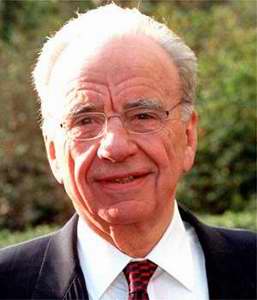
Rupert Murdoch is not, it must be said, a cuddly public figure. He is a press baron throwback to the era of Joseph Pulitizer and William Randolph Hearst and has a reputation for ruthlessness in business and overweening ambition in politics to gain personal influence for promoting his conservative views. He is a hate figure to Democratic and liberal partisans of the intolerant kind who see political disagreement as evidence of evil and would like FOXnews, one of Murdoch’s most influential and profitable properties, to be suppressed by the FCC (though Murdoch’s right-wing views did not preclude him from trying to cozy up to China’s communist leadership). These folks are naturally celebrating Murdoch’s dilemma and hoping for a collapse – and Murdoch and his son James are in genuine jeopardy, possibly legal, certainly political and commercial.


Much indignant outrage is being heaped on Murdoch’s head now by the enlightened; I have no love for phone hacking and I definitely agree that and violating people’s privacy is a crime that ought to be punished by sending those responsible to prison. I am curious though, how this position is squared morally with the fact that the two liberal news outlets most triumphant about the News Corp scandal, The New York Times and The Guardian, themselves recently were knowing accessories to the much more serious crime of espionage.

Actually calling these papers criminal accessories is not a full picture of their behavior during the Wikileaks document dump; it is more accurate to say that they reaped corporate financial benefit from facilitating espionage, grand theft and treason, for which their editors have not faced any legal consequences. 

Yes, treason. Look up the definition.

Much unlike the nobody Army private and patsy, Bradley Manning, who is likely to face a sentence of life in prison. Good thing for  Manning that he only outed a vast array of US intelligence and diplomatic secrets and exposed ordinary, unimportant, unprotected Afghans and Iraqis to murderous retribution by Islamist degenerates. If Manning had phonehacked a Labor MP or a wealthy, airhead celebrity – you know, really important and beautiful people – the NYT and the Guardian would be calling for a death sentence. It is a most curious scale of values.

Go back and look at which partisan blowhards with columns and bylines and talking head opinion shapers thought Wikileaks was just great and defended Julian Assange and what their opinion is on phonehacking today and see if any – any at all – evidence some consistency. Or awareness of the relative magnitude of each crime – and crime is the right word, neither of these scandals are mere pranks, but one is important to national security and the other, so far, is only interesting.

There’s something amiss here in the way that partisan politics and a seamy, not too subtle, undercurrent of class entitlement have warped the perspective and sense of proportion of some people who are smart enough to know better.


Switch to our mobile site