zenpundit.com » Tactics

Archive for the ‘Tactics’ Category

Some New Additions…..

Tuesday, August 3rd, 2010

To the ominously increasing antilibrary and the waning summer reading bookpiles:


Counterinsurgency by David Kilcullen

The Grand Strategy of the Byzantine Empire by Edward Luttwak

Spook Country by William Gibson

Hope to start  a couple of these by the end of the month. A number of other books to be finished first.

I have a new decentralized reading strategy that seems to be helping me wad through books faster. Books that I am reading are distributed to be read in different places – one in my gym bag for the treadmill; one in my car in case there’s time to kill at an appointment or at a restaurant; one or two books downstairs to read on the couch or outside on the deck; one to take to the pool with the kids and four of five on my bedstand. There are also a store of books on my iPad, “just in case”.

The strategy allows me to concentrate on finishing several books – my “primary” reads – even as I steadily chip away at the rest and there are enough choices available to suit my mood on any given day so it doesn’t feel like I am doing a literary marathon. Books that I am focusing on, usually histories, strategic studies and social science works, I will mark up with marginalia and the others are just read without recourse to notation.

How do you handle your reading time?

Guest post: Cameron on Joan Rivers, Terrorists & Inflight Catering

Tuesday, July 27th, 2010

Charles Cameron, my regular guest blogger, is the former Senior Analyst with The Arlington Instituteand Principal Researcher with the Center for Millennial Studies at Boston University. He specializes in forensic theology, with a deep interest in millennial, eschatological and apocalyptic religious sects of all stripes.

Joan Rivers, terrorists and inflight catering

by Charles Cameron

Don’t you love it when the internet provides us with what appears to be reliable (albeit counterintuitive) answers to rhetorical questions? As when Joan Rivers asks about terrorist dietary restrictions on David Letterman:

Joan in the subject of a new documentary, “Joan Rivers: A Piece of Work”. Dave calls the film a wonderful, compelling documentary and something she should be very proud of. Joan recently had some trouble at a Costa Rica airport. She uses an alias on her passport, Joan Rosenberg, her married name, when she travels. The airport security was suspicious. Joan was detained at the airport for 24 hours while everyone she was with went on ahead. It was ridiculous. “What terrorist would take the name ‘Rosenberg’?” Joan wonders. She continued, “Do I look like a terrorist? Does a terrorist order a kosher meal?” Late Show with David Letterman, Show #3345, July 22, 2010

…and the answer is just a quick google away in Ha’aretz:

Matiri’s instruction manual for intelligence agents is part of a series of documents he has written. These include pointers on explosives, building an organization and recruiting agents. There are also explanations about Islam’s enemies. In his writings, Matiri comes across as someone who knows what he is talking about. He cites studies and conclusions from the experiences of other intelligence agencies, and he discusses methods used by Al-Qaida. … Matiri covers a variety of topics in the 42 pages of his instruction manual, among them advice on how the religious spy can get out of uncomfortable situations. He suggests that “Jewish meals” be ordered on airline flights – kosher meals that do not contain pork. Al-Qaida’s mother of all spy manuals, Ha’aretz, May 30, 2010

“Framing” a Meme Crudely: Prelude to Campaign 2010

Monday, July 26th, 2010


Former Governor, former Presidential candidate and former Chairman of the Democratic National Committee Howard Dean unveiled the Democratic Party’s trial balloon for the election of 2012. Normally, I bold all the text in an excerpt but I will do so from this POLITICO post only selectively:

….Appearing on “Fox News Sunday,” Dean, who’s also a former Democratic national chairman and hero of liberals, asserted Fox News failed to vet video footage of a speech misleadingly excerpted to make it appear that Sherrod was boasting of using her post as an Agriculture Department official to discriminate against a white farmer.

“I don’t think Newt Gingrich is a racist, and I don’t think you’re a racist,” Dean told Fox News host Chris Wallace, “but Fox News did something that was absolutely racist. They took a – they had an obligation to find out what was really in the clip. They had been pushing a theme of black racism with this phony Black Panther crap and this business and this Sotomayor and all this other stuff.”

When Wallace interrupted Dean to point out that Fox did not air the excerpted Sherrod footage until after the Obama administration had fired her based on it , Dean shot back “It was about to go on Glenn Beck, which is what the administration was afraid of.”

And Dean mildly rebuked the Obama administration, as well, saying, “We’ve got to stop being afraid of Glenn Beck (a Fox News host) and the racist fringe of the Republican Party. But Fox News was not blameless during this. You played it up.”

Dean dismissed Wallace’s point about timing, asserting “you didn’t do your job,” and charging that Fox News has helped the Republican Party foster racism by focusing on allegations of reverse racism.

“The tea party called out their racist fringe and I think the Republican Party’s got to stop appealing to its racist fringe. And Fox News is what did that. You put that on,” Dean said. “Continuing to cater to this theme of minority racism and stressing comments like this – some of which are taken out of context – does not help the country knit itself

In just this brief section where Dean is quoted, he used the word “racism” or a variant seven times and is paraphrased saying it twice more. Most likely, the transcript of the show will tally more uses of “racist” than just seven to nine in a few minutes of air time. Now either Howard Dean, a wealthy man born into a elite family, a graduate of St. Georges prep and Yale University, a physician and very successful governor, has only a rudimentary vocabulary or Dean was doing a crude imitation of George Lakoff’s  verbal “framing” and testing the Democratic Party’s none-too-subtle campaign theme:”All Republicans are racists”.

The underlying issue here is not about Shirley Sherrod or even racism, but of political power.

It seems likely at this point in time that the Democratic Party is headed for a reprise of their 1994 electoral disaster, despite the Republican Party being incompetent and bankrupt of both leadership and ideas ( in fact, given the demonstrated ineptitude of Micheal Steele as the GOP spokesman, the bast tactical stance for Republicans might be to just shut-up and only speak from unimpeachable ground that 60 % + of the public agrees with).  The war is not going well and the economy is worse, while taxes and spending are going up. That all of this is not the fault of Democrats is irrelevant because enough of it is and having all the power, the voters see them as accountable.. Having decided to govern from the left of center – maybe not Netroots Left, but left of moderate Democrats and Independents, under the aegis of Pelosi and Reid – the Democrats have irrevocably branded themselves for this election cycle and probably the next.

Not having any appealing points for undecided voters and independents leaves the Democrats the option of the hardball attack with the objective of mitigating the damage. How does trying to build an association between the word “racism” and “Republican” do that as it obviously fires up the Republicans to come out and vote by angering them?

Partisan liberals (note: I am not saying all liberals or all Democrats, just the zealous partisans) tend to believe that the only viable explanation for people not accepting their political agenda and exercise of power is a) Stupidity, or b) Evil motivations – among which, racism is the most evil of all.  In other words, there is no “legitimate” basis of democratic disagreement with them, only error and malice. Which is why many partisan liberals today, like the ranters exposed on Journolist, often come across to non-liberals as humorless authoritarians in a way that past liberals like Hubert Humphrey, William Brennan or Barbara Jordan never did. This campaign theme, while partisan liberals enjoy attacking Republicans immensely, isn’t for them either. They already are sure votes and maxed out political donors.

No, the target audience for Dean’s framing are the younger, basically apolitical, white voters who came out and voted for Barack Obama in 2008 and whom polls suggest won’t do so again. A second group are socially liberal, Democratic-leaning, independent swing voters. A coordinated drumbeat of prominent Democrats relentlessly attacking opponents as “racists” is designed to keep the first group at home on election day so that they do not vote Republican and to motivate the second group to come out and vote against them. In swing districts and states this might keep a few seats in Democratic hands that might otherwise go to the GOP and it could permanently tarnish or destroy some Republican politicians and turn them into damaged goods.

This is not a stupid tactic. It might not matter, if public sentiment is as angrily anti-incumbent and anti-Democrat as some polls suggest but such a framing campaign is based upon reasonable evidence that negative memes work, that charges of racism are an effective form of slander in American society, that Republicans are highly unlikely to mount an effective counterattack and that a majority of voters are only dimly aware of the factual details of political life. The prospect of losing power makes it a worthwhile gamble for Democrats – especially if figures whom voters cannot punish, like Howard Dean, lead the charge ( it also helps that a certain percentage of members of Congress of both parties harbor some degree of racism, anti-semitism, homophobia, religious bigotry, misogyny or other unseemly prejudices more obscure and tend to do and say things that give evidence of such beliefs. Public life is a target rich environment for take-down efforts).

Could Republicans respond effectively? Of course. There’s all sorts of ways to go for the jugular here, but they probably will not. Newt Gingrich, for example, could have demolished Dean on live television but he chose not to do so because Newt himself plays the “framing” game far better than does Dean and explaining to the uninformed what Dean was doing diminishes Gingrich’s own future rhetorical effectiveness with said uninformed public. Most other Republican leaders lack Gingrich’s intellectual firepower and debating skills and would either try to ignore the charge of racism (a loser move) or fall into protesting their lack of racism so as to better make themselves the object of ridicule as well as abuse.

The poor Republican Party, so close to power and so far from strategy.
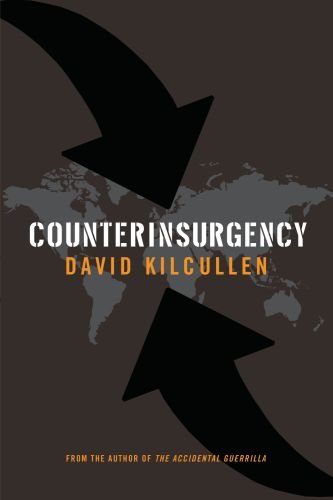
Ucko on Counterinsurgency and its Discontents

Friday, July 23rd, 2010

At Kings of War, Dr. David Ucko has a must-read post on the kulturkampf of COIN (hat tip SWJ Blog):

Counterinsurgency and Its Discontents

….It might be interesting to trace how an idea so welcome less than four years ago has since fallen from grace. Was it the perceived confidence with which the concept was rolled out? Was it the perceived automacity of its widespread acceptance? Is it anger at the arguably simplistic explanation that counterinsurgency, and counterinsurgency alone, won the day in Iraq? Or is it due to a perception of counterinsurgency experts gaining power and prestige in DC by peddling a theory that is not working so well in Afghanistan?

I strongly suggest reading Ucko’s post in its entirety, but here are a few highlights:

Attempts to disaggregate theory and practice has in turn engendered the accusation that counterinsurgency is like Marxism, in that its supporters insist on the doctrine’s infallibility and claim it simply hasn’t been implemented properly. It is a powerful analogy: a concept that survives only on paper has very limited worth.

But counterinsurgency principles have shown practical value, not just in ‘counterinsurgency campaigns’, but also in other campaigns concerned with stabilisation, pacification, peacebuilding – call it what you want. This is not wholly surprising, as many of these principles are quite banal, even commonsensical:

Agree with Ucko here. If COIN’s promise has at times been oversold by its advocates, its critics have occasionally swung in the opposite direction, penning highly ideological jeremiads equating the American use of COIN in Afghanistan and Iraq with the history of 19th century  European colonialism, capitalist-imperialism a la Lenin and Hobson, as a Democratic trojan horse for GOP neoconservatism and as Ucko mentioned, even Soviet Communism. This is dressing up the less exciting valid criticisms that can be made about COIN, in theory and execution, with highly polemical nonsense typical of cable TV news shoutfests.

A powerful reason why counterinsurgency today is so unpopular is because its principles are looked upon as strategy in their own right. As should be clear, the principles and theory of counterinsurgency are only relevant as a means toward a strategic end, which itself may be more or less realistic: to help a country recover from protracted conflict; to bolster the legitimacy and reach of a government, etc. Even then, the theory is not a silver bullet but mere guidance – a collection of lessons learned – that may help in the design and implementation of an effective campaign plan, a plan that must, as counterinsurgency theory clearly stipulates, be adapted for specific environments.

Strong agreement. I have written much the same in the past as have many others. Hopefully, if it is repeated often enough the ongoing COIN debate can begin to generate more light and less heat.

But if counterinsurgency theory is just ‘useful guidance’ or ‘some ideas’, what good is it? I think our own Faceless Bureaucrat hit the nail on the head in a previous post: ‘I have suspected for a long time that COIN itself is merely the knee-jerk answer to a previous question, “Do kinetic/conventional/body-count campaigns work?”‘. I’m currently reading Keith L. Shimko‘s The Iraq Wars and America’s Military Revolution, which provides a bitter reminder of the muddy RMA-type thinking on war within the Pentagon as it invaded Iraq. The discovery of counterinsurgency as a body of theory and lessons was definitely a step forward, but today it is no longer the antithesis, but itself the thesis. Its function as a reaction to muddy thinking is still being served, but it is also being held up in its own right and subjected to critical scrutiny.

….So there is definitely a need for criticism, but the aim of such a debate should be to improve on rather than kill the scholarship. There seems to be a desire to resign the whole ‘counterinsurgency’ concept to the intellectual wastebasket, which risks sacrificing what the concept has provided: a useful starting point to understand and discuss armed conflict and political violence, issues that today need to be discussed, whether in terms of ‘counterinsurgency’ or not.

Some of this desire to “resign the whole counterinsurgency concept to the intellectual wastebasket” is actually an indirect political campaign for other things. Namely, a more isolationist/non-interventionist foreign policy and secondly, a Weinberger-Powell military posture where the US is geared up to fight the Soviet Union’s closest facsimile of the moment, is buying a half-dozen aircraft carriers and F-35’s by the hundreds and the military “doesn’t do windows” – i.e. the 95 % of security threats since the end of the Cold War. Well this is policy for a world COIN critics wished we inhabited and not the one in which we have to live.

I’m not excerpting Ucko’s conclusions, to better incentivize your reading them for yourself.

What I would add to Ucko’s list of the reasons COIN is currently under harsh scrutiny are the variables I sugggested in The Post-COIN Era is Here – economics and the tie-in to domestic politics. States like California, Illinois, Michigan, New York, New Jersey are in varying degrees of financial meltdown, as are some EU/NATO nation-states, which has brought belt-tightening back into vogue, whether it is coming from tea party rallies or pious lectures by the German Chancellor. Increased competition for scarcer dollars (or euros) is already impacting defense budgets which have to be weighed with other societal needs.  COIN, which is intensive in terms of both time and personnel, begins to look less attractive to politicians than does FID, CT, drone and cruise missile strikes or the huge contracts going to shipyards and defense companies which employ their constituents back home.

Islamist insurgency may be global but all politics remain local.

Kindle Launch: The Handbook of 5GW

Tuesday, July 20th, 2010

h5gwc_close.png

The Handbook of 5GW Dr. Daniel H. Abbott, Editor

Nimble Books has published the first authoritative book on the competing interpretations of the military and political theory referred to as “Fifth Generation Warfare“, edited by my friend and colleague Dr. Daniel Abbott. The many contributing authors include academics, journalists such as David Axe, and many blogfriends associated with the former theory site, Dreaming5GW.

My chapter was entitled “5GW: Into the Heart of Darkness“. It is oriented more toward historical case studies than theory and is not in any way, shape or form, a “feel-good” piece. Here is a snippet:

“….This brings us to the probability that for the aforementioned states, their actual options for their ruling elites for adapting to the threat of 4GW will be between accepting varying degrees of failure-from conceding a temporary autonomous zone (TAZ) to rebels, to being overthrown, to imploding into anarchy as insurgents encroach-or “taking the gloves off” and using the indiscriminate, unrestricted violence of genocide to annihilate real and potential enemies before the international community can mobilize to prevent it. History suggests they might well succeed.”

The views within The Handbook of 5GW vary widely, as does the disciplinary approach of the authors, intending to stimulate thought, explore possible scenarios that range from the pragmatic and real to the imaginative and ideal.

Hardcover launch in September, 2010.


Switch to our mobile site

