zenpundit.com » complexity

Archive for the ‘complexity’ Category

Words, words — what’s a bunch of Wordsworth?

Sunday, May 19th, 2013

[ by Charles Cameron — bemused again, “jihad” (the word) in the news, “big data” too, plus Google expecting Mahdi ]
.

I suppose I should be glad — or should I? — that the word jihad is now in the news.

It’s about time. Jihad (the word, the concept, the interpretations) should have been in the news at least since 9/11, don’t you think? or since the World Trade Center bombing in February 26, 1993, perhaps? or at least since Osama bin Laden’s Declaration of Jihad Against the Americans Occupying the Land of the Two Holy Mosques of September 2, 1996?

In any case, the word finally seems to have arrived, if the entry from the National Geographic site last month (upper panel, above) can be trusted:

And Big Data (lower panel)?

President Obama launched his Big Data Initiative on March 29, 2012, but I’m not sure how long the term has been in active use. I’m told there’s no “big data” listing in the 2009 Oxford English Dictionary on CD-ROM, I have the sense that three days ago’s Foreign Policy is far more up to date than last month’s National Geographic in any case — and just a month or two ago the CTO of CIA, Ira “Gus” Hunt, situated Big Data somewhere between “the cloud” and right now, telling his audience at GigaOM:

Big Data was so last year, right, all those breathless articles and all the front page covers — I was expecting BD to be Time’s Man of the Year, right. This year what we’re really talking about is how do we get value out of the stuff?

That quote, of course, is so “two months ago”…

**

So what does National Geographic tell us about jihad?

The Boston marathon bombing has focused attention on the word “jihad.”

Vice President Biden characterized the alleged bombers as knockoff jihadis.” The Associated Press reported that the elder brother had “vaguely discussed jihad” with his mother over the phone in 2011.

Origins

“Jihad” is derived from the Arabic word juhd (meaning effort, exertion, or power) and literally translates to “struggle” or “resistance” for the sake of a goal. Used 30 times and in multiple contexts in the Koran, jihad most often denotes a struggle against external enemies, the devil, or one’s self. One example from the Koran (49.15) is: “The believers are those who believe in Allah and His Messenger … and jahadu (do jihad) with their properties and selves in the way of Allah.”

Mark Wilks, an early 19th-century British author, introduced jihad into the English lexicon, defining it as a Muslim “holy war,” in his Historical Sketches of the South of India. It’s retained that meaning in English; the Oxford English Dictionary defines jihad as “a religious war of Muslims against unbelievers.”

History

Because of its roots and context in the Koran, jihad has a positive meaning to Muslims. Whatever form jihad may take, the struggle is always noble. When the term is evoked against external enemies, it can be used only during just or defensive wars.

I’m sorry, but that last para beginning “Because of its roots and context in the Koran, jihad has a positive meaning to Muslims” isn’t terribly clear. When al-Zawahiri talks about jihad, for instance, does the writer imagine all Muslim readers imagine he’s talking about something noble? I fear there are some subtleties being missed her that not everyone who reads National Geographic may understand.

**

And what does Foreign Policy want to tell us about Big Data?

The promoters of big data would like us to believe that behind the lines of code and vast databases lie objective and universal insights into patterns of human behavior, be it consumer spending, criminal or terrorist acts, healthy habits, or employee productivity. But many big-data evangelists avoid taking a hard look at the weaknesses. Numbers can’t speak for themselves, and data sets — no matter their scale — are still objects of human design. The tools of big-data science, such as the Apache Hadoop software framework, do not immunize us from skews, gaps, and faulty assumptions. Those factors are particularly significant when big data tries to reflect the social world we live in, yet we can often be fooled into thinking that the results are somehow more objective than human opinions. Biases and blind spots exist in big data as much as they do in individual perceptions and experiences. Yet there is a problematic belief that bigger data is always better data and that correlation is as good as causation.

**

Mr Orange had something to say about the word “jihad” in his War Tracker blog the other day, under the title What’s in the names of terrorist groups (1): Jabhah al-Nusrah li-Ahl al-Shâm min Mujâhidî al-Shâm fi Sahât al Jihâd:

… they still use a religious term in their name: One that is quite negatively understood in the West but not so in the Arab and Muslim world namely Jihâd.

They are Mujâhidîn – those who do Jihâd (religious struggle – in this case fighting) – on the fields of Jihâd. Mujâhidîn has a positive, religiously legitimizing ring to it – see here is someone who struggles for the religion – and is furthermore including. Whether you are with the FSA (even one of the rather secular parts of that group mind you) or with an independent Islamist group or with Jabhah al-Nusrah all do use the term Mujâhîd and all may be identified by that term (Granted there was a time when Thuwâr (revolutionaries) was en vogue but no longer so).

That, IMO, gets us a lot closer to understanding a term that has a range of meanings, a range of users, and a range of audiences — from something along the lines of divinely obligated warfare to something akin to conscience (or what Rilke calls “being defeated, decisively, by constantly greater beings”) , and from those who use it for glorious self-identification to those for whom it is a euphemism for terrorist (irhabi), and from those itching for a fight to those longing, praying and working devotedly for peace…

**

So — since we’re talking big data and jihad, here’s a tiny snippet of jihad-related skew from Google, one of the giants of big data…

I came across it via SelfScholar, who posted a very interesting response re the Iranian nuclear fatwa issue here a few days ago, in a post titled Google Translate’s Khomeini Problem.

It appears that Google Translate has a distinctly unsecular view when it comes to major figures in Shi’ite theology — specifically, it adds religious honorifics to their names when translating from English into Farsi. As you might imagine, I wanted to know how they dealt with the Mahdi — and behold, my prayer was answered:

So Google awaits his blessed return?

It seems pretty clear that SelfScholar would be skeptical about that. He ends his blog post, in fact, with an indication that he neither awaits nor expects it — choosing for his final example “to highlight the inanity of it all, just one for the road…”:

**

Prof. Dr. Muhammad-Reza Fakhr-Rohani has an interesting piece titled Rendering Islamic Politeness Markers into English, which he concludes thus:

There remain some Desiderata to be dealt with. First, the Arabic pre-nominal honorifics as well as post-nominal honorific-cum-optative sentences must be re-translated with a view to remove the items which make the language sound odd, and perhaps ungrammatical. Secondly, appropriate abbreviations must be devised for them. Finally, they must find their ways into English dictionaries, hence registered as part of the language.

Thinking outside the cocoon…

Thursday, May 16th, 2013

[ by Charles Cameron — on caterpillars, butterflies, psyche and the alephs of Georg Cantor, with a glance at the vertiginous idea it might be “boxes all the way up and down”… ]
.

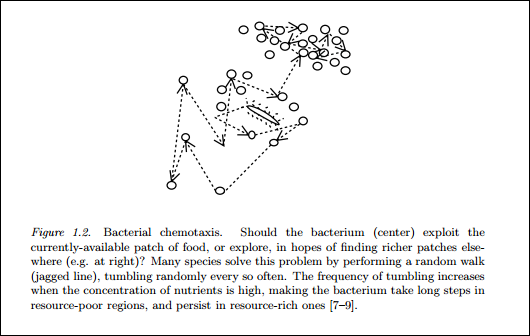
Let’s get the science — which is quite fascinating — taken care of first. Here’s our best current visualization of how a caterpillar, after crafting its cocoon, prepares to become a butterfly:

**

Words can sometimes tell us some things that images can’t — or explain things to parts of us that simply cannot comprehend them visually — so here for parallel processing is an account of part of the same business from Scientific American:

How does a caterpillar rearrange itself into a butterfly? What happens inside a chrysalis or cocoon?

First, the caterpillar digests itself, releasing enzymes to dissolve all of its tissues. If you were to cut open a cocoon or chrysalis at just the right time, caterpillar soup would ooze out. But the contents of the pupa are not entirely an amorphous mess. Certain highly organized groups of cells known as imaginal discs survive the digestive process. Before hatching, when a caterpillar is still developing inside its egg, it grows an imaginal disc for each of the adult body parts it will need as a mature butterfly or moth—discs for its eyes, for its wings, its legs and so on. In some species, these imaginal discs remain dormant throughout the caterpillar’s life; in other species, the discs begin to take the shape of adult body parts even before the caterpillar forms a chrysalis or cocoon. Some caterpillars walk around with tiny rudimentary wings tucked inside their bodies, though you would never know it by looking at them.

Once a caterpillar has disintegrated all of its tissues except for the imaginal discs, those discs use the protein-rich soup all around them to fuel the rapid cell division required to form the wings, antennae, legs, eyes, genitals and all the other features of an adult butterfly or moth.

**

It’s just possible that the bear’s ability to “die” in the winter and “be reborn” in spring gave use the original cirumpolar bear cult — and more generally, a propensity to believe that resurrection from the dead might be a physical, existential human possibility.

Humans watch animals pretty diligently — my old friend and mentor Wallace Black Elk once told me:

We watch the deer, and when they’re sick they know which plant is their aspirin: they eat that green medicine, and drink water. So we have deer medicine. We don’t need the mass-produced kind.

I don’t have the exact quote, but he also observed somewhat wryly that scouts from pharmaceutical companies used to watch him and see what medicines he used, in much the same way…

And if there’s any natural process that humans have watched with equivalent metaphysical interest to that which they may have shown in observing the bear’s pattern of hibernation and return, it would have been the process of metamorphosis in butterflies — whose name in Greek, psyche, is also the word for soul.

**

WB Yeats had a sense of the butterfly transcending both day-to-day human logic and death itself, when he wrote in his poem Tom O’Roughley:

‘Though logic choppers rule the town,
And every man and maid and boy
Has marked a distant object down,
An aimless joy is a pure joy,’
Or so did Tom O’Roughley say
That saw the surges running by,
‘And wisdom is a butterfly
And not a gloomy bird of prey.

adding just a few lines later:

What’s dying but a second wind?

**

What I’d like to do here is to take us from the plodding science of linear thought to which Yeats was (among other forms of linearity) objecting, towards the science — and poetry — of complexity, of nuance.

And I’d like to do it by skipping a couple of thoughts like a stone across water, inviting you to watch the ripples…

These are the leaps that connect the dots.. the creative leaps. And some leaps, it seems to me, are bigger and more demanding than others.

**

Is the leap from cocoon to butterfly in Hutching‘s quote really quite a huge leap? It certainly keeps some of our best scientists busy uncovering its hidden secrets. And the leap from butterfly to tornado, that Lorenz made? That would appear to me to be a larger leap, requiring a different mode of perception. And skipping from Hutchings to Lorenz, can we skim our stone of thought even further?

Putting two and two together is one thing: imagining “aleph null” for the first time, as Cantor did, that would be something else altogether. From two to four, I’m tempted to say, is a quantitative leap, while the imaginative leap from four, ten, or ten thousand to the alephs is qualitative.

How should we recognize and connect widely separated — yet deeply entangled — dots? What would prove to be the richest and most profound of creative leaps? Is there a move that will take us not just out of this box into the box it came in — but out of a whole matrioshka nest of boxes?

Those are the questions in my sandbox about now.

**

When we next meet, I’ll try to tie them in with this diagram that Adam Elkus recently pointed us to —

and with Hermann Hesse‘s Glass Bead Game for good measure.

Point and Counterpoint in Defining Warfare II.

Monday, December 10th, 2012

A few comments on the article by Lt. Col. Jill Long at SWJ and the hardheaded critique by Jason Fritz of Inkspots to which I linked yesterday.

First, the attempt that Long was making in posing an alternative to Clausewitz was a laudable one, in the sense that every serious student who picks up a classic text, Clausewitz, Thucydides, Sun Tzu, Marx, Plato, Machievelli, Musashi and so on, should do more than simply try to understand the author and accept their views uncritically. Doing so would make you a parrot, not a scholar. Instead, we need to wrestle with and challenge the text; try to poke holes in the argument, turn it inside out and break it apart, if we are able. Sometimes we can make a legitimate chip or dent but most of the time, we are going to fail – the reason people have read these books for two or twenty centuries is because the arguments of brilliant minds within them continue to have enduring relevance.

I don’t think Long succeeded in her effort here, but if every officer had as part of their PME to formally construct an alternative to Clausewitz as she tried, we’d have a more strategically informed military and arguably one that better understood Clausewitz. If nothing else, Long was intellectually more courageous than the majority of her brother officers to make the attempt in the full glare of public scrutiny and that is praiseworthy

That said, “What is War? A New Point of View” is problematic. In my view, there are three major structural flaws in Long’s article: first, I don’t think she wrestled with On War  to plausibly justify her opening claim that that Clausewitz’s definition of war was obsolete. As Colonel David Maxwell pointed out at SWJ, that kind of bold discussion requires some reference to CvC’s “remarkable trinity”. Jason Fritz was probably speaking for a Clausewitzian legion when he, quite correctly, jumped on her argument for using dictionary definitions(!),  not tackling Clausewitz’s actual definition of war in asserting it was an anachronism or that such a definition can and does apply to non-state actors making war as well as states. You can’t make sweeping claims as a declaratory preface to the subject you’d really like to talk about – your audience will demand proof of your claim first.

The second major problem, is Long similarly dismisses the accepted definition of war under international law which is not only as equally large a field as Clausewitzian thought, it’s far larger and more important – being, you know – binding international law!  Disproving either of these alone is a fit subject for a dissertation or a book, not a paragraph. Sometimes we must learn how to construct a melody before we attempt to write a symphony.

The third structural problem is one of basic epistemology. Long’s assertion that Clausewitz’s (or any ) definition is not sufficiently broad because it is simple and that her definition is because it is complex is fundamentally ass-backwards. The question of definitions is one of the oldest ones in Western philosophy and we know that simple and profound definitions are by nature broadly stated while the negative dialectical process of qualifying them narrows their scope of application by revising the definition in a more complex form.

Jason Fritz raised a very interesting objection in his rebuttal:

….Long fails to adequately describe how the world has changed or how the “Global Era” plays into this. She states that the terrorist attacks on September 11, 2001 have changed how we should perceive the world. It seems that the she believes that that day should have awakened Americans to the threat of non-state actors. Long also states that “‘interconnected systems of trade, finance, information, and security’ demand a larger perspective when considering the engagement of imposing national will on others.” Both of these points are stated in defiance of history. Globalists enjoy selling the greatness and threats of our “interconnected systems” in the modern day, but that presumes that the world is newly interconnected. We know this is not true. Interconnection in today’s world may be faster and easier, but it is not new. States and other political groups have interacted over the elements listed for millennia – look only to the period of global colonization to see how long we as humans have been at this. Long does not describe how today’s globalization is unique and why that changes how we define war.

There are important distinctions to be made here but my short comment would be that globalization has had a significant effect upon warfare but not upon war.

As Jude Wanniski once pointed out, there is and has always been only one “system” – the whole world. What globalization has changed among the constituent parts is the velocity of transactions, their frequency, the potential number of players making transactions, where the system has degrees of transparency and opacity, the incentives and capabilities of political “gatekeepers” to control exchange of information or goods among other things. It is a different global economy than the one under the auspices of Bretton Woods or the quasi-autarkic decade of the Great Depression or the first globalization that died in August 1914.

Most of these things have direct bearing on economics, politics or policy but indirectly on the conduct of warfare as well. Balance of comparative advantages can be altered, situational awareness of conflicts can be heightened and the line between de jure war and “mere violence” uncomfortably blurred. Generally, statesmen have reacted to globalization by imposing greater political constraints – usually more than would be tactically wise or efficient –  on their own use of military force in less than existential conflicts. Generally, this is perceived as an aversion to taking or inflicting casualties and a legalistic-bureaucratic micromanaging of  military commanders and troops.Whether such politically self-imposed limits are useful in pursuing a strategy for military victory is another question, one that can only be answered in specific contexts. Sometimes restraint and de-escalation is the best answer on the strategic level.

What was good in the Long article? In my view, the root idea of conceptualizing of war on a spectrum; it is a useful cognitive device that could accommodate nuances, ideal for examining case studies or changes in warfare over time. But would be more persuasive if developed with accepted definitions.

Steven Pinker on Analogy

Thursday, December 6th, 2012

[ by Charles Cameron — importance of analogy as an under-developed cognitive skill ]
.

There was a interview with five prominent “science writers” in the Guardian a few days back, titled Science writing: how do you make complex issues accessible and readable? and one of the writers, Steven Pinker, makes two highly interesting observations:

**

There are a couple of things going on here that I’d like to note. One is that without intending to do so specifically, he is in essence formulating a view about a possible, central difference between scientific and religious thinking, since what he says about the humanities in general applies with great specificity to religion and the arts: in both religion and art, the expansive nature of “symbolism” is a key to the experience.

And that in turn prompts me to suggest that perhaps both the arts and religion are geared towards provoking, evoking or invoking an experience — whereas the sciences are geared towards obtaining an understanding.

I’ll have to think about that, and come to some sort of understanding of my own — perhaps expressed via symbolic means.

**

My second point of interest is that there’s an analogy to be made between Pinker’s two remarks: each of them has a form I could portray thus in terms of cause :: effect

science : humanities :: simplicity : complexity

Nobody present — the interviewer, Pinker himself, and four other very bright science writers — picked up on the close correspondence between those two statements at the time. And I find that very interesting.

I find it very interesting because the six of them were more interested in seeing what they could say (of what they already thought) than in saying what they could see (in light of the ongoing, immediate conversation).

I think we all tend to do that — which is why David Bohm‘s approach to dialogue is so important: if brings us to speak more into the moment as it surrounds us, not quite so much from the past as it has informed us.

**

Then there’s the interesting fact that Pinker’s sense of the difference between modes of thought in the humanities and the sciences as expressed in the top quote translates so directly to the difference between uses of analogy in the second — and his fairly emphatic statement:

one could argue that we understand everything except for the physical world of falling objects by analogy.

Analogy is the central device in our mental toolkit, and yet we know far more about trains of logic than we do about analogical leaps. We know so little, in fact, that distinguishing between “literary metaphor” and “scientific analogy” (both of which are based in the recognition of resemblance) on the basis of one looking for multiple, rich connectivity and the other for a single tight connection is something noteworthy enough for Pinker to bother to point it out. It is indeed a provocative and perhaps essential insight. But it is also pretty basic — dividing a field up into significant chunks, the way anthropology got divided into “cultural”, “archaeological”, “linguistic” and “physical anthropology”…

It’s time we learned to understand and use analogic with the same rigor we’ve applied to learning and using logic — and Sembl is just the tool for this.

**

Experience wants to be rich: factual understanding wants to be clear.

Describing Ahmed al-Jabari, with a side of traffic patterns

Tuesday, November 20th, 2012

[ by Charles Cameron — this began with two quotes about the killing of Ahmed al-Jabari and ended up reminding me of traffic flows ]
.

So very much depends on nuance, doesn’t it? There are, after all, one-way streets and two-way streets:

Surely there’s more nuance in describing al-Jabari as “the man responsible both for the abduction of the Israeli soldier Gilad Shalit and his release a year ago” than as “directly responsible for the deaths of many Israelis and for the abduction of the soldier Gilad Shalit”.

**

Does that mean that abducting Gilad Shalit and releasing Gilad Shalit cancel each other out?

In my opinion, not.

But if in this case, (x) plus (-x) does not equal 0, it’s because that “plus” doesn’t represent an addition, it represents an incarceration — one in which Shalit himself was “cared for” under Jabari’s instructions, according to Gershon Baskin in his own NYT piece, Israel’s Shortsighted Assassination

No, Mr. Jabari was not a man of peace; he didn’t believe in peace with Israel and refused to have any direct contact with Israeli leaders and even nonofficials like me. My indirect dealings with Mr. Jabari were handled through my Hamas counterpart, Ghazi Hamad, the deputy foreign minister of Hamas, who had received Mr. Jabari’s authorization to deal directly with me. Since Mr. Jabari took over the military wing of Hamas, the only Israeli who spoke with him directly was Mr. Shalit, who was escorted out of Gaza by Mr. Jabari himself. (It is important to recall that Mr. Jabari not only abducted Mr. Shalit, but he also kept him alive and ensured that he was cared for during his captivity.)

Cared for, maybe — but still incarcerated.

In street terms, there are times when a multi-lane two-way street gets divided so that perhaps three lanes go one way and only one the other — when, in moral terms, there’s no moral equivalency, but still some truth, some justice on both sides. That’s the sort of situation that calls for even more nuance… some of which, to my mind, Baskin provides with what is essentially a “no, but” formulation — no, Jabari was not a man of peace, but, it is important to recall…

**

Look, I think the ability to envision flow patterns is one of the keys to understanding complicated and complex situations — and graphics does a better job of it than linear thinking. Contraflow lane reversal is an interesting example:

Credit: Matthew Hausknecht et al., Dynamic Lane Reversal in Traffic Management

Neither General Gordon nor the Mahdi lived to see this one:

The White Nile Bridge connecting Khartoum, Sudan and Omdurman, with 4 lanes total. Traffic is generally directed equally, 2 lanes to Khartoum and to lanes from except in the morning, where it’s 3 lanes towards Khartoum, and in the evening, 3 lanes towards Omdurman.

**

Of course, you don’t want your efforts to make an unexpected Dynamic Lane Reversal and blow back on you.

Credit: Blowback contraflow by Charles Cameron, h/t Matthew Hausknecht et al

But that at least seemed to be James Zogby‘s concern, when he wrote:

One can only wonder whether when the Israelis made the decision to assassinate Ahmed al Jabari they were foolish enough to assume that their attack would be the end of it. Having been down this same road before, where assassinations only led to escalation and then full-scale hostilities, one might have hoped that someone in the Israeli high command would have recalled 2008 or 2006 (and so many other tragic, bloody episodes in the past) and cautioned that “no good will come of this.” When I heard an Israeli Ambassador tonight saying that “we must finish them off, so we can sit with moderates and talk peace,” it became all too clear that no lesson had been learned.

**

I sometimes wonder whether maybe outcomes are above the human pay grade.


Switch to our mobile site