Happy Veteran’s Day!
Thursday, November 11th, 2010Thank you to all who have served and who are serving now.




Thank you to all who have served and who are serving now.

Charles Cameron is the regular guest-blogger at Zenpundit, and has also posted at Small Wars Journal, All Things Counterterrorism, for the Chicago Boyz Afghanistan 2050 roundtable and elsewhere. Charles read Theology at Christ Church, Oxford, under AE Harvey, and was at one time a Principal Researcher with Boston University’s Center for Millennial Studies and the Senior Analyst with the Arlington Institute:
Zen here – I think Charles has hit upon a primal psychological mechanism that comes into full flower as societies break down and war begins to shade into warlordism. We have seen this repeatedly in history from Tamerlane’s mounds of skulls to Khmer Rouge killing fields. Mad Barons, Dogmeat Generals, Friekorps kapteins and butchers long since forgotten by history- there’s a gravitational pull toward atavistic, symbolic, destruction as social norms erode under the corrosive effects of escalating violence.
Mexico, Africa, Zarqawi?
by Charles Cameron
I’ve been struck by a couple of passages I’ve run across in my reading recently that remind me of what I can only call “brutality with religious overtones”.
1. Mexico
There have been a fair number of articles about the various Mexican cartels, but the excerpt from Ed Vulliamy’s book, Amexica: War Along the Borderline that’s now online at Vanity Fair is the one that caught my eye yesterday.
Here’s Vulliamy’s account of a conversation with Dr. Hiram Muñoz of Tijuana:
He explained his work to me during the first of several visits I have made to his mortuary. “Each different mutilation leaves a message,” he said. “The mutilations have become a kind of folk tradition. If the tongue is cut out, it means the person talked too much—a snitch, or chupro. A man who has informed on the clan has his finger cut off and maybe put in his mouth.” This makes sense: a traitor to a narco-cartel is known as a dedo — a finger. “If you are castrated,” Muñoz continued, “you may have slept with or looked at the woman of another man in the business. Severed arms could mean that you stole from your consignment, severed legs that you tried to walk away from the cartel.”<¶>Earlier this year, 36-year-old Hugo Hernandez was abducted in Sonora; his body turned up a week later in Los Mochis, Sinaloa, but not in a single piece. His torso was in one location, his severed arms and legs (boxed) in another. The face had been cut off. It was found near city hall, sewn to a soccer ball.
That’s the brutality — I haven’t see the book itself yet, but I gather it also gets into the narco-corrida music and the “quasi-Catholic cult of Santíssima Muerte” — which brings me to the second part of my interest – the religious aspect.
As Vulliamy mentions, there’s the cult of Holy Death, to be sure, a sort of shadow or inverse of the Blessed Virgin — a Dark Mother for dark times, or perhaps a revival of the ancient Mictlancihuatl, lady of the Dead? — with her own liturgy, too:
Almighty God: in the name of the Father and of the Son and of the Holy Spirit, we ask for your permission to summon Saint Death. Welcome, White Sister: we find ourselves gathered here at this altar of the Romero Romero family and of each one of us, to offer you a Mass that we hope you will like…
Which brings us to the Robin-Hood-like bandit and folk-saint, Jesus Malverde, to whom prayers such as the following [FBI .pdf, see p. 20] are offered:
Lord Malverde, give your voluntary help to my people in the name of God. Defend me from justice and the jails of those powerful ones. Listen to my prayer and fill my heart with happiness. For you shall make me fortunate.
There are even miracles attributed to him:
Oh Malverde! The Vatican did not believe you to be holy and would not canonize you, but when they brought the Caterpillars to tear down your hood, you broke one machine and nobody could move you away, you broke another, leaving those who disrespect you speechless — and when the third one broke, they said, “Let Malverde’s chapel alone.”
Right beside the syncretistic quasi-Catholicism, there’s also a Protestant angle: La Familia is the group that, in Vulliamy’s words, “made its ‘coming out’ known in a famous episode: bowling five severed heads across the floor of a discotheque.” Time magazine reported on what it termed Mexico’s Evangelical Narcos:
Federal agents seized one copy of La Familia’s Bible in a raid last year. Quoted in local newspapers, the scripture paints an ideology that mixes Evangelical-style self-help with insurgent peasant slogans reminiscent of the Mexican Revolution. “I ask God for strength and he gives me challenges that make me strong; I ask him for wisdom and he gives me problems to resolve; I ask him for prosperity and he gives me brain and muscles to work,” Moreno writes, using terms that could be found in many Christian sermons preached from Mississippi to Brazil. But on the next page, there’s a switch to phrases strikingly similar to those coined by revolutionary Emiliano Zapata. “It is better to be a master of one peso than a slave of two; it is better to die fighting head on than on your knees and humiliated; it is better to be a living dog than a dead lion.”
As I commented on Zenpundit a while back,
What’s troubling here is that there is only one undoubtedly “evangelical” phrase in all those that Time quotes, and it is one of then ones said to resemble the aphorisms of Emilio Zapata. “It is better to be a living dog than a dead lion” is a pretty direct borrowing from Ecclesiastes 9.4 in the King James Version: “To him that is joined to all the living, there is hope: for a living dog is better than a dead lion.”
But that’s not actually all. I didn’t mention it at the time, but “I ask God for strength and he gives me challenges that make me strong; I ask him for wisdom and he gives me problems to resolve; I ask him for prosperity and he gives me brain and muscles to work” is almost word-for-word the same as a poem attributed to Islam — or Judaism for that matter. Indeed, it can be hard to tell who is borrowing from whom – but one final source for the La Familia bible is known – it’s the book Wild at Heart by John Eldredge, the pastor of a ministry in Colorado Springs, who must have been surprised at the uses to which his writings were being put.
In any case, as I said on Zenpundit: These people have a theology, and we should be studying it.
2. Africa
My thoughts turned to Africa when I read another paragraph recently, this one from Johann Hari’s review, The Valley of Taboos, of V.S. Naipaul’s new book, The Masque of Africa: Glimpses of African Belief:
I have stood in a blood-splattered house in Tanzania where an old woman had just been beaten to death for being a “witch” who cast spells on her neighbors. I have stood in battlefields in the Congo where the troops insist with absolute certainty they cannot be killed because they have carried out a magical spell that guarantees, if they are shot, they will turn briefly into a tree, then charge on unharmed. I have been cursed in Ethiopia by a witch-doctor with “impotence, obesity, and then leprosy” for asking insistently why he charged so much to “cure” his patients. (I’m still waiting for the leprosy.) Where do these beliefs come from? What do so many Africans get out of them? Can they be changed? These are questions that are asked in Africa all the time, but we are deaf to the conversation.
That sent me in search of some early military anthropology related to guerrilla warfare I’d come across in earlier readings.
James R Price and Paul Jureidini’s 1964 Witchcraft, Sorcery, Magic, and Other Psychological Phenomena and their Implications on Military and Paramilitary Operations in the Congo, and Roger D Hughes’s 1984 Emergency in Kenya: Kikuyu and the Mau Mau Insurrection are both of considerable interest here — but it is LSB Leakey, the world-class British archaeologist initiated as a boy into the Kikuyu ways, who has written the most provocative summary of the relationship between political and religious violence and ritual that I’m interested in tracking.
I’m quoting here from the chapter on “The Mau Mau Religion” in Maj. Hughes paper:
Leakey’s original hypothesis in Mau Mau and the Kikuyu: “Mau Mau was nothing more than a new expression of the old KCA … a political body that was banned … because it had become wholly subversive.” Furthermore, “Mau Mau was synomomous with the new body called the in school, Kenya African Union…” However, Leakey admits to a reversal of his original hypothesis in Defeating Mau Mau, and goes on to say, “Mau Mau, while to some extent synonymous with these political organizations, was in fact a religion and owed its success to this fact more than to anything else at all.”<¶>He then proceeds to attribute the origin of Mau Mau to an “ideology transfer,” wherein the religious beliefs of the Kikuyu transitioned from their ancient tribal religion to Euro-Christianity to Mau Mau. The first transition took place artificially, as the missionaries stripped away the traditional beliefs and supplanted them with “20th Century Europe’s concept of Christianity.” The second transition was more natural and evolutionary than the first. A reactionary hybrid of the old and the new developed, because the supplanted concepts would not hold up in their society. There were too many contradictions between the old and the new, mainly due to the 20th Century European “add-ons.”
Most of us have a pretty fixed view of what religion is, should be, or isn’t. Some of my readers no doubt hold to a evangelical Christian position, some are Catholic, some perhaps Buddhist, agnostic or atheist, and some perhaps Muslim. Each of us tends to take our own view of a particular religion as normative, but the reality is that the history of each of the great world religions contains sanctions for both peace-making and warfare — and human nature itself encompasses a range of behaviors that run from the kind of atavistic violence described above to the forgiving and compassionate impulse behind the Beatitudes…
And while economic pressures and political frustrations may be enough to power great struggles, when religious rituals, beliefs and feelings are added into the mix, it can quickly become even more lethal.
3. And Zarqawi?
All of which leaves me wondering how close the parallels are between the Mau Mau in LSB Leakey’s account, La Familia and the other Mexican cartels — and the brutalities of jihadists such as Abu Musab al-Zarqawi.
Charles Cameron is the regular guest-blogger at Zenpundit, and has also posted at Small Wars Journal, All Things Counterterrorism, for the Chicago Boyz Afghanistan 2050 roundtable and elsewhere. Charles read Theology at Christ Church, Oxford, under AE Harvey, and was at one time a Principal Researcher with Boston University’s Center for Millennial Studies and the Senior Analyst with the Arlington Institute:
The Diplomacy of Caring
by Charles Cameron
It’s such a simple thing, a blog post with space for comments. And yet it is also a remarkable opportunity.
The blog post I’m thinking of today was made about three weeks ago by an American helicopter pilot, CWO John Bockmann, who has been flying relief missions in Pakistan as part of the US response to the terrible floods there.
A retired Pakistani officer, Brig. FB Ali, read it on Pakistan’s Express Tribune blog, and quoted from it in a guest post on Col. Pat Lang’s blog, Sic Semper Tyrannis, today. Both are worth reading – but what’s most wonderful, as Brig Ali notes, is the outpouring of love and appreciation in the Comments section, both from individual Pakistanis and from Bockmann’s own family.
Bockmann writes:
I have learned in my time here that Pakistani people are truly gracious. Strangers have invited me for chai and conversation. Almost anyone will shake my hand and ask my name, inquire about my health and how I am getting along. Instead of a handshake at our first meeting, I have sometimes been embraced. “Strangers shake hands,” my new friend Mahmood explained, “but brothers hug each other.” This warms my heart. My mission, our mission, is straightforward, noble, and good. I am deeply grateful to those who support us here, for we need all the help we can get in order to help those in need. I am honored to do this work. I feel at home here beyond anything I could have expected.
and
When I do return home, I will bring with me hundreds of pictures, dozens of journal entries, six duffel bags, and several recipes for local dishes that I have enjoyed, but I will also bring innumerable memories that I will treasure for life — memories of Pakistan and its people. They have surprised me with friendship. I hope that through our work of compassion we may surprise them with friendship as well.
I will let the comments of Abdullah and Mustafa stand for the many that were posted by Pakistanis in response:
God bless you and may you return home safe and sound . There is a lot in common and a lot to share between common people not only living in U.S and Pakistan but also between people living all over the world. — Abdullah
and:
John, I’d like to personally thank you for your efforts and for giving your time for this cause. May Allah reward you and bless your family. — Mustafa
Others wrote longer and more effusive comments, but in their simplicity those two capture the spirit of the whole.
And then John’s mother, deeply moved by the love shown her son by these people from a far-off country, wrote her own comment — which strikes closer to the heart than the best of diplomats easily can:
Thus shall it be between Christians and Muslims, your country and mine: despite the heartbreaking fractures, we shall become strong in all the weak places, and no government policies, no misguided violent people shall prevent it, because God wills it, whether we call him Allah or Jehovah, and we will it, with all our hearts. We shall support each other while respecting our differences.
I’m with FB Ali on this, and Pat Lang, and John Bockmann and his family, and all the many Pakistanis who responded. More recently, John Bockmann wrote this comment on the whole exchange:
Amazing. I know the hearts of many Pakistanis now, but I am still surprised by their outpouring of warmth — especially in such hard times. I read all of the comments — the stories, the blessings, the frustrations — and I am increasingly convinced that international relations are effected more by common people like you and me than by politicians who may never get a chance to have tea and real conversation with “the other side”. I am so privileged to be so well loved while I am so far from home. God’s blessings on Pakistan and her people.
If you want to see Bockmann, Cpl. Jenie Fisher interviewed him earlier in the mission, and you can find those videos here. I hope she does a follow-up. I hope the press picks up on this. This is what’s best in our common humanity — hearts and minds – they’re not won, they open. And this is what’s best about the internet — this possibility. I’ll close with the words of Engineer Syed, who writes:
Ten people like the pilot who is in the picture in worlds each decision making cabinet-agency-organization etc can change the total scenario of the world

Fabius Maximus makes waves with a powerful and controversial post:
The Army and Marines are breaking, but we don’t care
Summary: The US Army and Marines are breaking. It’s a slow inexorable process resulting from fighting 4GWs around the world too long with too few men. Neocon war-mongers, national leaders, and the general public remain blind to the evidence, so they can express surprise when the results eventually become too severe to ignore. It took a decade to repair the damage after Vietnam, under more favorable social and economic circumstance than likely in early 21st century America. Here we see another warning from a senior officer, and revisit data from the lastest Army report about this slow-growth crisis, another in a string of similar reports. See the links at the end to other articles on this topic.
Update: The “we” in the title refers (as always on this website) to the American people. As the shown in previous posts and the report described here, the military quickly recognized these problems and strongly responded with measures to mitigate the damage. Unfortunately, solutions lie beyond the state of the medical and social sciences. Perhaps these ills result inexorably result from war.
Before the data, here’s a brief on the situation, from “Dark Hour“, Katherine McIntire Peters, Government Executive, 1 October 2010 (red emphasis added):
“This report literally whistles past the graveyard,” says retired Maj. Gen. Robert Scales, who served as commandant of the Army War College in 2000 and authored a number of books on military strategy and leadership. Suggesting that officers and NCOs or garrison staffs are responsible for a rising suicide rate because of lax leadership, as Scales reads the Army’s report, is “irresponsible,” he says. “This report basically allows people off the hook for the inability to resource these two wars with the people necessary to do it. It’s got nothing to do with politics. It’s got to do with the lack of perception of what land warfare does to a ground force,” he says. “Rarely have I ever read anything that so badly misses the mark. It’s trying to find little nooks and crannies in the Army’s management of these two wars and it absolutely misses the point of what’s been going on.”
Scales says too few troops have been carrying too heavy a burden for too long. “I don’t care if you’ve got an army of Robert E. Lees, the anecdotal evidence clearly shows the ground forces are going through an unprecedented realm of emotional stress,” he says.
Read the rest here.
ADDENDUM:
More at Wings Over Iraq:
Enough complaining, what do we actually do about suicides?
2.) Reduce the Separation Authority. I think it’s time to admit that we face a mounting discipline problem which will require years to fix. The instances of misdemeanor activity among soldiers has nearly doubled over the past five years. In almost a third of those cases, no disciplinary action was taken whatsoever.
Certainly, company commanders need to take action to either rehabilitate or get rid of problem troops. But this is easier said than done. For example, the Army has seen a precipitous decline in the number of soldiers chaptered out for obesity in recent years.
Don’t think for a moment it’s because we have fewer obese soldiers, either.?
Part of the problem, in my humble opinion, lies with the fact that separation authority has been taken from battalion commanders and raised to the “special court-martial convening authority” (in many cases, a two-star general)–a full two levels of command. Why? Because commanders were doing exactly what they should have been doing–kicking sub-par first-term soldiers out of the Army….
Courtesy review copies that arrived this week from authors and publishers. Sweet!


Magic and Mayhem: The Delusions of American Foreign Policy From Korea to Afghanistan
Operation Dark Heart: Spycraft and Special Ops on the Frontlines of Afghanistan
Without Hesitation: The Odyssey of an American Warrior
Soft Spots: A Marine’s Memoir of Combat and Post Traumatic Stress Disorder
I really enjoyed Leebaert’s early Cold War history, The Fifty Year Wound and therefore, have high hopes for Magic and Mayhem. By contrast, Operation Dark Heart has already been the subject of controversy when the Pentagon bought up the entire first edition in order to wheedle an idiosyncratic list of redactions from the publisher for the second edition.
A note to readers, General Shelton, the former Chairman of the Joint Chiefs of Staff, and LTC Anthony Shaffer are both associated with the new military affairs and history site, Command Posts.
In addition to review copies, I shelled out some hard-earned cash for a few other titles:


The Ruin of the Roman Empire: A New History
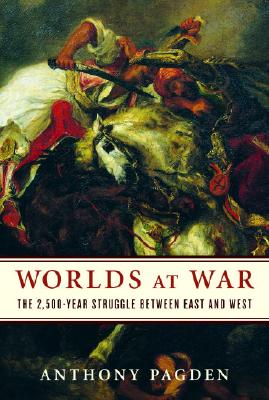
Worlds at War: The 2,500-Year Struggle Between East and West
The House of Medici: Its Rise and Fall
What new books have you just picked up?

Zenpundit is a blog dedicated to exploring the intersections of foreign policy, history, military theory, national security,strategic thinking, futurism, cognition and a number of other esoteric pursuits.
Customized Web Site & Blog Design