zenpundit.com » feedback

Archive for the ‘feedback’ Category

Rofer on Blogging

Saturday, June 12th, 2010

Broadening the discussion on the state of blogging begun by Dr. James Joyner and Dr. Bernard Finel, blogfriend Cheryl Rofer at Phronesisaical delves into the stratification and attribution issues that have been wrought in the blogosphere by the MSM:

A Sketch of a Post on Blogging

….Once upon a time, the blogosphere was a sort of talent night, a talent 24/7, with entertainment for all. Much of that is still there, but some of the talent has gone pro; Kevin Drum, Ezra Klein, Matt Yglesias and others have joined the MSM or think tanks and link only to each other. Some days there is almost a perfect linking circle of Drum quoting Klein quoting Yglesias quoting Drum. Drum got linked from The Economist blog the other day, moving up one more notch. Stratification. The MSM, meanwhile, still doesn’t understand the idea of hyperlinks but provides something they call blogs at their sites. Some of these are actually blogs, like Ezra Klein’s at the WaPo. Some are more like newspaper columns with more depth or specialization, like Olivia Judson’s at the NYT. Some are sui generis, like the Gail and David show at the NYT. Others are clearly from reporters who have been told that they will produce a blog, probably not much more instruction provided.And then there’s the problem of the MSM simply stealing bloggers’ material (or those somewhere below them on the food chain) and not crediting it. I’ve seen this pretty unambiguously many times over the almost six years I’ve been blogging. And then there are situations where it’s not quite clear that material has been cribbed, but someone in the MSM says something that looks an awful lot like something I read days before in a blog. As a blogger friend said, “I think they call it research.” Or they don’t take it seriously enough. Today someone on The Oil Drum asked if the MSM was reading their threads, which have much more good information than anything I’ve seen on the BP Blowout in the MSM. Of course, it’s mixed, and there are some just plain dumb comments, but hey! that’s what the reporters get the big bucks to filter, right?

Read the rest here. 

Cheryl brings up a number of points about blogging from an information ecology standpoint I had not really considered when I reacted to Bernard’s post. I’ve noticed ideas or arguments that have been “liberated” from blogs I read in the media with some frequency in recent years and I think I first noticed a MSM outlet cribbing a paragraph, almost verbatim from me circa 2006. At the time, I laughed, but Cheryl’s considered point that attribution is important is not something peculair to the blogosphere – it’s actually the traditional standard for scholarship and journalism. Bloggers, reporters, academics, government officials – anyone writing in the public sphere – should hew to it.

When in doubt, adding the little quotation marks, a link or a hat tip is still the best course of action – it saves headaches down the road.

ADDENDUM:

Peter weighs in at The Strategist.
Charles Cameron and the Strategist of Jihad

Friday, June 4th, 2010

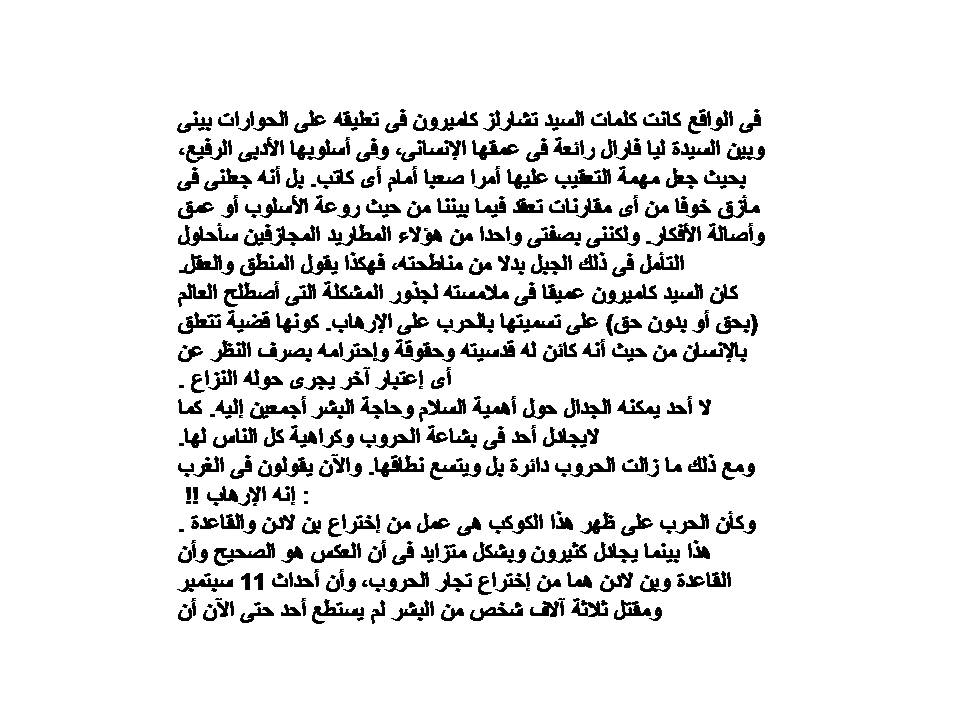
My friend and guest-blogger Charles Cameron, a while back, posted a learned essay here at ZP and at Leah Farrall’s  All Things Counterterrorism, in response to the unusual dialogue that Farrall, a former Australian counterterrorism official, was having with  Abu Walid al-Masri, an Egyptian strategist of jihad, a sometime critic of al Qaida and an adviser to the Taliban. In other words, al-Masri is an influential voice on “the other side” of what COIN theorists like Mackinlay and Kilcullen call the “globalized insurgency”.

After some delay, al-Masri has responded to Charles, as Farrall describes:

Abu Walid al Masri responds to Charles Cameron

Abu Walid  has responded a letter from Charles Cameron. Abu Walid’s response  to Charles can be found here.  You’ll notice when following the link, that he has a new website.

It’s well worth a look. There is also an interesting comment from a reader below Abu Walid’s response to Charles; it’s from “one of the victims of Guantanamo”.

As you’ll see from his website Abu Walid is also engaging in a number of other interesting dialogues at the moment, which I am interested to read as they progress.

Charles wrote his letter in response to the dialogue Abu Walid and I had a little while back. For those of you new to the site, you can find this dialogue to the right in the page links section.  The letter from Charles can be found on my blog here.

….These letters may not change anything, but they are important because  in mass media sometimes only the most controversial and polarising views tend to make it into the news.

I think person to person contact, especially via mediums like this, can go some way to providing opportunities for all of us to discover or be reminded that there is more than one viewpoint and along with differences there are also similarities. Contact like this humanizes people, and in my book that’s never a bad thing.

Farrall is working up a translation of al-Masri’s post  from Arabic ( I used Google which gives a very rough translation). Readers who are fluent are encouraged to read it in full and offer their thoughts. Here is a snippet:

al-masri.jpg

Google translation is fast and dirty but it is not the best source of translation, it garbles many words and phrases that require transliteration, which is how I read al-Masri’s response. With that caveat, my impression was that he did not know quite where to go with Charles’ essay, beyond acknowledging it and then retreating to some talking points. The remarkable aspect was that al-Masri felt the need to respond at all which has sent Charles thoughts bouncing around the radical Islamist online community.

Nice work, Charles!

What Should I be Reading?

Monday, May 3rd, 2010

Quick question to the august readership:

What should I be reading? Not in terms of books, I’m buried there, but periodicals, e-zines and blogs? We all can get in a rut with what we read and the topics we look at; I am no exception.

Nominate any suggestions in the comments section, if you have the time.

Thought Experiment

Thursday, April 22nd, 2010


Oligarchy is not good.

 ….But as soon as the people got leaders, they cooperated with them against the dynasty for the reasons I have mentioned; and then kingship and despotism were alike entirely abolished, and aristocracy once more began to revive and start afresh. For in their immediate gratitude to those who had deposed the despots, the people employed them as leaders, and entrusted their interests to them; who, looking upon this charge at first as a great privilege, made the public advantage their chief concern, and conducted all kinds of business, public or private, with diligence and caution.

16    But when the sons of these men received the same position of authority from their fathers-having had no experience of misfortunes, and none at all of civil equality and freedom of speech, but having been bred up from the first under the shadow of their fathers’ authority and lofty position-some of them gave themselves up with passion to avarice and unscrupulous love of money, others to drinking and the boundless debaucheries which accompanies it, and others to the violation of women or the forcible appropriation of boys; and so they turned an aristocracy into an oligarchy. But it was not long before they roused in the minds of the people the same feelings as before; and their fall therefore was very like the disaster which befell the tyrants.

                                                       – Polybius

I have made, from time to time, the observation that the elite in American society is trending in its favored policies toward conscious promotion of oligarchy. Over at The Committee of Public Safety, Joseph Fouche quoted a theorist, retired CIA analyst Patrick E. Kennon, who is a delighted advocate of a coming technocratic oligarchy:

“Now, as we enter the twenty-first century, the future of the nation-state is much in doubt…Indeed, tribalism has revived with a brutal savagery from Rwanda and Cambodia to the newly dissolved USSR and the newly unified Germany…At the same time, a kind of shadow empire…is being embraced by elites around the globe. UN bureaucrats and Greenpeace activists, Carlos the Jackal and Mother Theresa, Toyota and Amnesty International, the Cali drug cartel and the World Bank, people who worry about the dollar-yen ratio and people who worry about the ozone layer, all of these consciously or unconsciously look to empire for their profit or salvation. All of these have largely given up on the nation.”

Oligarchs elevate self-interest and class interest over national interest, it’s the signature of oligarchy, be it the Thirty Tyrants or the Soviet nomenklatura. Milovan Djilas knew what the hell he was writing about as much as did Thucydides.

What to do?

The proto-oligarchical class in America, the elite who are the product of “the good schools”, tend to embrace and celebrate progressive taxation and diversity as high moral principles. What if we applied them?

The gateway to membership in the elite and opportunities for fabulous wealth and power runs through the admissions offices of our best universities, the Ivy League and a few other select intitutions and a handful of old, highly exclusive, liberal arts colleges. What if we put a special surtax on the purchase of tuition on a sliding scale that correlated with how many generations that members of a family have matriculated at such schools? Plus a few other tweaks here and there.

For example, a student who is the first in their family to go to college and was accepted by Yale would not be taxed at all, perhaps instead, they would be subsidized with a free ride for four years. But someone like Treasury Secretary Tim Geithner, a Dartmouth grad who was the son of a Dartmouth grad and a Ford Foundation executive, his kids might face a steep penalty, maybe a $ 250,000 per annum fee on top of tuition, then an additional surcharge to their income tax rates if they entered government service or certain professions like, say, hedge fund management, for the next couple of decades. Entering a different field, say becoming a social worker, a bowling alley manager or a policeman would not incur any income tax surcharge.

We can argue about the appropriate level of progressive taxation but the basic idea is that we could make it increasingly expensive for a family to continue to perpetuate itself, generation after generation, at the political and economic heart of American power. Not impossible, that would be un-American, but very, very expensive.

The net result would be far greater “diversity” at our flagship educational institutions – far more white ethnics whose last names end in vowels, Catholics, Jews, Eastern Orthodox, Asian-Americans, Hispanics, Southerners, Midwesterners and Westerners, people hailing from small towns or blue collar socioeconomic backgrounds. Currently favored demographic groups might be markedly reduced under such a system but since most of them come from long established UMC to UC families with great connections, they’ll be ok even going to Big State U. and getting a third tier school degree.  No worries.

Thoughts?

Barnett on the Tipping Point of Blogging

Monday, March 29th, 2010

Dr. Tom Barnett had an excellent WPR column on the cognitive value that blogging has had for him:

The New Rules: Strategic Thinking in 10,000 Blog Posts or Less

In the last half-decade, blogs have gone from a quirky personal sideline activity to a mainstream, almost de rigeur professional activity — following the previous trajectory of Web sites and, before them, e-mail itself. To many, this democratization of the flow of information is a distinct blessing, to others it is the epitome of data deluge. As someone who has now posted blog entries every day for six years and recently passed the 10,000-unit mark (fulfilling Malcolm Gladwell’s quota for expert practice), I wanted to take stock of what this has meant to me as a writer and thinker

….Old-timer that I am at 47 years of age, I still read many of these sources via paper subscriptions, but that habit is slipping with each passing year and each new technology. In fact, what originally attracted me to online posting was the ease it offered in terms of maintaining the resulting database, compared to the hassle of physically clipping and filing MSM articles of interest, as I did during my pre-blogging days. With the blog, I can now attach my first-impression analysis to the formal citation, with both hot-linked to the full article and stored in a content management system — the blog — that I can instantly access and search from anywhere in the world.


In this sense, generating and maintaining the blog magnificently expanded my professional “RAM,” or random-access memory storage capacity. Without that upgrade, I simply couldn’t write or think at the level I do today, nor could I cover as much of the world or so many domains. Without that reach, I couldn’t be much of an expert on globalization, which in turn would seriously curtail my ambitions as a grand strategist — because nowadays, strategic thinking requires a whole lot more breadth than merely mastering the security realm. To be credible and sustainable in this complex age, grand strategy requires a stunning breadth of vision when judged by historical standards. So as far as this one-armed paperhanger is concerned — no blog, no grand strategist.

And I have to tell you, just making that admission in 2010 stuns me. But without the blog’s organizing and storage capabilities, I’d be reduced to a parody of “A Beautiful Mind”: tacking news clippings on walls and feverishly drawing lines between them, desperately seeking patterns but constantly falling behind the data tsunami. The blog thus prevents the early onset of what I call “strategic Alzheimer’s,” which is what happens when a strategist’s growing inability to process today’s vast complexity provokes a sad retreat into the past and an overdue reliance of history-is-repeating-itself arguments. But if a strategist no longer “gets it,” it’s because they’ve stopped trying to “see it.” The blogging “lens” corrects their vision’s lack of acuity.

But my blog is also my daily workspace, and I share it with strangers — for free, mind you — because I want to pass on this largely lost skill set of strategic thinking to others. I especially hope to reach the next generation of grand strategists, who would otherwise have to rely primarily on op-ed columnists’ flavor-of-the-news-cycle habits, with new “Manhattan Projects” proposed and “Marshall Plans” demanded every other month. Consider it a one-to-many offer of virtual internship.

Read the whole column here.

I really enjoyed this one because Tom was expounding on how a social media platform – this case, his blog – altered the psychological flow and conceptual reach of his professional work. It is now standard for author/thought leader types to have a blog that relates in some way to their books or speaking gigs. Some ghost it out to their PR firm or shut off the comments or have an almost static web page with little or no personal investment or thought.

IMHO those who keep the blog as an interactive medium with their readers as Tom does, tend to be more intellectually interesting and productive figures – they “grow” and play with ideas in the scrutiny of the public eye and accept the reader’s pushback along with the accolades which makes the exchanges are very stimulating – “infocrack”, as it were. Participation in well moderated, high quality forums like the Small Wars Council have a similar effect and are good places to “test drive” your new ideas – provided you have a thick skin and a healthy ego that can stand up to constructive criticism.

Personally, I wish I had more time for blogging – I learn a great deal from the readers who take the time to contact me across various Web 2.0 sites, send me links, ask questions, challenge my assertions, suggest new books or correct my errors. While the volume of feedback from ZP readers and other bloggers is sometimes more than I can manage as a one-man band, your contributions are always appreciated.


Switch to our mobile site