zenpundit.com » intellectuals

Archive for the ‘intellectuals’ Category

The Strategist as Demiurge

Saturday, August 7th, 2010

“Genius is above all rules” – Carl von Clausewitz

“Creativity is the ability to introduce order into the randomness of nature.” – Eric Hoffer

An intriguing, thought-provoking and frequently on-target paper by Dr. Anna Simons of SSI  (hat tip to SWJ Blog). First the summary excerpt and then some comments:

Got Vision? Unity of Vision in Policy and Strategy: What It Is and Why We Need It (PDF)

….Moving beyond “unity of effort” and “unity of command,” this monograph identifies an overarching need for “unity of vision.” Without someone at the helm who has a certain kind–not turn, not frame, but kind–of mind, asymmetric confrontations will be hard (if not impossible) to win. If visionary generals can be said to possess “coup d’oeil,” then unity of vision is cross-cultural coup d’oeil. As with strategic insight, either individuals have the ability to take what they know of another society and turn this to strategic–and war-winning–effect, or they do not. While having prior knowledge of the enemy is essential, strategy will also only succeed if it fits “them” and fits “us.” This means that to convey unity of vision a leader must also have an intuitive feel for “us.”

[ For the readers for whom military strategic terminology is unfamiliar, “coup d’ oeil” is an instant, intuitive, situational understanding of the military dynamics in their geographic setting. The great commanders of history, Alexander, Caesar, Belisarius, Napoleon – had it]

The key concept  here is “visionary generals” creating a mutually shared “general vision” of policy and its strategic execution. While military figures who hold high command – Eisenhower, MacArthur, Petreaus – are obvious examples, technically, it doesn’t have to be a “general” in immediate combat command, so much as the final “decider”. A figure whose authority is part autocrat and part charsmatic auctoritas. Abraham Lincoln and Winston Churchill epitomized this role, as did George Marshall, the orgainizer and architect of the Allied victory in WWII. On a less exalted scale, we see Edward Lansdale (cited by Simons) or Thomas Mann, LBJ’s behind the scenes, Latin America “policy czar” during the Dominican Crisis of 1965

Simons is arguing for finding “great men” of strategy rather than explaining how to contruct a strategic vision per se. There is a very strong emphasis here of successful strategy as an act of great creativity, with the strategist as a master artist of force and coercion, imposing their will on allies and the enemy to shape the outcome of events. Colonel John Collins, wrote of this article by Dr. Simons at his Warlord Loop:

Be aware that the following article is NOT about unity of vision. It is about visionaries who convinced a majority that their vision was the best available policy at a given time and place in a certain set of circumstances. Implementing plans, programs, and operations follow. Most successful visionaries indeed must be supersalespersons, because priceless theories and concepts otherwise gather dust.  

I agree. There’s a combination of actions here – strategic thought, proselytizing the vision, competent execution, empirical assessment and strategic adjustment – that feeds back continuously (or at least, it should). While Simons argues her point well and draws on several case studies from India from which I learned new things, there is a flaw in one of her premises:

Take Andrew Krepinevich’s and Barry Watts’s recent assertion that it is “past time to recognize that not everyone has the cognitive abilities and insight to be a competent strategist.”4 As they note, “strategy is about insight, creativity, and synthesis.”5 According to Krepinevich and Watts, “it appears that by the time most individuals reach their early twenties, they either have developed the cognitive skills for strategy or they have not.”6 As they go on to write:

If this is correct, then professional education or training are unlikely to inculcate a capacity for genuine strategic insight into most individuals, regardless of their raw intelligence or prior experience. Instead, the best anyone can do is to try to identify those who appear to have developed this talent and then make sure that they are utilized in positions calling for the skills of a strategist.7

Mark Moyar concurs. The point he makes again and again in his new book, A Question of Command: Counterinsurgency from the Civil War to Iraq, is that “counter-insurgency is ‘leader-centric’ warfare, a contest between elites in which the elite with superiority in certain leadership attributes usually wins.”8

Watts and Krepinevich are statistically correct regarding the rarity of strategic thinking and are probably largely correct regarding the effects of professional military education and the career path of most military officers. They are most likely wrong on the causation of the lack of strategic thinking ability. It is not exclusively a matter of winning the genetic lottery or losing it at age thirty, cognitively we are what we frequently do. Discourage a large number of people by regulation or culture from taking the initiative and making consequential choices and you will ultimately have a group bereft of strategic thought. Or possibly, thought.

As with most professionals, military officers tend to be vertical thinkers, or what Howard Gardner in Extraordinary Minds calls “Masters” – as they rise in rank, they acquire ever greater expertise over a narrower and more refined and esoteric body of professional knowledge. This tendency toward insularity and specialization, analysis and reductionism is the norm in a 20th century, modern, hierarchical institutional culture of which the US military is but one example.

However, if you educate differently, force officers out of their field (presumably into something different from military science but still useful in an adjunctive sense), the conceptual novelty will promote horizontal thinking, synthesis and insight – cognitive building blocks for strategic thinking. While we should value and promote those with demonstrated talent for strategic thinking we can also do a great deal more to educate our people to be good strategists.

Reminder: Chicago Boyz Roundtable – Defeat in Afghanistan? The View from 2050

Thursday, August 5th, 2010


From Lexington Green:

Defeat in Afghanistan? The View from 2050

As previously announced, ChicagoBoyz will be hosting a roundtable discussion of the American campaign in Afghanistan, looking back from a forty year distance, from 2050.

In the few weeks since the initial post went up, we have had several dramatic events occur: The end of Gen. McChrystal’s command, the rise of Gen. Petraeus for a historic second command of a very troubled war, the apparent abandonment of President Obama’s timetable, the appearance of the Wikileaks document trove … . These are major developments.

Yet, looking back at any historical events from a long enough distance, all the details get ironed flat, the granularity milled to smooth powder, the larger patterns emerge, while the roles of key individuals sometimes come into clearer focus.

But for now, we don’t know how this war is going to play out. We are doomed to live history marching backward, facing only the past, and not knowing what we will trip over next.

Imagining possible outcomes, and possible explanations for those outcomes, can help us understand what is happening now, and help to clarify what we should be doing.

Our Roundtable contributors will publish their posts and responses during the third and fourth weeks of August, 2010.

Armstrong on “Making American Public Diplomacy Safe for Americans”

Tuesday, August 3rd, 2010

Blogfriend and public diplomacy expert Matt Armstrong of MountainRunner has a new op-ed at World Politics Review:

Reforming Smith-Mundt: Making American Public Diplomacy Safe for Americans

American public diplomacy has been the subject of many reports and much discussion over the past few years. But one rarely examined element is the true impact of the Smith-Mundt Act of 1948, which for all practical purposes labels U.S. public diplomacy and government broadcasting as propaganda. The law imposes a geographic segregation of audiences between those inside the U.S. and those outside it, based on the fear that content aimed at audiences abroad might “spill over” into the U.S. This not only shows a lack of confidence and understanding of U.S. public diplomacy and international broadcasting, it also ignores the ways in which information and people now move across porous, often non-existent borders with incredible speed and ease, to both create and empower dynamic diasporas.

The impact of the “firewall” created by Smith-Mundt between domestic and foreign audiences is profound and often ignored. Ask a citizen of any other democracy what they think about this firewall and you’re likely to get a blank, confused stare: Why — and how — would such a thing exist? No other country, except perhaps North Korea and China, prevents its own people from knowing what is said and done in their name.

But in hiding from the public, Congress, and even the rest of the government what the U.S. government says and does abroad, this imaginary separation between foreign and domestic audiences reduces awareness of the State Department’s effectiveness (as well as that of USAID and the Millennium Challenge Corporation), increases the cost of engagement while decreasing overall effectiveness, and limits accountability. Its negative impact on the State Department, in particular, helped propel the militarization of U.S. public diplomacy, as the Defense Department stepped in, clumsily, to fill gaps left by ineffectual or absent civilian efforts. Overall, Smith-Mundt is a lose-lose scenario for the American public and people around the world.

Read the rest here.

The Mob of Virtue

Sunday, August 1st, 2010


Small “r” republican virtue, to be precise.

A wise man once told me that a weakness of our Constitutional system was that the Framers implicitly presumed that people of a truly dangerous character, from bullies to bandits to political menaces to the community, would primarily be dealt with in age-old fashion by outraged neighbors whose rights had been trespassed and persons abused one time too many. They did not prepare for a time when communities would be prohibited from doing so by a government that also, as a whole, had slipped the leash. Indeed, having read LockeMontesquieuCicero, Polybius, Aristotle and Plato, they expected that such a state of affairs was “corruption” of the sort that plagued the Old World and might happen here in time. A sign of cultural decadence and political decay. They gave Americans, in the words of Benjamin Franklin, “A republic, if you can keep it”. It remains so only with our vigilance.

It is happening now.

We have forgotten – or rather, deliberately been taught and encouraged to forget – the meaning of citizenship.

We have let things slip.

Joseph Fouche superbly captures this implicit element, the consequences of the loss of fear of  informal but very real community sanction, in his most recent post:

People Like Us Give Mobs a Bad Name

….A classic American mob could exhibit any or all of these strategies. It could be a saint inciting a mob to attack others who deviated from a shared narrative. It could be a knave in saint’s clothing inciting an attack on personal rivals. It could be a moralist inciting a mob against the local knaves. The one constant is that an American mob was an expression of communal self-government by moralists seeking to punish what they saw as deviant, even if its manifestation was frequently unpleasant. It was a sign the local people were engaged.

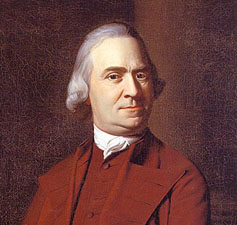
Samuel Adams was the Lenin of the American Revolution. He conceived a hatred for the British Empire and a desire for American independence well before anyone else did. Adams skillfully used mobs alongside legal pretense to incrementally spread his agenda. Others followed his example. In the Worcester Revolution of 1774, the local population shut down the normal operations of royal government in west and central Massachusetts and drove royal officials out of those regions (the book to read is Ray Raphael’s The First American Revolution: Before Lexington and Concord). The British crown lost control of inland Massachusetts before Lexington and Concord were even fought.

However, eleven years later, when many of the same local residents attempted to do the same thing in protest of the policies of a now independent Massachusetts, the state government put down their rebellion with Samuel Adams’s strong support. The difference? An apocryphal remark attributed to Adams captures some of the truth behind his attitude: “the man who dares to rebel against the laws of a republic ought to suffer death”. Mobs protesting the actions of an unrepresentative government like the British Parliament, Adams argued, were valid. Mobs protesting the actions of a representative government like Massachusetts’s state government, on the other hand, were treasonous. This doctrine, supported by other Revolutionary leaders, especially the cabal behind the Order of the Cincinnati, was eventually enshrined as the higher law of the land in the slow motion coup d’etat that overthrew the Articles of Confederation and replaced it with the more authoritarian United States Constitution in 1787-1788.

While mobs continued to combine, they were gradually neutered by the conscious agenda of American elites who sought to replace informal norms enforced by communal censure with formal norms applied under the professional supervision of “wiser heads”. This was a collusion between saints and knaves against moralists. Saints got purer standards that were not reliant on the whims of moralists who got stirred up in unpredictable ways that might violate the saints’ prevailing narrative while knaves got credentials that allowed them to entrench their positions and agendas under the cover of serving a higher good. The same sense of community morality and punishment that gave nineteenth century self-government its vigor and occasional excess was weakened as moralists were tuned out by saints embedded in holy isolation and knaves concerned only with advancing personal priorities. Moralists saw the knaves getting away with free riding off of them and began to opt out, leaving room for more knaves to free ride. For a little formal pretense, the returns on rent seeking were enormous.

The ideal went from a citizenry engaged in self-government to a system designed to advance the best and brightest. Meritocracy sounds good in theory and has some positives in reality. However, a perfect meritocracy is a perfect tyranny. All of the leaders are on once side and all the followers are on the other. This tendency toward the separation of the best from the rest may only be checked by the tendency of those on the ascendant to favor their own children, whatever their merit, over strangers that are more meritorious. This will force some aspiring meritocrats to side with the followers and bring about a rotation of elites. But the transition may take a while and its best to start before you have a meritocratic problem….

Read the whole post here.

Today’s circumstances, with the elite determinedly crafting rules for the mass but not for their class, have an ominous portent for the future of America as a democratic republic, but violence is not yet required.

Political engagement is.

An Interesting “Collapse” Hypothetical

Thursday, July 29th, 2010

Dr. Paul Craig Roberts, the famous Reagan administration economist and now an embittered and cranky paleoconservative social critic, penned a short but intriguing American “collapse” scenario set in the near future. Some of what Roberts writes fits neatly with the thesis in Joseph Tainter’s The Collapse of Complex Societies:

The Year America Dissolved

….As society broke down, the police became warlords. The state police broke apart, and the officers were subsumed into the local forces of their communities. The newly formed tribes expanded to encompass the relatives and friends of the police.

The dollar had collapsed as world reserve currency in 2012 when the worsening economic depression made it clear to Washington’s creditors that the federal budget deficit was too large to be financed except by the printing of money. With the dollar’s demise, import prices skyrocketed. As Americans were unable to afford foreign-made goods, the transnational corporations that were producing offshore for US markets were bankrupted, further eroding the government’s revenue base.

The government was forced to print money in order to pay its bills, causing domestic prices to rise rapidly. Faced with hyperinflation, Washington took recourse in terminating Social Security and Medicare and followed up by confiscating the remnants of private pensions. This provided a one-year respite, but with no more resources to confiscate, money creation and hyperinflation resumed.

Organized food deliveries broke down when the government fought hyperinflation with fixed prices and the mandate that all purchases and sales had to be in US paper currency. Unwilling to trade appreciating goods for depreciating paper, goods disappeared from stores.

Several interesting things here. First, the demagogic front men who are currently engaging in op-ed tirades against public pensions in order to loot them to ostensibly plug state budget deficits will, if successful, use that precedent to go after private pensions, IRAs, 401(k), mutual funds, Social Security, Medicare, Home mortgage interest deduction – any remaining big pot of money in the hands of the middle-class has a big target on it. Secondly, food shortages historically were the spark that set off the French and Russian Revolutions.

When hubris sent America in pursuit of overseas empire, the venture coincided with the offshoring of American manufacturing, industrial, and professional service jobs and the corresponding erosion of the government’s tax base, with the advent of massive budget and trade deficits, with the erosion of the fiat paper currency’s value, and with America’s dependence on foreign creditors and puppet rulers.

The Roman Empire lasted for centuries. The American one collapsed overnight.

Rome’s corruption became the strength of her enemies, and the Western Empire was overrun.

America’s collapse occurred when government ceased to represent the people and became the instrument of a private oligarchy. Decisions were made in behalf of short-term profits for the few at the expense of unmanageable liabilities for the many.

Overwhelmed by liabilities, the government collapsed.

Connectivity, contra Roberts, is good. Corruption, on the other hand, is not. Free markets are generally efficient, so long as you do not expect them to automatically create public goods of a certain scale or be perfectly self-regulating. They require a scrupulously impartial rule of law in order to not become corrupted by abusive players seeking rents. Unfortunately, a scrupulously impartial rule of law is incompatible with technocracy, where expert administrators are granted arbitrary discretion without democratic accountability, the prevailing ethos in the EU supranational bureaucracy, to cite a real world example. The late, unlamented, Soviet nomenklatura would be another, more sinister, historical one.

The primary problem with the American political economy is that in the last 10-15 years, elite, moderately liberal technocrats have made common cause with the elite, moderately conservative rentiers of the financial and corporate world to form an incipient oligarchy. One sees their fellow Americans paternalistically as children. The other sees us as sheep to be sheared. It’s a common enough ground on which to unite and it is the reason you see a very liberal Democratic Obama administration and a Pelosi-Reid Congressional leadership counterintuitively putting corporate regulation in impenetrable shadows not seen since before the Stock Market Crash of 1929 as if they were the minions of Jay Gould and J.P. Morgan.

Don’t expect mainstream Republicans in Congress to die on any hills fighting for the free market either – they aspire to be the party of no-bid contracts to the Democratic party of government by clout.

Alderman Paddy Bauler would be proud.


Switch to our mobile site