zenpundit.com » 21st century

Archive for the ‘21st century’ Category

Moral Degeneration in the Crucible of War

Wednesday, June 12th, 2013


The recent post on Is 4GW Dead? stirred a great deal of interest, so I would like to extend the discussion on a point that that is critical not only for those who have responsibility for conducting military campaigns, but for statecraft and policy as well.

One of more important tenets of 4GW was the importance of “the moral level of war”, drawn from Colonel John Boyd’s thinking on the strategic impact of a combatant’s behavior, immoral  or exemplary, on all observers – belligerents, civilian noncombatants, neutral third parties, the media, the combatant’s own soldiers and citizens back home. Here is Boyd:

Morally our adversaries isolate themselves when they visibly improve their well being to the detriment of others (allies, the uncommitted), by violating codes of conduct or behavior patterns that they profess to uphold or others expect them to uphold.

· Morally we interact with others by avoiding mismatches between what we say we are what we are and the world we have to deal with, as well as by abiding by those other cultural codes or standards we are expected to uphold.

In a Reader’s Digest version of Boyd,  heroic, noble and magnanimous  behavior is admirable and attractive while hypocrisy, cruelty and cowardice are repulsive and antagonizing characteristics. While the former won’t guarantee your victory and the latter, unfortunately, won’t ensure your defeat, they will be a significant factor in ameliorating or generating friction.  The impression given by an army impacts the will of the enemy to fight, the morale and discipline of the soldiers, the restiveness of the civilians, the loyalty of allies and the goodwill of neighbors.

Boyd developed his thinking about the moral level of war in Patterns of Conflict  all the way up to grand strategy and above. The rub about the moral level  is that war is a crucible that puts every “cultural code” or “standard” to the test, as well as the character of the men fighting it and their leaders upon whom great responsibility rests.  Even with the best of intentions in policy and careful generalship in the field, the horrors of war can erode moral fiber and military discipline in an army, in a company or in the heart of one man. Nor does every army begin with good intentions and effective discipline – some fighting forces are scarcely to be regarded as “armies” at all while others embrace the darkness as a matter of policy.

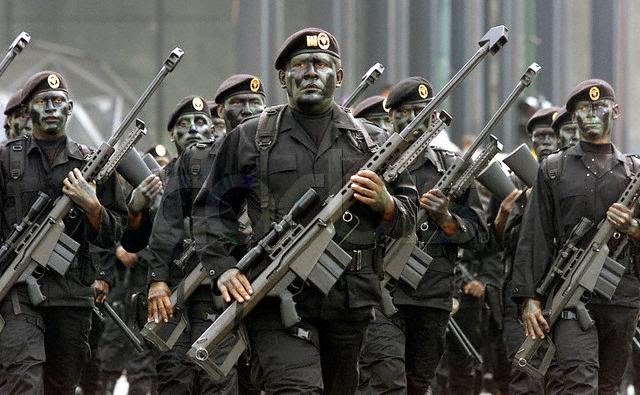
In terms of warfare, let us define “moral degeneration” as a degraded state of moral decline where a belligerent has effectively abandoned the operational and tactical restraints on conduct mandated by the Laws of War (i.e. war crimes are SOP) and in some instances, the vestiges of civilization.

A textbook example of this kind of moral degeneration came to light a few weeks ago when a jihadi lunatic in Syria, a rebel commander Khalid al-Hamad, who goes by the name of “Abu Sakkar”, cut out the heart of a (presumably) dead government soldier and ate it on video. Charles Cameron expounded at length upon this minor atrocity here. I am not, to say the least, a fan of radical, revolutionary, transnational Sunni Islamism but I cannot honestly say that its proponents like Abul Mawdudi , Sayid Qutb, Abdullah Azzam, Osama bin Laden and their ilk ever openly advocated cannibalism. It is much more likely that Mr. al-Hamad’s behavior is explained by the ferocity of the civil war in Syria eroding customary norms of the combatants than  it is by Islamist ideology.

Moral degeneration in war seems to spring from two directions:

a) As a calculated act of Policy, from the top down, enforced by the leadership by military discipline and bureaucratic control.

b) As a spontaneous reaction by soldiers or fighters, appearing from the bottom up, without orders and frequently, in spite of them, possibly due to a breakdown in the chain of command, an erosion of discipline or sheer mutiny for the age-old purpose of reprisal, pillage and rapine.

The first category often occur with war as a convenient cover rather than a cause of grave crimes against humanity that leaders and  ideologues had long wished to carry out. The Armenian Genocide, as John Keegan wrote, belongs properly to the history of Ottoman imperial policy than it did WWI; in truth, the Genocide was the greatest and worst in a long succession of vicious pogroms that the Ottomans had launched against their Armenian Christian subjects during the reign of Abdul Hamid and the Young Turks. The Holocaust (which had some inspiration in Hitler’s mind, from the fate of the Armenians) was more closely tied to the evolution of  Nazi war policy but once Operation Barbarossa opened up the vast spaces of Soviet Eurasia, “the East” in Nazi parlance, the war itself increasingly took a backseat to expediting Hitler and Himmler’s ghastly and murderous racial priorities. This is a pattern of a priori planning, an escalating ideological radicalization of society that tends to be present with most of the large scale democides and genocides. It is the organizational powers of  coercion utilized by the state, or a mobilized faction of , it that makes the enormous scale of death possible, not the war.

What is different and also dangerous about moral degeneration from the bottom-up, is that it is cultural evolution driven by the psychological effects of extreme violence at work and, unlike an act of policy, more likely to be diffused widely across society as a permanent change for the worse. Too many German soldiers in WWI, former peasants and artisans and boys from middle-class families, returned from the Western Front morally coarsened and addicted to the adrenalin rush of combat and became in succession Freikorps paramilitaries, Communist streetfighters, Nazi Stormtroopers and SS men. The World War also gave Russia the men of the Cheka, the Red terror and the first Gulags on the Bolshevik Left and brutal and mad warlords on the White Right.

In more recent two decades, the break-up of Yugoslavia unleashed atavistic passions of ethnic hatred and atrocity, while organized society in Western African states and central Africa broke down entirely in transnational regional civil wars with unrestrained massacres and mass rape. As a result, there is little that is political but much that is primeval, at this juncture, to explain Joseph Kony’s motivations; he resembles nothing so much as a 21st century Kurtz. Mexico too is degenerating from the escalating violence of cartel insurgency and narco-cultas – there is not much tactical or strategic value in pagan death cults or human sacrifice but it is spreading:

…Our impression is that what is now taking place in Mexico has for some time gone way beyond secular and criminal (economic) activities as defined by traditional organized crime studies.3 In fact, the intensity of change may indeed be increasing. Not only have de facto politicalelements come to the fore-i.e., when a cartel takes over an entire city or town, they have no choice but to take over political functions formerly administered by the local government- but social (narcocultura) and religious/spiritual (narcocultos) characteristics are now making themselves more pronounced. What we are likely witnessing is Mexican society starting to not only unravel but to go to war with itself. The bonds and relationships that hold that society together are fraying, unraveling, and, in some instances, the polarity is reversing itself with trust being replaced by mistrust and suspicion. Traditional Mexican values and competing criminal value systems are engaged in a brutal contest over the ?hearts, minds, and souls‘ of its citizens in a street-by-street, block-by-block, and city-by-city war over the future social and political organization of Mexico. Environmental modification is taking place in some urban centers and rural outposts as deviant norms replace traditional ones and the younger generation fully accepts a criminal value system as their baseline of behavior because they have known no other. The continuing incidents of ever increasing barbarism-some would call this a manifestation of evil even if secularly motivated-and the growing popularity of a death cult are but two examples of this clash of values. Additionally, the early rise of what appears to be cartel holy warriors may now also be taking place. While extreme barbarism, death cults, and possibly now holy warriors found in the Mexican cartel wars are still somewhat the exception rather than the rule, each of these trends is extremely alarming, and will be touched upon in turn.

The crucible of war either tempers a people or it breaks them.

I am not Kafka. But..

Tuesday, June 4th, 2013

[by Charles Cameron — a very preliminary salute to James Bennett and Michael Lotus’ new book, with blues harp to match ]
.


.

Okay, I’m a snapper-up of unconsidered trifles, a jackdaw, not the most consistent of readers — but I did stumble upon something…

I’ll admit, I cannot even see how “the actual time and materials cost of the hammer might be $60 a hammer” when its “functional equivalent might cost $20 in a hardware store” — but let’s overlook that 200% markup for a moment, and chew on the rest of this dazzling paragraph from James C. Bennett and Michael J. Lotus, America 3.0: Rebooting American Prosperity in the 21st Century — Why America’s Greatest Days Are Yet to Come, pp. 266-67:

The Department of Defense requires that the labor time and materials used in building defense items on a “time and materials” basis, which is the great majority of all such items, be documented in excruciating detail. The costs of doing this are themselves allowed as expenses, so that the government ultimately pays for the costs of this proof. Therefore, when lurid accounts of $600 hammers procured by the Pentagon surface in the press, what is actually happening is a hammer whose functional equivalent might cost $20 in a hardware store is purchased in the Pentagon system, the actual time and materials cost of the hammer might be $60, with an additional $540 in documentation costs to ensure that the government is not being over¬charged for the item.

I admit, I am not Kafka.

But if that isn’t a snake biting its own tail arrangement, I don’t know what is.

**

What can I say?

**

Interesting, btw — I’ll bet there’s a story behind the decision to switch book covers from the one proposed earlier (at the top of the post, left) to the one the book now carries (right)!

Update on America 3.0 Book Events – Bennett and Lotus

Friday, May 31st, 2013

America 3.0 

From Chicago Boyz:

America 3.0: Mike Lotus on The Bob Dutko Show

Mike Lotus will be on the Bob Dutko radio show tomorrow, May 31, 2013 at 12:40 p.m. EST. Bob hosts Detroit’s #1 Christian Talk Radio Show on WMUZS 103.5 FM.

Please listen in if you can!

Many thanks to the Bob Dutko Show for having me on.

This weekend we will post an updated list of upcoming appearances by Jim Bennett, Mike Lotus, and occasionally both of us together, talking about America 3.0.

Thanks to The Takeaway, the The Armstrong & Getty Show, and The Janet Mefferd show for interviewing Jim Bennett — all yesterday. It was a Bennett Threefer! 

And Author Appearances:

Upcoming appearances for Jim Bennett and Mike Lotus discussing America 3.0

Tuesday, May 28, 2013
Lou Dobbs Tonight (James and Michael)
We will be on about 7:45 p.m. EST.

Wednesday, May 29, 2013
Armstrong & Getty (James)
11:15 am EST

Wednesday, May 29, 2013 
Janet Mefferd Show (James)
3:30 pm EST

Friday, May 31, 2013 
Bob Dutko Show (Michael)
1:40 pm EST

Tuesday, June 4, 2013
Talk to Adam Smith Society, Booth School of Business (Michael)
Noon

Thursday, June 6, 2013
Mornings with Nick Reed (Michael)

Saturday, June 7, 2013
Marc Bernier Show (James & Michael)
4:25 pm EST

Monday, June 17, 2013
Western Conservative Summit, “Envisioning America 3.0” (James)

And their maiden TV appearance with Lou Dobbs:

Is 4GW Dead?: Point-Counterpoint and Commentary

Tuesday, May 28th, 2013

4GW theory has always attracted overenthusiasts and  raging haters ever since the concept emerged way back in 1989, so debates about the merit of 4GW are nothing new; in fact, the arguments became so routine that they had largely gone sterile years ago.  After T.X. Hammes published his excellent  The Sling and the Stone and John Robb  went to the next level with Brave New War , it seemed that  little new was left to be said. In the late 2000’s, intellectual energies shifted to arguing the nuances and flaws of Pop-centric COINwhich proved in time to be even more bitter than those about 4GW.

Generations of War Theory Visualized by Chet Richards

What is different recently is that the person taking the affirmative on the question “Is 4GW dead?” was Dr. Chet Richards, who for years ran the premier but now defunct 4GW site, D-N-I.net, now archived here by the Project on Government Oversight.  Richards is no Clausewitzian true-believer or Big Army MBA with stars, but a former collaborator with John Boyd and a leading thinker of the 4GW school who had written several books with that strategic theme.

Therefore, not a critic to be dismissed lightly. Here’s Chet:

Is 4GW Dead? 

….The first thing to note is that 4GW is an evolution from 3GW, which they equate to maneuver warfare and the blitzkrieg as defined in MCDP 1 and Boyd’s Patterns of Conflict. These are styles of warfare conducted by state armies against other state armies, although the paper does invoke the notion of transnational terrorists near the end.

At some point in the late 1990s, the theory bifurcated. Bill Lind and Martin van Creveld began to emphasize the decline of the state and focus on transnational guerrilla organizations like al-Qa’ida. Tom Barnett called this the “road warrior” model. T. X. Hammes, on the other hand, characterized 4GW as “evolved insurgency” and envisioned the techniques described in the paragraphs above as also useful for state-vs-state conflicts.

….The 9/11 attacks, by a transnational guerrilla movement, seemed to confirm 4GW in both of its forms. In the last few years, however, everything has gone quiet. Transnational insurgencies, “global guerrillas” as John Robb terms them, have not become a significant factor in geopolitics. “Continuing irritation” might best describe them, whose primary function seems to be upholding national security budgets in frightened western democracies. The state system has not noticeably weakened. So it might be fair at this point to conclude that although 4GW was a legitimate theory, well supported by logic and data, the world simply didn’t develop along the lines it proposed.

A prominent critic of 4GW, Antulio J. Echevarria, may have been correct:

What we are really seeing in the war on terror, and the campaign in Iraq and elsewhere, is that the increased “dispersion and democratization of technology, information, and finance” brought about by globalization has given terrorist groups greater mobility and access worldwide. At this point, globalization seems to aid the nonstate actor more than the state, but states still play a central role in the support or defeat of terrorist groups or insurgencies.

Why? I’ll offer this hypothesis, that the primary reason warfare did not evolve a fourth generation is that it didn’t live long enough. The opening of Sir Rupert Smith’s 2005 treatise, The Utility of Force, states the case….

Chet’s post spurred a sharp rebuttal from William Lind, “the Father of Fourth Generation Warfare”:

4GW is Alive and Well 

So “the world simply didn’t develop along the lines it (4GW) proposed”? How do you say that in Syriac?

The basic error in Chet Richards’ piece of April 19, “Is 4GW dead?” is confusing the external and internal worlds. Internally, in the U.S. military and the larger defense and foreign policy establishment, 4GW is dead, as is maneuver warfare and increasingly any connection to the external world. The foreign policy types can only perceive a world of states, in which their job is to promote the Wilsonian nee Jacobin, follies of “democracy” and “universal human rights.” They are in fact, 4GW’s allies, in that their demand for “democracy” undermines states, opening the door for more 4GW.

In most of the world, democracy is not an option. The only real options are tyranny or anarchy, and when you work against tyranny, you are working for anarchy. The ghost of bin Laden sends his heartfelt thanks.

Third Generation doctrine has been abandoned, de facto, if not de jure, by the one service that embraced it, the U.S. Marine Corps. The others never gave it a glance. The U.S. military remains and will remain second generation until it disappears from sheer irrelevance coupled with high cost. That is coming much sooner than any of them think.

….In many of these cases, including Egypt and Pakistan, the only element strong enough to hold the state together is the army. But the “democracy” crowd in Washington immediately threatens aid cut-offs, sanctions, etc., if the army acts. Again, the children now running America’s foreign policy are 4GW’s best allies.

Fourth generation war includes far more than just Islamic “terrorism,” and we see it gaining strength in areas far from the Middle East. Gangs have grown so powerful in Mexico, right on our border, that I predict the state will soon have to make deals with them, as the PRI has done in the past. Invasion by immigrants who do not acculturate is a powerful form of 4GW, more powerful than any terrorism, and that is occurring on a north-south basis (except Australia) literally around the world. Remember, most of the barbarians did not invade the Roman Empire to destroy it. They just wanted to move in. In fact, most were invited in. Sound familiar?

What should concern us most is precisely the disconnect between the internal and external worlds. Externally, 4GW is flourishing, while internally, in the US government and military, it does not exist. This is the kind of chasm into which empires can disappear….

Fabius Maximus – who is a both a pseudonymous blogger and a group blog, also responded:

Update about one of the seldom-discussed trends shaping our world: 4GW 

One of the interesting aspects of recent history is the coincidence of

  1. the collapse of discussion about 4GW in US military and geopolitical circles,
  2. victories by insurgents using 4GW methods over foreign armies in Iraq and Afghanistan, &
  3. most important, the perhaps history-making victory by Bin Laden’s al Qaeda.

The second point is important to us, but the usual outcome since WW2 (after which 4GW became the dominate form of military conflict; see section C below).  The third point is the big one. Based on the available information, one of Bin Laden’s goals was to destabilize the US political regime. Massive increase in military spending (using borrowed funds). The bill of rights being shredded (note yesterday’s House vote to tear another strip from the 4th amendment). Our Courts holding show trials of terrorists — recruited, financed, supported by our security services. Torture and concentration camps.

….We — the Second American Republic — have engaged in a war with nationalistic, Islamic forces using 4GW.  So far we are losing.  For various reasons we are unable to even perceive the nature of the threat. In DoD the hot dot is again procurement of high-tech weapons — new ships, the F-35, the hypersonic cruise missile, etc.  All useless in the wars we’ve fought for the past 50 years, and probably in those of the next 50 years….. 

A few comments.

4GW has been heavily criticized – and accurately so – for making selective use of history, for unsupported maximal claims, for an excessively and ahistorically linear argument and for shifting or vaguely defined terms. Presented rigidly, it is relatively easy for critics to poke holes in it simply by playing “gotcha” (some of the criticism of 4GW did not get beyond ad hominem level garbage, but more intellectually serious detractors made very effective critiques of 4GW’s flaws).

That said, there were a number of useful elements or insights in the body of 4GW writings that retain their utility and I think are worth recalling:

  • Whatever one thinks of 4GW as a whole, the school drew attention to the threat of non-state irregular warfare, failed states and the decline of state vs. state warfare and did so long before it was Pentagon conventional wisdom or trendy Beltway talking head spiels on Sunday morning news programs.
  • While the state is not in decline everywhere in an absolute sense, it sure is failing in some places and has utterly collapsed elsewhere. Failed, failing and hollowed out states are nexus points for geopolitical problems and feature corruption, black globalization, insurgency, tribalism, terrorism, transnational criminal organizations and zones of humanitarian crisis. Whether we call these situations “irregular”, “hybrid”, “decentralized and polycentric”, “LIC”, “4GW” or everyone’s favorite, “complex” matters less than using force to achieve political aims becomes increasingly difficult as the interested parties and observers multiply. Some of the advice offered by the 4GW school regarding “the moral level of war”, de-escalation and the perils of fighting the weak in such a conflict environment are all to the good for reducing friction.
  • The emphasis of the 4GW school on the perspective of the irregular fighter and their motivations not always fitting neatly within state-centric realpolitik, Galula-ish “Maoist Model” insurgency, Clausewitzian best strategic practice or the Western intellectual tradition, were likewise ahead of their time and contrary to S.O.P. Even today, the effort to see the world through the eyes of our enemies is at best, anemic. Red teams are feared more than they are loved. Or utilized.
  • The bitter criticism the 4GW school lodged of the American political elite being allergic to strategic thinking and ignorant of strategy in general was apt; that American strategy since the end of the Cold War has been exceedingly inept in thought and execution is one of the few points on which the most rabid 4GW advocate and diehard Clausewitzian can find themselves in full agreement.

The lessons of 4GW will still be relevant wherever men fight in the rubble of broken societies, atomized communities and failed states.

Two Readings, and If You Read It, Why Not Review It?

Thursday, May 23rd, 2013

[by J. Scott Shipman]

One Hundred Days, The Memoirs of the Falklands Battle Group Commander, Admiral Sandy Woodward

For professional reasons, many trusted colleagues have recommended One Hundred Days, and I finally finished it a few weeks ago. They reminded me the Falklands War “was the first modern anti-access/area-denial (A2/AD) war, pitting a joint expeditionary force against a regional power with modern land, air, and sea capabilities.” [sourced from Proceedings magazine, May 2012, by Commander Jim Griffin, U.S. Navy—strongly recommended] In other words, the scrap in the South Atlantic in 1982 was the last time a “modern” expeditionary force faced a credible adversary with modern capabilities. 

Admiral Woodward reminds that no one expected Argentina to invade the Falklands, and even if they did, no one expected the UK to respond with force (even the Royal Navy (RN) was surprised, and many had to find the islands on a map). Woodward departed with the two remaining UK carriers, the Hermes and Invincible which were already on the chopping block due to budget problems (sound familiar?). Fighting was such a distant memory for the RN, having not engaged in significant action since WWII, and Woodward recounts that many of his men had difficulty making the transition from “a sea-going job” to fighting, and possibly dying. I wondered as I read if the U.S. Navy has prepared/is prepared for this transition; and truly both officer and rates proved susceptible. The personal nature of Woodward’s account was bit of a surprise, but provides valued insight into the challenges and frequent frustrations faced by naval leaders.

Commander Griffin’s account in Proceedings referenced above has a very good list of lessons learned, and a few observations and questions are added for consideration:

  1. Naval warfare is war of attrition. Attrition can occur as a result of sinking or disabling an opponent. In the case of the Brits, many of their ships sustained non-fatal hits that, for practical purposes, removed the ship from any offensive or defensive action. Many of our enemies, while not sophisticated, understand and plan accordingly. As a result numbers are important; numbers of ships and weapons.
  2. In the age of the missile, response times were/are measured in seconds, so ships and aircraft will be lost…often, quickly.
  3. Are our systems susceptible to electro-magnetic interference (EMI)? 
  4. Could our ships navigate or fight without GPS or other satellite-dependent technologies?
  5. Can sailors onboard fix systems when they break (and they will break, see #6 below)? One RN ship had a contractor embarked who made the difference, which was blind luck. Over the last 20 years, the USN has tended towards “operators” over technicians.
  6. “Murphy” is alive and well. When things can fail (including technologies), they will, at the worst possible time.
  7. Is the theater commander in command? In the Falklands, Woodward had command of ships, but not submarines—which hampered the effectiveness of his battle group.
  8. Ship preservation (preventive maintenance) is often paid for in battle. At least two RN ships were unable to use weapons because of salt corrosion rendering missile hatches inoperable. This is engineering problem, too, to be sure, but also an example of how preventive maintenance can pay-off when it counts.
  9. Damage control training for all-hands; rigorous and often. RN sailors did a masterful job of saving several of their wounded ships.
  10. Anti-missile capabilities on logistic/support ships.
  11. Homefront politics and posturing provides fog in war as does the enemy. One curse of modern communications; having the White House Situation Room second-guessing/micromanaging the war.
  12. The press is often not your friend. On a couple of occasions, the BBC broadcast orders of battle and goals, and the Argentineans planned and acted accordingly.
  13. The motto of Captain John Coward, RN, of HMS Brilliant, “The essence of war is violence. Moderation in war is imbecility.”

Woodward’s book is the clearest account we have of naval warfare in the missile age. If it is not already, One Hundred Days should be required reading for every naval officer. Strongest recommendation.

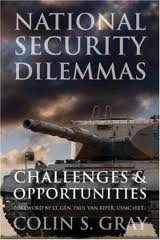
National Security Dilemmas, Challenges & Opportunities, Colin S. Gray

Colin Gray is no stranger to the readers of Zenpundit. I read this title over the Christmas break, and have returned to review with some frequency. In fact, my copy is so littered with underlining and marginalia, these periodic “reviews” can take a couple of hours. As the title suggests, Gray outlines the challenges and opportunities facing policymakers, and in so doing provides an accurate glimpse of our current state of political-military affairs. He encourages policymakers to reacquaint themselves with the importance of the concept of victory, and on how to successfully navigate a transition of our military from our previous focus of regular warfare to the realities introduced by enemies using irregular methods. Gray discusses “revolutions in military affairs (RMA)” and deterrence and the implications of both in our thinking and planning. Gray’s concluding section on preemption and preventative war is exceptionally well-presented.

For example, Gray’s section on Achieving Decisive Victory includes:

  1. Better armies tend to win.
  2. No magic formula for victory.
  3. Technology is not a panacea.
  4. The complexity of strategy and war is the mother of invention.
  5. Know your enemies.

This book is imminently quotable, so I’ll share a few with my highest recommendation.

The idea that strategy has an essence is deeply attractive. Strategy sounds incredibly rare and valuable, like something that could be bottled and sold. Unfortunately, American understanding of and sound practice in strategy is desperately rare. Strategic thinking and behavior are endangered activities in the United States. This is hardly a stunningly original insight. However, familiar though the criticism should be, it loses none of its bite for reason of longevity. Much as the U.S. defense community periodically is prodded by irregularist anxiety to worry about insurgency and terrorism, so from time to time it remembers the value of strategy. Though American defense professionals do not know what strategy is or how it works, they know that it is a matter of grave importance. The pattern has been one wherein a politician or a senior official with a personal interest has lit the fire of genuinely strategic discussion. The fire briefly flare brightly but then dies away for want of fuel. The fire is not fed, because there is not much demand for the heat and light of truly strategic argument in the United States. Although America is not quite a strategy-free environment, such a characterization would err in the right direction. (page 169 of paperback edition)

Since, inter alia, warfare is a competition in learning between imperfect military machines, fortunately one need only be good enough. (page 178; this is a personal favorite of mine)

There needs to be a continuous, albeit “unequal,” dialogue between civilian and soldier. War and warfare are permeated with political meaning, and consequences. A competent supreme command knows this and behaves accordingly. However, this relationship carries implications for civilian participation in military decisions in wartime that run contrary to the traditional American way in civil-military relations. If the strict instrumentality of force is not to be neglected, there has to be a constant dialogue between policymaker and soldier. Policy is a nonsense if the troops cannot perform “in the field,” while the troops may be so effective in action that policy is left gasping far behind unexpected opportunities by events. (page 179, emphasis added)

Gray’s National Security Dilemmas is a must read for policymakers and practitioners. [btw: it has been my custom to provide selected referenced works in book reviews. Gray’s bibliography is so excellent and comprehensive, I could not make a list that would do it justice.]

That said, I’ll close with more questions, and an apology: Does anyone read anymore? I’m rereading Manchester’s classic American Caesar after an absence of 30+ years, and I’d forgotten how much time both MacArthur the Elder and MacArthur the Younger (Douglas) spent reading. That said, how often do we see military leaders review the books they recommend? A reading list is one thing, explaining why the book made the cut another. With blogs, the internet, and social media, there are no barriers to entry. Recommendation to senior officers, including the General Officers and Flag Officers who post required reading lists: let your folks know why, write it down, explain it—the exercise will do you good, and give your subordinates insights into your thinking.

Now for the apology: there are four of us here at Zenpundit, but I’ve been the anchor man. This is my first post in too long, and I apologize to my colleagues and you, the reader. I’ve been on a tear reading naval stuff, mostly associated with my business endeavors. That said, I’ll endeavor to eat my own cooking and review what I read/have read with greater frequency.


Switch to our mobile site