zenpundit.com » diplomacy

Archive for the ‘diplomacy’ Category

A draft of what’s on my mind lately

Sunday, December 5th, 2010

by Charles Cameron
[ cross-posted from ChicagoBoyz ]

I’ve been thinking…

*

Reports, overstatements and underestimates

There are factual reports of violence and threats of violence, which are within the proper province of journalism and intelligence gathering.

There are also overstatements of such reports, generally resulting from paranoia, hatred, recruitment, or the desire to increase sales of advertising or munitions.

And there are understatements of such reports, generally resulting from sheer ignorance or a desire to be diplomatic.

*

Religious sanctions for violence

Similarly, there are factual reports of sanctions for violence in the scriptures, hagiographies and histories of various religions.

There are also overstatements of such reports, attributing to entire religions the beliefs and or activities of a significant subsection or outlier group of that religion

And there are understatements of such reports, avoiding the attribution of violence to religious beliefs regardless of whether the religious correlation is a “cover” for other motives or a sanction powerfully affecting the actions of those who respond to it.

*

Proportional and disproportionate responses

There are actions which represent a balanced and proportional response to threats or acts of violence, whether they be made at home or abroad, by the military or law enforcement, for reasons of just war or of security.

There are actions which present an unbalanced and disproportionate heightened response to acts of violence, into which category I would place both over-reactive military responses and over-reactive domestic security measures.

And there are inactions which are no less unbalanced as responses to acts or threats of violence, as with political wool-gathering or appeasement, bureaucratic failures to implement realistic information sharing and dot-connection within the IC, or public aversion to factual news or intelligent, nuanced analysis.

*

Ideals, kumbaya and skepticism

There are honest statements of aspiration for peaceable outcomes to current and future conflicts.

There are versions of such aspirations which naively overlook the very real correlations between religious sanctions and violence.

And there are skeptical aversions to such aspirations, which no less naively overlook the very real differences which are present between the most angry, the most terrified, the most politically driven, the most financially interested and the most generous members of any and every religious and irreligious viewpoint.

*

Let’s talk…

It is useful to bear these distinctions of category in mind, and to make accurate appraisals of one’s information inputs in terms of which categories they fall under, and how much trust one should therefore place in them.

There: it was on my mind and I have said it.

This is, as my title indicates, a first draft. I hope it will spark some interesting conversations, and lead to further insight and refinement…

Tom Barnett’s Communique to the Barbarians

Wednesday, November 24th, 2010

” A communication: magnificently our great Emperor soothes and pacifies China and the foreign countries, regarding all with the same kindness. If there is profit, then he shares it with the peoples of the world; if there is harm, then he removes it on behalf of the world. This is because he takes the mind of heaven and earth as his mind.”                                      – Lin Zixu

I am no Sinologist, so I am interested in how professional China-watchers interpret this signal. Here’s my two cents:

Dr. Thomas P.M. Barnett teamed up with two highly-regarded (inside Chinese elite circles) pundits John Milligan-Whyte and Dai Min to offer a “grand strategic rebalancing” of the Sino-American relationship for the 21st century, which ran in The People’s Daily, the official newspaper of the Central Committee of the Communist Party of China. Agree or disagree with the particulars, an impressive and timely move on Tom’s part.

An excerpt – but you should really read the whole thing:

….When agreed upon by the presidents of both nations through an “executive agreement” not subject to U.S. Senate ratification, it will promote U.S. economic recovery, increase U.S. exports to China, create 12 million US jobs, balance China-US trade as well as reduce U.S. government deficits and debt. Furthermore, it will stabilize the U.S. dollar, global currency and bond markets. It will also enable reform of international institutions, cooperative climate change remediation, international trade, global security breakthroughs as well as facilitate the economic progress of developed and developing economies, the stabilization and rebuilding of failed states and security of sea transport. The essence of the grand strategy is that the United States and China will balance their bilateral trade and never go to war with each other, and the US will refrain from seeking regime change and interference in China’s internal affairs with regard to Taiwan, Tibet, Xinjiang, the Internet, human rights etc. and China will continue its political, legal, economic and human rights reforms.The Taiwan situation will be demilitarized by an informal U.S. presidential moratorium on arms transfers to Taiwan, China’s reduction of strike forces arrayed against it, a reduction of U.S. strike forces arrayed against China and ongoing joint peacekeeping exercises by U.S., Chinese and Taiwan militaries.The strategic uncertainty surrounding nuclear program in Democratic People’s Republic of Korea (DPRK) will be de-escalated by the U.S. eschewing DPRK regime change goals and China ensuring that DPRK adopt policies along the lines of Deng Xiaoping’s economic reforms and terminate its nuclear weapons program. China, U.S., South Korean and other military forces will together ensure maritime safety in the Yellow Sea….

Read more: Thomas P.M. Barnett’s Globlogization – Thomas P.M. Barnett’s Globlogization – New China-U.S. grand strategy proposal, as published in People’s Daily Online

Publication in The People’s Daily does not imply that this blue sky missive is Chinese policy, but it would never have appeared without the sanction of some important figures in China’s government and Communist Party. I am not up to speed on elite Chinese politics, but historically, the Central Committee of the CCP was a much more integrated body of elite decision makers in the sense of mixing PLA generals, state bureaucrats and Party bigwigs than was the Soviet Cenntral Committee, which served in the post-Stalin era to cement CPSU dominance over the military and KGB. 

Set aside the merits of this “rebalancing” for later, as some points have not a hope in hell of seeing the light of day,and focus on what it means that the article has appeared at all.

First, I read this as a Mongolfier kind of trial balloon, a plausibly deniable rough draft of a Shanghai Communique 2.0 where Chinese rulers lay out their internal consensus “red line” vital interests and what they will put on the table in return, without any risk of “losing face”.

Secondly, while most of the critical noise will be over the security-military relationship, Taiwan and the total omission of Japan (!), I find the economics the most interesting section. Never before in history have two great powers with so little in common, who were not allies, so deeply entangled themselves in each others economies, basically to the point of no return. This piece tells me China’s leaders realize that a path of confrontation with America or pursuing beggar-thy-neighbor trade policy indefinitely, will mean the destruction of a generation of painfully accumulated surplus wealth, held largely in dollars and treasury securities. China’s elite would rather “double-down” on their bet on America instead of attempting to painfully wrench themselves free and cut their losses by cashing in devalued chips.

That concern is the apex of realism – a good variable to see at a time when nationalistic hubris and hypersensitivity have increasingly been on display in China’s foreign relations with great powers and weak neighbors alike. That kind of realism, other countries can do business with.

What are your thoughts?

ADDENDUM:

Tom has added his briefing slides

Exum in Foreign Policy

Sunday, October 24th, 2010

Andrew Exum on negotiation in AfPakland in Foreign Policy:

Smoke and Mirrors in Kabul

….But Afghans are perfectly comfortable talking while still fighting. So too, at least in practice, are the United States and its allies: In insurgencies from Vietnam to Northern Ireland, we have negotiated with insurgents while combat operations were ongoing. In the American public’s mind, however, wars take place sequentially: First, you fight; second, you negotiate a settlement. The word “negotiations” conjures up hopes for an end to the conflict in the minds of Americans and other Westerners — when all that really might be occurring is another round of jockeying for position between Afghanistan’s warring political forces.

….All that, to make matters worse, assumes the insurgent groups are independent actors. The reality, though, is that negotiations between the insurgent groups and the government in Kabul will only go so far as the Pakistani security services allow. Some Western analysts took heart in Pakistan’s decision in February to arrest Taliban leader Mullah Abdul Ghani Baradar. At the time, however, the arrest of Mullah Baradar, who was in negotiations with the government in Kabul, was interpreted by the Taliban rank and file to be a stark warning to those who would negotiate without the permission of the Pakistani government, under whose patronage and protection the Taliban has operated east of the Durand Line since 2005. Today it is widely accepted that this was indeed the case and that Pakistan deliberately thwarted negotiations between the Quetta Shura Taliban and the government in Kabul to serve its own parochial interests. Since that event, there is no sign that Pakistan’s powerful military has taken a softer line on negotiations between the Taliban and the government in Kabul.

Exum wrote a good op-ed. Go read it.

That said, the above paragraph makes me want to ask Andrew why the United States is not negotiating directly with Pakistan/ISI instead of wasting valuable time kabuki-ing around with plausibly deniable and expendable members of proxy groups over which Pakistan holds a demonstrated veto?
 
What is particularly curious in this situation is that  Secretary of Defense Robert Gates, in his memoir From the Shadows, made laudatory remarks about George Schultz (with whom Gates bumped heads) as “the toughest secretary of State I knew” who was willing to negotiate with the Soviets in one part of the world while bleeding them in another ( paraphrasing here). A lesson from history that bears revisiting.

Pakistan is our real adversary in Afghanistan and the party with the power to actually make agreements that stick. Negotiations 101: bargaining should not take place with powerless intermediaries.

Guest Post: The Diplomacy of Caring

Tuesday, October 19th, 2010

Charles Cameron is the regular guest-blogger at Zenpundit, and has also posted at Small Wars Journal, All Things Counterterrorism, for the Chicago Boyz Afghanistan 2050 roundtable and elsewhere.  Charles read Theology at Christ Church, Oxford, under AE Harvey, and was at one time a Principal Researcher with Boston University’s Center for Millennial Studies and the Senior Analyst with the Arlington Institute:

The Diplomacy of Caring

by Charles Cameron

It’s such a simple thing, a blog post with space for comments. And yet it is also a remarkable opportunity.

The blog post I’m thinking of today was made about three weeks ago by an American helicopter pilot, CWO John Bockmann, who has been flying relief missions in Pakistan as part of the US response to the terrible floods there.

A retired Pakistani officer, Brig. FB Ali, read it on Pakistan’s Express Tribune blog, and quoted from it in a guest post on Col. Pat Lang’s blog, Sic Semper Tyrannis, today. Both are worth reading – but what’s most wonderful, as Brig Ali notes, is the outpouring of love and appreciation in the Comments section, both from individual Pakistanis and from Bockmann’s own family.

Bockmann writes:

I have learned in my time here that Pakistani people are truly gracious. Strangers have invited me for chai and conversation. Almost anyone will shake my hand and ask my name, inquire about my health and how I am getting along. Instead of a handshake at our first meeting, I have sometimes been embraced. “Strangers shake hands,” my new friend Mahmood explained, “but brothers hug each other.” This warms my heart. My mission, our mission, is straightforward, noble, and good. I am deeply grateful to those who support us here, for we need all the help we can get in order to help those in need. I am honored to do this work. I feel at home here beyond anything I could have expected.

and

When I do return home, I will bring with me hundreds of pictures, dozens of journal entries, six duffel bags, and several recipes for local dishes that I have enjoyed, but I will also bring innumerable memories that I will treasure for life — memories of Pakistan and its people. They have surprised me with friendship. I hope that through our work of compassion we may surprise them with friendship as well.

I will let the comments of Abdullah and Mustafa stand for the many that were posted by Pakistanis in response:

God bless you and may you return home safe and sound . There is a lot in common and a lot to share between common people not only living in U.S and Pakistan but also between people living all over the world. — Abdullah

and:

John, I’d like to personally thank you for your efforts and for giving your time for this cause. May Allah reward you and bless your family. — Mustafa

Others wrote longer and more effusive comments, but in their simplicity those two capture the spirit of the whole.

And then John’s mother, deeply moved by the love shown her son by these people from a far-off country, wrote her own comment — which strikes closer to the heart than the best of diplomats easily can:

Thus shall it be between Christians and Muslims, your country and mine: despite the heartbreaking fractures, we shall become strong in all the weak places, and no government policies, no misguided violent people shall prevent it, because God wills it, whether we call him Allah or Jehovah, and we will it, with all our hearts. We shall support each other while respecting our differences.

I’m with FB Ali on this, and Pat Lang, and John Bockmann and his family, and all the many Pakistanis who responded. More recently, John Bockmann wrote this comment on the whole exchange:

Amazing. I know the hearts of many Pakistanis now, but I am still surprised by their outpouring of warmth — especially in such hard times. I read all of the comments — the stories, the blessings, the frustrations — and I am increasingly convinced that international relations are effected more by common people like you and me than by politicians who may never get a chance to have tea and real conversation with “the other side”. I am so privileged to be so well loved while I am so far from home. God’s blessings on Pakistan and her people.

If you want to see Bockmann, Cpl. Jenie Fisher interviewed him earlier in the mission, and you can find those videos here. I hope she does a follow-up. I hope the press picks up on this. This is what’s best in our common humanity — hearts and minds – they’re not won, they open. And this is what’s best about the internet — this possibility. I’ll close with the words of Engineer Syed, who writes:

Ten people like the pilot who is in the picture in worlds each decision making cabinet-agency-organization etc can change the total scenario of the world

Book Bonanza

Sunday, October 10th, 2010

Courtesy review copies that arrived this week from authors and publishers. Sweet!


Magic and Mayhem: The Delusions of American Foreign Policy From Korea to Afghanistan by Derek Leebaert

Operation Dark Heart: Spycraft and Special Ops on the Frontlines of Afghanistan by Anthony Shaffer

Without Hesitation: The Odyssey of an American Warrior by Hugh Shelton

Soft Spots: A Marine’s Memoir of Combat and Post Traumatic Stress Disorder by Clint van Winkle

I really enjoyed Leebaert’s early Cold War history, The Fifty Year Wound and therefore, have high hopes for Magic and Mayhem.  By contrast, Operation Dark Heart has already been the subject of controversy when the Pentagon bought up the entire first edition in order to wheedle an idiosyncratic list of redactions from the publisher for the second edition.

A note to readers, General Shelton, the former Chairman of the Joint Chiefs of Staff, and LTC Anthony Shaffer are both associated with the new military affairs and history site, Command Posts.

In addition to review copies, I shelled out some hard-earned cash for a few other titles:


The Ruin of the Roman Empire: A New History  by James J. O’Donnell

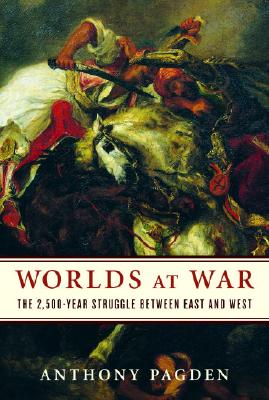
Worlds at War: The 2,500-Year Struggle Between East and West by Anthony Pagden

The House of Medici: Its Rise and Fall by Christopher Hibbert

What new books have you just picked up?


Switch to our mobile site