
zenpundit.com » reform

Archive for the ‘reform’ Category

The US Army Embraces “Crowdsourcing”

Wednesday, September 23rd, 2009

At SWJ Blog.

The Army wants your comments on its new Capstone Concept

by Robert Haddick
Brigadier General H.R. McMaster has sent to Small Wars Journal the latest draft of Army Capstone Concept version 2.7. McMaster leads a team at TRADOC that is charged with revising the Capstone Concept, which provides fundamental guidance to the Army’s doctrine and training efforts.

By December, McMaster and his team will complete their work on the Capstone Concept. Between now and then, he wants to hear from you. So please open this file, read it, and provide your comments, either here or at the Capstone Concept comment thread at Small Wars Council. McMaster and his team will read these comments and use them to improve this important document.

(You will note that the Capstone Concept draft we received is marked “For Official Use Only.” I assure you that we received this document openly from the Army and for the purposes explained above. McMaster and his colleagues at TRADOC want Small Wars Journal‘s readers to help them improve the Capstone Concept.)

Ok. Mil/intel/strategy/national security/COIN bloggers. We’ve been blogging on the “future of warfare” for five or six or more years. Some of us have also written books and journal articles, spoken at conferences and done op-eds. Along the way, there has been periodic lamentation (i.e. whining) that the powers that be don’t “get it” and no one pays attention anyway. Well HR McMaster is asking for  input on shaping official military policy. A “put up or shut up” moment for the bloggers.

I’m in! Who else is joining the party?

“The Big Picture”- the Nexus between Education and Grand Strategy

Thursday, July 16th, 2009

This will be the first of several related posts. 

The other day, I happened to be talking to my friend Dr. Von, a physicist and educator, and he brought up a post by The Eide Neurolearning Blog, on educating children in terms of “big picture thinking”:

What is ‘big picture’ thinking? Business consultant Andrew Sobel described it as:

1. Having a simple framework
2. Using analogies and metaphors
3. Developing multiple perspectives
4. Looking for patterns and commonalities
….

Instead of training for compliance, careful rule-following, and exact memorization or a paragon of crystallized intelligence, we need to make more room for ‘big picture’ thinkers – while still recognizing the need for basic skills and knowledge.….Pint-sized big picture thinkers really do exist and they seem to be over-represented among gifted children who underperform or cause behavioral disruptions in their early elementary school years. Many of these kids are ‘high conceptual’ thinkers, those who like discovering novel subjects, themes, and things that don’t make sense(“The thing that doesn’t fit is the interesting thing” – Richard Feynman), but the reason for this is often not random – inductive learners (learners who derive rules from examples) use novelties to generate new hypotheses or new rules.If you really want to teach and interest big picture thinkers, you would expose them to rich multisensory and chronologically-advanced experiences. Look for subjects, phenomena and ideas that could be compared and contrasted. Complexity should be embraced and not shunned. For big picture thinkers – complex is simple and simple is complex. Complexity often brings more meaning because there are enough examples that one can make a pattern.….Many of them are seeking the overarching framework inside which they can put their new bit of knowledge. Often these are ‘why’ kids – who need to know why something is true, not just that something is true.

The Eides have given an excellent explanation of the big picture thinker as a cognitive type and had some implied suggestions in that description on how a teacher or professor could approach students to get them thinking – models, metaphors, analogies, exposure to patterns and multiple perspectives. Note: all students willl derive some benefit from these techniques and become better at seeing the larger context. Many people can, with sufficient practice, can become significantly better, but the natural big picture thinkers are the ones who will react with insightful leaps of reasoning, imagination and questions with little or no prompting.

Unfortunately, such experiences in public schools and even our universities have become increasingly rare. Dr. Von explains why:

When I talk with students (juniors and seniors in high school) about how different subjects and classes are taught, invariably it comes down to great amounts of memorization. Most students, when you engage them in real conversations about the education they receive, will open up freely and get right to the point…because of the continued emphasis on grades and GPAs by colleges, students feel the need to focus first on memorization and get the grade on the test, and then move on to the next topic without much concern with what was just studied. When this is the case in school, has true learning just occurred? Likely not, if students are unable to recall and actually apply concepts that were covered in the past.

….To make matters worse, as students rely so heavily on memorization and short-term success on tests (and this is driven home even more in the ‘high stakes testing’ environment we find ourselves in in the era of No Child Left Behind, as resently implemented), those students, many of whom are gifted, as the Eides point out, who prefer complexity in their learning, are not benefitting from the way many (most) classrooms are run. By complexity, I mean those students who want to ‘see the big picture.’ Those students who want to know why something works, and how it is related to the material that was studied last semester as well as to the material that was covered in another class. For example, I love when students in my physics classes come to me asking about how to interpret and apply a particular integral result which was just studied in calculus class, or how Einstein’s theories changed political and military history, as studied in a history course. Those moments happen every so often, as a result of student curiosity and their wanting to truly learn about the material rather than memorize something for the test, and good teachers recognize such moments when they happen…

It falls to me to discuss why it matters: As a nation we are crippling the next generation of visionaries by retarding their intellectual growth with bad educational policy as surely as we might if we were adding lead to their drinking water.

Scientists and inventors, philosophers and artists, entrepreneurs and statesmen, individuals who conceive of and accomplish great things do not emerge from schools and colleges that emphasize low-level thinking and a curriculum without intellectual depth or rigor. They emerge in spite of them.

To force a systemic improvement in public education, the Bush administration pushed through “No Child Left Behind” with rigid timetables, mandated high stakes testing and punitive consequences for schools and districts not making standards. That is to say, the Bush administration addressed the lack of rigor in educational process with a sledgehammer – but ignored the lack of rigor in educational substance ( at least directly – under NCLB some schools had to toughen their curriculum to teach to the state test, but other schools or schools in different states dumbed down for the same reason – curricular alignment).

That NCLB forced public schools to ensure that our weakest students verifiably succeed at understanding the fundamentals is laudable. That this emphasis increasingly comes at the cost of schools only educating all their students at the level of the fundamentals is inexcusable. Perhaps criminal. NCLB is the overarching legal framework that was superimposed on a system whose content was (and often still is) frequently less than demanding and taught by instructors who themselves have not majored in the subject they are teaching. 

At the postsecondary level, long before the measure and punish model of NCLB arrived at k-12 schools, colleges and universities abandoned any semblance of a core curriculum or traditional canon and undergraduate degree requirements were larded with plenty of au courant esoterica as course options. Esoterica formerly left for footnotes in dissertations or as the subject of longwinded, diatribes at the dreary meetings of extremist splinter parties. Ivy League, big state schools, small third tier colleges – it does not matter; with only a few exceptions, the “cafeteria a la carte” model of undergraduate education prevails.

While a few students absorb and become true believers of fashionable cant, most students graduate high school and college unaffected by the large amounts of rubbish and trivia they have been exposed to because it was presented without any kind of sensible context and being committed to short term memory, quickly forgotten. The real damage to students comes from the cumulative effect of the absence of substance – the waste of time where meaningful content and the pressure to think through hard problems should have been.

The costs of educational myopia are here and they will grow worse with time. We already see sharply declining public support for science (because more people are now ignorant of basic scientific literacy),  lower rates of innovation and other negative economic effects. In the area of governance, across the board, regardless of party label or ideology, we have national leaders in their 40’s, 50’s and early 60’s who see the world primarily in short-term, tactical terms and who confuse career or class interest with governing in the national interest. Oligarchy is inherently a non-strategic worldview because it eschews making choices because choices require sacrifice in the near term in order to acquire systemic advantages in the long term. 

Oligarchy” seems like a a harsh word because we think of “oligarchs” as being selfish, exceedingly greedy, political sociopaths. While such figures do exist outside of TV and the movies (Burmese junta, Iranian hardliners, Soviet politburo etc.) most people are neither particularly malicious nor eager to consciously and openly do things society acknowledges to be wrong or counterproductive. Even less so are they eager to be seen by the public as incompetent. The problem is that, frequently, people are prisoners of their own limited frame of reference and, when their conscience might be tweaked, they excel at rationalization and denial.

This is not a question of smart or dumb or of expecting politicians to be moral paragons. There’s plenty of IQ wattage inside and outside of Washington, DC and petty larceny in politics goes back to the stone age. Rather, on average, the difficulty is that our nation’s intellectual potential has not been effectively maximized. Is it reasonable to educate people in a way where all subjects are disconnected from one another, prioritizing narrow specialization, emphasizing accumulating facts over understanding principles, rewarding the “right answer” instead of the “best question”, demanding conformity instead of curiosity and then expect our leaders to be visionaries and adaptively creative statesmen who think in strategic terms?

Why would our societal orientation in complex, dynamic, fast moving situations be good when our educational system trains people only to think through simplified, linear, sequential problems? Strategic thinkers need to be able to see “the big picture” and handle uncertainty, or they cannot be said to be strategic thinkers.

The ship of state has been steered, over the last forty or so years, into an epistemological cul-de-sac and we are headed for the rocks. America needs a grand strategy for a competent citizenry in order to reach the point where it can again have a grand strategy to deal with an unruly world.

LINKING TO THIS POST:

Red Herrings

Project White Horse

Fabius Maximus

The Committee of Public Safety ( provides an extensive analysis of the subject)

RELATED TOPIC:

Liberty/SecurityRethinking liberal arts

Strategic Communication, Science, Technology

Wednesday, July 8th, 2009

Blogfriend Matt Armstrong had an important post regarding The Strategic Communication Science and Technology Plan, April 2009. An excerpt:

The plan describes current efforts within the Department of Defense, the military services, the combatant commands and other agencies on SC. In total, these efforts could be linked together to form the foundation of an S&T thrust area for strategic communication. The report also includes a macro-analysis of capability gaps not being addressed by ongoing initiatives and lays out potential areas for future S&T investment.

While the request for the plan itself represents recognition from Congress that SC plays a critical role in the public and private response to current and emerging threats, it also highlights that there is much research and development already underway and many tools available to increase the government’s effectiveness in global engagement. The rub today is the need for strong leadership and coordination to ensure: 1) awareness of the long list of capabilities; 2) incorporating these capabilities into plans; and 3) participation by stakeholders across the US government, NGO’s, industry, and private citizens.

The S&T plan sorts current efforts into the following categories:

  • Infrastructure: Enabling and facilitating access to information from news to markets to vocational
  • Social Media: Knowledge Management, Social Media, and Virtual Worlds
  • Discourse: Analysis of radical and counter-radical messages and ideas
  • Modeling and Forecasting: Gaming and anticipating adversarial messages and ideas as well as our counters and pre-emptive measures
  • Collaboration: Increasing collaboration and training across and beyond Government
  • First Three Feet: Empowering, Equipping, Educating, and Encouraging media and others to exist and freely report on events for what they really are
  • Understanding: Develop country, culture, and regional expertise, including polling
  • Psychological Defense: Planning and capacity building for dealing with critical strains on society in peacetime and wartime

The interesting thing here for me is that “strong leadership” is lacking because the people spread across and outside government who have the shared awareness of technology, social media and national security at a level of sophistication where they could actually craft a strategic communication policy, are usually many levels removed from the appointee policy deciders for whom these variables are (usually) fuzzily understood.

To use an analogy, the chefs are valet parking cars outside while trying to get the manager of the restaurant to acknowledge their recipes. Or, maybe that there should be cooking going on in the kitchen if they want to have any customers. Or that the business is, in fact, a restaurant and not a nicely organized room full of tables.

Strangling OSINT, Weakening Defense, Censoring Criticism: The Pentagon

Wednesday, April 29th, 2009

banned.jpg

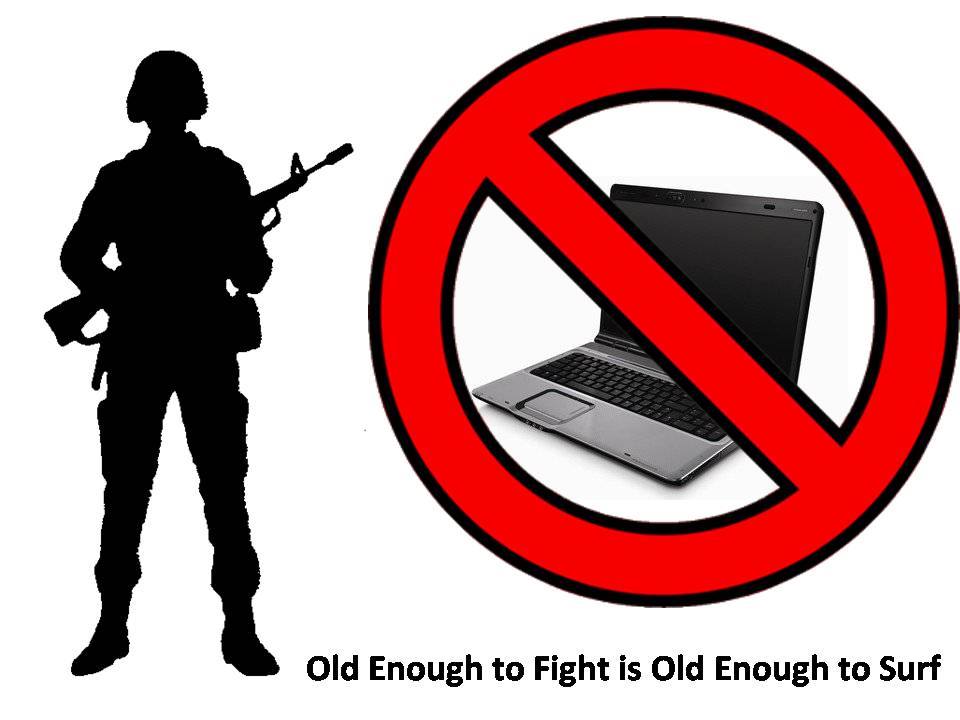
William Lind has a new post up at Defense and The National Interest that addresses the issue of the IT restrictions on the use of the internet by military personnel. This topic has been touched on previous by others such as at the SWC, SWJ Blog, Haft of the Spear, Hidden Unities and many milbloggers, intel and cyberwonks but previously, IT policy varied across services and from command to command. That appears to be changing – for the worse.

On War #302: Blinders

At the height of the Cold War, a U.S. army corps commander in Europe asked for information on his Soviet opposite, the commander of the corps facing him across the inter-German border. All the U.S. intelligence agencies, working with classified material, came up with very little. He then took his question to Chris Donnelly, who had a small Soviet military research institute at Sandhurst. That institute worked solely from open source, i.e. unclassified material. It sent the American general a stack of reports six inches high, with articles by his Soviet counterpart, articles about him, descriptions of exercises he had played in, etc.

What was true during the Cold War is even more true now, in the face of Fourth Generation war. As we have witnessed in the hunt for Osama, our satellite-photo-addicted intel shops can’t tell us much. But there is a vast amount of 4GW material available open-source: websites by and about our opponents, works by civilian academics, material from think-tanks, reports from businessmen who travel in areas we are interested in – the pile is almost bottomless. Every American soldier with access to a computer can find almost anything he needs. Much of it is both more accurate and more useful than what filters down through the military intelligence chain.

Or at least he could. In recent months, more and more American officers have told me that when they attempt to access the websites they need, they find access is blocked on DOD computers. Is al Qaeda doing this in a dastardly attempt to blind American combat units?
Sadly, no. DOD is doing it. Someone in DOD is putting blinders on American troops.

I do not know who is behind this particular bit of idiocy. It may be the security trolls. They always like to restrict access to information, because doing so increases their bureaucratic power. One argument points to them, namely an assertion that the other side may obtain useful information by seeing what we are looking for. That is like arguing that our troops should be given no ammunition lest muzzle flashes give away their positions in a fire-fight.

But the fact that websites of American organizations whose views differ from DOD’s are also blocked points elsewhere. It suggests political involvement. Why, for example, is access to the website of the Center for Defense Information blocked? CDI is located in Washington, not the Hindu Kush. Its work includes the new book on military reform America’s Defense Meltdown, which has garnered quite a bit of attention at Quantico.

The goal of the website blockers, it seems, is to cut American military men off from any views except those of DOD itself. In other words, the blockaders want to create a closed system. John Boyd had quite a bit to say about closed systems, and it wasn’t favorable.

Read the rest here

What is disturbing to me is that Lind indicates that the previous policy, which left IT restrictions up to commanders, seems to be coalescing behind one of systemic, tight, restrictions on access for all uniformed personnel to all kinds of blogs or websites that do not jeopardize information security. Or may even be useful to the conduct of their mission. The previous excuse by DoD bureaucrats was “conserving bandwidth” but it’s hard to see how esoteric sites like the Center for Defense Information or some university PDF on Islamist madrassas in Pakistan clog up a combatant command’s skinny pipes.

Intel and cyber experts in the readership are cordially invited to weigh in here.

ADDENDUM:

Professor Sam Liles offered up this manifesto on cyberthreats and cybersecurity.

ADDENDUM II:

Fabius Maximus, Ubi war and Wings Over Iraq took a similar view ( Wings though, added “Curse you Zenpundit!”).

ADDENDUM III THE COUNTERPOINT:

Galrahn says Bill Lind does not understand the legitimate cybersecurity aspect that causes blogs and websites to be blocked and then offers some practical advice to the blocked bloggers (such as myself):

….but I’d bet at least 5 shots of Canadian Whiskey (I’m a Crown Royal fan until summer gets here) that the problem that triggered his rant doesn’t originate in the DoD or any government entity, rather the private sector.

But I will say this. There are several legitimate reasons why websites, blogs, and other forms of social media sites on the web are blocked. If your website or blog is blocked, please understand you can do something about it besides whine.

Use Feedburner, or some other form of syndication software to distribute your content, including by email. Organizations including the military may block Blogger but typically they do not block syndication service sites because from an IT perspective, syndication services like Feedburner is a better way to manage bandwidth for larger enterprises. If an organization is blocking syndication sites too, then your organization has a very strict IT policy, BUT if your favorite websites are distributing content by email, problem solved

I used Feedburner previously with my old blogger site when Feedburner was in beta but when it was purchased or absorbed by Google, that account went dormant. I think I will ressurect it and then look into Galrahn’s other suggestions.

Government 2.0 and National Security

Saturday, April 18th, 2009

Dr. Mark Drapeau and Dr. Linton Wells II in a National Defense University paper:

Social Software and National Security: An Initial Net Assessment (PDF)

….We have approached this research paper as an initial net assessment of how social software interacts with government and security in the broadest sense.1 The analysis looks at both sides of what once might have been called a “blue-red” balance to investigate how social software is being used (or could be used) by not only the United States and its allies, but also by adversaries and other counterparties. We have considered how incorporation of social software into U.S. Government (USG) missions is likely to be affected by different agencies, layers of bureaucracy within agencies, and various laws, policies, rules, and regulations. Finally, we take a preliminary look at questions like: How should the Department of Defense (DOD) use social software in all aspects of day-to-day operations? How will the evolution of using social software by nations and other entities within the global political, social, cultural, and ideological ecosystem influence the use of it by DOD? How might DOD be affected if it does not adopt social software into operations?

Saw this a day or two ago. Just finished reading the intro. Read the rest here.


Switch to our mobile site
