Intellectuals and their Romance with Political Barbarism
Saturday, July 4th, 2015[by Mark Safranski, a.k.a. “zen“]

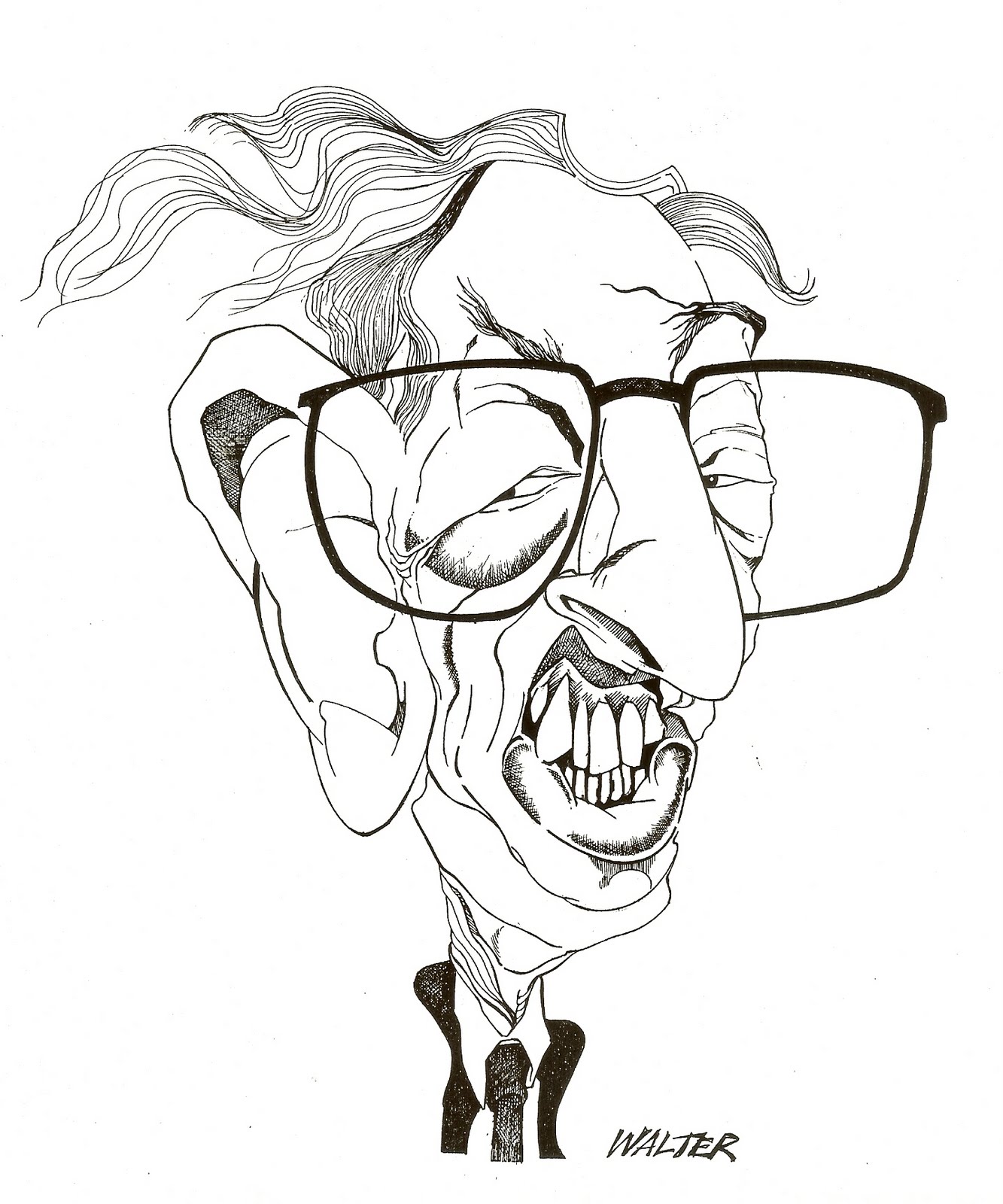

Martin Heidegger, Eric Hobsbawm and Ezra Pound
A meandering post inspired by Reason Magazine and Charles Cameron.
Reason.com is best known for giving a scrappy libertarian take on current events, crime, technology and pop culture, but recently, an article by Charles Paul Freund touched a deeper, darker vein of twentieth century history and, in my view, a problematic recurring pattern in intellectual life:
Al Pacino has withdrawn from a Danish stage version of Knut Hamsun’s novel, Hunger, after learning that the Norwegian Nobel prize-winning author had been an ardent supporter of Nazi Germany. The move dismayed some of Hamsun’s defenders, but it’s also a reminder of the appalling state of intellectual life during the rise of fascism. So many writers and thinkers embraced fascism in those years that they constituted what came to be called a “fascist foreign legion.”
Hunger (1890) is considered a classic of psychological literature, and Hamsun himself is regarded by many critics and writers as one of the fathers of literary Modernism, and an important influence on such writers as Franz Kafka, Herman Hesse, Thomas Mann, and many others. In a 1987 introduction to Hunger, Isaac Bashevis Singer wrote that “The whole modern school of fiction in the twentieth century stems from Hamsun.”
[….] Hamsun’s fascism was hardly a byproduct of hardening of the arteries. He lived for a time in the 1880s in the U.S., and came to dislike the country for its egalitarian principles, and because it had a large black population (even though that population wasn’t benefitting much from the egalitarianism). His 1918 novel, Growth of the Soil, is a pretty good example of “blood and soil” lit. John Carey, a British critic, cites a passage from Hamsun’s Kareno trilogy of dramas, written in the 1890s, as indicative of his outlook:
“I believe in the born leader, the natural despot, the master, not the man who is chosen but the man who elects himself to be ruler over the masses. I believe in and hope for one thing, and that is the return of the great terrorist, the living essence of human power, the Caesar.”
Hamsun, who gave his Nobel to Hitler as a mark of his esteem, remained faithful to the fascist cause to the bitter end. Hamsun’s most-often quoted words come from the brief eulogy for Hitler that he published in a collaborationist newspaper in May 1945, a week after the Fuehrer died.
[….] George Orwell wrote in 1946 that, “The relationship between fascism and the literary intelligentsia badly needs investigating, and [William Butler] Yeats might well be the starting point.” Such investigations have since been written, of course, and they include the expected chapters on Yeats as well as others on D.H. Lawrence (The Plumed Serpent may be the clearest example of Lawrence’s fascism), T.S. Eliot, and Wyndham Lewis (who at this point is probably as well known for his fascism as for anything else he did).
What was the appeal of fascism to such people? It wasn’t just that many of them were racists and/or anti-Semites (though that didn’t hurt); plenty of authors have been racists without embracing totalitarian systems. The underlying issue for many of these figures, according to investigations by John R. Harrison and by John Carey, was an antipathy to democracy.
“Many twentieth-century writers,” wrote John R. Harrison in The Reactionaries: A study of the anti-democratic intelligentsia (1966), “have decided that culture has been sacrificed to democracy; the spread of culture has meant that the level of the masses is raised, but that the level of the elite is lowered.” As for writers like Pound, Yeats, and others, “they realized there was no hope of a return to an earlier form of civilization, so they hoped for a stability provided by totalitarian regimes.”[….]
Read the whole thing here.
The dark romance of intellectuals with Fascism died in 1945. Their bloody affair with Communism has dwindled significantly, but lingers in some quarters still.
Why though was 20th century totalitarianism so attractive to the West’s leading thinkers, artists and writers? After all, once you got past the snazzy uniforms, the trains running on time and land for the peasants, the overt reveling in barbarism and cruelty by Fascists and Communists was hard to miss – and if you missed it, the Nazis gave choreographed tours of concentration camps and the Soviets held show trials right in the face of world media. Very little of the bloodbath was hidden, except to the willingly blind, who tended to most often be well educated and otherwise thoughtful people yet found ways to morally rationalize collaboration and fellow traveling.
There are, in my view, a number of reasons. These tended to differ somewhat depending on whether the intellectual in question gravitated more to fascism or communism, but even here there is a significant, muddling, psychological, overlap between the two. So much so, that Fascism’s creator cut his political teeth as a firey socialist agitator and as thuggish a Nazi leader as Ernst Rohm could boast of his admiration for his Communist enemies’ “idealism” and street fighting courage. Indeed, in training his stormtroopers, Rohm remarked that ex-communists made the best SA men.
The first person to offer a coherent explanation of the individuals drawn to fascism was the German-Jewish journalist Konrad Heiden. In Der Fuehrer, Heiden’s groundbreaking 1944 political biography of Adolf Hitler and the Nazi movement, referred to two categories of potential adherents : “Armed Bohemians” and the “Armed Intellectuals”. The former were the freebooting roughnecks and men of habitual violence who were always restless and ill at ease in civilized society. Men like Ernst Rohm, who found in totalitarian movements a political cause to justify themselves. These men do not concern us here.
The latter group are also ill at ease in established society. The armed intellectuals are the born critics, gadflies, dreamers, autodidacts, bar-room philosophers, self-styled poets and no small number of crackpots and cranks; what these quarrelsome eccentrics lacked in muscle or raw courage, they more than made up for in the blizzard of half-baked ideas and skill at words which they employed with maniacal zeal. Heiden’s taxonomy was mirrored a few years later by Eric Hoffer in the groups Hoffer called “practical men of action” and the “fanatics” in his classic, The True Believer. The armed intellectuals were seldom noteworthy as intellectual heavyweights – men like Alfred Rosenberg and Grigory Zinoviev were third-rate minds, or worse – but they excelled at propagating ideas and simplifying them in the fashion required to build and sustain a mass movement; ideas as war banners or flags of political tribalism rather than as part of a coherent system of thought. Or as Ortega y Gasset wrote at the time of the fascists and radicals “….ideas are in effect, nothing more than appetites in words, something like musical romanzas.”
Yet, as Charles Paul Freund indicates, totalitarianism attracted as supporters and admirers not just intellectual crackpots like Gottfried Feder, Dietrich Eckhart or Trofim Lysenko, but genuinely substantive men of letters, art and science. Many of these did not officially become “party comrades”, though some like philosophers Martin Heidegger and Carl Schmitt did, most were content to wield their pens as admirers, fellow travelers, enthusiastic supporters and public apologists. Being intellectuals, they were of course entranced by ideas – on the Right, the totemic, mythic, reactionary idolatry and the volkisch ur-narratives of messianic nationalism (much of which was the mummery of fools). Neither Hitler nor Mussolini were innovators here; the bombastic poet Gabriele D’Annunzio’s grandiose adventurism in Fiume, for example, presaged much of Fascist Italy’s swaggering Il Duce and his bullying blackshirts. On the left, by the intoxicating prospect of revolutionary “justice” and being on the “right side of history”, which could allegedly be explained with “scientific laws” of dialectical materialism. It was all rubbish but it was politically potent rubbish.
There were also material rewards – the Third Reich and the Soviet Union liked to lavish medals, Stalin Prizes and various emoluments on its foreign sycophants, while intellectuals who were particularly active minions, like Heidegger and Maxim Gorky, were given public honors by their respective regimes. This did not always work out well, however. Unlike Heidegger, who outlived the destruction of his Reich in 1945 to embrace and be embraced by the deconstructionist and postmodernist European left, Gorky was likely murdered by his master, an age-old risk for courtiers of tyrants. While the rewards and awards were highly esteemed, see Paul Robeson’s pathetic, groveling, gratitude for his Stalin Prize, the primary driver of slavish loyalty was always political. Too many intellectuals in that era were fascinated with totalitarian power, accepted cruelty as strength and despised liberal democracy and individualism, unless if it was individualism as heroic symbolism for some kind of impending vanguard – square-jawed, blond SS men, muscular Stakhanovite workers brandishing sledgehammers and so on. The barbarism of these regimes the intellectuals either ignored, explained away or embraced.
This longwinded preface brings me to a question that Charles Cameron asked me in regard to the article in Reason:
“I notice that quote about how many early 20C intellectuals “realized there was no hope of a return to an earlier form of civilization, so they hoped for a stability provided by totalitarian regimes” and wonder how you see it corresponding with current thoughts which view the dismantling of the Gaddafi, Hussein, and Mubarak regimes as enabling the rise of AQI > ISIS > IS?”
This is a great question.
The regimes of Saddam Hussein, Hosni Mubarak and Muammar Gaddafi shared some similarities, notably official secularism and modernization, but they also had some important ideological and structural differences. Saddam’s regime and Mubrak’s Egypt were rooted in pan-Arab nationalism, a regional anti-imperialist movement the built in fervor from the 20’s and peaked in the late fifties with the personality cult of Nasserism and a characteristic that was shared initially in the early years of Gaddafi’s rule in Libya, who idolized Nasser and for a time, hoped to inherit his mantle. All of the regimes were secular, modernizing, anti-monarchical, anti-imperialist and “socialist” in a nationalist style more suggestive of Hitler and Mussolini than Marx and Lenin. Saddam’s Iraq, furthermore, was like Syria, Baathist in its pan-Arabism and its founding generation of activists like Michel Aflaq, were directly influenced in by the European totalitarian parties of the 1930’s Left and Right and the extremist movements of the French Third Republic .
Colonel Gaddafi, who came to power in a coup in 1969, was somewhat different ideologically and probably psychologically. Initially a pan-Arab Nasserite, Gaddafi soon went his own way, drifting toward Third World revolutionary terrorism, a muddled Islamic Libyan utopianism based on a personality cult and finally as a pan-African interventionist given to bizarre and unpredictable behavior. Fearing coups, Gaddafi deliberately weakened and hollowed out the Libyan state, including the military, weakening them institutionally, relying upon competing revolutionary committees, militias, secret police agencies and the like run by members of his extended family until the entire structure was more or less entirely dependent upon Gaddafi’s personal whims. By contrast, Nasser, Mubarak and Saddam Hussein were centralizers who built states centered on the military and security services and a government dominated economy that did not tolerate political rivals. Saddam in particular, took this tendency to an extreme in a conscious imitation of Stalin and Iraq had up until the first Gulf War, a complex bureaucratic state, albeit one dominated by a Baath Party run by the al-Tikriti clan (Saddam’s rule slid more toward Gaddafi’s in practice as postwar decay and sanctions eroded the efficiency of Iraq’s government and arbitrary terror and corruption increasingly were used to prop up the regime)
These dictators, whether hostile to the West (Saddam, Gaddafi) or friendly (Mubarak) lacked the advantage of having a western, fellow-traveling, amen chorus of influential intellectuals as the Fascist and Communist tyrants once enjoyed. Serious intellectuals and public figures had made pilgrimages to Moscow, Berlin and Rome; no one was going to play John Reed to Muammar Gadaffi’s Lenin or Saddam and say their ramshackle future “worked”. So, when Western leaders, especially the American President, decided it might be good for these regimes to go, the only westerners to defend them in the court of public opinion were those already regarded as minor nuisances, political cranks and buffoons. Furthermore, rather than being viewed as linchpins of stability against radical Islamism, many western politicians and intellectuals of the neoconservative and liberal internationalist variety saw these dictatorships as a cause of radical Islam’s growth at best, or complicit with groups like al Qaida in promoting international terrorism at worst. Unfortunately, while both Saddam Hussein and Gaddafi had a long and bloody history of funding terrorism, mainly of the radical Palestinian nationalist variety, neither were much interested in helping al Qaida or radical Salafis; Gaddafi in fact, was fairly busy imprisoning and torturing them on a regular basis, as did the more restrained military backed dictatorship of the Egyptians during most of its existence (the brief period of tolerating Islamism, under Anwar Sadat, resulted in Sadat being assassinated by Egyptian Islamic Jihad, which later merged with al Qaida. The Egyptian military did not tolerate them again until coerced into it by the Arab Spring and pressure from the Obama administration).
These police state regimes of the Arab world also played an indirect role in the rise of AQI–ISIS in the sense that their savage repression of all other political alternatives, especially democratic and liberal ones, created a vacuum in civil society that radical Islamism in all its manifestations could fill. This was not unlike the dynamic of Indochina where Ho’s Communists were greatly helped by the French first brutally suppressing the right wing Vietnamese nationalists in the 1930’s and then Diem’s regime wiping out all the other potential rivals to the Viet Cong in the late 1950’s and early 1960’s, leaving the Communists as the voice of political opposition. The security services of most Arab states, not just Saddam’s or Gaddafi’s, were efficient enough that no real political opposition existed anywhere outside of the mosque from Oman to Morocco, except on sufferance. These states also played a passive theological role as foils in shaping decades of jihadi discourse at home, in prison, in exile and online regarding the ruler’s “apostasy”, their strategic priority as ” the Near Enemy” and the Islamic legitimacy of supporting or rejecting peaceful, democratic politics as a tool of struggle. During the course of the years of debates, as in secular revolutionary movements, there was a “ratcheting effect” in Islamist discourse towards progressively more radical, more militant and ever more takfiri–khawairijte mythologizing tendencies that glorified barbaric violence, all of which was seen clearly in early 1990’s Algeria even before the rise of the Taliban [An important caveat: it is dubious that liberal or democratic regimes would have changed the radicalization curve for Islamists much as these too would have been regarded as apostasy by Salafi militants, though there might have possibly been fewer of them, at least outside of Egypt].
With the Arab police states having cleared a space internally for Islamism to dominate underground political discourse the removal of the regimes themselves by American invasion, popular uprising abetted by foreign air support or foreign pressure did eventually enable the rise of ISIS. As much as the cruelty and corruption of the dictators drove their dissatisfied countrymen toward political Islam, they also had means to intimidate, contain or punish those who stepped too far out of line with great severity. No one doubted the ruthlessness of the Assads, Saddam’s willingness to employ terror or the Mad Colonel’s paranoid vindictiveness and when the surety of coercion and retribution disappeared, so too did the restraints on the freedom of action of Islamist radicals. American power was not a substitute for a fearsome native strongman. In the eyes of our enemies we were erratic and soft; capable of miraculous military feats of devastation if sufficiently provoked, but usually culturally clueless where or when to use our power or against whom, often leaving allies in the lurch or ignoring them spitting in our faces. Instead of fearing the Americans the way they had feared Saddam, the worst jihadis like Zarqawi were emboldened to unleash the kind of medieval barbarism in Iraq that foreshadowed ISIS.
What alarms me regarding ISIS is that it is theologically a radical-apocalyptic Islamist movement blending insurgency, terrorism and conventional warfare that is also reviving the secular pageantry of Fascism with its grandiose mythmaking, blood rituals, compelling uniforms, Fuhrerprinzip and war-worship. It is an unholy combination that exudes a dark romanticism, a glamour of evil that rootless young Muslim men – a new generation of “armed bohemians” and “armed intellectuals” – find mesmerizing the way young Germans, Italians, Spaniards and Japanese did decades ago. Worse, while we may rightly laugh at the mummery of a dime store “Caliphate” and Islamists cribbing their P.R. style from Triumph of the Will, their success in manipulating deep cultural avatars as the key to power will inspire imitators in barbarism elsewhere that we can ill afford.
Fascism is dead – but it may not stay that way.