zenpundit.com » conspiracy

Archive for the ‘conspiracy’ Category

WikiLeaks: Counterpoint at the State Department?

Wednesday, December 8th, 2010

[ by Charles Cameron ]

[ note: all links are to youtube videos ]

The pianist Glenn Gould is celebrated for his ability to bring the different and at times positively oppositional voices in a fugue by Bach to our attention, so that we follow each one separately while hearing all at the same time as a single whole. What is less known is that he liked to sit at a table in a truck stop and listen to the different conversations at the other tables and booths, mentally braiding their pale or brightly colored threads of human together into an analogous tapestry — one voice harmonizing with or conflicting against another, here a new subject introduced, there an echo of an earlier idea heard in a fresh context, with the murmurings of waitresses punctuated by the kaching! of the cash register, the hydraulic hiss of a door closing — conversation as counterpoint.

Organizations and individual alike, we all have different and at times dissonant voices, and strive to bring them to some kind of resolution. The many stakeholders debating an issue in town halls, blogs or letters to the editor, the many drives within each one of us, idealistic, hopeful, defeated, paralytic, angry, evasive, sluggish, vengeful, curious, alert, defiant, all have voices, all constitute an experience of polyphony, a “music of many voices”, in point counter point.

One of my interests is to find a way to score these many fugues, these musics of meaning.

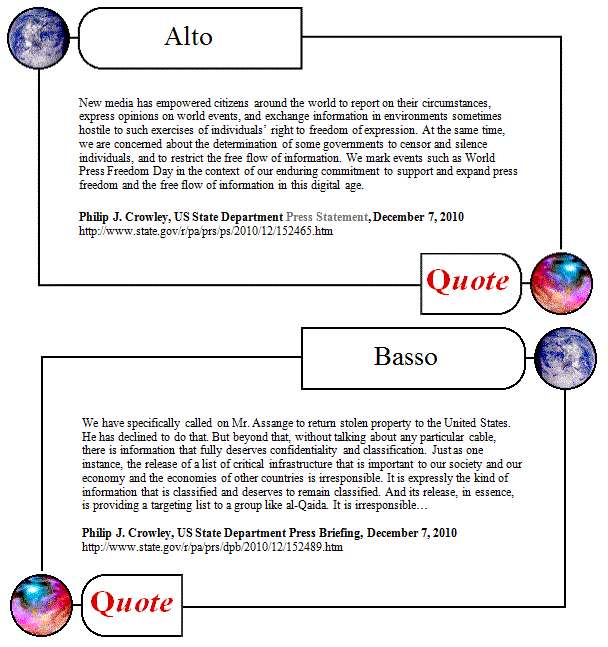
My DoubleQuotes, then, can be considered as two-part inventions, attempts to show the multiple tracking of the mind — whether of a single individual, as in this case, or of a group, a community, a world divided – so that something of the music begins to be visible, and some of the dissonances can move towards necessary resolution.

*

QUOwikileaks

*

I believe there is unresolved irony between these two statements, made on the same day by Philip J Crowley, the US State Department’s Assistant Secretary, Bureau of Public Affairs – but each has its reasons, and there are arguments to be made for both transparency and opacity, diplomacy and publicity, secrets and revelations.

Between them lies the possibility I think of as a virtual music of ideas.

*

Bach published a series of two-part inventions, BWV 772–801, and wrote of them that he intended to offer them as an honest method

by which the amateurs of the keyboard – especially, however, those desirous of learning – are shown a clear way not only (1) to learn to play cleanly in two parts, but also, after further progress, (2) to handle three obligate parts correctly and well; and along with this not only to obtain good inventions (ideas) but to develop the same well; above all, however, to achieve a cantabile style in playing and at the same time acquire a strong foretaste of composition…

Later comes the Art of Fugue.

Wikileaks and the Search for a Cryptographic Mythology

Thursday, December 2nd, 2010

[ by Charles Cameron ]

Jean Rosenfeld of the UCLA Center for the Study of Religion just posted a comment on an earlier Zenpundit post of mine, opening up a topic which may interest some readers here: that of Wikileaks founder Julian Assange’s mythological associations.

1

Jean had earlier pointed me to Assange’s use of the name “Marutukku” to describe his encryption program, and a little fishing brought me to these two Assange-related documents:

One Man’s Search for a Cryptographic Mythology
Enuma Elish

2

I’d been idly wondering about cryptographic mythology myself, as it happens, nudged by vague memories of a cache of porno images tweaked by jihadists as encoding devices for steganography.

Steganography is the cryptographic – or is it kabbalistic? — art devised by one Abbot Trithemius, whose 1518 Polygraphia is the first work on cryptography printed in Europe, and whose Steganographia was known in MS to such hermetic philosophers as Cornelius Agrippa, Giordano Bruno and John Dee. Jim Reeds captures the ambiguity of Trithemius’ work nicely in his paper, Solved: The Ciphers in Book III of Trithemius’s Steganographia, when he asks:

Is it [the Steganographia] primarily an exposition of cryptographic techniques disguised as angel magic, or is it primarily a magic work disguised as cryptography?

Readers of Frances Yates and Ioan Couliano will be somewhat familiar with these matters.

And jihadist steganography? The technique itself is described in the al-Fajr Information Center’s Technical Mujahid magazine of Feb. 2007 according to a Jamestown Foundation Terrorism Monitor piece, but the reports of actual jihadist use of the technique may turn out to be fabrications.

3

But it was Julian Assange‘s bliss we were trying to follow, right?

Assange sidekick Suelette Dreyfus wrote The Idiot Savants’ Guide to Rubberhose — which is the manual for Assange’s crypto program… but this business of naming the program gets complicated, eh?

Dreyfus explains:

If you’re wondering about the name of this program, Marutukku is the internal development name (it’s spelled Ru-b-b-e-r-h-o-s-e, but it’s pronounced M-a-r-u-t-u-k-k-u)

In case you didn’t get it, there may be a play on Lewis Carroll there, and the exchange Alice has with the White Knight in Through the Looking-Glass as to what the name of a certain very sad song is called.

Alice aside – and such detours are in fact the very method of discovery in non-linear thinking – Dreyfus offers as an epigraph to her piece the following quote:

The third name is MARUTUKKU, Master of the arts of protection, chained the Mad God at the Battle. Sealed the Ancient Ones in their Caves, behind the Gates.

which she attributes to “The Akkadian Creation Epic”. That would be the Enuma Elish.

Assange, in his One Man’s Search for a Cryptographic Mythology, attributes his choice of the name Marutukku to a conversation he had with a friend concerning the Enuma Elish, telling us (after much other curious and wandering stuff) that his friend recommended the god Marduk’s third name to him, saying

The third name is MARUTUKKU, Master of the arts of protection, chained the Mad God at the Battle. Sealed the Ancient Ones in their Caves, behind the Gates.

Assange liked the idea, observing, “Even the very word MARUTUKKU looked like it had been run through a product cipher”.

A little later in the same document, he quotes from the Enuma Elish, and the phrases given above appear in the quoted excerpts from that text – although they are not present in the version “Based on the translation of E. A. Speiser, with the additions by A. K. Grayson, Ancient Near Eastern Texts Relating to the Old Testament, third edition, edited by James Pritchard (Princeton, 1969), pp. 60-72; 501-503, with minor modifications” that Assange offers us on the sibling-page at Enuma Elish.

As Dr. Rosenberg pointed out to me, “the quote — if it is a translation — differs from other translations I found on the Internet. It is more specific and extensive and ‘mythological.'”

4

Okay, I’ve kept what may be the most practical (ie 21st century) “creative leap” made by my skittish and wandering mind for this, my penultimate paragraph.

Oxford’s Anders Sandberg blogs today about Assange’s application of network theory to conspiracies, quoting Assange as saying:

Conspiracies are cognitive devices. They are able to out think the same group of individuals acting alone Conspiracies take information about the world in which they operate (the conspiratorial environment), pass it around the conspirators and then act on the result. We can see conspiracies as a type of device that has inputs (information about the environment) and outputs (actions intending to change or maintain the environment).

And Anders’ summary of Assange’s position? “In short, conspiracies are a kind of collective intelligence enhancement.”

[ admission: I associate the name Anders Sandberg with some brilliant early net writings on role-playing games and the hermetic tradition – I’m hoping this is the same guy ]

5

Finally, let’s go back to that enhancement of the Enuma Elish text. That phrase, “Sealed the Ancient Ones in their Caves, behind the Gates” struck me, too – it reminded me of the Chthulu Mythos of HP Lovecraft, and its apocalypse:

That cult would never die until the stars came right again and the secret priests would take Cthulhu from His tomb to revive His subjects and resume His rule of earth. The time would be easy to know, for then mankind would have become as the Great Old Ones; free and wild, and beyond good and evil, with laws and morals thrown aside and all men shouting and killing and revelling in joy. Then the liberated Old Ones would teach them new ways to shout and kill and revel and enjoy themselves, and all earth would flame with a holocaust of ecstasy and freedom.

And with that quote from Lovecraft, courtesy of Erik Davis, we have returned by a commodius vicus of recirculation back to the hermetically sealing and revealing world of John Dee.

Guest Post:A Hipbone Approach to Analysis III.

Saturday, October 30th, 2010


Charles Cameron is the regular guest-blogger at Zenpundit, and has also posted at Small Wars Journal, All Things Counterterrorism, for the Chicago Boyz Afghanistan 2050 roundtable and elsewhere.  Charles read Theology at Christ Church, Oxford, under AE Harvey, and was at one time a Principal Researcher with Boston University’s Center for Millennial Studies and the Senior Analyst with the Arlington Institute:

A Hipbone Approach to Analysis III.

by Charles Cameron

I’ve been slowly prepping this series of pieces about my analytic approach — and the mysterious business of “connecting the dots” — for a while, but.. Jeff Jonas, whose work I only recently ran across, has given me “another piece of the puzzle” and a slew of new dots to connect, so here’s a quick impression of some new (for me) terrain that connects with other areas I have long been familiar with.

1

What it comes down to in my post today is this: I would like to reconcile “connecting the dots” with “putting together the pieces of the puzzle”.

Both metaphors have to do with “seeing the big picture”, and one of them (“connecting the dots”) has to do directly with nodes and edges, i.e. with those systems we call graphs and networks, while the other suggests a far subtler set of connections.

Consider this: n+1 is the next dot in the series of integers after n, with “+1” being the only link necessary — you can represent that on a graph with two nodes and an edge. But if you had the sky of the northern hemisphere in one hand (hey, this is a thought experiment) and five square miles of landscape around Winchester Cathedral in the other, finding just where to fit the cathedral (and the surrounding, branching, leafy trees nearby) snugly into the sky would be a far trickier business, and the links between air and leaf and stone molecules would be very many — we should be grateful for the ease with which the sky accommodates itself in reality to the cathedral and the trees (and the cathedral and the trees to the sky) — and for the ease with which a painter like Turner can capture the effect…
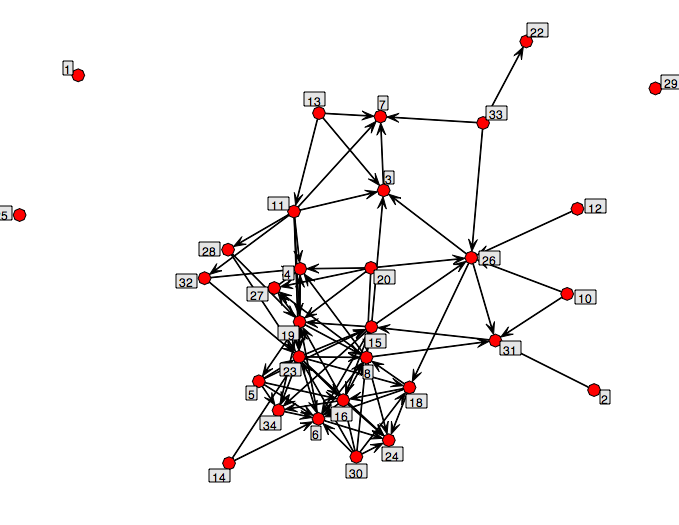
Two puzzle pieces, I mean, may have to fit along many aspects of their intersection, while dots can be connected by a single common thread.

2

I’ve only recently “met” the mind of Jeff Jonas, but he has some remarkable things to say about puzzles — for one thing, he writes about the levels of, well, computation involved in solving a jigsaw puzzle:

The first piece you take out of the box and place on the work surface requires very little computational effort. The second and third pieces require almost equally insignificant mental effort. Then as the number of pieces on the table grows the effort to determine where the next piece goes increases as well. But there is a tipping point where the effort to determine where to place the next piece gets easier and easier … despite the fact the number of puzzle pieces on the table continues to grow.

That in itself is a fascinating thought to dwell on, in fact it’s the sort of piece of the puzzle that gives me an epiphany — Jonas talks about puzzle pieces that provoke epiphanies, too:

Some pieces produce remarkable epiphanies. You grab the next piece, which appears to be just some chunk of grass – obviously no big deal. But wait … you discover this innocuous piece connects the windmill scene to the alligator scene! This innocent little new piece turned out to be the glue.

I’m processing this as a theologian / philosopher / poet, and Jonas has just given me a new angle on the theme of the intersection of frames of reference that Arthur Koestler in The Act of Creation takes to be the fundamental element in insights ranging all the way from casual jokes about rabbis to — let me give you a more powerful example — the Taniyama-Shimura Conjecture which, if I’ve understood the layman’s version correctly, began as a hunch that the otherwise entirely distinct mathematical zones known as “elliptic curves” and “modular forms” could be mapped onto each other – and wound up once proven, successfully bridging algebra with analysis.

Now, I am no no no no mathematician — but I am a student of conceptual bridges, so if I’ve phrased myself poorly here, please bear with me. The point is to think freshly about how one idea connects with another.

Koestler’s insight at the intersection between two fields (for this is essentially a matter of multiple-frame, and thus cross-disciplinary, thinking) is, I’d suggest, Jonas’ epiphanic piece of the puzzle.

Awesome.

3

But as we are trying to figure out the puzzle pieces — and this applies to “what is the meaning of life?” as much as to “what threat should be uppermost in our concern?” — Jonas has more to throw at us:

There may be more than one puzzle in the box, some puzzles having nothing to do with others. There may be duplicate pieces, pieces that disagree with each other, and missing pieces. Some pieces may have been shredded and are now unusable. Other pieces are mislabeled and/or are exceptionally well crafted lies.

I would like to add that puzzles may not be the only thing in the (universal) box. There’s a quote that originates somewhere in Heidegger, to the effect that “A puzzle is the unknown, to be solved, while a mystery is the unknowable, to be entered into and dwelt within.” As I say, I’ve only just run into Jonas’ thoughts, but I’d like to integrate that piece of the puzzle in with the ideas he’s providing – why not have a go at the mystery too while we’re about it?

4

So what happens with ideas? How do they connect?

Hermann Hesse, the Nobel laureate in literature who gave us Siddhartha and Steppenwolf and The Journey to the East, won his Nobel for his most ambitious novel, The Glass Bead Game (Das Glasperlenspiel, also known in English as Magister Ludi). It is an amazing piece of work that inspired at least one other book by another Nobel laureate — Manfred Eigen’s Laws of the Game: How the Principles of Nature Govern Chance — gave John Holland (he of genetic algorithms) the ruling metaphor for his life’s work, was an early and profound influence on Christopher Alexander’s thinking about pattern languages, and in general serves as a catalyst for grand scale creativity among a disparate crowd of very bright minds.

It is about a game — a game on the order of the complete works of JS Bach. And the essence of the game is the juxtaposition of thoughts.

It is about “connecting the dots” and “putting together the pieces of the puzzle” on the grand scale, to create not a single link between ideas, not a small “bigger picture” deploying a half-dozen or so insights, but a vast architecture of ideas that encompasses all “deep” human thought and connects all “beautiful” cognizable patterns. Hesse uses the image of an organist playing an organ to describe the play of ideas that composes his Game, writing:

All the insights, noble thoughts, and works of art that the human race has produced in its creative eras, all that subsequent periods of scholarly study have reduced to concepts and converted into intellectual values the Glass Bead Game player plays like the organist on an organ. And this organ has attained an almost unimaginable perfection; its manuals and pedals range over the entire intellectual cosmos; its stops are almost beyond number.

And in Hesse’s central, musical metaphor, the myriad thoughts that comprise what he terms the “hundred-gated cathedral of Mind” are linked one with another by likeness — by identity, isomorphism, homology, symmetry, parallelism, opposition, analogy, metaphor…

5

I’ll have to move us deep into the territory of the arts and humanities here, because Hesse himself was supremely versed in those areas, but in doing so I would remind you that John Holland wrote of his life’s work, “If I could get at all close to producing something like the glass bead game I can’t think of anything that would delight me more.”

Here’s Hesse on the analogical / isomorphic nature of the moves that connect ideas — “only connect!” said EM Forster — in his great Game:

Throughout its history the Game was closely allied with music, and usually proceeded according to musical or mathematical rules. One theme, two themes, or three themes were stated, elaborated, varied, and underwent a development quite similar to that of the theme in a Bach fugue or a concerto movement. A Game, for example, might start from a given astronomical configuration, or from the actual theme of a Bach fugue, or from a sentence out of Leibniz or the Upanishads, and from this theme, depending on the intentions and talents of the player, it could either further explore and elaborate the initial motif or else enrich its expressiveness by allusions to kindred concepts. Beginners learned how to establish parallels, by means of the Game’s symbols, between a piece of classical music and the formula for some law of nature. Experts and Masters of the Game freely wove the initial theme into unlimited combinations. For a long time one school of players favored the technique of stating side by side, developing in counterpoint, and finally harmoniously combining two hostile themes or ideas, such as law and freedom, individual and community. In such a Game the goal was to develop both themes or theses with complete equality and impartiality, to evolve out of thesis and antithesis the purest possible synthesis.

It is Bach, it is Hegel, it is the very essence of creativity, it is the associative, metaphoric nature of mind and brain (and I won’t get more than toe-deep in the “deep problem” of consciousness here).

6

And it does involve combining the understanding of both puzzle and mystery, to return to that distinction from Heidegger:

I suddenly realized that in the language, or at any rate in the spirit of the Glass Bead Game, everything actually was all-meaningful, that every symbol and combination of symbols led not hither and yon, not to single examples, experiments, and proofs, but into the center, the mystery and innermost heart of the world, into primal knowledge. Every transition from major to minor in a sonata, every transformation of a myth or a religious cult, every classical or artistic formulation was, I realized in that flashing moment, if seen with a truly meditative mind, nothing but a direct route into the interior of the cosmic mystery, where in the alternation between inhaling and exhaling, between heaven and earth, between Yin and Yang, holiness is forever being created.

Hesse is proposing his intuition that the world of ideas is a mandala-form array of symmetries with a “vanishing point” in the center.

Well, I have leapt far from my original topic, Jeff Jonas’ comments on piecing together a puzzle, but I hope the bungee-cord I’ve been depending on has held your attention, and now as always, at the far end of the extension there’s a bouncing-back.

7

The human mind “connects the dots” and “pieces together the puzzle” by recognizing likenesses — pattern recognition, if you like.

But just how human analogical thinking functions is not exactly an easy question…
We Need Pitchforks and Torches

Monday, October 18th, 2010

Top Billing! The Daily CallerTheDC OP-ED: One nation, under fraud

Tomorrow, a bank-not your bank, but any bank-could evict you from your home. Even if you didn’t know the bank was foreclosing. Even if your mortgage is paid off. Even if you never had a mortgage to begin with. Even if the bank doesn’t hold a single piece of paper that you signed. And major banks not only know this fact, but have spent millions of dollars to defend it in court. Why? The answer starts with a Jacksonville homeowner named Patrick Jeffs.

In 2007, Deutsche Bank sued Jeffs for his home, which is a necessary step in the process of foreclosing on a homeowner in the state of Florida. Curiously, despite the fact that he immediately hired a law firm to defend his property when he found out about the foreclosure, neither Jeffs nor his attorneys were at the trial. That’s because it had already happened. Deutsche won by default because Jeffs wasn’t able to travel backwards in time to attend, even though the trial featured a signed affidavit indicating that he had been served his court summons.

The only problem with the summons Jeffs supposedly received was that it had been conjured out of thin air.

In June of this year, a Florida court ruled that the document was fraudulent, as the person who was supposed to make sure Jeffs was served had mysteriously received a copy of the summons before the lawsuit had even been filed, and Jeffs never even saw the copy. The text of that ruling was posted on various financial news websites in September. The lawyers that Jeffs hired to defend his case say that fraud such as this is not uncommon. It’s a widespread problem, and it has cost countless families their homes.

“I think it’s safe to say that 95% of the foreclosure cases in Florida involve some form of fraud on the part of the bank,” David Goldman of Apple Law Firm, PLLC told The Daily Caller in a phone interview. “It’s probably closer to 99%. And the court system is helping them get away with it.”

Banksters should not only be going to prison for intentionally destroying the lives of people who are not only NOT in default on their mortgages, but have never transacted a mortgage with the institutions attempting to illegally seize their property, these guys should be made to face an angry mob composed of the people they have defrauded.

This is the Oligarchy in action. They intend to hollow this country out and move their loot offshore just like in Russia during the 1990’s

Hat tip to Ron Beasley at Newshoggers.com who also found this gem:

COUNTERPOINT ADDENDUM:

Blogfriend Fabius Maximus, who often blogs on economics, would like to offer a counterpoint and i have agreed to let him put up his perspective here and some excerpts:

  A briefing about the foreclosure fraud crisis: its origin and impacts.
 

….The real estate title system in the US is complex, with safeguards protecting debtor and creditor (for details see this by Barry Ritholz).  It’s also local (rules and data are not national).  This system worked well for generations, but collapsed during the housing boom.

  • Loan volume accelerated, overloading key parts of the system.  Appraisals were often corrupted, as loan originators routed business to compliant appraisers.
  • Massive securitization of mortgages ignored these constraints, and erected a pseudosystem on top of it that cheaply processed the high volume of both mortgage origination and securitization (e.g., the Mortgage Electronic Registration System – a faux version of security clearing corporations; see this explanation).  Securitization also broke the link between the originator and end owner, with many ill consequences.  Among other things, this put great pressures on the servicing firms to lower costs.
  • During the RE boom years recoveries on foreclosed mortgages were zero or positive, which meant a low rate of foreclosures (homes could be sold by the owner rather than default on the mortgage).  So the institutional apparatus for foreclosures atrophied.

The the default bust hit.  Massive flow, overwhelming the system – which was never configured for such an event.  Remember, experts believed home prices never decline for more than a calendar year.  The worst scenario considered by the most experts was flat prices for 3 years.

The servicers (sometimes the bank originating the mortgage, often not) reacted by cutting corners (seethis Reuters story).  Finding the original loan documents was too expensive, so they used lost document procedures designed for extraordinary circumstances (e.g., fire, flood, or misfiling – see this at Calculated Risk and here at Reuters).  Some servicers hired law firms set up as foreclosure mills (e.g., FL), processing incredible numbers of foreclosures.  It’s not clear how, but clearly proper procedures were not followed.

As a result there have been many claims that foreclosure notices were never served (an easy way to make serving a high-margin profit center).  Employees have admitted under oath in depositions to fraudulently signing thousands of notarized affidavits.

This took place in the 23 states with judicial foreclosures only with the cooperation of Judges.  A few Judges protested when shown that their banks and their agents were committing perjury.  But the process ran smoothly for the past few years.  Now the wheels are coming off.  This might be difficult for the financial sector to conceal or mitigate, despite their de facto control over the government’s regulatory machinery.

A situation report about two headine issues – and a more serious problem

….Despite the oft-hysterical analysis, there is as yet insufficient public information about the scale of the problem.  Quite likely even key players (e.g., banks, their law firms, government regulators) lack the necessary information.  Deliberately, as all prefered to “see no evil.”  But now that the problem has erupted into the daylight, this leaves them ill-prepared to respond.  Especially as any adequate response will reveal their incompetence and malfeasance in creating the situation.  (Here are Wells Fargo’s procedures regarding creditors’ complaints; nothing available for their procedures to debtors’ complains).

Political factors, not legal or economic, probably will control the evolution of this crisis.  Hence the likelihood of modest impact to the national economy.  More than the small impact expected by Wall Street; less than expected by the increasingly rabid doomsters.   Over a longer horizon, a year or more, the economy will affect the political dynamics.  For a good analysis of the current political situation see “Congress Taking Cautious Approach with Foreclosure Mess“, American Banker, 14 October 2010.  The Republicans, as usual, eagerly support the banks – despite any violations of the law, despite the interests of the American people.

The economic impact looks to be minimal and probably less than the political effects.  New home sales are unaffected by this crisis.  The title problems are solvable.  New home finance is unaffected, and in any case are now 90% government financed or guaranteed.  Interruptions in sales of existing homes will have severe effects for those affected, but little for the overall economy (despite the massive attention to the volume of existing home sales, they have minimal economic effect).

What could change this forecast? A second dip would radically change the situation, as more links in US and global economy “unexpectedly” break.   As would a long foreclosure moratorium, although this is unlikely under the current political regime.  It could happen as part of system change, of such magnitude that the moratorium would be one of the lesser results.

The Mob of Virtue

Sunday, August 1st, 2010


Small “r” republican virtue, to be precise.

A wise man once told me that a weakness of our Constitutional system was that the Framers implicitly presumed that people of a truly dangerous character, from bullies to bandits to political menaces to the community, would primarily be dealt with in age-old fashion by outraged neighbors whose rights had been trespassed and persons abused one time too many. They did not prepare for a time when communities would be prohibited from doing so by a government that also, as a whole, had slipped the leash. Indeed, having read LockeMontesquieuCicero, Polybius, Aristotle and Plato, they expected that such a state of affairs was “corruption” of the sort that plagued the Old World and might happen here in time. A sign of cultural decadence and political decay. They gave Americans, in the words of Benjamin Franklin, “A republic, if you can keep it”. It remains so only with our vigilance.

It is happening now.

We have forgotten – or rather, deliberately been taught and encouraged to forget – the meaning of citizenship.

We have let things slip.

Joseph Fouche superbly captures this implicit element, the consequences of the loss of fear of  informal but very real community sanction, in his most recent post:

People Like Us Give Mobs a Bad Name

….A classic American mob could exhibit any or all of these strategies. It could be a saint inciting a mob to attack others who deviated from a shared narrative. It could be a knave in saint’s clothing inciting an attack on personal rivals. It could be a moralist inciting a mob against the local knaves. The one constant is that an American mob was an expression of communal self-government by moralists seeking to punish what they saw as deviant, even if its manifestation was frequently unpleasant. It was a sign the local people were engaged.

Samuel Adams was the Lenin of the American Revolution. He conceived a hatred for the British Empire and a desire for American independence well before anyone else did. Adams skillfully used mobs alongside legal pretense to incrementally spread his agenda. Others followed his example. In the Worcester Revolution of 1774, the local population shut down the normal operations of royal government in west and central Massachusetts and drove royal officials out of those regions (the book to read is Ray Raphael’s The First American Revolution: Before Lexington and Concord). The British crown lost control of inland Massachusetts before Lexington and Concord were even fought.

However, eleven years later, when many of the same local residents attempted to do the same thing in protest of the policies of a now independent Massachusetts, the state government put down their rebellion with Samuel Adams’s strong support. The difference? An apocryphal remark attributed to Adams captures some of the truth behind his attitude: “the man who dares to rebel against the laws of a republic ought to suffer death”. Mobs protesting the actions of an unrepresentative government like the British Parliament, Adams argued, were valid. Mobs protesting the actions of a representative government like Massachusetts’s state government, on the other hand, were treasonous. This doctrine, supported by other Revolutionary leaders, especially the cabal behind the Order of the Cincinnati, was eventually enshrined as the higher law of the land in the slow motion coup d’etat that overthrew the Articles of Confederation and replaced it with the more authoritarian United States Constitution in 1787-1788.

While mobs continued to combine, they were gradually neutered by the conscious agenda of American elites who sought to replace informal norms enforced by communal censure with formal norms applied under the professional supervision of “wiser heads”. This was a collusion between saints and knaves against moralists. Saints got purer standards that were not reliant on the whims of moralists who got stirred up in unpredictable ways that might violate the saints’ prevailing narrative while knaves got credentials that allowed them to entrench their positions and agendas under the cover of serving a higher good. The same sense of community morality and punishment that gave nineteenth century self-government its vigor and occasional excess was weakened as moralists were tuned out by saints embedded in holy isolation and knaves concerned only with advancing personal priorities. Moralists saw the knaves getting away with free riding off of them and began to opt out, leaving room for more knaves to free ride. For a little formal pretense, the returns on rent seeking were enormous.

The ideal went from a citizenry engaged in self-government to a system designed to advance the best and brightest. Meritocracy sounds good in theory and has some positives in reality. However, a perfect meritocracy is a perfect tyranny. All of the leaders are on once side and all the followers are on the other. This tendency toward the separation of the best from the rest may only be checked by the tendency of those on the ascendant to favor their own children, whatever their merit, over strangers that are more meritorious. This will force some aspiring meritocrats to side with the followers and bring about a rotation of elites. But the transition may take a while and its best to start before you have a meritocratic problem….

Read the whole post here.

Today’s circumstances, with the elite determinedly crafting rules for the mass but not for their class, have an ominous portent for the future of America as a democratic republic, but violence is not yet required.

Political engagement is.


Switch to our mobile site