zenpundit.com » insurgency

Archive for the ‘insurgency’ Category

Martyrdom, messianism and Julian Assange

Thursday, December 23rd, 2010

[ by Charles Cameron ]

Martyr and messiah are two of the more intense “roles” in the religious vocabulary, and unlike mystics and saints, both martyrs and messiahs tend to have an impact, not just within their own religious circles but in the wider context of the times.

Martyr and messiah are also words that can be bandied about fairly loosely — so a simple word-search on “messiah” will reveal references to a third-person platform game with some gunplay and the white messiah fable in Avatar, while a search on “martyr” might tell you how to become a martyr for affiliate networks, just as a search on “crusade” will turn up crusades for justice or mental health – my search today even pointed me to a crusade for cloth diapers.

1. Martyrdom and messianism in WikiLeaks

Unsurprisingly, perhaps, both terms crop up occasionally in WikiLeaks, with the Government of Iraq, for instance, banning use of the word “martyr” for soldiers who died in the war with Iran, and US diplomats wiring home a report by an opposition psychiatrist to the effect that “Morally, Chavez [of Venezuela] combines a sense of tragedy and romanticism (a desire for an idyllic world) to project a messianic image.” Indeed, the whole paragraph is choc-a-bloc with that kind of imagery, and worth quoting in full:

Ideologically, Chavez wants to project an image of a “utopian socialist,” which de Vries described as someone who is revolutionary, collectivist, and dogmatic. In reality, de Vries argues, Chavez is an absolute pragmatist when it comes to maintaining power, which makes him a conservative. Coupled with Chavez’ self-love (narcissism), sense of destiny, and obsession with Venezuelan symbolism, this pragmatism makes Chavez look more like fascist, however, rather than a socialist. Morally, Chavez combines a sense of tragedy and romanticism (a desire for an idyllic world) to project a messianic image. De Vries, however, said Chavez is a realist who uses morals and ethics to fit the situation.

PM Netanyahu of Israel was using the term “messianic” with a little more precision when he described the Iranian regime as “crazy, retrograde, and fanatical, with a Messianic desire to speed up a violent ‘end of days.'”

2. Julian Assange in the role of martyr

The words martyr and messiah, then, carry a symbolic freight that is at the very least comparable to that of flags and scriptures – so it is interesting that both terms crop up in the recent BBC interview with Julian Assange.

My reading of the interview suggests that it is Assange himself who introduces the meme of martyrdom, though not the word itself, when he answers a question about the impact of the sexual accusations against him, “What impact so you think that will have on your organisation and what sort of figure do you think you, Julian Assange, cut in the face of all this. How will you be regarded? What will it do to you?” with the response, “I think it will be quite helpful for our organisation.”

In the follow up, interviewer John Humphrys twice uses the word “martyr” explicitly:

Q: Really? You see yourself as a martyr then?

JA: I think it will focus an incredible attention on the details of this case and then when the details of this case come out and people look to see what the actions are compared to the reality of the facts, other than that, it will expose a tremendous abuse of power. And that will, in fact, be helpful to this organisation. And, in fact, the extra focus that has occurred over the last two weeks has been very helpful to this organisation.

and:

Q: Just to answer that question then. You think this will be good for you and good for Wikileaks?

JA: I’ve had to suffer and we’ve had incredible disruptions.

Q: You do see yourself as a martyr here.

JA: Well, you know, in a very beneficial position, if you can be martyred without dying. And we’ve had a little bit of that over the past ten days. And if this case goes on, we will have more.

3. Julian Assange in the role of messiah

If the role of martyr implies, at mimimum, that one suffers for a cause, that of messiah implies that one leads it in a profound transformation of the world. Both terms are now found in association with the word “complex” – which applies whenever a individual views himself or herself as a martyr or messiah – but a “messianic complex” is presumably more worrisome than a “martyr complex” if only for the reason that there are many more martyrs than messiahs, many more willing to suffer for a cause than to lead it.

It is accordingly worth noting that it is the interviewer, John Humphrys, who introduces both the word “messianic” and the concept of a “messianic figure” into the interview, although Assange makes no effort to wave it away…

Q: Just a final thought. Do you see yourself… as some sort of messianic figure?

JA: Everyone would like to be a messianic figure without dying. We bringing some important change about what is perceived to be rights of people who expose abuses by powerful corporations and then to resist censorship attacks after the event. We are also changing the perception of the west.

Q: I’m talking about you personally.

JA: I’m always so focussed on my work, I don’t have time to think about how I perceive myself… I had time to perceive myself a bit more in solitary confinement. I was perfectly happy with myself. I wondered what that process would do. Would I think “my goodness, how have I got into this mess, is it all just too hard?”

The world is a very ungrateful place, why should I continue to suffer simply to try and do some good in the world. If the world is so viciously against it ,why don’t I just go off and do some mathematics or write some books? But no, actually, I felt quite at peace.

Q: You want to change the world?

JA: Absolutely. The world has a lot of problems and they need to be reformed. And we only live once. Every person who has some ability to do something about it, if they are a person of good character, has the duty to try and fix the problems in the environment which they’re in.

That is a value, that, yes, comes partly from my temperament. There is also a value that comes from my father, which is that capable, generous men don’t create victims, they try and save people from becoming victims. That is what they are tasked to do. If they do not do that they are not worthy of respect or they are not capable.

4. Julian Assange, martyr and messiah?

I think it is clear that both Assange and his interviewer are in effect reframing the religious terms “martyr” and “messiah” in non-religious, basically psychological senses — although I don’t suppose Assange is exactly claiming to have the two “complexes” I mentioned above.

Here’s what’s curious about this reframing, from a religious studies point of view:

Assange’s implicit acceptance of a “messianic” role undercuts the specific force of the role of “martyr” – one who gives his life for the cause. “Everyone” he says, “would like to be a messianic figure without dying.” Assange wouldn’t exactly object to being a martyr without dying, too.

A draft of what’s on my mind lately

Sunday, December 5th, 2010

by Charles Cameron
[ cross-posted from ChicagoBoyz ]

I’ve been thinking…

*

Reports, overstatements and underestimates

There are factual reports of violence and threats of violence, which are within the proper province of journalism and intelligence gathering.

There are also overstatements of such reports, generally resulting from paranoia, hatred, recruitment, or the desire to increase sales of advertising or munitions.

And there are understatements of such reports, generally resulting from sheer ignorance or a desire to be diplomatic.

*

Religious sanctions for violence

Similarly, there are factual reports of sanctions for violence in the scriptures, hagiographies and histories of various religions.

There are also overstatements of such reports, attributing to entire religions the beliefs and or activities of a significant subsection or outlier group of that religion

And there are understatements of such reports, avoiding the attribution of violence to religious beliefs regardless of whether the religious correlation is a “cover” for other motives or a sanction powerfully affecting the actions of those who respond to it.

*

Proportional and disproportionate responses

There are actions which represent a balanced and proportional response to threats or acts of violence, whether they be made at home or abroad, by the military or law enforcement, for reasons of just war or of security.

There are actions which present an unbalanced and disproportionate heightened response to acts of violence, into which category I would place both over-reactive military responses and over-reactive domestic security measures.

And there are inactions which are no less unbalanced as responses to acts or threats of violence, as with political wool-gathering or appeasement, bureaucratic failures to implement realistic information sharing and dot-connection within the IC, or public aversion to factual news or intelligent, nuanced analysis.

*

Ideals, kumbaya and skepticism

There are honest statements of aspiration for peaceable outcomes to current and future conflicts.

There are versions of such aspirations which naively overlook the very real correlations between religious sanctions and violence.

And there are skeptical aversions to such aspirations, which no less naively overlook the very real differences which are present between the most angry, the most terrified, the most politically driven, the most financially interested and the most generous members of any and every religious and irreligious viewpoint.

*

Let’s talk…

It is useful to bear these distinctions of category in mind, and to make accurate appraisals of one’s information inputs in terms of which categories they fall under, and how much trust one should therefore place in them.

There: it was on my mind and I have said it.

This is, as my title indicates, a first draft. I hope it will spark some interesting conversations, and lead to further insight and refinement…

RESTREPO on Television this Monday

Monday, November 29th, 2010

An important announcement from my colleague, Lexington Green:

Lexington Green – (1) RESTREPO Monday, 11/29/10 at 9PM ET/PT; (2) Maj.Gen. Scales on Small Unit Dominance

This is the television premier of this extraordinarily film. I wrote about seeing this film here.

Restrepo chronicles the deployment of a platoon of U.S. soldiers in Afghanistan’s Korengal Valley. The movie focuses on a remote 15-man outpost, Restrepo, named after a platoon medic who was killed in action. It was considered one of the most dangerous postings in the U.S. military. This is an entirely experiential film: The cameras never leave the valley; there are no interviews with generals or diplomats. The only goal is to make viewers feel as if they have just been through a 94-minute deployment. This is war, full stop. The conclusions are up to you.

I highly recommend this film to all of our readers.

An information page for Restrepo is here, including video.

RESTREPO, an award winning documentary, was based on (or more precisely, closely related to) the book WAR by Sebastian Junger, which told the story of the war against the Taliban in the Korengal Valley, waged by the soldiers of the 2nd Platoon of Battle Company.

I previously reviewed WAR here and the movie RESTREPO here.

What the Dickens? Symbolic details in Inspire issue 3

Sunday, November 21st, 2010

by Charles Cameron
.
It’s easily missed. It’s part of the “small print” that most small-format paperbacks carry on the copyright page:

The sale of this book without its cover is unauthorized. If you purchased this book without a cover, you should be aware that it was reported to the publisher as “unsold and destroyed.” Neither the author nor the publisher has received payment for the sale of this “stripped book.”

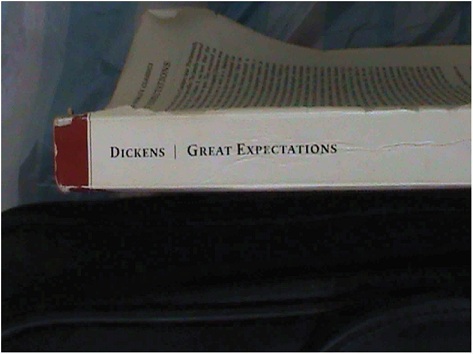
Here’s the picture that AQAP took of the copy of Dickens’ novel Great Expectations they inserted into one of their bombs recently – which they then published in issue 3 of their English language magazine Inspire:

Dickens

And here’s the explanation that accompanies that photo, in a piece titled “The Objectives if Operation Hemorrhage” by their “Head of the Foreign Operations Team”:

This current battle fought by the West is not an isolated battle but is a continuation of a long history of aggression by the West against the Muslim world. In order to revive and bring back this history we listed the names of Reynald Krak and Diego Diaz as the recipients of the packages. We got the former name from Reynald de Chatillon, the lord of Krak des Chevaliers who was one of the worst and most treacherous of the Crusade’s leaders. He fell into captivity and Salahuddeen personally beheaded him. The name we used for the second package was derived from that of Don Diego Deza, the Inquisitor General of the Spanish Inquisition after the fall of Granada who along with the Spanish monarchy supervised the extermination and expulsion of the Muslim presence on the Iberian Peninsula employing the most horrific methods of torture and done in the name of God and the Church. Today we are facing a coalition of Crusaders and Zionists and we in al Qaeda of the Arabian Peninsula will never forget Palestine. How can we forget it when our motto is: “Here we start and in al-Aqsa we meet”? So we listed the address of the “Congregation Or Chadash”, a Gay and Lesbian synagogue on our one of our packages. The second package was sent to “Congregation B’nai Zion”. Both synagogues are in Chicago, Obama’s city.
.
We were very optimistic about the outcome of this operation. That is why we dropped into one of the boxes a novel titled, Great Expectations.

They may not have read the book or seen the movie, as Ibn Siqilli comments at the link above, but they do have long memories and/or a taste for history, and they are indeed sending signals with small details like the fictitious names of their addressees.

*

This is in line with one of the basic premises of Islamic thought: that the world we inhabit is a world of ayat or symbols (the singular is ayah, and the word is also used to refer to the verses of the Qur’an, each of which is viewed as a symbolic utterance). Here, for instance, is a passage from Fazlun Khalid’s paper, Islam and the Environment, from the website of Jordan’s Royal Aal al-Bayt Institute for Islamic Thought:

The Qur’an refers to creation or the natural world as the signs (ayat) of Allah, the Creator, and this is also the name given to the verses contained in the Qur’an. Ayat means signs, symbols or proofs of the divine. As the Qur’an is proof of Allah so likewise is His creation. The Qur’an also speaks of signs within the self and as Nasr explains, “… when Muslim sages referred to the cosmic or ontological Qur’an … they saw upon the face of every creature letters and words from the cosmic Qur’an … they remained fully aware of the fact that the Qur’an refers to phenomena of nature and events within the soul of man as ayat … for them forms of nature were literally ayat Allah”. As the Qur’an says, “there are certainly signs (ayat) in the earth for people with certainty; and in yourselves. Do you not then see?” (Adh-Dhariat, 51:20, 21).

*

BTW, I don’t think Penguin (or, for that matter, Charles Dickens) got paid for that book… whatever their expectations may have been.

Galula and the Maoist Model

Monday, November 15th, 2010

Counterinsurgency Warfare: Theory and Practice

SWJ Blog has been featuring Octavian Manea talking to COIN experts about counterinsurgency godfather David Galula:

Interview with Dr. John Nagl

“Counterinsurgencies are after all learning competitions.”

What is the legacy of David Galula for US Counterinsurgency doctrine? Is he an intellectual father?

The most important thinker in the field is probably Mao whose doctrine of insurgency understood that insurgency is not a component or a precursor of conventional war but could by itself accomplish military objectives. The greatest thinker in my eyes in COIN remains David Galula who has the enormous advantage of having studied and seen the evolution of insurgency in France during WW2, then spending a great deal of time in Asia, and really having thought through the problem for more than a decade before he practiced COIN himself for a number of years. His book is probably the single biggest influence on FM 3-24, the COIN Field Manual. David Galula is the best COIN theoretician as Kennan was for containment.

Interview with Dr. David Ucko

What was the role of David Galula in shaping the mind of the US Army or the Army Concept? Could we see him as an intellectual founding father? And what specific beliefs do you have in mind when you assess his role in shaping the organizational culture of the US military?

As certain individuals and groups within the US military again became interested in counterinsurgency, this time as a result of the persistent violence in ‘post-war’ Iraq, one of the more immediate reference points for how to understand this type of political violence were the scholars and theorists who had marked the US military’s previous ‘counterinsurgency eras’, during the 1960s primarily, but also during the 1980s. In the former camp, the thinkers of the 1960s, David Galula stands as an intellectual forefather to much that was finally included in the US Army and Marine Corps’ FM 3-24 counterinsurgency field manual; indeed I believe his book is one of the three works cited in the manual’s acknowledgements. I think it is fair to say far fewer people have read than heard of Galula, and it would be an interesting study to go through his writings more carefully and see to what degree they apply to our understanding of counterinsurgency today. Nonetheless, even at a cursory level, Galula has been extremely helpful in conceptualizing some of the typical conundrums, dilemmas and complexities of these types of campaigns: the civilian capability gaps in theater; the political nature of counterinsurgency; the importance of popular support, etc. These were issues that US soldiers and Marines were confronting in Iraq and struggling to find answers to; Galula’s seminal texts were in that context helpful.


In terms of influencing US counterinsurgency doctrine, perhaps one of Galula’s main contributions is the emphasis on the political nature of these types of campaigns, and – importantly – his concomitant warning that although the fight is primarily more political than military, the military will be the most represented agency, resulting in a capability gap. Galula’s answer to this conundrum is explicitly not to restrict military forces to military duties, a notion picked up on in US doctrine, which also asks the US military to go far beyond its traditional remit where and when necessary. In a sense, this line of thinking is one of the greatest distinctions between the Army’s first interim COIN manual in 2004 and the final version in 2006: in doctrine (if not necessarily in other areas, such as force structure), Galula’s view of military forces filling civilian capability gaps had been accepted. Of course, it should be added that all of this is much easier said than done, and perhaps some of the implications of involving military forces in civilian tasks (agriculture, sewage, project management) have not been thoroughly thought through – do the armed forces have the requires skills, the training, and how much civilian capability can one realistically expect them to fill? Also, the danger with following Galula on this point is that by doing what’s necessary in the field, the armed forces may also be deterring the development of the very civilian capabilities they reluctantly usurp.

How relevant is Galula’s “Maoist Model” of insurgency anymore?

It is certainly possible for a Maoist insurgency to be successful in today’s world under the right conditions. This was proved, ironically, by Maoists in Nepal who managed to shoot their way, if not into power, into a peace agreement with other Nepalese political parties who united with the Communists to topple Nepal’s monarchy in 2006. Conditions were nearly ideal for an insurgent victory: Nepal is a poor, isolated, landlocked nation which had an unpopular and tyrannical king who was, at best, an accidental monarch; and who lacked an effective COIN force in the Royal Army. Nor was India, which passed for the Royal Nepal goverment’s foreign patron, willing to consider vigorous military intervention or even military aid sufficient to crush the rebellion. For their part, the Maoists were highly disciplined with a classic Communist hierarchical system of political-military control and were relatively-self-sufficient as a guerrilla force.

How well does such a “Maoist Model” of revolutionary warfare reflect conditions of insurgency that we see today in Mexico, Afghanistan, Iraq, Somalia or Yemen? Or in central Africa

Not very well at all.

For that matter, how relevant was “the Maoist Model” for Mao ZeDong in actual historical practice as opposed to retrospective mythologizing and theorizing that lightly sidestepped the approximately 4 million battlefield casualties inflicted on Chiang Kai-shek’s Nationalists at the hands of the Imperial Japanese Army? Prior to the invasion of China proper by Imperial Japan, Chiang Kai-shek’s “extermination campaigns” had a devastating effect on Mao’s forces and had Chiang been free to concentrate all his strength against the Communists, it is difficult to see how Mao’s revolution would have survived without significant Soviet intervention in China’s civil war.

If David Galula were alive today, I suspect he’d be more interested in constructing a new COIN model from empirical investigation than in honing his old one.


Switch to our mobile site