zenpundit.com » COIN

Archive for the ‘COIN’ Category

Guest Post: PRT and State Department Ignorance Fails Us All

Monday, March 21st, 2016

[by Mark Safranski / “zen“]

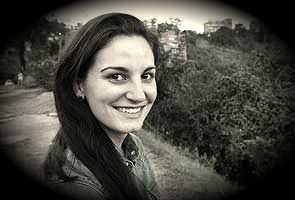
AnnSmed


Anne Smedinghoff

ZP is pleased to bring you a guest post by Pete Turner, co-host of The Break it Down Show and is an advocate of better, smarter, transition operations. Turner has extensive overseas experience in hazardous conditions in a variety of positions including operations: Joint Endeavor (Bosnia), Iraqi Freedom (2004-6, 2008-10), New Dawn (Iraq 2010-11) and Enduring Freedom (Afghanistan 2011-12).

PRT and State  Department Ignorance Fails Us All

by Pete Turner

Anne Smedinghoff and 5 others died when a Taliban car bomb, a.k.a. VBIED, attacked her patrol almost 3 years ago on April 6, 2013 in Qalat city Afghanistan, Zabul province.  The mission’s purpose was to get a photo opportunity while the US patrol handed out books to Afghan kids.  Their deaths were completely preventable.

Ignorance, arrogance and incompetence by the local Provincial Reconstruction Team (PRT), Anne and her Department of State (DoS) peers surely contributed to her death, and the death of multiple soldiers.  I know that statement is pretty inflammatory…and it’s part of the reason why I waited 3 years to tell the tale.  Please read the attached article for the required context.  Also, read Peter Van Buren’s (former DoS boss) HuffPo blog in which he also criticizes DoS competence in this tragedy.

I worked in the same area as Anne, but I’d left about a year prior to her arrival.  It’s unfortunate that my research partner and I didn’t get a chance to meet her.  If we had, she would have been armed with some information that could have saved her life.  It is also unfortunate that the knowledge we gained while working in Qalat left apparently left with us.

Before going any further, my partner, Dr. Ledet and I conducted research into improving education in the province.  Specifically, we were tasked with learning how the US should distribute learning materials to Afghans, and we did so by working with tribal, religious, and political leaders in the area.  Our report was distributed to the PRT, US military and the DoS working in the areas, and briefed to higher authorities. The senior Afghan Ministry of Education (MoE) representative for the province, and multiple leaders we consulted, provided us with the solution regarding how the US could help improve education.

Our Afghan partners clearly and forcefully stated, US elements were not, under any circumstances, to provide books directly to Afghan children.

Yet, Anne and the others died on a book delivery operation. WTF?

It’s critical to understand how bad this is, as not only did the DoS and PRT undermine the MoE directive, which was given with the consent of religious leaders and family elders; effectively the patrol’s objective undermined their authority as well, and created violence and more instability.

How does this happen?  Simply, our foreign policy theory doesn’t match our tactics.  We hire highly intelligent people to do complex work, but their personal intelligence and accomplishments often mean little in this environment.  Often, the people I encounter with fantastic resumes are not trained to listen and learn.  Our failings aren’t about individual brain power and desire.  Where we fail is in our overriding compulsion to help, coupled with our inability to make sure that “ground truth” knowledge is accurately passed on to our replacements when we redeploy.

When we as a nation, bring “help” it often harms locals but sounds great in our briefings or in a eulogy...These are John Kerry’s words the day following Anne’s death, “…Yesterday in Afghanistan, we had a different stealing of a young life. And I think there are no words for anybody to describe the extraordinary harsh contradiction of a young 25-year-old woman with all of the future ahead of her, believing in the possibilities of diplomacy, of changing people’s lives, of making a difference, having an impact, who was taking knowledge in books to deliver them to a school. “  

I have words to describe this, Mr. Kerry….and they are harsh.  THAT PATROL SHOULD HAVE NEVER HAPPENED!  Anne was not properly prepared, and it’s a failure of the existing DoS and PRT staff that should have known better.  It’s the failure of whoever disregarded that day’s threat assessment to send out a patrol on a photo safari.  Those photos only validate our ignorance, and do nothing to repair the damage of that day.

Mr. Kerry and Anne simply wanted to help the Afghans become educated, but in reality that patrol was indicative of the continued separation between the Afghans and US partners. That patrol also created another opportunity for the Taliban to show locals where their future interests lie.  Because we don’t learn, and continue to act as though our culture is superior to the Afghans, we fail to make the kind of progress necessary to create stability.

It’s one thing for me to criticize John Kerry and Anne…hang in there, when I post part 2, I’ll illustrate how Dr. Ledet and I were able to use culture to our advantage, and gain uncommon access to the Afghans while we learned the appropriate way to support the MoE.
Small Wars and Big Thoughts

Saturday, March 19th, 2016

[by Mark Safranski / “zen“]


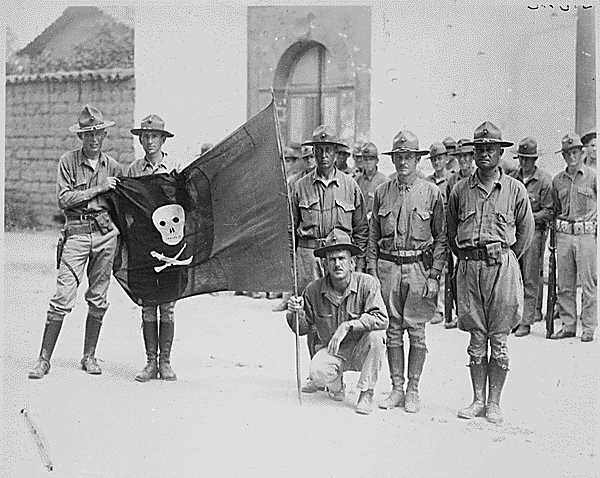
U.S. Marines display captured flag of Nicaraguan rebels led by Augusto Cesar Sandino

While pop-centric COIN may be dead, small wars and irregular warfare will always be with us. We might say they are in the fourth or fifth generation; are an open-source insurgency; or have become “hybrid“; or exist in some kind of mysteriousgray zone“. Whatever we call them, small wars are here to stay.

Two recent publications explore the topic.

The first is a taxonomic work from Robert Bunker at the Strategic Studies Institute:

Old and New Insurgency Forms

….Blood Cultist (Emergent). Strategic implications:  Limited to moderate. This insurgency form can be viewed as a mutation of either radical Islam and/or rampant criminality, as found in parts of Latin America and Africa, into dark spirituality based on cult-like behaviors and activities involving rituals and even human sacrifice. To respond to this insurgency form, either federal law enforcement or the military will be the designated lead depending on the specific international incident taking place. An all-of-government approach will be required to mitigate and defeat this insurgency form, which has terrorism (and narco-terrorism) elements that represent direct threats—especially concerning the Islamic State—to the U.S. homeland […]

I strongly agree with Bunker’s “dark spirituality” angle present in deviant religious-military movements. For example, ISIS, for all its protestations of ultra-orthodoxy in its Salafism exudes a spirit of protean paganism in its words and deeds.

The second is a book, Clausewitz on Small War by Christopher Daase and James W. Davis (Hat tip to Nick Prime). From a book review at the London School of Economics:

….The current generation’s trend in understanding Clausewitz is that of moving beyond On War – an analysis which Clausewitz himself considered incomplete and which was published posthumously. As part of this shift, 2015 alone saw the publication of a new account of his life, together with a biography of his wife and a comparison between Napoleon’s and Clausewitz’s ideas on war, to name a few.

Through Clausewitz on Small War, Christopher Daase and James W. Davis make a significant contribution to such efforts of contextualisation. Yet theirs is quite distinct from other works, in that they translate into English writings that were thus far accessible only to those with a reading knowledge of German. This is precisely where the value of the book lies, as well as being the editors’ primary aim: opening up Clausewitz through translating his own words, rather than in interpreting them. In doing so, they offer the tools through which future analyses can be better informed.

The editors nonetheless do set out a case in the introduction: Clausewitz’s writings on ‘Small War’ are testimony to his continuing relevance. To illustrate this, they offer four chronologically arranged texts – a journey of how his thinking on Small War evolved. Each text was written with a different frame of mind. The first is comprised of lecture notes on small-unit warfare that are informal and rather technical; the second and third are memoranda distributed to military reformers and through which Clausewitz passionately makes the case for militias; and the final is a chapter from On War, again on the arming of the people.

I would add that ZP contributor, Lynn Rees, also had a recent post on the role of Marie von Clausewitz in shaping “Clausewitz” and Clausewitzian thought.

That’s it.

Guest Post: Duncan Hunter and Human Terrain System by Turner

Sunday, February 14th, 2016

[by Mark Safranski / “zen“]

ZP is pleased to bring you a guest post by Pete Turner, co-host of The Break it Down Show and is an advocate of better, smarter, transition operations. Turner has extensive overseas experience in hazardous conditions in a variety of positions including operations: Joint Endeavor (Bosnia), Iraqi Freedom (2004-6, 2008-10), New Dawn (Iraq 2010-11) and Enduring Freedom (Afghanistan 2011-12).

ON REPRESENTATIVE DUNCAN HUNTER’S QUESTIONS ABOUT HTS

by Pete Turner

Today I was sent this USA Today article about Rep. Duncan Hunter (R-Ca) and Human Terrain System with a request for comments. An excerpt:

….A critic of the program, Rep. Duncan Hunter, a California Republican and member of the Armed Services Committee, demanded answers about the program from Acting Army Secretary Patrick Murphy in a letter sent Monday. Hunter noted “striking similarities between the two programs” and called on the Army to explain how the Global Cultural Knowledge Network differed from Human Terrain System. He also asked for an accounting of its cost and the number of people it employs.

“Unless the Army can show real differences between programs, then there should be no doubt that this constitutes a blatant attempt to rebrand and reboot a failed program under another name and a launch it with a reworded mission statement,” Hunter told USA TODAY on Tuesday. “What’s obviously lost on the Army is that it wasn’t just the implementation of HTS that was the problem, it was the whole thing, to include the program’s intent and objective.”

I have no faith in TRADOC’s ability to get Human Terrain System or HTS 2.0 any more right than last time.  The program was full of prima donnas, liars and academics who lacked the ability to relate to the military and commanders.  Also, commanders aren’t trained in how to best use HTS assets either – and that matters. For example:

COL: “Pete, I want you to tell me who the most influential person in our region is….can you do that?”  

Pete: “Yes Sir, I have the answer already…it’s you…until the people recognize their own governmental leaders, police and military, our focus has to be in ramping your influence down while we enable them to ramp up, Sir.”   

That statement is the essence of what an HTS does – we identify and translate the intersection of the ramps.  There is no book on how to do it well. The ground truth is where the best work is done.  It’s a shame that Rep Duncan Hunter and DoD cannot see that.

For those who aren’t familiar with my work, I have 70+ months of time working in combat zones.  I’ve worked most of this time at the lowest level interacting with locals on well over a 1000 patrols.  A great deal of this time I worked in the HTS program mentioned in the article.

Rep D. Hunter questioned the need and was critical of the original HTS program.  Like any program we absolutely had our share of fraud, waste and abuse.  Here’s the thing…the HTS program even when legitimately run is expensive.  Units work hard, long hours and a relentless schedule.  On numerous occasion, I’d work a 20 hour day followed by an 18 hour day followed by a string of 16 hour days.  An 84 hour week is the minimum I’d work.  Working at the minimum pace of 12 hours a day 7 days a week, a person will “max out” on their federal pay for the year and accumulate “comp time” or paid days off.

Since there are always things to do, lives at stake, command directives to pursue…missions to go on, planning to complete, analysis to run, reports to write, meetings to attend…it’s not hard to work 90+ hours a week and be seen as not doing enough.  How about this – some units will practice for a meeting for hours prior to the actual meeting?  If a unit is going to spend 6 hours prepping for and executing a meeting, that’s just ½ of a day…yes, legitimate work will result in paid leave.

If my patrol leaves at 3AM because there is a full moon and we move up and over a mountain arriving at a village before dawn…then spend the rest of the morning patrolling more and finally return to base at 2 in the afternoon…I still have to report on what I saw, a report may take 3-4 hours to write….and then prep for the next day’s patrol…unless your unit is doing 2 patrols a day.

I recall one specific time when a brigade from the 82nd that I was attached to was going to rotate home.  The brigade commander wanted to provide the new unit with the best possible handoff in terms of data, relationships etc.  To facilitate this handoff, my team was tasked to improve a “smart book” of dossiers on prominent Iraqis.  At one point I sat in the same chair for 24 hours writing, rewriting and then updating the book…simply because we HAD to work – the books weren’t getting better, just being constantly reworked.

Why do I bring this up?  Two reasons: First, the 82nd works HARD and if one is attached to them, that person works hard too, or suffers from irrelevance.  The 82nd spent a lot of taxpayer money on HTS people writing those books with the best intentions.  Secondly, the next unit came in and literally, never used the books.  When I asked why,  the new unit said, “we really don’t do that.”

When Rep Hunter originally questioned, the need for the program, I reached out to him to illustrate how when done properly, HTS work saves money and creates the kind of wins that unit’s cannot do without a HTS capability.  I also sent several notices to the my district’s congressional rep Mr. Mike Thompson.  Both he and Mr Duncan are veterans; I thought, surely they’d value my unique “ground truth” based knowledge.  I was wrong, both representatives ignored my offer to provide feedback.

The answer to Rep Duncan’s question about the need for this program is this:

Commanders need an outside element to translate what the US is doing for locals; in this case Afghans.  Meanwhile the HTS person also translates back to the US military what the locals are experiencing.  What an HTS person really does is works as a cultural translator allowing the different sides to understand the reality of their “partner.”

I worked in a valley that had a steep narrow canyon.  The local US Army agricultural development team (ADT) a truly myopic, xenophobic program that commonly created instability more than anything else, decided to build a check dam.  The dam was supposed to elevate the water in the river high enough to charge the irrigation ditches that ran the length of the river valley.  Over the course of 18 or more months the ADT fought with locals to improve the dam, while the locals rejected it and attempted to destroy it on several occasions.

The Dam Project

I was able to talk to locals who reasonably explained why the dam was an issue.  Simply put, they didn’t want it – and it was predicted to fail as soon as the first rain came.  Further, the region had an Afghan leader chosen to handle water issues for the families.  He agreed that the dam was a bad idea; and also predicted it would fail with the first rain.  We never effectively engaged the water elder–instead the ADT insulted this person and ignored his position and influence with the farmers.  A commander can’t know these things without an HTS person on the ground studying the human terrain.

I spoke with the ADT engineer responsible for the final “upgrade” to the dam.  I mentioned the concerns of the people and the water elder about the long term viability of the dam, which was visibly failing – the ADT hydrologist said, the elder may be right. Exacerbating this further, the dam project was done, updated and repaired all without any planning with the local Afghan governor.  All in all, the dam cost well in excess of $100k

Then the first rain came…

If one was to look at the ADT reporting, the dam was a hit.  It was accomplishing great things for the valley’s farmers.  Without an human terrain operator like myself, the ADT and the local US commander likely would never have found out how miserably they’d failed.  Rep Duncan, you want to fix things? Give me a call and I’ll show you where the money is really being wasted.

It gets worse…not only did the dam fail; when locals began to engage the governor about his plan to deal with the dam (this BTW is a small win, as most farmers a month prior saw no benefit from the government) the governor had no capacity to change anything.  This in effect confirmed for many locals that the governor had no ability to help them and therefore,  the Taliban would remain the dominant force in the region.  Ultimately, the ADT had closed the books on the region and meanwhile security further eroded.  Our efforts to create capacity resulted in us undermining the fledgling power of the governor.  Within a few months of my leaving the region, a district once considered to be a model of stability, had three service members assassinated by their Afghan partners.

Without an HTS asset, we never learn these lessons.  This is one of dozens of tales I was able to illustrate as an HTS operator.  Of course, since Reps Duncan and Thompson can’t be bothered with the ground truth – its all fraud waste and abuse, isn’t it?

Zen in the Art of Future Warfare

Wednesday, July 15th, 2015

[ by Charles Cameron — a highly interesting discussion, discussed ]
.

How to Write and Fight World War III:

This is the video of a terrific discussion of the future of warfare — peacemaking, too, if you see them as two sides of a coin — from the Art of Future Warfare project, to which I have contributed [two stories, 1, 2, a video appearance, 3, and even a DoubleQuotes reference 4]

**

I want to select certain phrases from the discussion above, and comment on them.

It’s a work of fiction, not prediction.

The thing is, a work isn’t just what its creators intend it to be, it can also be whatever its readers make of it. It’s my impression that the Hebrew prophets were not predicting so much as warning — that’s a distinction Wallace Black Elk made a point of mentioning when he was waxing prophetic — but todays “prophecy teachers” all too often read prophecy as a statement of future fact rather than as a warning of a dangerous path to be avoided.

So we’re dealing with this incredibly complex world – how do we grapple with it? How do we think about these problems?

There’s a class of answers to this question, ranging from complex mathematical models, sims and games to stocks and flows diagrams to Dialogue Mapping and my own HipBone Games. Most if not all of the items in this class are graph-based (node and link) networks.

My own vector is away from high tech and “big” data, towards “rich” data and human-sized graphs — ie graphs with few enough nodes that the human mind can fairly easily envision them, and nodes and links rich enough in anecdotal, visual, statistical, aphoristic, quotatiuonal and other forms of data to elicit full-spectrum human responses, emotional, cultural, mental, heart and mind in conjunction.

we hunger for creativity and intellectual agility in our national security leaders, and our military leaders

The usual routes to leadership significantly fail to provide such agility, although occasional good apples to manage to survive among the rotten throng.. That’s why it takes so long to go from John Boyd being a voice in the wilderness to his being lauded by SecDef.

how do we actually cultivate that kind of thinking, that creative, lateral thinking?

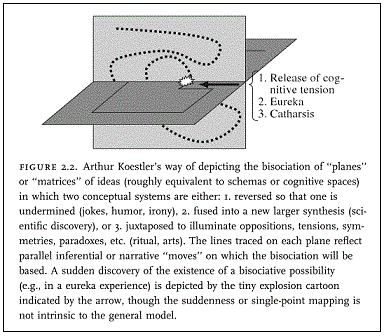
Again, my own practice draws explicitly on Arthur Koestler‘s insight that it is at the intersection of “planes of thought” — silos, anyone? — that creative insights arise.

My games accordingly, simply and elegantly make all moves consist, at some level, of such intersections. The HipBone move is a conceptual leap, regular practice of HipBone Games is the most focused way to train the mind in creative leaping, on or off the gameboard, in play or in life.

fiction, literature and the arts are a critical and often overlooked vehicle for exactly that

I fully agree, and indeed it turns out that the style of “creative leaping” I am talking about is richly found within the complex weavings of the arts — and indeed, my games were directly inspired by a Nobel-winning novel by Hermann Hesse.

I lack the competence to build a web-playable version myself, but a museum-oriented adaptation of my game ideas by Cath Styles can be played on iPads in the Australian National Museum, and its web implementation, also focused on visual artefacts rather than concepts, can serve as a proof of concept for the wider uses I envision — intelligence analysis included.

Paul Callaghan, a writer, game developer, and university lecturer who has played Cath’s Sembl game commented:

Sembl incredibly succesfully mixes competitive and collaborative play, creativity and expression, and exploration and inspiration. It’s the sort of game you think about when you’re not playing it, and it’s the sort of game that helps you see the world in new ways.

That’s very precisely what any HipBone derived game aims to do, and if we want creative leadership, getting the HipBone Games up and running online and using them in analytic and decision-making training would be a pretty useful step to take.

it was basically this Army / Marine Corps answer to a zen koan, right

and

a theological and religious scholar

It may seem strange to find zen buddhism, theology, and religious scholarship mentioned in a discussion on the future of warfare, but they’re areas of the human conceptual spectrum with a great deal to teach us about insight. And fwiw, I read Theology at Oxford, and have recently been “sitting zen” with koans after a brief but brilliant afternoon with the zen roshi John Tarrant.

Playing a HipBone move and “solving” (resolving, dissolving?) a zen koan have a great deal in common. Haiku, likkewise.

But that’s enough for one post.

**

Here are the selections I’ve been responding too, at greater length:

Peter W Singer

We have been very clear. It’s a work of fiction, not prediction. That’s the opening line of it. It is based on real world trends and technologies, but it is not a prediction – but hopefully it can be something that maybe ends up being preventative, by identifying certain issues, trends, even mistakes we are making right now, it helps us to avoid those from happening so that the scenario actually doesn’t come to pass. ..

Kathleen McInnis:

We’re grappling with an increasingly complex and interdependent world: globalization, climate change, urbanization, population migration, resource scarcity, all of these are trends that are intersecting with the re-emergence of geopolitics on the one hand, and the erosion of what we’ve known as the sovereign state on the other. So we’re dealing with this incredibly complex world – how do we grapple with it? How do we think about these problems? How do we advance US and global security in a world plagued by wicked problems and unintended consequences?

As Dan mentioned earlier, we hunger for creativity and intellectual agility in our national security leaders, and our military leaders—but how do we actually cultivate that kind of thinking, that creative, lateral thinking? And crucially, how do we communicate how we are thinking about these problems and what we think we should be doing about them – how do we communicate that to our public in a way that resonates.

And I submit to you that fiction, literature and the arts are a critical and often overlooked vehicle for exactly that, the creative contemplation of matters of statecraft and national security.

One of the interesting things about that manual [Field Manual 3-24, Counterinsurgency] was that it actually proposed these intellectual puzzles, these constructs, like, “the more you secure your environment, the less safe you can be” – when you’re operating in a local tactical environment. Instead of having a tactical check-list of, you know, this is what we need to do in these particular operations and this is the logic flow for how you do x, y or z in these environments, it was basically this Army / Marine Corps answer to a zen koan, right – like how does this non-logical, really intuitive way to creatively grapple …

This is no accident. The point of a zen koan is to inspire a deeper, non-logical level of contemplation. But we haven’t always used koans to access that part of our psyches, and that way of thinking about things.

Karen Armstrong, who is a theological and religious scholar, who wrote a book that I just love, it’s called A Short History of Myth – she argues that ever since we were cavemen, sitting round camp fires, we have been using stories and myths as ways to communicate truths to each other, ways to communicate meaning. Myths were not an expression of religious beliefs per se, rather they were an imaginative, non-logical way to understand who we are and how we fit in the world. ..

And then you get to the ancient Greeks, who had two very different, equally important ways of looking at the world, Mythos and Logos.

WTG, Kathleen!

**

Possible koans from the COIN Manual, p 1.27:

  • Sometimes, the More You Protect Your Force, the Less Secure You May Be
  • Sometimes, the More Force Is Used, the Less Effective It Is
  • Pete Turner on “Collecting Instability”

    Friday, June 12th, 2015

    [by Mark Safranski, a.k.a. “zen“]

    Collection Center Collects Instability

    Pete Turner of The Break it Down Show had a powerful post that encapsulated what is wrong with the American approach to intervention in foreign societies, both in terms of our aid and development programs as well as COIN and military assistance of various kinds.

    Collection Center Collects Instability 

    ….A good example of what we did involves things called Collection Centers, which our government built to afford Afghan farmers a place to showcase products to vendors. The Center is supposed to create greater revenue for farmers. Despite the best of intent, and a lot of hard work, the program was and remains an utter disaster.

    Why has the program been such a flop?

    We, the US, came in and established these centers without ever considering how the existing system worked. We never bothered to determine how changing the system might be accepted or rejected, or cause harm to those we intended to help. We didn’t consider if the Afghans even had a system (which, of course, they did).

    Instead of defining the existing system and assessing whether or how our tool might address a need, we just came in and started changing things It didn’t work, and we barely cared that it didn’t; and we reported the opposite.-

    An aside–the if you read the report, look for mentions of Afghan involvement in the process. You won’t find it.  

    I spoke with an Army Major in charge of the program and asked him about the existing local market chain from grower to consumer. He admitted that he didn’t know about it. When I asked why he was trying to change it, I was met with silence.

    We also never considered if we were creating a harmful situation for farmers, and that ignorance caused unexpected and undesirable outcomes. At the most basic level, Taliban fighters notice “western” influence. A farmer who uses (though they never actually did) the collection center is exposing his allegiance with the US and therefore putting his family and himself in jeopardy. Further, the farmer buyer relationship is established relationship. Changing the nature of their transaction is reckless in such a conservative, Taliban influenced place. What we can’t do is create a situation that is perceived to increase uncertainty for farmers.

    We built these centers throughout Afghanistan. At every instance, covering multiple units, I observed the same poor US decision-making. We never bothered to involve our Afghan partners in the decisions and never allowed them to guide us on how to work within their system. We forced these centers upon the people of Afghanistan, and wasted more than money and resources in the process. We wasted opportunities to actually improve the lot of the farmer, which makes de-legitimizing the Taliban fighters more challenging.

    Read the whole post here.

    Turner wore many different hats in Iraq and Afghanistan but in one extended tour in Zabul, Pete worked closely with political science Professor Richard Ledet, who in addition to his scholarly expertise, was uncannily good at donning local attire and blending in with Afghan villagers.

    Dr. Richard Ledet

    Turner and his partner Jon, interviewed Ledet recently on their program:

    What happens when an institution attempts to make changes intending to improve the lot of others? What if they ignore culture and fail to communicate with the people designed to receive a benefit from the change? We address these questions in ourepisode with Dr. Richard Ledet.

    We are fans of Rich. He’s a warrior, professor, surfer, hunter, all-around brilliant, rugged dude. His current gig is working as a Poli Sci professor at Troy University in Troy Alabama. Rich and I worked together in Afghanistan studying how effective or “affective” our work was as US assets helping Afghans. It’s not common for Poli Sci professors to get so close to the ground truth, and then to be able to test our policy and strategic programs as they implemented at the lowest level. This experience, we believe, is fascinating and applies directly to the real world.

    Listen to the interview here on The Break it Down Show.


    Switch to our mobile site