A wise man once told me that a weakness of our Constitutional system was that the Framers implicitly presumed that people of a truly dangerous character, from bullies to bandits to political menaces to the community, would primarily be dealt with in age-old fashion by outraged neighbors whose rights had been trespassed and persons abused one time too many. They did not prepare for a time when communities would be prohibited from doing so by a government that also, as a whole, had slipped the leash. Indeed, having read Locke, Montesquieu, Cicero, Polybius, Aristotle and Plato, they expected that such a state of affairs was “corruption” of the sort that plagued the Old World and might happen here in time. A sign of cultural decadence and political decay. They gave Americans, in the words of Benjamin Franklin, “A republic, if you can keep it”. It remains so only with our vigilance.
It is happening now.
We have forgotten – or rather, deliberately been taught and encouraged to forget – the meaning of citizenship.
We have let things slip.
Joseph Fouche superbly captures this implicit element, the consequences of the loss of fear of informal but very real community sanction, in his most recent post:
….A classic American mob could exhibit any or all of these strategies. It could be a saint inciting a mob to attack others who deviated from a shared narrative. It could be a knave in saint’s clothing inciting an attack on personal rivals. It could be a moralist inciting a mob against the local knaves. The one constant is that an American mob was an expression of communal self-government by moralists seeking to punish what they saw as deviant, even if its manifestation was frequently unpleasant. It was a sign the local people were engaged.
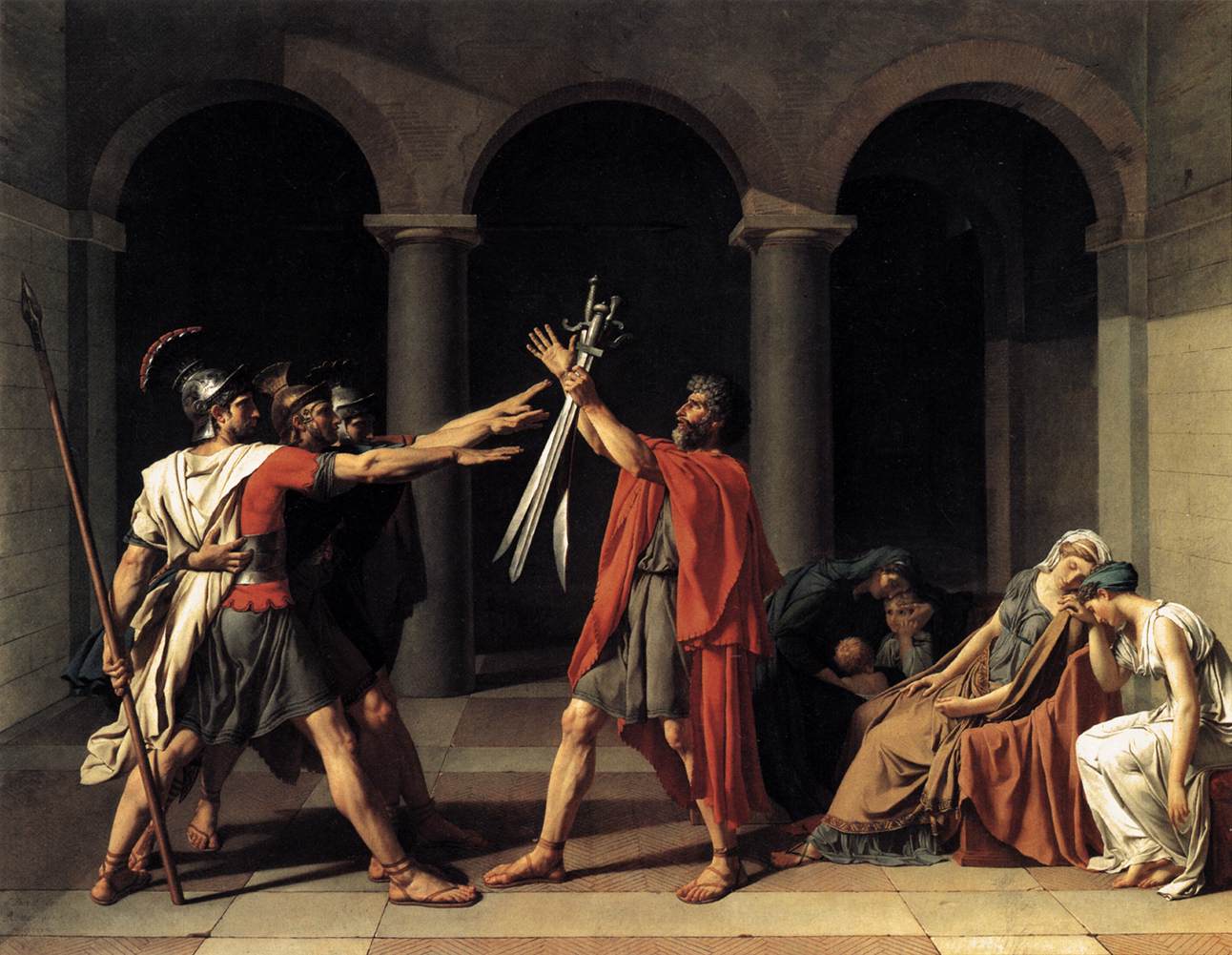
Samuel Adams was the Lenin of the American Revolution. He conceived a hatred for the British Empire and a desire for American independence well before anyone else did. Adams skillfully used mobs alongside legal pretense to incrementally spread his agenda. Others followed his example. In the Worcester Revolution of 1774, the local population shut down the normal operations of royal government in west and central Massachusetts and drove royal officials out of those regions (the book to read is Ray Raphael’sThe First American Revolution: Before Lexington and Concord). The British crown lost control of inland Massachusetts before Lexington and Concord were even fought.
However, eleven years later, when many of the same local residents attempted to do the same thing in protest of the policies of a now independent Massachusetts, the state government put down their rebellion with Samuel Adams’s strong support. The difference? An apocryphal remark attributed to Adams captures some of the truth behind his attitude: “the man who dares to rebel against the laws of a republic ought to suffer death”. Mobs protesting the actions of an unrepresentative government like the British Parliament, Adams argued, were valid. Mobs protesting the actions of a representative government like Massachusetts’s state government, on the other hand, were treasonous. This doctrine, supported by other Revolutionary leaders, especially the cabal behind the Order of the Cincinnati, was eventually enshrined as the higher law of the land in the slow motion coup d’etat that overthrew the Articles of Confederation and replaced it with the more authoritarian United States Constitution in 1787-1788.
While mobs continued to combine, they were gradually neutered by the conscious agenda of American elites who sought to replace informal norms enforced by communal censure with formal norms applied under the professional supervision of “wiser heads”. This was a collusion between saints and knaves against moralists. Saints got purer standards that were not reliant on the whims of moralists who got stirred up in unpredictable ways that might violate the saints’ prevailing narrative while knaves got credentials that allowed them to entrench their positions and agendas under the cover of serving a higher good. The same sense of community morality and punishment that gave nineteenth century self-government its vigor and occasional excess was weakened as moralists were tuned out by saints embedded in holy isolation and knaves concerned only with advancing personal priorities. Moralists saw the knaves getting away with free riding off of them and began to opt out, leaving room for more knaves to free ride. For a little formal pretense, the returns on rent seeking were enormous.
The ideal went from a citizenry engaged in self-government to a system designed to advance the best and brightest. Meritocracy sounds good in theory and has some positives in reality. However, a perfect meritocracy is a perfect tyranny. All of the leaders are on once side and all the followers are on the other. This tendency toward the separation of the best from the rest may only be checked by the tendency of those on the ascendant to favor their own children, whatever their merit, over strangers that are more meritorious. This will force some aspiring meritocrats to side with the followers and bring about a rotation of elites. But the transition may take a while and its best to start before you have a meritocratic problem….
Today’s circumstances, with the elite determinedly crafting rules for the mass but not for their class, have an ominous portent for the future of America as a democratic republic, but violence is not yet required.
ScienceDaily (July 20, 2010) – A new study analysing interactions between players in a virtual universe game has for the first time provided large-scale evidence to prove an 80 year old psychological theory called Structural Balance Theory. The research, published in the Proceedings of the National Academy of Sciences, shows that individuals tend to avoid stress-causing relationships when they develop a society, resulting in more stable social networks.
The study, carried out at Imperial College London, the Medical University of Vienna and the Santa Fe Institute, analyses relationships between 300,000 players in an online game called Pardus (http://www.pardus.at/). In this open-ended game, players act as spacecraft exploring a virtual universe, where they can make friends and enemies, and communicate, trade and fight with one another.
Structural Balance Theory is an 80 year old psychological theory that suggests some networks of relationships are more stable than others in a society. Specifically, the theory deals with positive and negative links between three individuals, where ‘the friend of my enemy is my enemy’ is more stable (and therefore more common) than ‘the friend of my friend is my enemy’.
….The authors found that in positive relationships, players are more likely to reciprocate actions and sentiments than in negative ones. For example, if player A declares player B to be their friend, player B is likely to do the same. If player A declares player B to be their enemy, however, player B is not likely to reciprocate.
The research also revealed strong interactions between different types of links, with some networks overlapping extensively, as players are likely to engage in similar interactions, and others tending to exclude each other. For example, friendship and communication networks overlap: as we would expect, friends tend to talk to each other. However, trade and hostility did not overlap at all, showing that enemies tend not to trade with one another.
Dr Renaud Lambiotte said: “This may seem like an obvious finding, as we would all prefer to communicate more with people we like. However, nobody has shown the evidence for this theory on such a large scale before.”
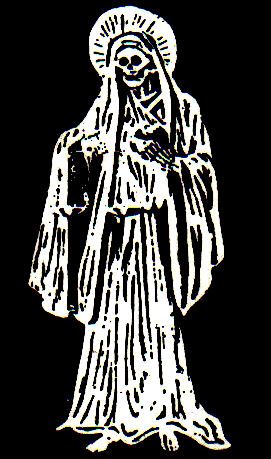
Conventional wisdom holds that narco gang and drug cartel violence in Mexico is primarily secular in nature. This viewpoint has been recently challenged by the activities of the La Familia cartel and some Los Zetas, Gulfo, and other cartel adherents of the cult of Santa Muerte (Saint Death) by means of religious tenets of ‘divine justice’ and instances of tortured victims and ritual human sacrifice offered up to a dark deity, respectively. Severed heads thrown onto a disco floor in Michoacan in 2005 and burnt skull imprints in a clearing in a ranch in the Yucatán Peninsula in 2008 only serve to highlight the number of such incidents which have now taken place. Whereas the infamous ‘black cauldron’ incident in Matamoros in 1989, where American college student Mark Kilroy’s brain was found in a ritual nganga belonging to a local narco gang, was the rare exception, such spiritual-like activities have now become far more frequent.
These activities only serve to further elaborate concerns amongst scholars, including Sullivan, Elkus, Brands, Manwaring, and the authors, over societal warfare breaking out across the Americas. This warfare- manifesting itself in ‘criminal insurgencies’ derived from groups of gang, cartel, and mercenary networks- promotes new forms of state organization drawn from criminally based social and political norms and behaviors. These include a value system derived from illicit narcotics use, killing for sport and pleasure, human trafficking and slavery, dysfunctional perspectives on women and family life, and a habitual orientation to violence and total disregard for modern civil society and democratic freedoms. This harkens back to Peter’s thoughts concerning the emergence of a ‘new warrior class’ and, before that, van Creveld’s ‘non-trinitarian warfare’ projections.
I regret the light posting and lack of attention to the superb comments. I am buried at work and will be until early next week. Will be posting short items until then
Steven Pressfield, author, historian and this year, blogger has made a major revision of his blog, originally an Afghan War-centric site known as “It’s the Tribes, Stupid!”. Pressfield has relaunched the blog today with a sharp new site redesign, a broader focus and a new expert co-blogger, as:
Steve has enlisted scholar-soldier William S. “Mac” McCallister to apply his experience in military affairs and irregular warfare at Agora, a page which will cover the subjects and news formerly housed at “Tribes, where Mac has already put up his first post:
Often, ideas are discounted because they don’t mesh with someone else’s concept of reality. I was on the receiving end myself recently, related to my latest recommendations for prosecuting the war in Afghanistan. And, well, I’ve shot down the ideas of others in the past, too.
End of day, we have to consider the different realities-because the one thing I think we can all agree on is that, in Afghanistan in particular, there’s no one-size-fits-all solution, because the realities on the ground vary so greatly.
“Agora” is a place to consider all of the realities.
Steven will be blogging on “Writing Wednesdays” creativity and other themes on his page, The Creative Process and, I expect, popping in from time to time on Agora as well when the mood strikes.
Zenpundit is a blog dedicated to exploring the intersections of foreign policy, history, military theory, national security,strategic thinking, futurism, cognition and a number of other esoteric pursuits.
officials out of those regions (the book to read is Ray Raphael’s The First American Revolution: Before Lexington and Concord). The British crown lost control of inland Massachusetts before Lexington and Concord were even fought.

 end myself recently, related to

