zenpundit.com » tribes

Archive for the ‘tribes’ Category

Is 4GW Dead?: Point-Counterpoint and Commentary

Tuesday, May 28th, 2013
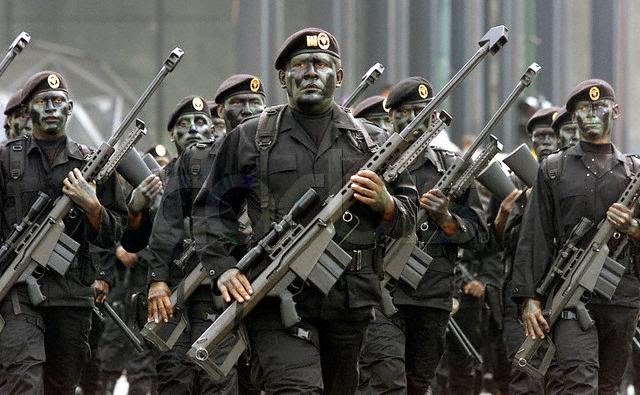
4GW theory has always attracted overenthusiasts and  raging haters ever since the concept emerged way back in 1989, so debates about the merit of 4GW are nothing new; in fact, the arguments became so routine that they had largely gone sterile years ago.  After T.X. Hammes published his excellent  The Sling and the Stone and John Robb  went to the next level with Brave New War , it seemed that  little new was left to be said. In the late 2000’s, intellectual energies shifted to arguing the nuances and flaws of Pop-centric COINwhich proved in time to be even more bitter than those about 4GW.

Generations of War Theory Visualized by Chet Richards

What is different recently is that the person taking the affirmative on the question “Is 4GW dead?” was Dr. Chet Richards, who for years ran the premier but now defunct 4GW site, D-N-I.net, now archived here by the Project on Government Oversight.  Richards is no Clausewitzian true-believer or Big Army MBA with stars, but a former collaborator with John Boyd and a leading thinker of the 4GW school who had written several books with that strategic theme.

Therefore, not a critic to be dismissed lightly. Here’s Chet:

Is 4GW Dead? 

….The first thing to note is that 4GW is an evolution from 3GW, which they equate to maneuver warfare and the blitzkrieg as defined in MCDP 1 and Boyd’s Patterns of Conflict. These are styles of warfare conducted by state armies against other state armies, although the paper does invoke the notion of transnational terrorists near the end.

At some point in the late 1990s, the theory bifurcated. Bill Lind and Martin van Creveld began to emphasize the decline of the state and focus on transnational guerrilla organizations like al-Qa’ida. Tom Barnett called this the “road warrior” model. T. X. Hammes, on the other hand, characterized 4GW as “evolved insurgency” and envisioned the techniques described in the paragraphs above as also useful for state-vs-state conflicts.

….The 9/11 attacks, by a transnational guerrilla movement, seemed to confirm 4GW in both of its forms. In the last few years, however, everything has gone quiet. Transnational insurgencies, “global guerrillas” as John Robb terms them, have not become a significant factor in geopolitics. “Continuing irritation” might best describe them, whose primary function seems to be upholding national security budgets in frightened western democracies. The state system has not noticeably weakened. So it might be fair at this point to conclude that although 4GW was a legitimate theory, well supported by logic and data, the world simply didn’t develop along the lines it proposed.

A prominent critic of 4GW, Antulio J. Echevarria, may have been correct:

What we are really seeing in the war on terror, and the campaign in Iraq and elsewhere, is that the increased “dispersion and democratization of technology, information, and finance” brought about by globalization has given terrorist groups greater mobility and access worldwide. At this point, globalization seems to aid the nonstate actor more than the state, but states still play a central role in the support or defeat of terrorist groups or insurgencies.

Why? I’ll offer this hypothesis, that the primary reason warfare did not evolve a fourth generation is that it didn’t live long enough. The opening of Sir Rupert Smith’s 2005 treatise, The Utility of Force, states the case….

Chet’s post spurred a sharp rebuttal from William Lind, “the Father of Fourth Generation Warfare”:

4GW is Alive and Well 

So “the world simply didn’t develop along the lines it (4GW) proposed”? How do you say that in Syriac?

The basic error in Chet Richards’ piece of April 19, “Is 4GW dead?” is confusing the external and internal worlds. Internally, in the U.S. military and the larger defense and foreign policy establishment, 4GW is dead, as is maneuver warfare and increasingly any connection to the external world. The foreign policy types can only perceive a world of states, in which their job is to promote the Wilsonian nee Jacobin, follies of “democracy” and “universal human rights.” They are in fact, 4GW’s allies, in that their demand for “democracy” undermines states, opening the door for more 4GW.

In most of the world, democracy is not an option. The only real options are tyranny or anarchy, and when you work against tyranny, you are working for anarchy. The ghost of bin Laden sends his heartfelt thanks.

Third Generation doctrine has been abandoned, de facto, if not de jure, by the one service that embraced it, the U.S. Marine Corps. The others never gave it a glance. The U.S. military remains and will remain second generation until it disappears from sheer irrelevance coupled with high cost. That is coming much sooner than any of them think.

….In many of these cases, including Egypt and Pakistan, the only element strong enough to hold the state together is the army. But the “democracy” crowd in Washington immediately threatens aid cut-offs, sanctions, etc., if the army acts. Again, the children now running America’s foreign policy are 4GW’s best allies.

Fourth generation war includes far more than just Islamic “terrorism,” and we see it gaining strength in areas far from the Middle East. Gangs have grown so powerful in Mexico, right on our border, that I predict the state will soon have to make deals with them, as the PRI has done in the past. Invasion by immigrants who do not acculturate is a powerful form of 4GW, more powerful than any terrorism, and that is occurring on a north-south basis (except Australia) literally around the world. Remember, most of the barbarians did not invade the Roman Empire to destroy it. They just wanted to move in. In fact, most were invited in. Sound familiar?

What should concern us most is precisely the disconnect between the internal and external worlds. Externally, 4GW is flourishing, while internally, in the US government and military, it does not exist. This is the kind of chasm into which empires can disappear….

Fabius Maximus – who is a both a pseudonymous blogger and a group blog, also responded:

Update about one of the seldom-discussed trends shaping our world: 4GW 

One of the interesting aspects of recent history is the coincidence of

  1. the collapse of discussion about 4GW in US military and geopolitical circles,
  2. victories by insurgents using 4GW methods over foreign armies in Iraq and Afghanistan, &
  3. most important, the perhaps history-making victory by Bin Laden’s al Qaeda.

The second point is important to us, but the usual outcome since WW2 (after which 4GW became the dominate form of military conflict; see section C below).  The third point is the big one. Based on the available information, one of Bin Laden’s goals was to destabilize the US political regime. Massive increase in military spending (using borrowed funds). The bill of rights being shredded (note yesterday’s House vote to tear another strip from the 4th amendment). Our Courts holding show trials of terrorists — recruited, financed, supported by our security services. Torture and concentration camps.

….We — the Second American Republic — have engaged in a war with nationalistic, Islamic forces using 4GW.  So far we are losing.  For various reasons we are unable to even perceive the nature of the threat. In DoD the hot dot is again procurement of high-tech weapons — new ships, the F-35, the hypersonic cruise missile, etc.  All useless in the wars we’ve fought for the past 50 years, and probably in those of the next 50 years….. 

A few comments.

4GW has been heavily criticized – and accurately so – for making selective use of history, for unsupported maximal claims, for an excessively and ahistorically linear argument and for shifting or vaguely defined terms. Presented rigidly, it is relatively easy for critics to poke holes in it simply by playing “gotcha” (some of the criticism of 4GW did not get beyond ad hominem level garbage, but more intellectually serious detractors made very effective critiques of 4GW’s flaws).

That said, there were a number of useful elements or insights in the body of 4GW writings that retain their utility and I think are worth recalling:

  • Whatever one thinks of 4GW as a whole, the school drew attention to the threat of non-state irregular warfare, failed states and the decline of state vs. state warfare and did so long before it was Pentagon conventional wisdom or trendy Beltway talking head spiels on Sunday morning news programs.
  • While the state is not in decline everywhere in an absolute sense, it sure is failing in some places and has utterly collapsed elsewhere. Failed, failing and hollowed out states are nexus points for geopolitical problems and feature corruption, black globalization, insurgency, tribalism, terrorism, transnational criminal organizations and zones of humanitarian crisis. Whether we call these situations “irregular”, “hybrid”, “decentralized and polycentric”, “LIC”, “4GW” or everyone’s favorite, “complex” matters less than using force to achieve political aims becomes increasingly difficult as the interested parties and observers multiply. Some of the advice offered by the 4GW school regarding “the moral level of war”, de-escalation and the perils of fighting the weak in such a conflict environment are all to the good for reducing friction.
  • The emphasis of the 4GW school on the perspective of the irregular fighter and their motivations not always fitting neatly within state-centric realpolitik, Galula-ish “Maoist Model” insurgency, Clausewitzian best strategic practice or the Western intellectual tradition, were likewise ahead of their time and contrary to S.O.P. Even today, the effort to see the world through the eyes of our enemies is at best, anemic. Red teams are feared more than they are loved. Or utilized.
  • The bitter criticism the 4GW school lodged of the American political elite being allergic to strategic thinking and ignorant of strategy in general was apt; that American strategy since the end of the Cold War has been exceedingly inept in thought and execution is one of the few points on which the most rabid 4GW advocate and diehard Clausewitzian can find themselves in full agreement.

The lessons of 4GW will still be relevant wherever men fight in the rubble of broken societies, atomized communities and failed states.

Syria is Not Rwanda

Monday, April 29th, 2013

Anne-Marie Slaughter had a short but bombastic WaPo op-ed on Syria and chemical weapons use that requires comment:

Obama should remember Rwanda as he weighs action in Syria 

….The Clinton administration did not want to acknowledge that genocide was taking place in Rwanda because the United States would have been legally bound by the Genocide Convention of 1948 to intervene to stop the killing. The reason the Obama administration does not want to recognize that chemical weapons are being used in Syria is because Obama warned the Syrian regime clearly and sharply in August against using such weapons. “There would be enormous consequences if we start seeing movement on the chemical-weapons front or the use of chemical weapons,” he said. “That would change my calculations significantly.”

….But the White House must recognize that the game has already changed. U.S. credibility is on the line. For all the temptation to hide behind the decision to invade Iraq based on faulty intelligence about weapons of mass destruction, Obama must realize the tremendous damage he will do to the United States and to his legacy if he fails to act. He should understand the deep and lasting damage done when the gap between words and deeds becomes too great to ignore, when those who wield power are exposed as not saying what they mean or meaning what they say.

This is remarkably poorly reasoned advice from Dr. Slaughter that hopefully, President Obama will continue to ignore.
.
The President, on the basis of advice very much in the spirit of this op-ed, drew a public “red-line” about chemical weapons use for Bashar Assad, or some variation of that, on six occasions, personally and through intermediaries. On the narrow point, Slaughter is correct that this action was ill-considered, in that the President wisely does not seem to have much of an appetite for jumping into the Syrian conflict. Bluffing needlessly is not a good practice in foreign policy simply to pacify domestic critics, but it is something presidents do from time to time. Maybe the POTUS arguably needs better foreign policy advisers, but doubling down by following through with some kind (Slaughter fails to specify) military intervention in Syria is not supported in this op-ed by anything beyond mere rhetoric.
.
First, as bad as the Syrian civil war is in terms of casualties it does not remotely approximate the Rwandan Genocide in scale, moral clarity, military dynamics or characteristics of the major actors. This is a terrible analogy designed primarily to appeal to emotion in the uninformed. Syria is engaged in civil war, not genocide.
.
Secondly, the “credibility” argument has been lifted by Slaughter from it’s Cold War historical context where the United States capacity to provide a nuclear umbrella and effective deterrent for allied states was tied to the perception of our political will to assume the appropriate risks, which in turn would help avoid escalation of any given conflict to WWIII. This psychological-political variable of “credibility” soon migrated from the realm of direct US-Soviet nuclear confrontation in Europe to all manner of minor disputes (ex. –Quemoy and Matsu, civil unrest in the Dominican Republic) and proxy wars. It was often misapplied in these circumstances and “credibility” assumed a much greater exigency in the minds of American statesmen than it it did in our Soviet adversaries or even our allies, to the point where American statecraft at the highest level was paralyzed by groupthink in dealing with the war in Vietnam. By 1968, even the French thought we were mad.
.
Absent the superpower rivalry that kept the world near the brink of global thermonuclear war, “credibility” as understood by Johnson, Rusk, Nixon and Kissinger loses much of it’s impetus. If “credibility” is the only reason for significant US intervention in Syria it is being offered because there are no good, hardheaded, reasons based on interest that can pass a laugh test.
.
The historical examples President Obama should heed in contemplating American intervention in Syria is not Rwanda, but Lebanon and Iraq.

Octavian Manea interviews MIT’s Roger D. Peterson

Friday, April 19th, 2013

Another installment of Octavian Manea’s excellent COIN interview series at SWJ. This one focuses on social science and varieties of insurgency:

Breaking Down “Hearts and Minds”: The Power of Individual Causal Mechanisms in an Insurgency 

….OM: In your research you pointed out to a spectrum of conceivable individual roles in an insurgency. What is the methodology behind this typology?

RDP: This methodology comes from my 2001 book (Resistance and Rebellion: Lessons from Eastern Europe) which focused on Lithuanian resistance to Soviets in the 1940’s. Insurgency is a complex phenomenon, especially in how violent organization and networks are created and sustained, and the methodology of that book involved breaking down this complexity into component parts and then building back up into a coherent whole. At the base of this process is the way individuals position themselves relative to the dramatic and violent events of insurgency. Most people may wish to remain neutral and just take care of their families but events push significant numbers of individuals into roles of unarmed support of insurgents, or local armed position of a militia, membership in a mobile non-local organization, or equivalent positions in support of the government.  Furthermore, individuals may move back and forth along this spectrum of roles. If one is skeptical of broad and vague theories at a high level of aggregation, as I am, then you need to get down and observe dynamics at a basic level. Observing movement along this spectrum of roles is one way to do that. 

…..Is it FM 3-24 and the whole contemporary Western COIN discourse too narrow, too much focused on rational, cost/benefit models of decision-making? Is it too restrictive when making this inventory of driving motivations or causal mechanisms?

RDP: I think there is a tendency in the Western academic analysis to focus on rational theories. Those theories are straightforward.  But they also might be too straightforward, too simple.  In Iraq, the coalition did not plan on the emotion of resentment stemming from a status reversal affecting Sunni calculations in the beginning stages of the conflict. We did not understand the revenge norms that exist in some of the places. We did not fully understand the social norms that helped to produce the tribal militias in Anbar province.  We did not understand the psychological mechanisms underlying the Sunni view of the new world they were living in. 

The last part is a curious lacuna.

The incompetence of the planning for the occupation of Iraq has been amply recorded – the high level disdain of General Tommy Franks and Secretary Rumsfeld for what befell the day after victory, the keeping of professional Arabists at arms length in preference for Beltway contractors and college kids with AEI connections, the haplessness of Jay Garner and the political obtuseness of Paul Bremer ad so on. This is not what I mean about lacuna.

I mean something more fundamental, in terms of understanding human nature as the root of political behavior and therefore political violence. We are all familiar with the Clausewitzian trinity (or should be) but less attention is paid to the motivational factors that make men decide to stand, fight and die or stand aside. Thucydides also had a trinity that did not attempt to capture the nature of war but rather explain why wars happened and it seems to me to be of particular use for evaluating the decision in small wars to pick up a gun or not, to side with the government or join the rebellion:

“Surely, Lacedaemonians, neither by the patriotism that we displayed at that crisis, nor by the wisdom of our counsels, do we merit our extreme unpopularity with the Hellenes, not at least unpopularity for our empire. That empire we acquired by no violent means, but because you were unwilling to prosecute to its conclusion the war against the barbarian, and because the allies attached themselves to us and spontaneously asked us to assume the command. And the nature of the case first compelled us to advance our empire to its present height; fear being our principal motive, though honour and interest afterwards came in. And at last, when almost all hated us, when some had already revolted and had been subdued, when you had ceased to be the friends that you once were, and had become objects of suspicion and dislike, it appeared no longer safe to give up our empire; especially as all who left us would fall to you. And no one can quarrel with a people for making, in matters of tremendous risk, the best provision that it can for its interest. 

Fear, honor and interest are ever present in “calculation” both by men and by the political communities they compose and the factions that threaten to tear them apart. All the more so in a defeated and broken country divided by ethnicity and sect where all parties were uneasily eyeing the conqueror. No special knowledge of Arab culture should have been required to anticipate that Iraqi men, if made desperate by uncertainty and circumstance, might have at least seen it in their interest to achieve some measure of security with the gun and to enact policies of carrots and sticks a priori to discourage that, before the insurgency gained critical mass.

Awareness of the universality of the Thucydidean trinity would not have in itself guaranteed success in Iraq but knowing it is a rudimentary minimum of political competence upon which you can at least build.

Two Cheers for the State?

Wednesday, December 12th, 2012

An excellent post from Adam Elkus – strongly recommended!

The State Problem In National Security Policy

….The report makes a lot of comments about the rise of individual autonomy, the empowering of regional network-cities, and technology’s acceleration of the power of non-state actors. Wired interpreted part of this as signaling a decline of the statewhich has been a popular theme since Martin van Creveld’s work on theTransformation of War. I think that is an accurate characterization of the parts of the 2030 report that talk about the empowerment of non-state actors and the rise of international networks. I’m less interested in the report, though, than in the general narrative of state decline in national security policy discourse.

We’ve heard that states are in decline, and both benign and malign networks and private actors are on the rise. This isn’t a new theme—if you look back a few decades the rise of multinational corporations and the multilaterals prompted a similar debate about sovereignty and power in the modern world. The state-centric defense practitioner is enjoined to move beyond caring about states and embrace a new reality.

…. What we have been dealing with, however, is an unfortunate tendency to write the non-state actor and transnational network out of the last few centuries of history. But he (or she) stubbornly refuses to go away. We can talk about some of the reasons why this might be the case in the international environment but it is also worth talking about why we often assume much more coherence and cohesion in our domestic environment than reality may justify.

….In Charles Tilly’s book Democracy, he argues that four processes are necessary to create and sustain a democratic state: the growth of state capacity by suppressing alternative sources of power, the reduction of categorical inequalities, and the integration of strong tie-based trust networks into public life. Warlords and kingpins that predate make it difficult for rights to be guaranteed. Categorical inequality lessens the ability of the people to meaningfully control their own destiny. And strong trust networks that cannot express themselves in political and social life also have the potential for predation and the erosion of state authority. Tilly casts these processes as never-ending in scope, and states are capable of backsliding on any one of them.

Very rich food for thought.

Trust networks are an interesting way to look at broader social networks and discern, at times, the presence of modularity (and therefore specialized skills, capacities, knowledge etc.) within a looser network structure (weak ties and links vs. highly interconnected sets of hubs with strong ties). We tend to graph these things in simple diagrams, like concentric circles with “al Qaida hard core” in the center, but really, they are more akin to clumping or clotting or uneven aggregation within a less dense field of connections.

Adam is also right that the irregular, the illegal, the tribal, the secret society, the rebellious peasant was largely ignored by nationalistic  historians in the late 19th and early to mid 20th century – and when they came back in vogue in the 1960’s with revisionist, labor, social, cultural etc. schools of historians, they tended to groan under the heavy yoke of dogmatic Marxist class analysis and then later the radical academic obsessions with race, gender and sexual orientation “oppression”. Too seldom, were these people and their doings found to be interesting in themselves so much as puppets for a very tortured, abstract passion play to exorcise demons and pursue petty grudges against other scholars.

In any event, Adam is worth reading in full.


Warlords Revisited

Monday, July 23rd, 2012

“The horror! The horror!

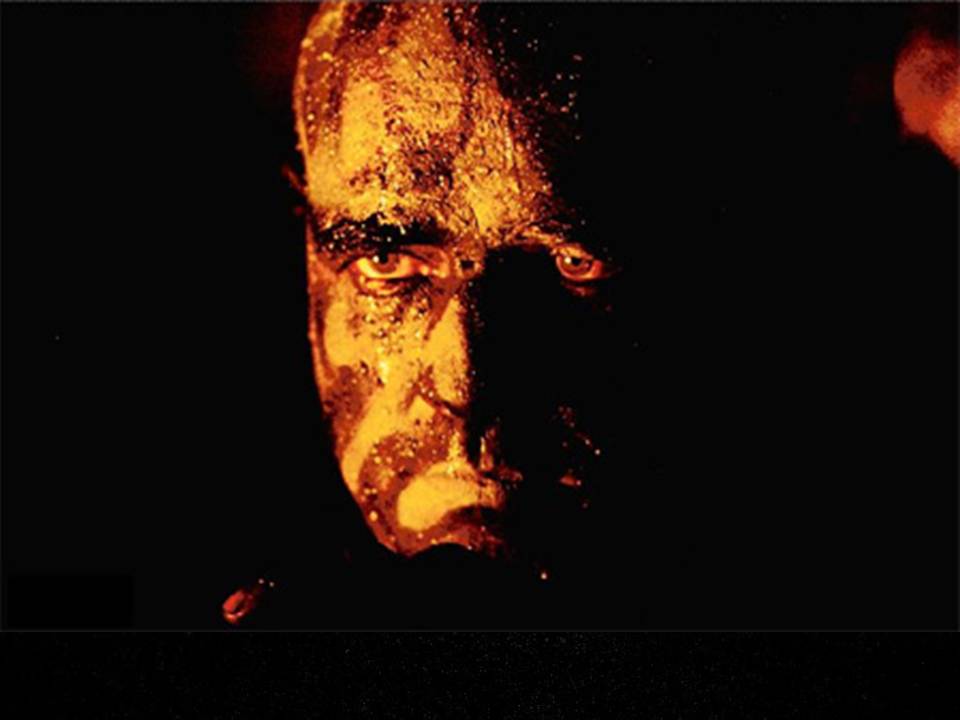
Charles Cameron sparked a discussion with his doublequotes post on two colonels, the late strategist John Boyd and the fictional monster,  Walter Kurtz from Francis Ford Coppola’s classic Vietnam War film homage to Joseph Conrad Apocalypse Now.  Kurtz is a disturbing figure, one who is recurrent in literature and history going back to Homer’s Iliad. A superlative warrior who excels above all others who nonetheless sheds all trace of civilization in his descent into barbarism. While the fall of a heroic individual can take many narrative forms, Kurtz is of a particular and dreaded kind of fallen man, the warlord.

Warlords are fascinating and repellent figures who seem to thrive best when the normal order of a society is breaking down, permitting the strong and ruthless to carve out their reputations in blood and infamy. As I have written previously:

Kent’s Imperative had a post up that would have been worthy of Coming Anarchy:

Enigmatic biographies of the damned 

“….Via the Economist this week, we learn of the death of an adversary whose kind has nearly been forgotten. Khun Sa was a warlord who amassed a private army and smuggling operation which dominated Asian heroin trafficking from remotest Burma over the course of nearly two decades. In the end, despite indictment in US courts, the politics of a failed state permitted him to retire as an investor and business figure, and to die peacefully in his own bed.

The stories of men such as these however shaped more than a region. They are the defining features of the flow of events in a world of dark globalization. Yet these are not the biographies that are taught in international relations academia, nor even in their counterpart intelligence studies classrooms. The psychology of such men, and the personal and organizational decision-making processes of the non-state groups which amassed power to rival a princeling of Renaissance Europe, are equally as worthy of study both for historical reasons as well as for the lessons they teach about the nature of empowered individuals.

….There are no shortage of warlords for such a study. Among the living we have Walid Jumblatt, the crafty chief of the Druze during the 1980’s civil war in Lebanon, the egomaniacal and democidal Charles Taylor of Liberia, Gulbuddin Hekmatyar the Islamist mujahedin commander and a large assortment of Somali, Colombian, Indonesian and El Salvadoran militiamen and paramilitaries. The history of the twentieth century alone offers up such colorful characters as “The Dogmeat General“, the ghoulishly brutal Ta Mok of the Khmer Rouge, “The Mad Baron” Ungern von SternbergCaptain Hermann Ehrhardt and Pancho Villa among many others.

What would such a historical/cross-cultural/psychological “warlord study” reveal ? Primarily the type of man that the German journalist Konrad Heiden termed “armed bohemians”. Men who are ill-suited to achieving success in an orderly society but are acutely sensitive to minute shifts that they can exploit during times of uncertainty, coupled with an amoral sociopathology to do so ruthlessly. Paranoid and vindictive, they also frequently possess a recklessness akin to bravery and a dramatic sentimentality that charms followers and naive observers alike. Some warlords can manifest a manic energy or regularly display great administrative talents while a minority are little better than half-mad gangsters getting by, for a time, on easy violence, low cunning and lady luck.

Every society, no matter how civilized or polite on the surface, harbors many such men within it. They are like ancient seeds waiting for the drought-breaking rains.

There are occasionally positive portrayals of warlords. Ahmed Shah Massoud, “the Lion of Panjshir” who fought tenaciously first against the Soviets, then later against the murderous Gulbuddin Hekmatyar’s army of thugs and the Taliban’s fanatics, providing a modicum of civilized governance to ordinary Afghans wherever his power ran, until his assassination by al Qaida. The cagey and mercurial Walid Jumblatt, made the transition from Druze warlord in the 1980’s to Lebanese politician and something of an elder statesman.

In literature, Xenophon was the de facto strategos of the retreating Greek mercenaries in The Anabasis of Cyrus, cut a noble example, but like Massoud, this is a rarity. In recent fiction, Stephen Pressfield created as an antagonist in The Profession, General James Salter, a totemic and caesarian figure who takes on the great powers with his PMC forces with impressive ruthlessness. In the popular fantasy series of George R.R. Martin that began with The Game of Thrones, the notable warlord is the outlandish, cruel and somewhat demented Vargo Hoat, who leads a freebooting company of misfit brigands “The Brave Companions“, whose nonstop atrocities and ludicrous pretensions lead all the other characters to call them “the Bloody Mummers“.

Given the world’s recent experiences with the Lord’s Resistance Army, General Butt Naked and the uprisings in Syria and Libya, I think Martin and Coppola have captured warlordism in it’s most frequent incarnation.


Switch to our mobile site

