zenpundit.com » 21st century

Archive for the ‘21st century’ Category

Armstrong on “Making American Public Diplomacy Safe for Americans”

Tuesday, August 3rd, 2010

Blogfriend and public diplomacy expert Matt Armstrong of MountainRunner has a new op-ed at World Politics Review:

Reforming Smith-Mundt: Making American Public Diplomacy Safe for Americans

American public diplomacy has been the subject of many reports and much discussion over the past few years. But one rarely examined element is the true impact of the Smith-Mundt Act of 1948, which for all practical purposes labels U.S. public diplomacy and government broadcasting as propaganda. The law imposes a geographic segregation of audiences between those inside the U.S. and those outside it, based on the fear that content aimed at audiences abroad might “spill over” into the U.S. This not only shows a lack of confidence and understanding of U.S. public diplomacy and international broadcasting, it also ignores the ways in which information and people now move across porous, often non-existent borders with incredible speed and ease, to both create and empower dynamic diasporas.

The impact of the “firewall” created by Smith-Mundt between domestic and foreign audiences is profound and often ignored. Ask a citizen of any other democracy what they think about this firewall and you’re likely to get a blank, confused stare: Why — and how — would such a thing exist? No other country, except perhaps North Korea and China, prevents its own people from knowing what is said and done in their name.

But in hiding from the public, Congress, and even the rest of the government what the U.S. government says and does abroad, this imaginary separation between foreign and domestic audiences reduces awareness of the State Department’s effectiveness (as well as that of USAID and the Millennium Challenge Corporation), increases the cost of engagement while decreasing overall effectiveness, and limits accountability. Its negative impact on the State Department, in particular, helped propel the militarization of U.S. public diplomacy, as the Defense Department stepped in, clumsily, to fill gaps left by ineffectual or absent civilian efforts. Overall, Smith-Mundt is a lose-lose scenario for the American public and people around the world.

Read the rest here.

The Mob of Virtue

Sunday, August 1st, 2010


Small “r” republican virtue, to be precise.

A wise man once told me that a weakness of our Constitutional system was that the Framers implicitly presumed that people of a truly dangerous character, from bullies to bandits to political menaces to the community, would primarily be dealt with in age-old fashion by outraged neighbors whose rights had been trespassed and persons abused one time too many. They did not prepare for a time when communities would be prohibited from doing so by a government that also, as a whole, had slipped the leash. Indeed, having read LockeMontesquieuCicero, Polybius, Aristotle and Plato, they expected that such a state of affairs was “corruption” of the sort that plagued the Old World and might happen here in time. A sign of cultural decadence and political decay. They gave Americans, in the words of Benjamin Franklin, “A republic, if you can keep it”. It remains so only with our vigilance.

It is happening now.

We have forgotten – or rather, deliberately been taught and encouraged to forget – the meaning of citizenship.

We have let things slip.

Joseph Fouche superbly captures this implicit element, the consequences of the loss of fear of  informal but very real community sanction, in his most recent post:

People Like Us Give Mobs a Bad Name

….A classic American mob could exhibit any or all of these strategies. It could be a saint inciting a mob to attack others who deviated from a shared narrative. It could be a knave in saint’s clothing inciting an attack on personal rivals. It could be a moralist inciting a mob against the local knaves. The one constant is that an American mob was an expression of communal self-government by moralists seeking to punish what they saw as deviant, even if its manifestation was frequently unpleasant. It was a sign the local people were engaged.

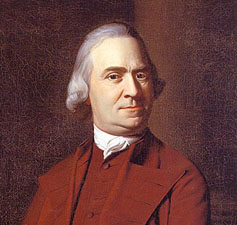
Samuel Adams was the Lenin of the American Revolution. He conceived a hatred for the British Empire and a desire for American independence well before anyone else did. Adams skillfully used mobs alongside legal pretense to incrementally spread his agenda. Others followed his example. In the Worcester Revolution of 1774, the local population shut down the normal operations of royal government in west and central Massachusetts and drove royal officials out of those regions (the book to read is Ray Raphael’s The First American Revolution: Before Lexington and Concord). The British crown lost control of inland Massachusetts before Lexington and Concord were even fought.

However, eleven years later, when many of the same local residents attempted to do the same thing in protest of the policies of a now independent Massachusetts, the state government put down their rebellion with Samuel Adams’s strong support. The difference? An apocryphal remark attributed to Adams captures some of the truth behind his attitude: “the man who dares to rebel against the laws of a republic ought to suffer death”. Mobs protesting the actions of an unrepresentative government like the British Parliament, Adams argued, were valid. Mobs protesting the actions of a representative government like Massachusetts’s state government, on the other hand, were treasonous. This doctrine, supported by other Revolutionary leaders, especially the cabal behind the Order of the Cincinnati, was eventually enshrined as the higher law of the land in the slow motion coup d’etat that overthrew the Articles of Confederation and replaced it with the more authoritarian United States Constitution in 1787-1788.

While mobs continued to combine, they were gradually neutered by the conscious agenda of American elites who sought to replace informal norms enforced by communal censure with formal norms applied under the professional supervision of “wiser heads”. This was a collusion between saints and knaves against moralists. Saints got purer standards that were not reliant on the whims of moralists who got stirred up in unpredictable ways that might violate the saints’ prevailing narrative while knaves got credentials that allowed them to entrench their positions and agendas under the cover of serving a higher good. The same sense of community morality and punishment that gave nineteenth century self-government its vigor and occasional excess was weakened as moralists were tuned out by saints embedded in holy isolation and knaves concerned only with advancing personal priorities. Moralists saw the knaves getting away with free riding off of them and began to opt out, leaving room for more knaves to free ride. For a little formal pretense, the returns on rent seeking were enormous.

The ideal went from a citizenry engaged in self-government to a system designed to advance the best and brightest. Meritocracy sounds good in theory and has some positives in reality. However, a perfect meritocracy is a perfect tyranny. All of the leaders are on once side and all the followers are on the other. This tendency toward the separation of the best from the rest may only be checked by the tendency of those on the ascendant to favor their own children, whatever their merit, over strangers that are more meritorious. This will force some aspiring meritocrats to side with the followers and bring about a rotation of elites. But the transition may take a while and its best to start before you have a meritocratic problem….

Read the whole post here.

Today’s circumstances, with the elite determinedly crafting rules for the mass but not for their class, have an ominous portent for the future of America as a democratic republic, but violence is not yet required.

Political engagement is.

An Interesting “Collapse” Hypothetical

Thursday, July 29th, 2010

Dr. Paul Craig Roberts, the famous Reagan administration economist and now an embittered and cranky paleoconservative social critic, penned a short but intriguing American “collapse” scenario set in the near future. Some of what Roberts writes fits neatly with the thesis in Joseph Tainter’s The Collapse of Complex Societies:

The Year America Dissolved

….As society broke down, the police became warlords. The state police broke apart, and the officers were subsumed into the local forces of their communities. The newly formed tribes expanded to encompass the relatives and friends of the police.

The dollar had collapsed as world reserve currency in 2012 when the worsening economic depression made it clear to Washington’s creditors that the federal budget deficit was too large to be financed except by the printing of money. With the dollar’s demise, import prices skyrocketed. As Americans were unable to afford foreign-made goods, the transnational corporations that were producing offshore for US markets were bankrupted, further eroding the government’s revenue base.

The government was forced to print money in order to pay its bills, causing domestic prices to rise rapidly. Faced with hyperinflation, Washington took recourse in terminating Social Security and Medicare and followed up by confiscating the remnants of private pensions. This provided a one-year respite, but with no more resources to confiscate, money creation and hyperinflation resumed.

Organized food deliveries broke down when the government fought hyperinflation with fixed prices and the mandate that all purchases and sales had to be in US paper currency. Unwilling to trade appreciating goods for depreciating paper, goods disappeared from stores.

Several interesting things here. First, the demagogic front men who are currently engaging in op-ed tirades against public pensions in order to loot them to ostensibly plug state budget deficits will, if successful, use that precedent to go after private pensions, IRAs, 401(k), mutual funds, Social Security, Medicare, Home mortgage interest deduction – any remaining big pot of money in the hands of the middle-class has a big target on it. Secondly, food shortages historically were the spark that set off the French and Russian Revolutions.

When hubris sent America in pursuit of overseas empire, the venture coincided with the offshoring of American manufacturing, industrial, and professional service jobs and the corresponding erosion of the government’s tax base, with the advent of massive budget and trade deficits, with the erosion of the fiat paper currency’s value, and with America’s dependence on foreign creditors and puppet rulers.

The Roman Empire lasted for centuries. The American one collapsed overnight.

Rome’s corruption became the strength of her enemies, and the Western Empire was overrun.

America’s collapse occurred when government ceased to represent the people and became the instrument of a private oligarchy. Decisions were made in behalf of short-term profits for the few at the expense of unmanageable liabilities for the many.

Overwhelmed by liabilities, the government collapsed.

Connectivity, contra Roberts, is good. Corruption, on the other hand, is not. Free markets are generally efficient, so long as you do not expect them to automatically create public goods of a certain scale or be perfectly self-regulating. They require a scrupulously impartial rule of law in order to not become corrupted by abusive players seeking rents. Unfortunately, a scrupulously impartial rule of law is incompatible with technocracy, where expert administrators are granted arbitrary discretion without democratic accountability, the prevailing ethos in the EU supranational bureaucracy, to cite a real world example. The late, unlamented, Soviet nomenklatura would be another, more sinister, historical one.

The primary problem with the American political economy is that in the last 10-15 years, elite, moderately liberal technocrats have made common cause with the elite, moderately conservative rentiers of the financial and corporate world to form an incipient oligarchy. One sees their fellow Americans paternalistically as children. The other sees us as sheep to be sheared. It’s a common enough ground on which to unite and it is the reason you see a very liberal Democratic Obama administration and a Pelosi-Reid Congressional leadership counterintuitively putting corporate regulation in impenetrable shadows not seen since before the Stock Market Crash of 1929 as if they were the minions of Jay Gould and J.P. Morgan.

Don’t expect mainstream Republicans in Congress to die on any hills fighting for the free market either – they aspire to be the party of no-bid contracts to the Democratic party of government by clout.

Alderman Paddy Bauler would be proud.

Kindle Launch: The Handbook of 5GW

Tuesday, July 20th, 2010

h5gwc_close.png

The Handbook of 5GW Dr. Daniel H. Abbott, Editor

Nimble Books has published the first authoritative book on the competing interpretations of the military and political theory referred to as “Fifth Generation Warfare“, edited by my friend and colleague Dr. Daniel Abbott. The many contributing authors include academics, journalists such as David Axe, and many blogfriends associated with the former theory site, Dreaming5GW.

My chapter was entitled “5GW: Into the Heart of Darkness“. It is oriented more toward historical case studies than theory and is not in any way, shape or form, a “feel-good” piece. Here is a snippet:

“….This brings us to the probability that for the aforementioned states, their actual options for their ruling elites for adapting to the threat of 4GW will be between accepting varying degrees of failure-from conceding a temporary autonomous zone (TAZ) to rebels, to being overthrown, to imploding into anarchy as insurgents encroach-or “taking the gloves off” and using the indiscriminate, unrestricted violence of genocide to annihilate real and potential enemies before the international community can mobilize to prevent it. History suggests they might well succeed.”

The views within The Handbook of 5GW vary widely, as does the disciplinary approach of the authors, intending to stimulate thought, explore possible scenarios that range from the pragmatic and real to the imaginative and ideal.

Hardcover launch in September, 2010.

Angelo Codevilla – America’s Milovan Djilas

Tuesday, July 20th, 2010


Older readers may recall the once famous but now largely forgotten Cold War figure of Milovan Djilas. While other dissidents from Communism like Andrei Sakharov, Aleksandr Solzhenitsyn and Whittaker Chambers acheived a more epic historical stature, Djilas was the first high Communist official, the adviser and likely successor to Yugoslavian dictator Tito, to turn against Communism as a system. More importantly, Djilas wrote New Class in 1957, a damning analysis that accurately castigated the hierarchy of Communist Party and government officials an exploitive and tyrannical ruling class that in the Soviet context was later termed “Nomenklatura“. For this act, Djilas would suffer in Tito’s prisons, but he outlived both Tito and Communism and his Party enemies were never able to shake off the truth of his bitter critique.

Claremont scholar and Boston U. international relations professor Angelo Codevilla has published in The American Spectator a very lengthy, often brilliant, sometimes meandering, essay that is part analysis, part cri de coeur, but primarily the most devastating attack on America’s emerging, bipartisan, technocratic Oligarchy that I have ever read:

America’s Ruling Class — And the Perils of Revolution

….Never has there been so little diversity within America’s upper crust. Always, in America as elsewhere, some people have been wealthier and more powerful than others. But until our own time America’s upper crust was a mixture of people who had gained prominence in a variety of ways, who drew their money and status from different sources and were not predictably of one mind on any given matter. The Boston Brahmins, the New York financiers, the land barons of California, Texas, and Florida, the industrialists of Pittsburgh, the Southern aristocracy, and the hardscrabble politicians who made it big in Chicago or Memphis had little contact with one another. Few had much contact with government, and “bureaucrat” was a dirty word for all. So was “social engineering.” Nor had the schools and universities that formed yesterday’s upper crust imposed a single orthodoxy about the origins of man, about American history, and about how America should be governed. All that has changed.

Today’s ruling class, from Boston to San Diego, was formed by an educational system that exposed them to the same ideas and gave them remarkably uniform guidance, as well as tastes and habits. These amount to a social canon of judgments about good and evil, complete with secular sacred history, sins (against minorities and the environment), and saints. Using the right words and avoiding the wrong ones when referring to such matters — speaking the “in” language — serves as a badge of identity. Regardless of what business or profession they are in, their road up included government channels and government money because, as government has grown, its boundary with the rest of American life has become indistinct. Many began their careers in government and leveraged their way into the private sector. Some, e.g., Secretary of the Treasury Timothy Geithner, never held a non-government job. Hence whether formally in government, out of it, or halfway, America’s ruling class speaks the language and has the tastes, habits, and tools of bureaucrats. It rules uneasily over the majority of Americans not oriented to government.

The two classes have less in common culturally, dislike each other more, and embody ways of life more different from one another than did the 19th century’s Northerners and Southerners — nearly all of whom, as Lincoln reminded them, “prayed to the same God.” By contrast, while most Americans pray to the God “who created and doth sustain us,” our ruling class prays to itself as “saviors of the planet” and improvers of humanity. Our classes’ clash is over “whose country” America is, over what way of life will prevail, over who is to defer to whom about what. The gravity of such divisions points us, as it did Lincoln, to Mark’s Gospel: “if a house be divided against itself, that house cannot stand.”

That passage captures the zeitgeist. Read Dr. Codevilla’s article in in its’ entirety here.

I am not in harmony with everything Codevilla has written. Neither is Dr. James Joyner. Codevilla’s personal, very socially conservative, cultural preferences are not mine and, like Joyner, I would quibble with some of his descriptions as immoderate. In general, this essay would have benefited from either having been edited down to be more concise or expanded into a book to leverage greater evidentiary support of diverging political worldviews, which is out there. What is hard to deny though, is that Codevilla is pointing a finger at a visceral problem of a self-aware ruling class in the process of ossifying and separating itself culturally and legally away from and over the ruled – an alien thing in American history. Something the ancient Greeks as well as the Founding Fathers would recognize as anoligarchy“, a threat to democratic self-government and constitutional liberties.

Unlike Milovan Djilas, Angelo Codevilla will not face prison or lose his job for his criticism. Our oligarchy is in its newborn infancy, but it is hungry for power, venal in its corruption, covetous of security, impatient of democratic accountability and intolerant of dissent. Beware of legislative moves, cloaked in high-sounding phrases, to regulate speech, circumscribe criticism of public officials, grant police powers to private corporations like BP, tax farm the many to benefit the few, and generally exclude the public from important policy decisions by making citizen participation in governmental process more complex, opaque, indirect, financially burdensome and personally risky.

If any proposed government action would seem likely to legitimize an activity that would be unethical or illegal if an ordinary person did it, that is a time to make your voice heard against going down the slippery slope.
Switch to our mobile site

