zenpundit.com » futurism

Archive for the ‘futurism’ Category

Stocking Stuffers……

Saturday, December 12th, 2009

In a burst of raw self-interest – and also a little love for my blogfriends – these books make nifty gifts for any war nerd or deep thinker on your Christmas list:

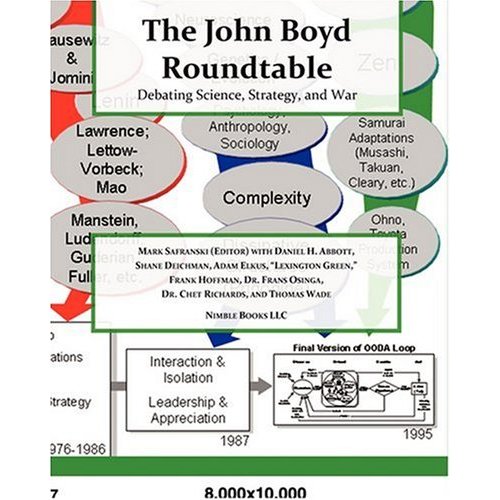
The John Boyd Roundtable: Debating Science, Strategy, and War – Mark Safranski (Ed.)


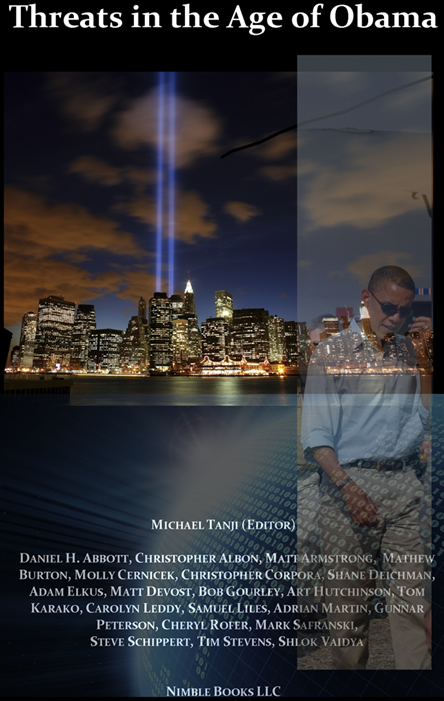
Threats in the Age of Obama – Michael Tanji (Ed.)

Great Powers: America and the World After Bush – Thomas P.M. Barnett

Brave New War: The Next Stage of Terrorism and the End of Globalization – John Robb

Science, Strategy and War: The Strategic Theory of John Boyd – Frans Osinga


The Genius of the Beast: A Radical Re-Vision of Capitalism  by Howard Bloom

Intelligence and How to Get It: Why Schools and Cultures Count  by Richard Nisbett

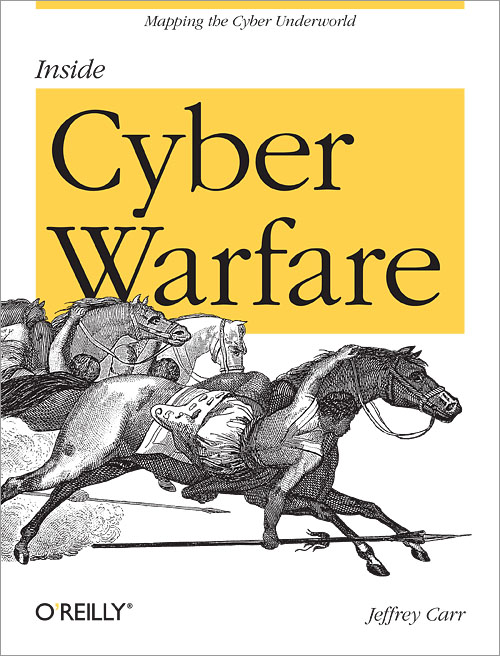
Inside Cyber Warfare: Mapping the Cyber Underworld  by Jeffrey Carr

This Is for the Mara Salvatrucha: Inside the MS-13, America’s Most Violent Gang  by Samuel Logan

Full Disclosure:

In copmpliance with new Federal regulations of dubious Constitutional merit, I hearby declare ZP does not accept money for publishing reviews or any paid advertising. Courtesy review copies were extended to me by authors or publishers acting on behalf of Sam Logan, Tom Barnett and Jeff Carr. I edited the first book in this post and was a contributing author to the second one. All of the books, with the exception of Cyber Warfare have been the subject of prior reviews or posts at ZP.

Strategy, Dilemmas and Choices

Monday, November 2nd, 2009

Futurist Jamais Cascio on strategic forecasting:

Futures Thinking: Asking the Question

….”Asking the Question” is the first step in a formal futures thinking project. At first glance, it should be easy–after all, you should know what you’re trying to figure out. Unfortunately, while it may be simple to ask a question, asking the right question is much more challenging It’s easy to ask questions that are too vague, too narrow, or assume the answer; it’s much more difficult to ask a question that can elicit both surprises and useful results.

….It’s a subtle point, but I tend to find it useful to talk about strategic questions in terms of dilemmas, not problems. Problem implies solution–a fix that resolves the question. Dilemmas are more difficult, typically situations where there are no clearly preferable outcomes (or where each likely outcome carries with it some difficult contingent elements). Futures thinking is less useful when trying to come up with a clear single answer to a particular problem, but can be extremely helpful when trying to determine the best response to a dilemma. The difference is that the “best response” may vary depending upon still-unresolved circumstances; futures thinking helps to illuminate possible trigger points for making a decision.

Cascio’s framing of dilemmas is reminiscient of a discussion I had here a while back with Dave Schuler regarding “wicked problems” though dilemmas appear to be more generic a class of difficulties ( all dilemmas are not wicked problems but all wicked problems represent a dilemma). There is a lot of merit to the frame that Cascio is using and it points to the dysfunctionality present in top tier national security decision making.

Pakistan, for example, represents a serious dilemma for the United States.We need to begin, as Cascio suggests, by framing the right questions. A better question than “Is Pakistan an ally?” would be “Is Pakistan our enemy?”

Islamabad is a major state sponsor of terrorist groups, perhaps the largest on earth in that regard. It has a poor record – again one of the world’s worst – on nuclear nonproliferation and nuclear security issues. Pakistan’s civilian elite is amazingly corrupt and it’s thoroughly undemocratic senior officer corps of the Army only moderately less so. Pakistani public opinion borders on delusional with any issue tangentially connected to India and in the main, informed Pakistanis deeply resent it when their own policies of sponsoring terrorism cause other countries to become angry with Pakistan and take any kind of retaliatory action. It’s political system is polarized and unstable.

Yet while Pakistan is deeply hostile to America and cannot “be bought”, their deep corruption means that they can be “rented”. Pakistan is the major and irreplaceable conduit for supplies to US and NATO forces in Afghanistan and the Pakistani military will grudgingly cooperate in providing intelligence for drone attackson the militant terror groups that the ISI aids, directs and trains. Pakistan is ready to sacrifice many pawns but not any chesspiece of significance.

The American elite tend to speak of Pakistan as an “ally”, when the reality is that Pakistan is a sullen and coerced client, and to profess great concern about Pakistan’s “stability. This falsehood permits the illusion of “partnership” with Pakistan and makes it politically easier for the administration of the day to secure appropriations from the Congress for Afghanistan and Pakistan. Unfortunately, this facade creates a mental fog of unwarranted reassurance when clarity is most needed to assess our strategic choices and make any of them with decisiveness. A permanent preference for “muddling through” and crisis management has taken root.

Pakistan’s elite by contrast, tell visiting Secretaries of State how much they hate America and continue to endorse aiding the very violent Islamist groups that are eating away at the authority and legitmacy of the Pakistani state like a horde of termites. The elite regularly exercises its far smaller degree of national power with infinitely greater ruthlessness than its American counterparts, not appearing to care all that much about “stability”. The Pakistanis are willing to play hardball yet the USG shrinks from doing so.

Something does not compute here and that something is us.

ADDENDUM:

Tom Barnett views Karzai as an even worse strategic bet than dealing with Pakistan ( but also thinks our diplomatic play is hamfisted and obtuse), saying the Obama administration should “take advantage of this fiasco“.
The Handbook of 5GW

Sunday, October 25th, 2009

Is coming.

Shlok Vaidya’s Singularity of Warfare

Thursday, October 8th, 2009

Nice.

Shlok posts up on the future of war in response to Lexington’s Green’s prospective speaking engagement:

The History and Future of Warfare

…..The history of warfare looks something like this cycle that repeats itself within the governance market – between an insurgent governance platform and the dominant platform of the time. Victory is gauged by market-share of each platform.

  1. Tribe vs. Tribe
  2. Tribe vs. State
  3. State vs State
    1. Marked by the invention of the nuke.
  4. Network vs State
    1. Where we are now. Networks are essentially information empowered tribes.
  5. Network vs. Network
    1. When the nation-state collapses into its component resilient communities and combats the networks that won.
    2. Insurgencies and private military corporations act as governance platforms.
  6. Small-Scale Networks vs Network
    1. Advanced information flows decreases mass requirements and increases decentralization.
    2. Trend continues until post-human age.
  7. Small-Scale Network vs Small-Scale Network
  8. Individual vs. Small-Scale Network
  9. Individual vs. Individual
  10. Post-human vs. Individual
    1. When the difference between man and machine is negligible.
  11. ? vs Post-Human

*Acceleration really takes off when the network barrier is broken.

I like the flow in the outline. Potential countervailing trends to Shlok’s model? Here’s a couple:

  • Aggressive migration/refugees-in-arms – think Hutu militiamen fleeing to the Congo from Tutsi rebels, but scaled up for a failing great or regional power.
  • Rogue nuclear events will cause a countervailing, centralizing, “circling the wagons” effect that will temporarily strengthen states and allow them to “take off the gloves” against networked opponents.

The US Army Embraces “Crowdsourcing”

Wednesday, September 23rd, 2009

At SWJ Blog.

The Army wants your comments on its new Capstone Concept

by Robert Haddick
Brigadier General H.R. McMaster has sent to Small Wars Journal the latest draft of Army Capstone Concept version 2.7. McMaster leads a team at TRADOC that is charged with revising the Capstone Concept, which provides fundamental guidance to the Army’s doctrine and training efforts.

By December, McMaster and his team will complete their work on the Capstone Concept. Between now and then, he wants to hear from you. So please open this file, read it, and provide your comments, either here or at the Capstone Concept comment thread at Small Wars Council. McMaster and his team will read these comments and use them to improve this important document.

(You will note that the Capstone Concept draft we received is marked “For Official Use Only.” I assure you that we received this document openly from the Army and for the purposes explained above. McMaster and his colleagues at TRADOC want Small Wars Journal‘s readers to help them improve the Capstone Concept.)

Ok. Mil/intel/strategy/national security/COIN bloggers. We’ve been blogging on the “future of warfare” for five or six or more years. Some of us have also written books and journal articles, spoken at conferences and done op-eds. Along the way, there has been periodic lamentation (i.e. whining) that the powers that be don’t “get it” and no one pays attention anyway. Well HR McMaster is asking for  input on shaping official military policy. A “put up or shut up” moment for the bloggers.

I’m in! Who else is joining the party?


Switch to our mobile site