zenpundit.com » society

Archive for the ‘society’ Category

The Mob of Virtue

Sunday, August 1st, 2010
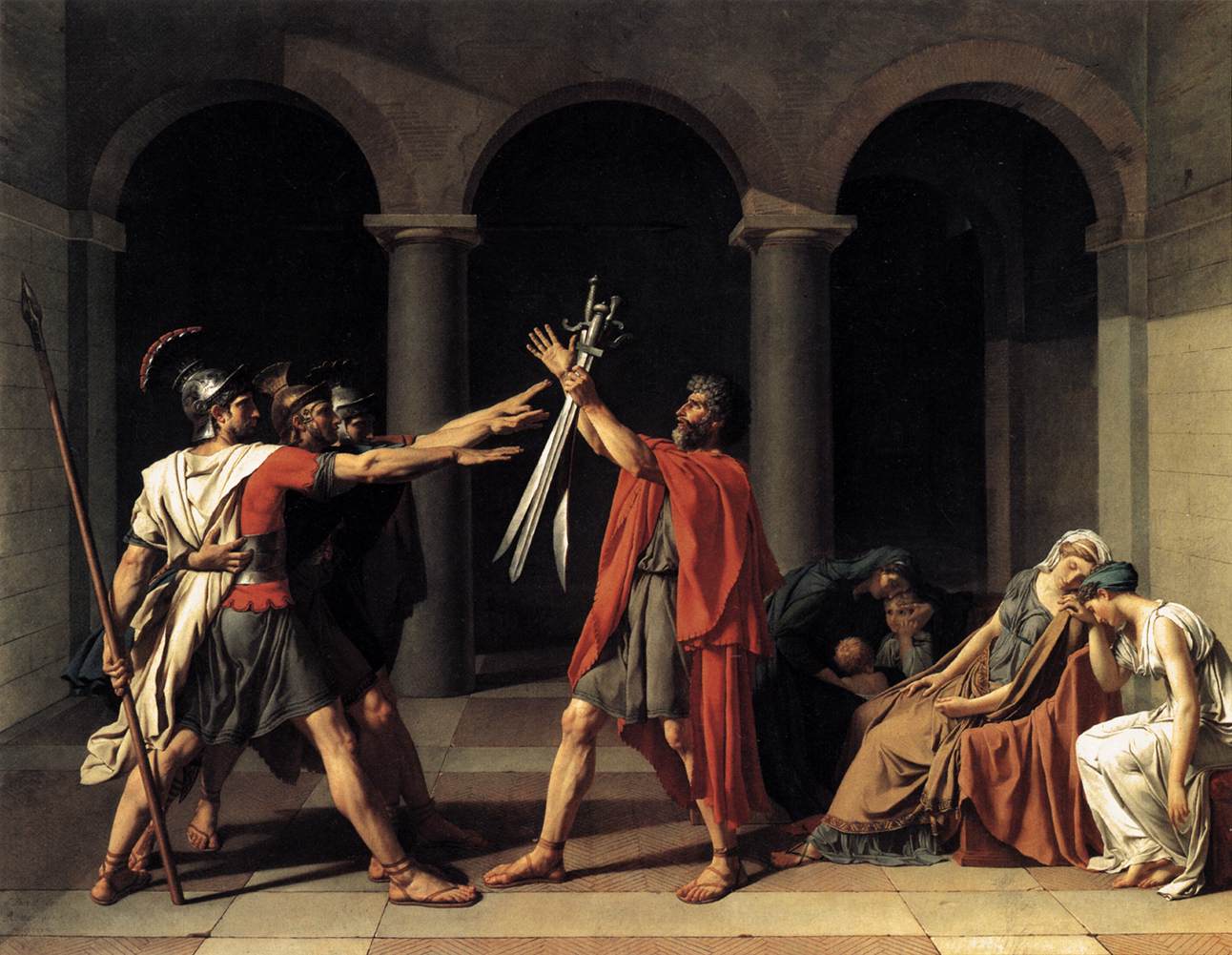
 

Small “r” republican virtue, to be precise.

A wise man once told me that a weakness of our Constitutional system was that the Framers implicitly presumed that people of a truly dangerous character, from bullies to bandits to political menaces to the community, would primarily be dealt with in age-old fashion by outraged neighbors whose rights had been trespassed and persons abused one time too many. They did not prepare for a time when communities would be prohibited from doing so by a government that also, as a whole, had slipped the leash. Indeed, having read LockeMontesquieuCicero, Polybius, Aristotle and Plato, they expected that such a state of affairs was “corruption” of the sort that plagued the Old World and might happen here in time. A sign of cultural decadence and political decay. They gave Americans, in the words of Benjamin Franklin, “A republic, if you can keep it”. It remains so only with our vigilance.

It is happening now.

We have forgotten – or rather, deliberately been taught and encouraged to forget – the meaning of citizenship.

We have let things slip.

Joseph Fouche superbly captures this implicit element, the consequences of the loss of fear of  informal but very real community sanction, in his most recent post:

People Like Us Give Mobs a Bad Name

….A classic American mob could exhibit any or all of these strategies. It could be a saint inciting a mob to attack others who deviated from a shared narrative. It could be a knave in saint’s clothing inciting an attack on personal rivals. It could be a moralist inciting a mob against the local knaves. The one constant is that an American mob was an expression of communal self-government by moralists seeking to punish what they saw as deviant, even if its manifestation was frequently unpleasant. It was a sign the local people were engaged.

Samuel Adams was the Lenin of the American Revolution. He conceived a hatred for the British Empire and a desire for American independence well before anyone else did. Adams skillfully used mobs alongside legal pretense to incrementally spread his agenda. Others followed his example. In the Worcester Revolution of 1774, the local population shut down the normal operations of royal government in west and central Massachusetts and drove royal officials out of those regions (the book to read is Ray Raphael’s The First American Revolution: Before Lexington and Concord). The British crown lost control of inland Massachusetts before Lexington and Concord were even fought.

However, eleven years later, when many of the same local residents attempted to do the same thing in protest of the policies of a now independent Massachusetts, the state government put down their rebellion with Samuel Adams’s strong support. The difference? An apocryphal remark attributed to Adams captures some of the truth behind his attitude: “the man who dares to rebel against the laws of a republic ought to suffer death”. Mobs protesting the actions of an unrepresentative government like the British Parliament, Adams argued, were valid. Mobs protesting the actions of a representative government like Massachusetts’s state government, on the other hand, were treasonous. This doctrine, supported by other Revolutionary leaders, especially the cabal behind the Order of the Cincinnati, was eventually enshrined as the higher law of the land in the slow motion coup d’etat that overthrew the Articles of Confederation and replaced it with the more authoritarian United States Constitution in 1787-1788.

While mobs continued to combine, they were gradually neutered by the conscious agenda of American elites who sought to replace informal norms enforced by communal censure with formal norms applied under the professional supervision of “wiser heads”. This was a collusion between saints and knaves against moralists. Saints got purer standards that were not reliant on the whims of moralists who got stirred up in unpredictable ways that might violate the saints’ prevailing narrative while knaves got credentials that allowed them to entrench their positions and agendas under the cover of serving a higher good. The same sense of community morality and punishment that gave nineteenth century self-government its vigor and occasional excess was weakened as moralists were tuned out by saints embedded in holy isolation and knaves concerned only with advancing personal priorities. Moralists saw the knaves getting away with free riding off of them and began to opt out, leaving room for more knaves to free ride. For a little formal pretense, the returns on rent seeking were enormous.

The ideal went from a citizenry engaged in self-government to a system designed to advance the best and brightest. Meritocracy sounds good in theory and has some positives in reality. However, a perfect meritocracy is a perfect tyranny. All of the leaders are on once side and all the followers are on the other. This tendency toward the separation of the best from the rest may only be checked by the tendency of those on the ascendant to favor their own children, whatever their merit, over strangers that are more meritorious. This will force some aspiring meritocrats to side with the followers and bring about a rotation of elites. But the transition may take a while and its best to start before you have a meritocratic problem….

Read the whole post here.

Today’s circumstances, with the elite determinedly crafting rules for the mass but not for their class, have an ominous portent for the future of America as a democratic republic, but violence is not yet required.

Political engagement is.

“Framing” a Meme Crudely: Prelude to Campaign 2010

Monday, July 26th, 2010


Former Governor, former Presidential candidate and former Chairman of the Democratic National Committee Howard Dean unveiled the Democratic Party’s trial balloon for the election of 2012. Normally, I bold all the text in an excerpt but I will do so from this POLITICO post only selectively:

….Appearing on “Fox News Sunday,” Dean, who’s also a former Democratic national chairman and hero of liberals, asserted Fox News failed to vet video footage of a speech misleadingly excerpted to make it appear that Sherrod was boasting of using her post as an Agriculture Department official to discriminate against a white farmer.

“I don’t think Newt Gingrich is a racist, and I don’t think you’re a racist,” Dean told Fox News host Chris Wallace, “but Fox News did something that was absolutely racist. They took a – they had an obligation to find out what was really in the clip. They had been pushing a theme of black racism with this phony Black Panther crap and this business and this Sotomayor and all this other stuff.”

When Wallace interrupted Dean to point out that Fox did not air the excerpted Sherrod footage until after the Obama administration had fired her based on it , Dean shot back “It was about to go on Glenn Beck, which is what the administration was afraid of.”

And Dean mildly rebuked the Obama administration, as well, saying, “We’ve got to stop being afraid of Glenn Beck (a Fox News host) and the racist fringe of the Republican Party. But Fox News was not blameless during this. You played it up.”

Dean dismissed Wallace’s point about timing, asserting “you didn’t do your job,” and charging that Fox News has helped the Republican Party foster racism by focusing on allegations of reverse racism.

“The tea party called out their racist fringe and I think the Republican Party’s got to stop appealing to its racist fringe. And Fox News is what did that. You put that on,” Dean said. “Continuing to cater to this theme of minority racism and stressing comments like this – some of which are taken out of context – does not help the country knit itself

In just this brief section where Dean is quoted, he used the word “racism” or a variant seven times and is paraphrased saying it twice more. Most likely, the transcript of the show will tally more uses of “racist” than just seven to nine in a few minutes of air time. Now either Howard Dean, a wealthy man born into a elite family, a graduate of St. Georges prep and Yale University, a physician and very successful governor, has only a rudimentary vocabulary or Dean was doing a crude imitation of George Lakoff’s  verbal “framing” and testing the Democratic Party’s none-too-subtle campaign theme:”All Republicans are racists”.

The underlying issue here is not about Shirley Sherrod or even racism, but of political power.

It seems likely at this point in time that the Democratic Party is headed for a reprise of their 1994 electoral disaster, despite the Republican Party being incompetent and bankrupt of both leadership and ideas ( in fact, given the demonstrated ineptitude of Micheal Steele as the GOP spokesman, the bast tactical stance for Republicans might be to just shut-up and only speak from unimpeachable ground that 60 % + of the public agrees with).  The war is not going well and the economy is worse, while taxes and spending are going up. That all of this is not the fault of Democrats is irrelevant because enough of it is and having all the power, the voters see them as accountable.. Having decided to govern from the left of center – maybe not Netroots Left, but left of moderate Democrats and Independents, under the aegis of Pelosi and Reid – the Democrats have irrevocably branded themselves for this election cycle and probably the next.

Not having any appealing points for undecided voters and independents leaves the Democrats the option of the hardball attack with the objective of mitigating the damage. How does trying to build an association between the word “racism” and “Republican” do that as it obviously fires up the Republicans to come out and vote by angering them?

Partisan liberals (note: I am not saying all liberals or all Democrats, just the zealous partisans) tend to believe that the only viable explanation for people not accepting their political agenda and exercise of power is a) Stupidity, or b) Evil motivations – among which, racism is the most evil of all.  In other words, there is no “legitimate” basis of democratic disagreement with them, only error and malice. Which is why many partisan liberals today, like the ranters exposed on Journolist, often come across to non-liberals as humorless authoritarians in a way that past liberals like Hubert Humphrey, William Brennan or Barbara Jordan never did. This campaign theme, while partisan liberals enjoy attacking Republicans immensely, isn’t for them either. They already are sure votes and maxed out political donors.

No, the target audience for Dean’s framing are the younger, basically apolitical, white voters who came out and voted for Barack Obama in 2008 and whom polls suggest won’t do so again. A second group are socially liberal, Democratic-leaning, independent swing voters. A coordinated drumbeat of prominent Democrats relentlessly attacking opponents as “racists” is designed to keep the first group at home on election day so that they do not vote Republican and to motivate the second group to come out and vote against them. In swing districts and states this might keep a few seats in Democratic hands that might otherwise go to the GOP and it could permanently tarnish or destroy some Republican politicians and turn them into damaged goods.

This is not a stupid tactic. It might not matter, if public sentiment is as angrily anti-incumbent and anti-Democrat as some polls suggest but such a framing campaign is based upon reasonable evidence that negative memes work, that charges of racism are an effective form of slander in American society, that Republicans are highly unlikely to mount an effective counterattack and that a majority of voters are only dimly aware of the factual details of political life. The prospect of losing power makes it a worthwhile gamble for Democrats – especially if figures whom voters cannot punish, like Howard Dean, lead the charge ( it also helps that a certain percentage of members of Congress of both parties harbor some degree of racism, anti-semitism, homophobia, religious bigotry, misogyny or other unseemly prejudices more obscure and tend to do and say things that give evidence of such beliefs. Public life is a target rich environment for take-down efforts).

Could Republicans respond effectively? Of course. There’s all sorts of ways to go for the jugular here, but they probably will not. Newt Gingrich, for example, could have demolished Dean on live television but he chose not to do so because Newt himself plays the “framing” game far better than does Dean and explaining to the uninformed what Dean was doing diminishes Gingrich’s own future rhetorical effectiveness with said uninformed public. Most other Republican leaders lack Gingrich’s intellectual firepower and debating skills and would either try to ignore the charge of racism (a loser move) or fall into protesting their lack of racism so as to better make themselves the object of ridicule as well as abuse.

The poor Republican Party, so close to power and so far from strategy.

“The Enemy of my Enemy is…?”

Thursday, July 22nd, 2010

This is interesting. Age-old, conventional strategic wisdom is supported by social network mapping research involving 300,000 ppl:

‘The Friend of My Enemy Is My Enemy’: Virtual Universe Study Proves 80-Year-Old Theory on How Humans Interact

ScienceDaily (July 20, 2010) – A new study analysing interactions between players in a virtual universe game has for the first time provided large-scale evidence to prove an 80 year old psychological theory called Structural Balance Theory. The research, published in the Proceedings of the National Academy of Sciences, shows that individuals tend to avoid stress-causing relationships when they develop a society, resulting in more stable social networks.

The study, carried out at Imperial College London, the Medical University of Vienna and the Santa Fe Institute, analyses relationships between 300,000 players in an online game called Pardus (http://www.pardus.at/). In this open-ended game, players act as spacecraft exploring a virtual universe, where they can make friends and enemies, and communicate, trade and fight with one another.

Structural Balance Theory is an 80 year old psychological theory that suggests some networks of relationships are more stable than others in a society. Specifically, the theory deals with positive and negative links between three individuals, where ‘the friend of my enemy is my enemy’ is more stable (and therefore more common) than ‘the friend of my friend is my enemy’.

….The authors found that in positive relationships, players are more likely to reciprocate actions and sentiments than in negative ones. For example, if player A declares player B to be their friend, player B is likely to do the same. If player A declares player B to be their enemy, however, player B is not likely to reciprocate.

The research also revealed strong interactions between different types of links, with some networks overlapping extensively, as players are likely to engage in similar interactions, and others tending to exclude each other. For example, friendship and communication networks overlap: as we would expect, friends tend to talk to each other. However, trade and hostility did not overlap at all, showing that enemies tend not to trade with one another.

Dr Renaud Lambiotte said: “This may seem like an obvious finding, as we would all prefer to communicate more with people we like. However, nobody has shown the evidence for this theory on such a large scale before.”

Read the rest here.

First, I wonder what Valdis Krebs thinks of this study?

Second, does this bear out on larger scale entities that cultivate primary loyalties?

Kindle Launch: The Handbook of 5GW

Tuesday, July 20th, 2010

h5gwc_close.png

The Handbook of 5GW Dr. Daniel H. Abbott, Editor

Nimble Books has published the first authoritative book on the competing interpretations of the military and political theory referred to as “Fifth Generation Warfare“, edited by my friend and colleague Dr. Daniel Abbott. The many contributing authors include academics, journalists such as David Axe, and many blogfriends associated with the former theory site, Dreaming5GW.

My chapter was entitled “5GW: Into the Heart of Darkness“. It is oriented more toward historical case studies than theory and is not in any way, shape or form, a “feel-good” piece. Here is a snippet:

“….This brings us to the probability that for the aforementioned states, their actual options for their ruling elites for adapting to the threat of 4GW will be between accepting varying degrees of failure-from conceding a temporary autonomous zone (TAZ) to rebels, to being overthrown, to imploding into anarchy as insurgents encroach-or “taking the gloves off” and using the indiscriminate, unrestricted violence of genocide to annihilate real and potential enemies before the international community can mobilize to prevent it. History suggests they might well succeed.”

The views within The Handbook of 5GW vary widely, as does the disciplinary approach of the authors, intending to stimulate thought, explore possible scenarios that range from the pragmatic and real to the imaginative and ideal.

Hardcover launch in September, 2010.

Angelo Codevilla – America’s Milovan Djilas

Tuesday, July 20th, 2010


Older readers may recall the once famous but now largely forgotten Cold War figure of Milovan Djilas. While other dissidents from Communism like Andrei Sakharov, Aleksandr Solzhenitsyn and Whittaker Chambers acheived a more epic historical stature, Djilas was the first high Communist official, the adviser and likely successor to Yugoslavian dictator Tito, to turn against Communism as a system. More importantly, Djilas wrote New Class in 1957, a damning analysis that accurately castigated the hierarchy of Communist Party and government officials an exploitive and tyrannical ruling class that in the Soviet context was later termed “Nomenklatura“. For this act, Djilas would suffer in Tito’s prisons, but he outlived both Tito and Communism and his Party enemies were never able to shake off the truth of his bitter critique.

Claremont scholar and Boston U. international relations professor Angelo Codevilla has published in The American Spectator a very lengthy, often brilliant, sometimes meandering, essay that is part analysis, part cri de coeur, but primarily the most devastating attack on America’s emerging, bipartisan, technocratic Oligarchy that I have ever read:

America’s Ruling Class — And the Perils of Revolution

….Never has there been so little diversity within America’s upper crust. Always, in America as elsewhere, some people have been wealthier and more powerful than others. But until our own time America’s upper crust was a mixture of people who had gained prominence in a variety of ways, who drew their money and status from different sources and were not predictably of one mind on any given matter. The Boston Brahmins, the New York financiers, the land barons of California, Texas, and Florida, the industrialists of Pittsburgh, the Southern aristocracy, and the hardscrabble politicians who made it big in Chicago or Memphis had little contact with one another. Few had much contact with government, and “bureaucrat” was a dirty word for all. So was “social engineering.” Nor had the schools and universities that formed yesterday’s upper crust imposed a single orthodoxy about the origins of man, about American history, and about how America should be governed. All that has changed.

Today’s ruling class, from Boston to San Diego, was formed by an educational system that exposed them to the same ideas and gave them remarkably uniform guidance, as well as tastes and habits. These amount to a social canon of judgments about good and evil, complete with secular sacred history, sins (against minorities and the environment), and saints. Using the right words and avoiding the wrong ones when referring to such matters — speaking the “in” language — serves as a badge of identity. Regardless of what business or profession they are in, their road up included government channels and government money because, as government has grown, its boundary with the rest of American life has become indistinct. Many began their careers in government and leveraged their way into the private sector. Some, e.g., Secretary of the Treasury Timothy Geithner, never held a non-government job. Hence whether formally in government, out of it, or halfway, America’s ruling class speaks the language and has the tastes, habits, and tools of bureaucrats. It rules uneasily over the majority of Americans not oriented to government.

The two classes have less in common culturally, dislike each other more, and embody ways of life more different from one another than did the 19th century’s Northerners and Southerners — nearly all of whom, as Lincoln reminded them, “prayed to the same God.” By contrast, while most Americans pray to the God “who created and doth sustain us,” our ruling class prays to itself as “saviors of the planet” and improvers of humanity. Our classes’ clash is over “whose country” America is, over what way of life will prevail, over who is to defer to whom about what. The gravity of such divisions points us, as it did Lincoln, to Mark’s Gospel: “if a house be divided against itself, that house cannot stand.”

That passage captures the zeitgeist. Read Dr. Codevilla’s article in in its’ entirety here.

I am not in harmony with everything Codevilla has written. Neither is Dr. James Joyner. Codevilla’s personal, very socially conservative, cultural preferences are not mine and, like Joyner, I would quibble with some of his descriptions as immoderate. In general, this essay would have benefited from either having been edited down to be more concise or expanded into a book to leverage greater evidentiary support of diverging political worldviews, which is out there. What is hard to deny though, is that Codevilla is pointing a finger at a visceral problem of a self-aware ruling class in the process of ossifying and separating itself culturally and legally away from and over the ruled – an alien thing in American history. Something the ancient Greeks as well as the Founding Fathers would recognize as anoligarchy“, a threat to democratic self-government and constitutional liberties.

Unlike Milovan Djilas, Angelo Codevilla will not face prison or lose his job for his criticism. Our oligarchy is in its newborn infancy, but it is hungry for power, venal in its corruption, covetous of security, impatient of democratic accountability and intolerant of dissent. Beware of legislative moves, cloaked in high-sounding phrases, to regulate speech, circumscribe criticism of public officials, grant police powers to private corporations like BP, tax farm the many to benefit the few, and generally exclude the public from important policy decisions by making citizen participation in governmental process more complex, opaque, indirect, financially burdensome and personally risky.

If any proposed government action would seem likely to legitimize an activity that would be unethical or illegal if an ordinary person did it, that is a time to make your voice heard against going down the slippery slope.


Switch to our mobile site
