Charles Cameron is the regular guest-blogger at Zenpundit, and has also posted at Small Wars Journal, All Things Counterterrorism, for the Chicago Boyz Afghanistan 2050 roundtable and elsewhere. Charles read Theology at Christ Church, Oxford, under AE Harvey, and was at one time a Principal Researcher with Boston University’s Center for Millennial Studies and the Senior Analyst with the Arlington Institute:
[Originally cross-posted at Chicago Boyz]
Of Weaponry and Flags II.
by Charles Cameron
YT in a comment on Zenpundit just pointed me to a quote from Virilio’s War and Cinema, Scott meanwhile suggested I might be interested in Meaning by Michael Polanyi – and between the two of them, I find myself wanting to make a trilogy of quotes that present the symbolic impact of flags from philosophical, psychological and neurological perspectives, thus (I hope) braiding together from somewhat disparate sources a simple, non-dualistic insight. From Michael Polanyi and Harry Prosch, Meaning, pp. 72-73:
The focal object in symbolization, in contrast to the focal object in identification, is of interest to us only because of its symbolic connection with the subsidiary clues through which it became a focal object. What bears upon the flag, as a word bears upon its meaning, is the integration of our whole existence as lived in our country. But this means that the meaning of the flag (the object of our focal attention) is what it is because we have put our whole existence into it. We have surrendered ourselves to that “piece of cloth” (which would be all the flag could be perceived to be were we to try to view it in the indication way of recognizing meaning). It is only by virtue of our surrender to it that this piece of cloth becomes a flag and therefore becomes a symbol of our country. Some of the subsidiaries, then, that bear upon the flag and give it meaning are our nation’s existence and our diffuse and boundless memories of our life in it. These, however, not only bear upon the flag as other subsidiary clues bear upon their focal objects, but they also, in our surrender to the flag, become embodied in it. The flag thus reflects back upon its subsidiaries, fusing our diffuse memories. We cannot use a straight arrow to express this feature in our diagram, since such an arrow pictures only a straight, one-directional bearing-upon. We must make the arrow loop, in symbolization, in order to express the way our perception of the focal object also carries us back toward (and so provides us with a perceptual embodiment of) those diffuse memories of our own lives (i.e., of ourselves) which bore upon the focal object to begin with. This is how the symbol can be said to “carry us away.” In surrendering ourselves, we, as selves, are picked up into the meaning of the symbol.
From Murray Stein, Jung’s map of the soul: an introduction, p 100:
Life itself may be sacrificed for images such as the flag or the cross and for ideas like nationalism, patriotism, and loyalty to one’s religion or country. Crusades and countless other irrational or impractical endeavors have been engaged in because the participants felt, “This makes my life meaningful! This is the most important thing I’ve ever done.” Images and ideas powerfully motivate the ego and generate values and meanings. Cognitions frequently override and dominate instincts. In contrast to the impact of the instincts on the psyche — when one feels driven by a physical need or y — the influence of archetypes leads to being caught up in big ideas and visions. Both affect the ego in a similar way dynamically, in that the ego is taken over, possessed, and driven.
And from Paul Virilio, War and cinema: the logistics of perception, pp. 5-6:
War can never break free from the magical spectacle because its very purpose is to produce that spectacle: to fell the enemy is not so much to capture as to ‘captivate’ him, to instil the fear of death before he actually dies. From Machiavelli to Vauban, from von Moltke to Churchill, at every decisive episode in the history of war, military theorists have underlined this truth: ‘The force of arms is not brute force but spiritual force.’ There is no war, then, without representation, no sophisticated weaponry without psychological mystification. Weapons are tools not just of destruction but also of perception – that is to say, stimulants that make themselves felt through chemical, neurological processes in the sense organs and central nervous system, affecting human reactions and even the perceptual identification and differentiation of objects
Might one identify the “stimulant” aspect (Virilio) as the one that drives those in the battlefield under fire, and thus also their memories and reflections, while strategists, as thinkers, will be more inclined to see the significance of the “archetypal” aspect (Murray, Jung)? Virilio (like Boyd) is concerned with speed — and it seems plausible to me that we have three “speeds of thought” – instinctive, considered and contemplative – corresponding in rough outline to Maslow’s hierarchy, the instinctive being bodily and immediate, the considered being logical and rapid, and the contemplative being symbolic and gradual. But there’s a curious loop at work here, because the symbolic / archetypal may take its time to work its way into conscious awareness – in some cases we refer to the end result as “maturity” or “wisdom” – but it’s also somehow very close to instinct, as Jung suggests in “On the Nature of the Psyche”, Collected Works VIII, para. 415:
Psychologically … the archetype as an image of instinct is a spiritual goal toward which the whole nature of man strives; it is the sea to which all rivers wend their way, the prize which the hero wrests from the fight with the dragon.
If anyone wants to follow up this particular line of thought, I’d recommend Jolande Jacobi’s Complex / Archetype / Symbol in the psychology of C. G. Jung, and for the interweaving of image, archetype and instinct, Andrew Samuels, Jung and the Post-Jungians Chapter 2, pp. 19 ff.
 on
on
 security has been subordinated to the HR nostrums of the day at CIA. Jones effectively outlined how “the emperor has no clothes.” Not so much inept as indifferent. As someone operating under “deep cover” in the clandestine branch, away from the support and comforts of consular life, he was certainly qualified to note the career paths and day-to-day obsessions of the “home office” and his colleagues. While he didn’t name names, he described enough duplicity and lassitude in the CIA’s management and staffing to earn the undying enmity of “tap dancers” and “clock watchers” alike.
 Kindle eBook of The War of Art. (The Amazon page has been crashing regularly since it first went up.) “Why,” the reader wanted to know, “does Amazon keep saying there’s no such book? And why can’t my wife get The War of Art for her iPad?”
 , which should be on the shelf of every aspiring writer. $ 1.99 is a steal.


 by Derek Leebaert
 by
by  by
by  by Clint van Winkle
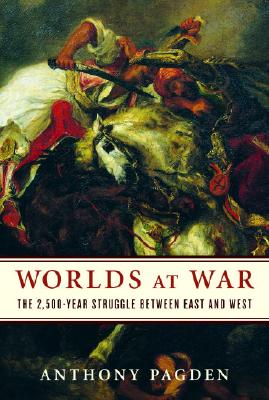

 by James J. O’Donnell
 by Anthony Pagden
 by Christopher Hibbert

