zenpundit.com » government

Archive for the ‘government’ Category

Two Cheers for the State?

Wednesday, December 12th, 2012

An excellent post from Adam Elkus – strongly recommended!

The State Problem In National Security Policy

….The report makes a lot of comments about the rise of individual autonomy, the empowering of regional network-cities, and technology’s acceleration of the power of non-state actors. Wired interpreted part of this as signaling a decline of the statewhich has been a popular theme since Martin van Creveld’s work on theTransformation of War. I think that is an accurate characterization of the parts of the 2030 report that talk about the empowerment of non-state actors and the rise of international networks. I’m less interested in the report, though, than in the general narrative of state decline in national security policy discourse.

We’ve heard that states are in decline, and both benign and malign networks and private actors are on the rise. This isn’t a new theme—if you look back a few decades the rise of multinational corporations and the multilaterals prompted a similar debate about sovereignty and power in the modern world. The state-centric defense practitioner is enjoined to move beyond caring about states and embrace a new reality.

…. What we have been dealing with, however, is an unfortunate tendency to write the non-state actor and transnational network out of the last few centuries of history. But he (or she) stubbornly refuses to go away. We can talk about some of the reasons why this might be the case in the international environment but it is also worth talking about why we often assume much more coherence and cohesion in our domestic environment than reality may justify.

….In Charles Tilly’s book Democracy, he argues that four processes are necessary to create and sustain a democratic state: the growth of state capacity by suppressing alternative sources of power, the reduction of categorical inequalities, and the integration of strong tie-based trust networks into public life. Warlords and kingpins that predate make it difficult for rights to be guaranteed. Categorical inequality lessens the ability of the people to meaningfully control their own destiny. And strong trust networks that cannot express themselves in political and social life also have the potential for predation and the erosion of state authority. Tilly casts these processes as never-ending in scope, and states are capable of backsliding on any one of them.

Very rich food for thought.

Trust networks are an interesting way to look at broader social networks and discern, at times, the presence of modularity (and therefore specialized skills, capacities, knowledge etc.) within a looser network structure (weak ties and links vs. highly interconnected sets of hubs with strong ties). We tend to graph these things in simple diagrams, like concentric circles with “al Qaida hard core” in the center, but really, they are more akin to clumping or clotting or uneven aggregation within a less dense field of connections.

Adam is also right that the irregular, the illegal, the tribal, the secret society, the rebellious peasant was largely ignored by nationalistic  historians in the late 19th and early to mid 20th century – and when they came back in vogue in the 1960’s with revisionist, labor, social, cultural etc. schools of historians, they tended to groan under the heavy yoke of dogmatic Marxist class analysis and then later the radical academic obsessions with race, gender and sexual orientation “oppression”. Too seldom, were these people and their doings found to be interesting in themselves so much as puppets for a very tortured, abstract passion play to exorcise demons and pursue petty grudges against other scholars.

In any event, Adam is worth reading in full.


Reforming Intelligence vs.Intelligent Reforms

Wednesday, December 5th, 2012

The intense behind the scenes lobbying on behalf of prospective candidates to replace General David Petraeus as Director of the CIA and the ongoing furor over Ambassador Rice’s “talking points” on Benghazi, have spilled over into op-eds quietly urging that the vacancy be used as an opportunity for reforms of the IC and CIA. This is not unexpected – the churn of ” IC reform” tends to be cyclical, free of institutional or historical memory and useful for distracting the media from genuine problems – but it is also true that the situation could bear improvement.

One of the smarter observations was by former star analyst Nada Bakos in Foreign Policy:

…..In light of this, what should the DNI’s role be in the intelligence community, if not disseminating a coordinated intelligence product? The CEO of a company is typically the one planning strategy, interfacing with board members, stockholders, and consumers. A CEO doesn’t typically write the chief financial officer’s year-end summary or the marketing director’s strategy — instead, he views both products from 25,000 feet to ensure the company is on steady footing. The DNI should have a similar role: rather than replicating work, it should focus on reviewing the source material from the various agencies and collaborating to ensure all of the information has been reviewed. In the case of the Benghazi talking points, the intelligence community all had a role in editing the talking points once passed from the CIA. Other points of view make sense, but in the immediate aftermath of something like Benghazi, the arrival of new (and possibly conflicting information) is likely to confuse, not improve, the product. It is best to leave the dissemination, in the immediate aftermath, in the hands of the agency that owns the source of the information and is in the business of disseminating intel products — in this case the CIA.

As with the recent and somewhat ironic leaking that the Pentagon is going to overrun the Earth with hordes of DIA covert agents [i.e. 90% of new money and personnel will probably feed the CONUS based DIA bureaucracy as a budget protection strategy] when an agency or entity can get political authorities to grant them incursions into another bureaucracy’s turf, it is because that bureaucracy has ceased doing it’s job so long ago everyone has just accepted that it will never change.

The Bakos piece contrasts well with the politicized bullshittery being offered in The New York Times. Here are some of my favorite bits of harmful nonsense:

….The United States has over 280 diplomatic posts worldwide. They are working on drug interdiction, arms control negotiations, border security, counterterrorism, access to energy and trade, implementing sanctions, fair trade and the like. Intelligence helps diplomats recognize everything from cheating on agreements to social unrest and surprise attack. And it helps them make decisions that lower the risks and consequences of war.

The new director should rededicate the C.I.A. to supporting these diplomatic operations.

Right. Each ambassador should get to play amateur Station Chief and fritter away extremely scarce intel resources on pet projects because, you know, the State Department has done such an awesome job on it’s own core missions the past decade or so, and….uh…wait….

….The best way to ensure the intelligence process can both produce the best analysis possible, free from political and policy influence, and that covert operations are smart and legal is to ensure the director is an independent actor not subject to political pressure. Making the job a 10-year appointment, which will cross the lines of elections, offers a way to reduce the risk of politicization.

Shorter Bruce Reidel: The DCIA should be able to delay or refuse the President’s order to do covert ops so the US will do far fewer of them and in maximum risk-averse fashion.

No.

You de-politicize the DCIA by not having new presidents fire old DCIAs because they were appointed by an administration from the other party, a practice begun not by Ronald Reagan as Bruce Reidel mistakenly believes, but by his predecessor, Jimmy Carter. The idea that the DCIA who is expected to oversee the most sensitive covert missions (i.e. those intended to have strategic or political effects) should be “independent” of the President is some form of really poor Constitutional theorizing. What happens when an “independent” DCIA launches covert ops *against* the wishes of a President?

Here are a few ideas that would be useful to keep in mind, if “reform” of the IC and CIA is actually desired and isn’t merely a stalking horse for smuggling in a different set of  foreign policy preferences unsupported by the wider American public (which I suspect much of the recent noise is):

It isn’t a choice between a “Militarized” CIA and a CIA that does HUMINT collection:

The CIA is supposed to do both covert action and intel collection and always did. Period. The true anomaly is the comatose period after the Church-Pike Hearings bloodied the CIA on Capitol Hill and created a deeply risk-averse generation of CIA managers, who, it must be said, did not exactly bend over backwards in the 1990’s to unleash a legion of deep cover operatives and agents of influence. The “militarized CIA” meme is utter B.S. from folks who dislike armed drones and kinetic tactics and lost that policy argument two years ago.

Drones and nefarious celebrity generals are not what prevents the CIA from more robust intel collection effort – only CIA management prevents better HUMINT collection by not prioritizing it and increasing the number of CIA personnel in overseas postings.

The Director of the CIA, alone or in combination with the DNI, is not the solution:

What is required is an engaged and active Chief Executive willing to spend time and political capital making the IC work for his administration the way it should and the way he needs. This may mean firing the recalcitrant, the resistant and the risk-averse and taking heat from The Washington Post and The New York Times when their favorite “senior official” sources start screaming bloody murder on background to undermine their DCIA and DNI.

Top talent in the DCIA chair, one with real gravitas on the Hill if possible, will be important but that person will still need the full backing of the President and key members of Congress or nothing will change.

“Clandestinity” and Strategic intel are more important than “Reportage”:

Senior officials in any administration like to get IC  briefs that edge out the media on breaking events and bring them details they can’t find in their own, usually very extensive, personal networks or from the bureaucracies and agency experts they themselves oversee.  The CIA in particular has catered to this demand as, it must be said, they are obligated to do.

The problem is that in economic terms, the marginal value of “secret” information over what information is available in the open media in an emerging crisis is not going to be very great unless the CIA has made substantial investments in clandestine networks in the crisis area over a period of years or decades to acquire “strategic” intel, or at least a formidable position to uncover some.

Pouring ever greater resources into near real time “reportage” and being a slightly spooky version of CNN makes such long-term, clandestine investments by the CIA less likely, less deep and less influential in shaping emerging events. Much like having a .357 magnum when someone is crawling through your bedroom window at 3 am, when a crisis erupts overseas, America either has a robust clandestine network on location or it does not.

Congress has a key role and usually abdicates it in favor of grandstanding or rearranging deck chairs:

The IC will work better with consistently active oversight done with a minimum of partisan rancor and an avoidance of any new legislation that features a new (and usually more complex) org chart. It’s important -sometimes delicate operations and lives depend on our politicians behaving and speaking with discretion. If there are important objectives for national security for the IC to accomplish, nothing sends that message better than the administration and key members of the intelligence committees acting in concert to make a policy succeed.

I’m not holding my breath on that last one.

Congratulations!!

Tuesday, December 4th, 2012

To Lexington Green and James Bennett, for finishing their new book, America 3.0 – due out (I think) in 2013 published by Encounter Books.

A political vision for an era desperately short on imagination and needing statecraft of inspiration.

Of ID cards and innermost mysteries

Thursday, November 29th, 2012

[ by Charles Cameron — just another angle on personal identity and ID, nudged on by two news pieces I saw today, and written to set the thought juices flowing ]
.

Life’s four deep questions are often listed thus: Who am I? Where did I come from? Why am I here? and Where will I go? We humans can spend a lifetime in search of the answers, and Paul Gauguin made three of them them the title of what some consider his greatest painting:

Paul Gauguin: D'où je viens, qui je suis, où je vais?

**

These are deeply personal questions — and now governments and bureaucracies everywhere would like to know the answers to them, too:

**

The poet Hopkins, in his tightly compressed way, teaches us that we are not our driving licenses, we are not files in a desk drawer or on a computer, we are not our photos, we are not numbers, we are not even our names, we are… that which is most natural to us, that which is most essential about us, what you might call our “true natures”:

Each mortal thing does one thing and the same:
Deals out that being indoors each one dwells;
Selves — goes itself; myself it speaks and spells,
Crying Whát I do is me: for that I came.

We selve, we go ourselves — most precisely, we deal out that being which dwells within us.

And to learn what that being is, that mystery which most richly propels us, is our life task.

**

In our desire to identify, classify, count and track everybody and everything, our governments and bureaucracies keep losing track (!) of the simple fact that a person’s person is that person’s innermost mystery.

A Tale of Two Victories and Two Falls

Sunday, November 11th, 2012

My co-blogger Charles Cameron is fond of his “DoubleQuotes” postings that feature frequently uncomfortable juxtapositions designed to prod thinking. Here’s a wordier one from me:

….Planning for a second term has been under way for months, with Lew and Pete Rouse, the counselor to the president and Obama’s internal management guru, preparing lists of possible promotions and nominations. The staff process has been gossiped about by the staff, but details have been kept secret, even from insiders.

“They haven’t even made calls. People haven’t been asked,” said a Democrat familiar with the situation. “They’re more targets than they are potential nominees.”

Now, officials will start to cement their departure dates, and aides will sound out colleagues about possible new roles. Among the top current officials expected to go: Treasury Secretary Timothy Geithner, Secretary of State Hillary Clinton, Defense Secretary Leon Panetta, Energy Secretary Steven Chu, Interior Secretary Ken Salazar and Lisa Jackson, administrator of the Environmental Protection Agency.

Attorney General Eric Holder and Transportation Secretary Ray LaHood might not be far behind — or may even beat them out the door.

There’s also a growing list of people the administration is looking to find spots for: Massachusetts Gov. Deval Patrick most of all, as well as former Michigan Gov. Jennifer Granholm and outgoing North Dakota Sen. Kent Conrad.

Obama has overseen one of the most stable cabinets in history — the only departures have been Defense Secretary Robert Gates, and Gary Locke and John Bryson from Commerce. But what’s about to happen amounts to an almost full-scale second transition: 


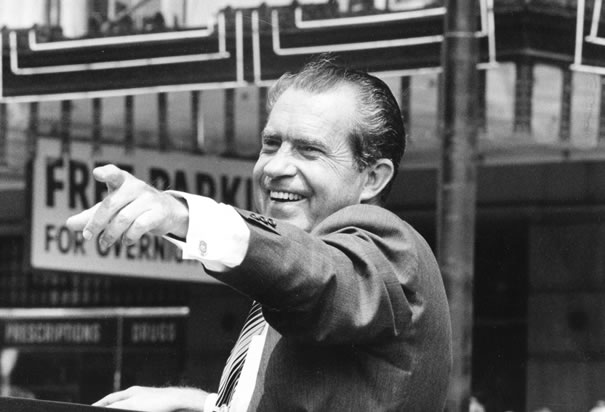
….At eleven o’clock in the morning, Nixon met with his staff in the Roosevelt Room. To many in the room he seemed oddly cool and quietly angry as he thanked them all for their loyalty and said something few of them understood. He said that he had been reading Robert Blake’s Disraeli and was struck by his description a century ago of William Gladstone’s ministers as “exhausted volcanoes” – and then mumbled something about embers that once shot sparks into the sky.

“I believe men exhaust themselves in government without realizing it” the president said “You are my first team, but today we start fresh for the next four years. We need new blood, fresh ideas. Change is important…..Bob, you take over.”

Nixon left then, turning the meeting over to Haldeman. The men and women of the White House stood to applaud his exit, then sat down. The chief explained what Nixon’s words meant: a reorganization of the administration. He told them that they were expected to deliver letters of resignation before the end of the day, then passed out photocopied forms requiring them to list all official documents in their possession. “These must be in by November 10,” he said. “This should accompany your pro forma letter of resignation to be effective at the pleasure of the President”. They were stunned. Speechless. Were they being fired? Haldeman said they would know within a month whether or not they could remain. At noon, the same drama was played out with the entire Cabinet, with Haldeman again passing out the forms.

Ironically, one of the many Cabinet secretaries Nixon ignominiously fired in his bid to centralize power in his White House staff was his former 1968 primary rival, HUD Secretary George Romney, father of 2012 Republican nominee, Governor Mitt Romney.  A blow from which George Romney’s political career never recovered. Nixon’s relationship with Romney had been an acrimonious one, formally polite on the surface with public shows of confidence by Nixon and machiavellian intrigues behind the scenes to undermine Romney and reverse the policies he had been advancing in Nixon’s name.

This latest Cabinet reshuffle to build a “Team without Rivals”, comes in the context of an explosive story, the abrupt resignation Friday of CIA Director General David Petraeus, citing an extramarital affair and accepting responsibility for “extremely poor judgment” and “unacceptable conduct”. The affair, allegedly conducted with his official biographer, came to light during a still not fully explained FBI investigation into unauthorized accessing of Petraeus’ private email account. The resignation of the highly regarded General Petraeus comes just before he was expected to testify before Congress regarding discrepancies and questions in the administrations handling of the terrorist attack in Benghazi that killed Ambassador Chris Stevens and other Americans. It also coincides with the Secretary of State Hillary Clinton, declining to testify.

It is difficult to say if General Petraeus public career will survive this scandal that he has brought upon himself, an action which stands in jarring contrast to his sterling, some might say superhuman, record of service to America, or if he will, like George Romney, fade away. Certainly, the CIA badly needed to stop the revolving door on the Director’s office and have a strong, visionary, hands-on leader who could reform and invigorate the Agency not merely in terms of covert action but in terms of rebuilding of capacity in deep cover clandestinity and the acquisition of strategic intel. I do not often find myself in agreement with Senator Feinstein but she is correct, this resignation hurts because it is also a significant institutional opportunity cost for the IC. I too wish it had not been accepted  – at one time it wouldn’t have been – but that is the President’s prerogative.

What however are the real issues? What should we be looking for?

Two things: As with Richard Nixon’s second term machinations, with such sweeping changes personnel changes in the offing for the Obama administration, ask yourself as events unfold: “Where is power flowing? And Why?”

If you do you will be in a better position to game out the direction of the next four years, especially in foreign policy and national security.

The White House has attempted to sell a story that the FBI doing a low-level harassment investigation  stumbled upon a security breach and – on their own authority, mind you – tapped the email account of the Director of the CIA and kept him under surveillance and investigated his mistress and, oh, yeah, the President was only informed of this business after the election on Thursday. Wait! And the DNI ( a three star general whose career was primarily intel administration) on his own initiative called the CIA Director ( a four star general and former theater and combatant commander) in on the carpet and fired him told him to resign. Right.

No, what most likely happened was that the minute the special agents realized who was involved in their investigation and the magnitude of the implications, they stopped and informed their superiors and the matter went up the chain to the FBI Director’s desk. The FBI Director, a former prosecutor with a political antennae circumspect enough to be appointed by George W. Bush and have his term be extended by Barack Obama, would have duly informed the Attorney-General of the United States before proceeding further and – I expect – the National Security Adviser, White House Chief of Staff and the DNI. Worst case scenario thinking in terms of national security would have been one driver. Another would be the fear of an all too juicy story leaking and the media catching an unbriefed POTUS unaware on the campaign trail with a blockbuster scandal before the election. How would that have gone over?

I would further expect that we will in the next few days and weeks hear the most salacious contents of the emails between Petraeus and his biographer, leaked by anonymous officials, timed to coincide with difficult days of testimony regarding Benghazi or new appointments to the administration that could, on a slow media day, prove controversial.

Instead of being distracted by prurient nonsense unrelated to the stewardship of the Republic, time would be better spent scrutinizing the host of nominations to come, not as individuals but as “teams” for particular areas of national security and foreign affairs cutting across bureaucracies – ex. arms control, Russian relations, Mideast etc. What commonalities or congruencies emerge?

I suggest this because back when the Obama administration decided on their “pivot” to Asia, the people they selected for second to third tier workday management related to the Asia-Pacific region were all accomplished, decent, honorable public servants, but their greatest common characteristic was a lack of any professional expertise with China. We saw the same personnel gambit with the Bush administration in the run-up to the war with Iraq where the greatest disqualifier for a job with the CPA was familiarity with the Arab world, Islam or Iraq. When you want careful stratagems, you solicit the advice of experts; when you want grand and revolutionary gestures, the wheels of policy are better greased with bold ignorance. There’s a reason Nixon appointed William Rogers Secretary of State – he knew the State Department bureaucracy would largely oppose his foreign policy initiatives and he wanted someone ill-suited and uninformed in charge there who he could more easily manipulate and keep in the dark.

The sixties radicals used to assert “the personal is the political”; in the eighties, Ronald Reagan in staffing his first administration understood that “the personnel are the political” and picked people culled from Heritage and Cato. My intuition is that in the second decade of the 21st century, the inside circle of the Obama administration have discovered that ” the political are the patterns”.

The story unfolding is no longer the “smoking gun” or the compromising jigsaw piece but the entirety of the puzzle.


Switch to our mobile site