Just received a courtesy review copy of Spinning the Law from Ruby at FSB Associates. This is not the genre of books that I typically review and I was initially hesitant that it would just be a pop culture title, but in skimming, I am pleased to report that the author, former US. Attorney Kendall Coffey, is engaged in an analysis of how public opinion, shaped by the media, impacts the justice system.
Coffey explains the strategies and tactics that prosecutors, defense lawyers and their clients employ as well as the hazards and mistakes made in playing to the media. Coffee’s reach includes the trials of Joan of Arc, Socrates and Aaron Burr as well as more recently infamous characters as the American Taliban, John Walker Lind, Jose Padilla and Governor Rod Blagojevic. Spinning the Law would seem to have a great deal of applicability to those readers interested in IO and public diplomacy, as well as those with conventional interest in the legal system and American politics.
I look forward to reading this and eventually posting a full review.
I mentioned TEMPO a few months back and I wanted to comgratulate Dr. Rao and the launch of his book and notify readers that Venkat will be doing a cross-country drive/book tour to promote TEMPO. Sort of a strategic cognition version of On The Road.
A review of TEMPO will appear here later this week.
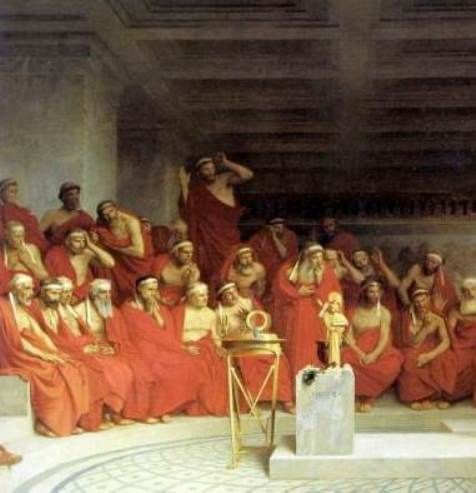
“I have not lived so long, Spartans, without having had the experience of many wars, and I see among you of the same age as myself, who will not fall into the common misfortune of longing for war from inexperience or from a belief in it’s advantage and safety”
One thing on which most commentators, academics and former officials seem to agree is that the United States government has a difficult time planning and executing strategy. Furthermore, that since 1991 we have been without a consensus as to America’sgrandstrategy, which would guide our crafting of policy and strategy. This failing bridges partisan divisions and departmental bureaucracies; there are many career officials, political appointees and even a few politicians, who can explain the nuances of the Afghan War, or the Libyan intervention, the depreciatory tailspin of the US Dollar or America’s Russia policy – but none who would venture to say how these relate to one another, still less to a common vision.
Sadly, they do not, in fact, relate to one another – at least not, as far as I can discern, intentionally.
Few American policies or even military operations (!) in one country can be said to have been conceived even within a coherent and logically consistent regional strategy and it is not just common, but normal, to have DIME agencies working at completely contradictory purposes in the same area of operations. The interagency process, to the extent that it exists, is fundamentally broken and incapable of interagency operational jointness; and the institutional coordinating mechanism for any “whole of government” effort, the National Security Council, has become too consumed with crisis management. A mismatched prioritization of resources which leaves little time for the kind of long range planning and strategic thinking that allows nations to seize the initiative instead of reacting to events.
It would be a useful corrective for the better conception and execution of US policy, for the President and the Congress to create a special board for grand strategy that could give presidents and key officials frank assessments and confidential guidance to help weave their policy ideas into a durable and overarching national strategy. One that might last beyond a few days’ headlines in The New York Times.
The President of the United States, of course has a number of bodies that could, should but do not always provide strategic advice. There’s the Defense Policy Advisory Board, an Intelligence Advisory Board, the National Intelligence Council, the State Department’sPolicy Planning Staff, theOffice of Net Assessment and not least, the NSC itself and the Joint Chiefs of Staff, whose Chairman, by act of Congress, is the military advisor to the President and Secretary of Defense. While strategic thinking does percolate from these entities, many have very specific mandates or, conversely, wide ranging briefs on matters other than strategy. Some operate many levels below the Oval Office, are filled with superannuated politicians or have personnel who, while intellectually brilliant, are excessively political and untrained in matters of strategy. The Joint Chiefs, the professionals of strategy, are highly cognizant of the Constitutional deference they are required to give to civilian officials and are very leery of overstepping their bounds into the more political realms of policy and grand strategy.
What the President could use is a high level group just focused on getting strategy right – or making sure we have one at all.
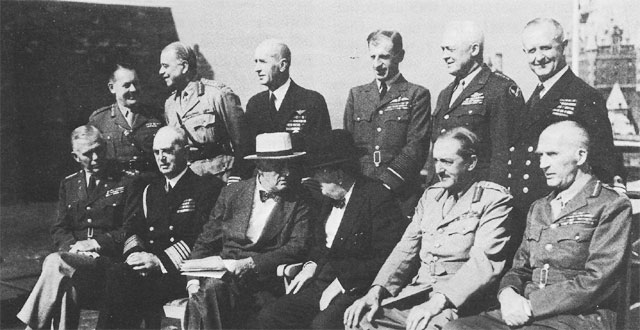
I’m envisioning a relatively small group composed of a core of pure strategists leavened with the most strategically oriented of our elder statesmen, flag officers, spooks and thinkers from cognate fields. A grand strategy board would be most active at the start of an administration and help in the crafting of the national strategy documents and return periodically when requested to give advice. Like the Spartan Gerousia, most of the members ( but not all) would be older and freer of the restraint of institutional imperatives and career ambitions. Like the Anglo-American joint chiefs and international conferences of WWII and the immediate postwar era, they would keep their eye on the panoramic view.
The Octagon Conference – FDR, Churchill and the Combined Chiefs of Staff
Here’s my grand strategy board in a hypothetical perfect world, unlike the one that prevails inside the beltway. I’m sure people will quibble with particular names or will suggest others. I freely admit, for example, that I do not have the best grasp of who our leading intellectual powerhouses are in the Navy, Air Force or the closed world of intelligence analysis and this impairs my ability to put together the list. Nevertheless, I’m trying anyway:
Let’s start with a group of acclaimed and eminent strategic thinkers who have demonstrated over a long tenure, their ability to consider matters of war, peace and statecraft as well as the nuances of strategic theory:
Thomas Schelling -Chairman
Andrew Marshall
Edward Luttwak
Colin Gray
Joseph Nye
Next, some senior statesmen:
Henry Kissinger
George Schultz
Zbigniew Brzezinski Madeleine Albright
General officers and one colonel with a demonstrated talent for challenging conventional assumptions:
Lieutenant General Paul van Riper
General James Mattis
General Jack Keane
Colonel John Warden
Two economists:
Alan Greenspan
Nouriel Roubini
Two scientists:
Freeman Dyson E.O. Wilson
Mixed group of strategists, historians, practitioners and theorists:
David Kilcullen
John Robb
John Negroponte Barry Posen
Antulio Echevarria Chet Richards
Micheal Vlahos
Thomas P.M. Barnett
Stephen Biddle
Robert Conquest
Duane Clairridge
Jack Matlock
Martin van Creveld
Visionaries and Contrarians:
Nicholas Nassim Taleb William Gibson
Ray Kurzweill
Andrew Bacevich
What are the problems with my grand strategy board (aside from having zero chance of coming into being)?
For one, it is probably way too large. In my efforts to balance expertise in strategy with varied thinking it grew bigger than what is manageable in real life, if the group is to be productive.
Secondly, it is an exceedingly white, male and conservative leaning list – though to some extent that reflects the criteria of experience, the field of strategy itself and the nature of American politics. Barbara Ehrenreich, for example, is definitely bright but her politics are fundamentally opposed to effectively maximizing American power in the world or the use of military force – thus making her of little use except as a voice of dissent.
Another limitation of this exercise is the idiosyncratic eclecticism of my approach – this was a blog post written over a few days in my spare time and not a methodical inquiry into who in American life would verifiably be the “best qualified” to help construct a grand strategy. There are “insiders” who command great respect within the national security, defense and intelligence communities who are unknown to the general public, or even this corner of the blogosphere, who would be enormously helpful to such a board. Finally, a grand strategy board would not be a panacea; it would be subject to all the inertial pressures that over time would reduce it’s ability to effect change, just as the Policy Planning Staff and the NSC have been “neutered” over decades by the forces of the status quo.
That said, the above group or one reasonably comparable to it could, for a time, markedly improve the construction of strategy , assuming American leaders are willing to enlist such advice, put aside short term political considerations and pursue long term strategic goals.
Whom would you nominate to a grand strategy board?
Going to try to catch up this week on the backlog of book reviews I need to do, particularly those books sent to me by publishers. I may have to break down and do a set of mini-reviews, so far behind I have gotten myself.
So, naturally, that was a suitable pretext to order more books 🙂
Luttwak’s book is a strategy classic and I recently enjoyed his Grand Strategy of the Byzantine Empire. I first heard of Stefan Zweig from Lexington Green but nearly everyone who has read The World of Yesterday that I have encountered has raved about it, so I am looking forward to that one. Why the West Rules- For Now is another rec from the Chicago Boyz crowd but I do not think that anyone has reviewed it there as of yet. Finally, I am pairing War Before Civilization with Azar Gat’s War in Human Civilization – have a sense that Gat’s ideas may be somewhat in tune with Martin van Creveld.
J. Scott Shipman, the owner of a boutique consulting firm in the Metro DC area that is putting Col. John Boyd’s ideas into action, is a longtime friend of this blog and an occasional guest-poster. Scott has an important report regarding the “war of ideas” against the Islamist-Takfirist enemy in Afghanistan after attending a workshop hosted by DARPA.
DARPA, STORyNet and the Fate of the War
by J. Scott Shipman
I had the opportunity to attend a DARPA workshop yesterday called STORyNet. The purpose was to survey narrative theories, to better understand the role of narrative in security contexts, and to survey the state of the art in narrative analysis and decomposition tools (see below):
This STORyNET workshop has three goals:
1. To survey narrative theories.
These empirically informed theories should tell us something about the nature of stories: what is a story? What are its moving parts? Is there a list of necessary and sufficient conditions it takes for a stimulus to be considered a story instead of something else? Does the structure and function of stories vary considerably across cultural contexts or is there a universal theory of story?
2. To better understand the role of narrative in security contexts.
What role do stories play in influencing political violence and to what extent? What function do narratives serve in the process of political radicalization and how do theyinfluence a person or group’s choice of means (such as violence) to achieve political ends? How do stories influence bystanders’ response to conflict? Is it possible to measure how attitudes salient to security issues are shaped by stories?
3. To survey the state of the art in narrative analysis and decomposition tools.
How can we take stories and make them quantitatively analyzable in a rigorous, transparent and repeatable fashion? What analytic approaches or tools best establish a framework for the scientific study of the psychological and neurobiological impact of stories on people? Are particular approaches or tools better than others for understanding how stories propagate in a system so as to influence behavior?
I was alerted to the meeting by a member at one of my “groups” at LinkedIn and just barely made the registration cut-off. It was a good meeting, but not reassuring on our situation in Afghanistan—you’ll see why below.
As a “hobby” I’ve been tinkering with the implications of patterns with respect to language and communications. Just about every presumption I have articulated over the last several months is being pursued in one way or another—which is good news for our guys. While the on-going research is good, I do believe there is room for better and more imaginative thinking, although I didn’t say anything during the meeting for once, I kept my mouth shut and just listened.
This is exceptionally brief and decidedly non-techincal. Here are some observations of interest:
In Afghanistan, stories (those who tell them and those who believe) are central to our geopolitical strategy and policies.
There is underway, a “battle of the narratives,” where any “counter” narrative developed by the US must have credibility. This seems obvious, but the speaker observed the “story telling” was more important than the story. Given the high illiteracy rate, this makes sense.
We [DARPA] are reviewing chants (which are wildly popular), video, magazines, poetry, the Internet, and sermons as thematic vehicles for analysis.
The language of the Taliban is not secular, and not the language of the insurgency—for the Taliban everything hangs on the legacy of jihad and religious struggle.
The Taliban not willing to negotiate on matters of jihad. They are using a unified vision of Islam giving their struggle a noble foundation against the corruption of outsiders who want to “Christianize” the nation.
The Taliban uses symbology to portray the struggle as a cosmic conflict against Christian invaders and US puppets (those cooperating with the US). Framing this symbology to communicate clearly the frame of the righteous vs. the infidels.
The Taliban manipulates the language to connect the current struggle to previous struggles of “warrior poets.” There is hope a “discourse” can be created that will counter this framing [personal note: I’m not optimistic]. The Taliban uses different language to subjugate rural and urban dwellers, and actually have standard operating procedures for dealing with villages that resist.
The cognitive patterns of rural Afghanistan are “foreign” to most Westerners and they use alien methods of knowledge transfer (chants, often under the influence of hashish).
We are adding a geospatial element to our analysis of local and personal narratives (which includes subject, verb, object) with respect to identified “master narratives.”
Internet data is indexed, with an eye toward predictive analysis and situational awareness (and interestingly, “sentiment” analysis). We are finding predictive power from the topology of “networks” used in models.
From a neuroscience perspective, there was an amazing talk on empathy. It turns out, based on fMRI testing that empathy is quite predictable across subjects. Research indicates people “care more” about an “in-group” to which they belong more than an “out group.” The speaker defined the brain as a “parliament” of competing parties and nuanced spectrums [personal note: this elegant description tracks with everything I’ve read on the topic.].
One presenter observed that after 10 years of war, we’re finally “getting” the importance of Pashtun culture and language. This presenter also noted US is still in need of people with language skills sufficient to adequately support the effort.
– End
COMMENTARY:
Zen here:
First, I’d like to cordially thank Scott for letting me share his insights gleaned from the workshop here with ZP readers. This is one of those fascinating events largely unavailable to those folks residing outside a reasonable driving distance from the Beltway.
Secondly, I am heartened that the brilliant folks at DARPA are taking the theological-ideological discourse of the enemy seriously in analyzing the power of narrative. Charles Cameron makes that point here with regularity. Michael Scheuer, Gilles Kepel and Olivier Roy did so even before 9/11. Our political appointees and policy makers remain steadfastly allergic to this reality, unable to process or discuss in public with coherence how religious ideas are a root for political extremism. Col. David Kilcullen, who certainly understands political Islam better than most and whose creative and analytical acheivements in structuring a framework for countering insurgency are second to none, eschews dealing with the topic in his theoretical writings on COIN where it can be avoided. That is the cost imposed by the political correctness to which our ruling elite are psychologically welded.
It comes as no surprise to me that only after “10 years of war” are we finally “getting the importance of Pashtun culture”.
Maybe at the dawn of the 22nd century we will be “old hands”.
Zenpundit is a blog dedicated to exploring the intersections of foreign policy, history, military theory, national security,strategic thinking, futurism, cognition and a number of other esoteric pursuits.




 process of political radicalization and how do theyinfluence a person or group’s choice of means (such as violence) to achieve political ends? How do stories influence bystanders’ response to conflict? Is it possible to measure how attitudes salient to security issues are shaped by stories?

