zenpundit.com » primary loyalties

Archive for the ‘primary loyalties’ Category

Query: COIN Manual Conference Feedback

Wednesday, May 16th, 2012


Was the COIN  Manual conference at Fort Leavenworth last week a success or a failure?

I have heard backchannel that the focus of the rewrite of FM 3-24 was going to be on “tactics” and but that a “light footprint option” had to be included to appease policy makers. Some good suggestions were made at SWJ by Colonel Robert C. Jones, but not much has been said yet online that I have seen. USACAC bloseriously could use some updating on a more frequent basis.

I’m curious where they went with this. Opinions and comments solicited.

Which world is more vivid? This, or the next?

Monday, March 19th, 2012

[ by Charles Cameron — bin Laden, Abu Bakr, Bernard of Clairvaux, Qur’an burning, Tora Bora, David Ignatius, Emptywheel, and impassioned belief ]
.


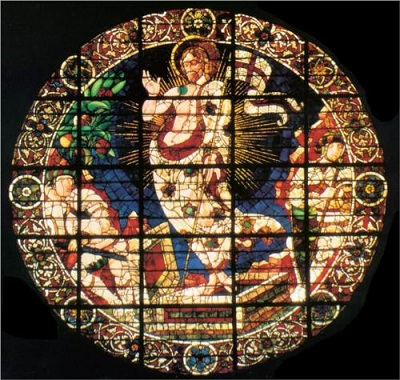
image: Paulo Uccello (1443) depicts the Resurrection
life after the grave, seen through a glass, darkly

We keep on stumbling over this one.

To the western mind, mostly, this world is axiomatically more vivid than the next. But there are those for whom the next life is axiomatically the more vivid – even if their day to day practices are geared to success and continuity in this life.

And this has consequences for our own lives, in the world around us — and for security.

1.

Some who are of this mind – bin Laden in this video among them — may quote or paraphrase Abu Bakr‘s message to Khosru:

I have come to you with an army of men that love death, as you love life.

That particular quote is from the rich tapestry of Islam – but Jewish history speaks also of Kiddush ha-Shem, martyrdom for the glory of God, which became in the time of the crusades “the exemplary answer of Jews threatened in their life and faith” when offered the options of conversion to Christianity or death.

And in Christendom, there is St Bernard of Clairvaux, who is quoted as writing in his letter to the Templars at the time of the Second Crusade:

The Christian who slays the unbeliever in the Holy War is sure of his reward, the more sure if he himself is slain.

and for good measure in his sermon promoting the Crusade:

Christian warriors, He who gave His life for you, to-day demands yours in return. These are combats worthy of you, combats in which it is glorious to conquer and advantageous to die.

2.

It is with this difference in axiomatic understanding in mind, that we should approach such issues as the relative importance – in our own minds, and in those of many Afghans – of the loss of human life in a night raid, as compared with the burning of copies of the Qur’an [In Reactions to Two Incidents, a U.S.-Afghan Disconnect]:

The mullah was astounded and a little angered to be asked why the accidental burning of Korans last month could provoke violence nationwide, while an intentional mass murder that included nine children last Sunday did not.

“How can you compare the dishonoring of the Holy Koran with the martyrdom of innocent civilians?” said an incredulous Mullah Khaliq Dad, a member of the council of religious leaders who investigated the Koran burnings. “The whole goal of our life is religion.”

And a quick note here — this is an issue I’ve raised before, eg in Burning scriptures and human lives, in Of Quantity and Quality I: weighing man against book, and more recently in On fire: issues in theology and politics – ii.

3.

The same understanding also explains bin Laden’s retreat to the Tora Bora caves. As I said in an early guest post here on ZP, with a hat-tip to Lawrence Wright and his book The Looming Tower:

When bin Laden, at the lowest point of his jihadist efforts, leaves the Yemen for Afghanistan and betakes himself to the Tora Bora caves, he will inevitably remind some Muslims of the Prophet himself, who at the lowest point of his prophetic vocation left Mecca for Medina and sought sanctuary in a cave — where by the grace of his God, a spider’s web covered the entrance in such a way that his enemies could not see him.

Our natural tendency in the west is to see Tora Bora in terms of military topography, as a highly defensible, almost impregnable warren of caves deep within some of the world’s most difficult mountain territory. What we miss may be precisely what Muslim piety will in some cases see — that bin Laden’s retreat there is symbolically aligned with the “sunna” or life of the Prophet, and thus with the life of Islam itself — in much the same way that Christians, in the words of Thomas a Kempis, may practice “the Imitation of Christ”.

4.

It was in fact Emptywheel‘s piece about bin Laden’s comment re killing President Obama (and thus promoting Joe Biden) that caught my attention today and prompted this post.

Emptywheel quoted the same passage from David Ignatius that had triggered my own post On the “head of infidelity” and the tale of Abdul-Rahman ibn Awf late yesterday —

“The reason for concentrating on them,” the al-Qaeda leader explained to his top lieutenant, “is that Obama is the head of infidelity and killing him automatically will make [Vice President] Biden take over the presidency… “

— and commented:

OBL was going to kill Obama not for the sake of killing the US President, but because Biden, who served in the Senate for 36 years, almost 12 of which he served as one or another powerful committee Chair, “is totally unprepared for that post, which will lead the U.S. into a crisis.”

I just don’t think that’s right. I think it’s wrong, in fact, but [and here’s the important part] subtly wrong.

I believe that OBL lived at the confluence of worlds — one that we might call mythic or spiritual, and one that’s the one we call the “real” world. I believe that it was his myth, archetype, spirit based reality that was the more vivid to him, the one to which he was entrained, and that he found means in the practical world of strategies and tactics to adhere to the demands of that other world.

A world that was both invisible to us, and to him axiomatically victorious – at least as much so in death as in life.

4GW and Legitimacy at SWJ

Thursday, February 23rd, 2012

Fourth Generation Warfare and William Lind was the topic of a critical essay by Major Lincoln Farish at Small Wars Journal. The article was interesting, despite my disagreement with the author on most points, because he was wrestling with important questions related to insurgency and COIN at a time when FM 3-24 is undergoing revision and the role of COIN itself in US Army operational culture is being questioned. Tight defense budgets= Musical chairs at the Pentagon. 🙂

Unfortunately, the article contained, in my view, significant problems in terms of understanding 4GW or strategy in general.Here is the article. It isn’t overly long. I am going to be commenting on passages that caught my attention and I invite readers to do the same and check out those made by Ken White and Slapout in the comments section at SWJ:

The Quest for Legitimacy 

According to The U.S. Army Marine Corps Counterinsurgency Field Manual an insurgency is “an organized movement aimed at the overthrow of a constituted government.” FM 3-24 continues with, “political power is the central issue in insurgencies and counterinsurgencies: each side aims to get the people to accept its governance or authority as legitimate.” Fourth Generation Warfare (4GW) advocates propose fighting insurgents with small cadres of highly-trained infantry, avoiding the large footprint of earlier generations of war created by command and control echelons above the company. Even if the 4GW proponents are correct on the tactical level, their proposed methods will not be successful in defeating an insurgency strategically as 4GW does not offer a legitimate alternative to the insurgents at the strategic or national level.

Premises here are incorrect.

First, while I do not speak for Mr. Lind, any fair reading of his many columns, articles and posts of the past decade (!) would demonstrate that he was, as Ken White and Slapout indicated, strongly opposed to expeditionary COIN adventures unless they were absolutely unavoidable.  His 4GW grand strategy was for the US to scrupulously avoid “centers of disorder” and view all states, even ideologically hateful misfits, as potential allies against 4GW forces. Where required, the US would instead rely on “punitive raiding” against such 4GW entities but not hunker down in the mud with them on a permanent basis.

William S. Lind, the architect of the 4GW concept, argues for units to become “true light infantry.”  He writes, “virtually all Fourth Generation forces are free of the First Generation culture of order; they focus outward, they prize initiative and, because they are highly decentralized, they rely on self-discipline.” Discipline is a key issue here; a company commander only has the authority to punish soldiers up to the (U. S. Army) rank of Sergeant (E-5). This is to protect not only the soldiers, but to give the commander the ability to maintain order and discipline commensurate with his position and abilities. A company is usually composed of only three to four officers, and they have little ability to conduct an investigation without disrupting combat operations….

…. Clear, codified, equitable discipline is one of the features that separate a military from a street gang or an insurgent movement…..

….It [4GW forces] should be trained and equipped to use cash to draw on the local infrastructure for most of its needs.”  Lind expects a company to handle most of its logistical needs with a minimum of support from a higher echelon, in other words, Lind is advocating an autonomous company.

One of the assertions of 4GW theory is that a large military with a  2GW culture organization based on hierarchy, micromanagement. limited or no autonomy of subordinates will go down to defeat ( or at least protracted stalemate) with a smaller, but more agile, adaptive 4GW force. Secondly, that counter-4GW units should be retooled to “mirror” these advantages in initiative and flexibility because the disciplined firepower of conventional military trumps those of irregulars (who of course, lack tanks, attack helicopters, cruise missiles, FOBs with food courts that include Pizza Hut and other hyperexpensive brontosaurian logistical tails). This combat advantage of light infantry over guerrillas is the reason for Lind’s advocacy of “Jaegers“.

H. John Poole, another disciple of 4GW, goes even further. Poole advocates using fire teams (a 3-4 man team) to perform deep interdiction to deny an enemy maneuver room, destroy minor camps, supply areas, and staying in place for up to three months at a time. In this scenario, how is it possible that the team effects the capture of prisoners? Would the team have to allow surrendering personnel to escape? How would enemy causalities be treated? Would the team leave enemy wounded, and how would that be portrayed to the media and world-wide? Whatever flaws there may be with 4GW, the biggest one is with legitimacy.

Poole is a tactical expert, which I certainly am not, even in terms of historical study. As I am not qualified to debate the utility of fire-teams vs. platoons or companies, I will simply note that in a different strategic context, both the Soviets and NATO contemplated and prepared for very deep, behind the lines, operations, by small, pre-positioned, sleeper cells. We also have scouts and a variety of special forces units and CIA clandestine operatives running around AfPak and the Horn of Africa – how do they currently handle these problems? Does SEAL Team 6 usually return home from a raid with 50+ prisoners?

A Western democratic government is considered legitimate if its rule is primarily derived from the consent of the populace. An illegitimate government would be one that ruled by coercion. Legitimate governments are inherently stable. They engender the popular support required to manage internal problems, change, and conflict. A lack of legitimacy in a constituted government results in a lack of popular support, and an end to the government’s actions.

Well, while I understand the point of contrast the author is making, and I’m deeply in sympathy with the inherent Lockeanism, the idea that liberal governments who have the consent of the governed do not regularly exercise coercion is fundamentally and empirically incorrect. This is easily demonstrated by refusing to pay one’s taxes, or attempting to sell unpasteurized milk, engage in sedition, build a house at variance with local zoning or in a myriad of ways. States enforce law where they do not have voluntary compliance and that enforcement, or threat thereof, constitutes coercion in a very real sense. If a state cannot make use of coercion in time of need, then it has failed as a state.

What states with consent of the governed have is a comparative advantage. Their greater legitimacy permits their actions of coercion- unlike that of a a hated, mad, tyrant – to take place less frequently and then with with less friction when they do. Enjoying greater voluntary compliance, more legitimate states have moral leeway and the political benefit of the doubt of the populace, when confronting lawbreakers and applying coercion to other challengers to the state’s authority. It is this very moral authority possessed by the state that 4GW forces seek to erode.

 Conrad Crane proposes six possible indicators of legitimacy:

– The ability to provide security for the populace.

– Selection of leaders at a frequency and in a manner considered just and fair by a substantial majority of the populace.

– A high level of popular participation in or support for political processes.

– A culturally acceptable level of corruption.

– A culturally acceptable level and rate of political, economic, and social development.

– A high level of regime acceptance by major social institutions.

While this is a good guide from a western view of what constitutes a “legitimate” government, not every group in the world would agree, and legitimacy is in the eyes of the beholder. What was legitimate in earlier times may now be unacceptable, what is legitimate in one area of the world is not in another.

Crane’s indicators are usefully pragmatic in a heuristic sense, but probably not sufficient in themselves – “legitimacy” is a huge subject and has many aspects or facets in terms of internal politics, external diplomacy, cultural identity and both positive and international law.  While “legitimacy” is difficult to define to the mutual satisfaction of military leaders, lawyers, statesmen or academics, populations seem to “know it when they see it” (and more importantly, when they don’t). The rub with pop-centric COIN theory, from a 4GW perspective, is that it is extremely difficult (though not always impossible) for armed outsiders to bestow or shore up legitimacy of a state.

I suspect that gambit works most effectively with new or emergent states also seeking acceptance or peace with neighboring states and aid from the international community and less well in cases of purely civil strife.

Insurgencies that are trying to develop legitimacy have integrated themselves locally into the social and political fabric of societies worldwide. They establish a “shadow government,” first addressing the needs of the local populace. Insurgents establish themselves as organizations capable of addressing the everyday problems of the local population. Insurgent groups have set up schools, medical clinics, sports clubs, and programs for free meals. Hamas and Hezbollah have also become powerful political parties within their respective governments. The key difference is that to be seen as legitimate, the insurgent only needs to appear legitimate in the area they are operating in and in accordance with the mores of the local populace.

Much of this passage is actually in concordance with classic 4GW thinking. I would hedge in that many 4GW entities, for example, criminal-insurgencies or loyalist paramilitaries (4GW entities acting in support of the state) have no interest in becoming a “shadow government”. Some, like Hezbollah and HAMAS do, but an across the board assumption is an effort to intellectually shoehorn all insurgencies everywhere into the Maoist model – that they seek to replace regime as the state’s new rulers- and that is one of the major flaws of pop-centric COIN assumptions.

Atrocities committed by insurgents, even if they were reported could be easily ignored.  International opinion matters little to an insurgent organization that is local, and is not subject to, or concerned with, international laws.

No.

Atrocities by irregulars may or may not be ignored. Largely that is the fault of policy, our elite’s decided lack of will in consistently pursuing their publicity, condemnation and where possible, exemplary punishment. That said, whether atrocities by irregulars are ignored or not and whether leaders of non-state forces hold international opinion in contempt, as parties to an armed conflict they are indeed subject to the laws of war and international law. Breaking laws does not mean that therefore, you are somehow above them.

The national government, on the other hand, has to appear legitimate at the international level, the national level, and at the local level. At each level there may be different beliefs as to what does or does not constitute “legitimate” governance. The counter insurgent has an even more difficult time, as they must be seen as “legitimate” in their home country, the host country, internationally, and at the local level. There is a difference in what actions and processes are seen as legitimate by these successive levels and the counter insurgent must not only be cognizant of these expectations and restrictions, but abide by them as well.

Generally correct, but all levels of legitimacy are not equally important all of the time.

The context of situations matter a great deal – first of all, the shooting part of war does count even in 4GW or COIN. It does not help to be scrupulously legitimate in all OF your actions if you lose the war to insurgents and are captured, tortured lavishly and displayed in a cage before being executed on live television.  Appealing to the sense of legitimacy of generally adversarial and distantly located foreign elites may or may not matter vs. appealing to the primary loyalty of villagers in guerrilla country. Or it might.

It is important to remember that in terms of legitimacy, the counterinsurgent  has an audience of overlapping political communities, but communities of unequal importance to the outcome. All actions in counterinsurgency warfare have political trade-offs. The bias is to ruthlessly accept those trade-offs that methodically and irrevocably advance the COIN side to victory and eschew ones where the costs greatly exceed any potential gain. To quote John Boyd, when considering conflict and threatswe should only undertake operations and policies that:

  • Support our national goal, which at the highest level involves improving our fitness, as an organic whole, to shape and cope with an ever-changing environment
  • Pump-up our resolve, drain-away our adversary’s resolve, and attract the uncommitted
  • End the conflict on favorable terms
  • Ensure that the conflict and peace terms do not provide seeds for (unfavorable) future conflict.

To continue:

The 4GW method of COIN does not properly account for legitimacy. Following the 4GW method, insurgent groups will be able to use the need for legitimacy by the counter insurgents to disrupt operations. If a charge is made that the 4GW forces have committed an atrocity, there will be a lot of interest in that story by outside groups. The media will want information, and human rights groups will bring political pressure for a full and complete investigation to be conducted, something a company commander will not have the resources to do.

I find this passage to simply be strange, given the emphasis that various writers of the 4GW school placed upon the mental and moral levels of war. Whether you agree with 4GW and William Lind or think that both = horseshit, it remains a fact that concern with legitimacy is one of 4GW’s central tenets as a theory or school of strategic thought. See, there’s this guy, an Israeli military historian, named Martin van Creveld and……

The problem, I suspect, is with how the author approaches legitimacy and the division of responsibility for questions of tactics, operations, strategy and policy. Bill Lind’s advocacy of of jaegers never seemed to me to imply that a master sergeant or captain out in the backcountry would be running an international level IO on his own. In his area of responsibility, with locals, sure – just not when Lara Logan or Dr. Jakob Kellenberger of the Red Cross shows up.

If the alleged atrocity is not investigated properly, regardless of the veracity, legitimacy for the operation and popular support at all levels will be at risk. The insurgents will be able to use the incident as a rallying cry against the counter insurgent forces. The lack of a full and complete investigation will give credence to their claims, and there will be allegations of “cover ups” and “obfuscation,” by those sympathetic to the insurgent cause. Outside neutral groups, like NGOs and the media, will not be able to quickly and easily refute these allegations, further reinforcing the insurgent’s claims. These claims harm the legitimacy of the counter insurgent operations and degrade popular support. Without popular support the U.S. Army would be forced to leave, allowing the insurgents to reoccupy the area. Tactically the insurgents may have been beaten at every turn, but strategically they have won. Given the proposed structure of 4GW forces, small 3-4 man teams, out of direct contact with higher headquarters for extended periods of time, with a minimum of command oversight- how would an investigation occur? How would media requests be handled, or investigations by human rights NGOs? How would the team or the company even be able to demonstrate that they were not responsible for the alleged crime? Do 4GW adherents believe that the US Army would be given the benefit of the doubt by the international press?

Wow.

First of all, all of what the passage describes occurs now, under the present system, beloved by Big Army, of top down micromanagement of company and platoon leaders by senior field grade or, remarkably, general officers. Any incarnation of 4GW COIN operations have not failed in the way Farish described but every major media failure that has happened in the war can be attributed in part, to the current institutional culture, climate and structure that produced such slick American IO moments as Abu Ghraib and “the Runaway General“.

Admittedly, as it is untried, a 4GW style COIN operation might not do any better than this, but really, it could hardly do worse.

The current mass of command and control, while cumbersome and at times inefficient, exists to protect the soldier and to allow him to conduct his mission with minimal disruption. To try and strip that away to a “lean fighting force” is to invite tactical success, but strategic failure. 

Top-heavy, slow moving, risk-averse, military bureaucracies ensure strategic victory?  Administrative process defines or formulates strategy? WTF?

With the loss of a robust command structure and the protection it brings from outside agencies, it will be easy for the insurgents to portray soldiers as cold-blooded killers, rampaging throughout the land with no oversight and no regard for international law, the UCMJ, or legitimacy. Without the appearance of legitimacy popular support will erode, without popular support counter- insurgent forces will be forced to cede the battlefield to the insurgents.

Move….out…of….your….comfort zone.

In general, military history and strategic thinking need to be taught earlier in the career arc of professional officers than the War College level as a counter to the habits of mind inculcated by organizational culture. The relationship between tactics, strategy and policy is always holistic, not distributed between “tactical leaders”, “operational planners” and civilian “policy wonks”. Strategy does not live way up at HQ or in the White House but should be a ladder or chain of implications that reach down to guide tactical decisions and upwards to a national or grand strategy.

Metz on the Psychology of Insurgency

Saturday, January 28th, 2012

Dr. Steve Metz, a friend of ZP blog and Chairman of the Regional Strategy and Planning Department and Research Professor of National Security Affairs at the Strategic Studies Institute, has new and heavily footnoted article up at SWJ:

Psychology of Participation in Insurgency 

 It’s common sense: to make insurgents quit the fight or to deter other people from joining them, to understand their appeal, we must know what makes them tick.   This is easier said than done as we Americans face a mental barrier of our own creation–we insist on approaching insurgency (and counterinsurgency) as a political activity.  This entails a major dose of mirror imaging.  We are a quintessentially political people, but it is politics of a peculiar type, born of the European Enlightenment.  We assume that the purpose of a political system is to reconcile competing interests, priorities, and objectives.  From this vantage point, we see insurgency as a form of collective, goal-focused activity that comes about when nefarious people exploit the weaknesses of a political system.  It occurs when “grievances are sufficiently acute that people want to engage in violent protest.”[1]  The state cannot or will not address the grievances.  And since insurgency is political, so too are its solutions: strengthen the state so it can address grievances and assert control over all of the national territory.  The improved state can then return to its mission of reconciling competing interests, priorities, and objectives.

            Much of the world–including the parts prone to insurgency–sees things different.  Most often the political system is used by an elite to solidify its hold on power and defend the status quo.  Most insurgents do not seek a better political system but rather one that empowers them or, at least, leaves them alone.  People become insurgents because the status quo does not fulfill their needs.  This is a simple observation with profound implications.  It means that the true essence of insurgency is not political objectives, but unmet psychological needs (although political objectives may serve as a proxy for psychological needs as insurgent leaders seek to legitimize and popularize their efforts).

This coincides with the observation of David Kilcullen that many insurgents are purely localized “accidental guerrillas“, motivated by other drivers than political calculation – such as opportunity for excitement, the dictates of an honor culture, fear of being considered a coward, prospects for glory or booty or the aggressive territoriality of young men.  Looking at historical examples of warlords as diverse as “General Butt Naked“, the Mad Baron Ungern von Sternberg and General Abdul RashidHeavy D”  Dostum, it is evident that some men fight and kill because they revel in slaughter for it’s own sake, are skilled at combat and find purpose in war.

Indeed, as Metz writes:

….Boredom also contributes to a sense of being lost.  In rural areas and urban slums, insurgency seems to provide excitement for those whose lives are devoid of it.[21] This theme appears over and over when former insurgents explain their motives.  Ribetti, for instance, heard it from Colombians, particularly from the female insurgents she interviewed who sought to escape the tedium of a woman’s life in rural areas.[22]  Louise Shelley observed that youth violence and association with terrorism is often linked to “the glamour of living dangerously and the adrenalin flow that is associated with living precariously.”[23]  States not susceptible to insurgency have proxies for youth boredom and the need for excitement which drains these impulses into less destructive channels, whether video games, violent movies, sports, or fast cars.  Societies without alternatives–particularly ones where the educational system has collapsed like Sierra Leone, Afghanistan, and he tribal areas of Pakistan can see boredom be channeled into political violence.[24]

            The Thugs:  There are people in every society–usually young males–with a propensity for aggression and violence.  Insurgency attracts them since it is more prestigious and legitimate than crime, and has a better chance of gaining internal or external support.  It offers them a chance to justify imposing their will on others.  This is amplified when a nation has a long history of violence or major military demobilization which increases the number of thugs and puts many of them out of work.  In many parts of the world, whole generations have never known a time without brutality and bloodshed.  Sierra Leone is a perfect example of this.  The RUF emerged from a group of young people from the slums of Freetown known for their antisocial behavior.[25]  While this group sometimes provided violent muscle for politicians, it also served up the raw material for the RUF, leading Ibrahim Abdullah and Patrick Muana to label it the “revolt of the lumpenproletariat” (a word coined by Karl Marx to describe society’s lowest strata).[26]  Thugs seldom create or lead insurgencies, but they do provide many of its foot soldiers.


Do Oligarchies Create Insurgencies?

Tuesday, November 29th, 2011

“…. But when the sons of these men received the same position of authority from their fathers-having had no experience of misfortunes, and none at all of civil equality and freedom of speech, but having been bred up from the first under the shadow of their fathers’ authority and lofty position-some of them gave themselves up with passion to avarice and unscrupulous love of money, others to drinking and the boundless debaucheries which accompanies it, and others to the violation of women or the forcible appropriation of boys; and so they turned an aristocracy into an oligarchy. But it was not long before they roused in the minds of the people the same feelings as before; and their fall therefore was very like the disaster which befell the tyrants.”-Polybius

One of the tenets of pop-centric COIN is that better governance will deliver the loyalty of the people who are the center of gravity over whom the insurgent and state contest. This usually means cajoling the state to reform and remove the worst abuses that serve to politically fuel the insurgency. Occasionally this is successful (El Salvador), frequently it is not (South Vietnam, Afghanistan) and in other cases it may be irrelevant as the method is eschewed in favor of indiscriminate brute force and punitive expeditions (Sri Lanka, Soviet COIN) but it begs the question of:

“What kind of governance is most likely to create insurgencies in the first place?”

Of insurgencies that are wholly indigenous, what form of government spawns them most frequently? A chart of historically recent insurgencies is given below containing who fought and who won (“negotiated” indicates a political settlemt “tie” of sorts, with some political accomodation and not settlements that are trucial “exit agreements” for the defeated belligerent): 

COUNTRY GOVERNMENT VICTOR
Aden Colonial Insurgents
Afghanistan (1979-1989) Communist/Occupied Insurgents
Afghanistan (2001-2011) Republic/Occupied Ongoing
Algeria (1954-1962) Colonial Insurgents
Algeria (1991-2006) Dictatorship Government
Angola(1961-1975) Colonial Insurgents
Angola (1975-2002) Communist Negotiated
Bolivia Dictatorship Government
Britain (N. Ireland) Democracy Negotiated
Cambodia (1970-1975) Dictatorship Insurgents
Cambodia (!978-1991) Communist/Occupied Negotiated
Colombia Democracy Ongoing
Chechnya Republic Government
China (1911-1949) Dictatorship Insurgents
Cuba Dictatorship Insurgents
Cyprus Colonial Insurgents
El Salvador (1930’s) Dictatorship Government
El Salvador (1970’s-1980’s) Dictatorship/Democracy Government
Greece Monarchy Government
Guatemala Dictatorship Government
India Democracy Ongoing
Indonesia (1945-1949) Colonial Insurgents
Indonesia (1965) Dictatorship Government
Iraq Democracy/Occupied Government
Israel (1st Intifada) Democracy/Occupied Negotiated
Israel (2nd Intifada) Democracy/Occupied Government
Jordan (Black September) Monarchy Government
Libya Dictatorship Insurgents
Malaya Colonial/Republic Government
Mexico Democracy Ongoing
Mozambique Communist Negotiated
Nepal Monarchy Insurgents
Nigeria (Biafra) Dictatorship Government
Nigeria (Delta) Democracy Ongoing
Nicaragua (1979) Dictatorship Insurgents
Nicaragua (1980’s) Dictatorship Negotiated
Palestinian Mandate Colonial Insurgents
Philippines (1899-1902) Colonial Government
Philippines (Huk Rebellion) Republic Government
Philippines Dictatorship/Democracy Ongoing
Rhodesia Colonial/Apartheid Insurgents
Saudi Arabia (Ikhwan Revolt) Monarchy Government
South Africa (Boer war) Colonial/Occupational Government
South Africa Apartheid Insurgents
Soviet Union (Basmachi Revolt) Communist Government
Soviet Union ( partisans) Communist Government
Syria (Hama Revolt) Dictatorship Government
Syria Dictatorship Ongoing
Vietnam (1930’s) Colonial Government
Vietnam (French War) Colonial Insurgents
Vietnam (American War) Dictatorship Insurgents
Yemen Dictatorship Ongoing
Yugoslavia Occupied Insurgents

The chart is fairly comprehensive, but I have not accounted for all movements or conflicts that can loosely be grouped under the heading of “insurgency” in the previous century. There are more. Corrections and additions are welcomed in the comments section. I also recognize that such a broad historical comparison as this chart involves a fairly massive degree of simplification of diverse examples. To some extent, simplification is unavoidable if insurgency is to be studied as a phenomenon at all rather than as an event in the history of a particular state or people.

EXCLUSIONS: 

Insurgencies before 1900.  A blog post cannot aspire become the encyclopedia of insurgency. 

The Russian Civil War (1918-1921) and the Lebanese Civil War of the 1980’s on the basis that while these conflicts contained many aspects of irregular warfare, they were primarily civil wars with extensive foreign intervention. The Greek and Chinese civil wars, by contrast are included because, despite foreign intervention in each case, the character of one of the belligerents in each conflict remained authentically and continuously insurgent in nature. The Greek communist army supported by Tito had previously been an anti-Nazi partisan force while Mao ZeDong’s Red Army were in rebellion against the Nationalist government before, after and to some extent, during, the WWII Japanese invasion of China.

Unlike the Vietnam War, the Korean War was neither an insurgency, nor a civil war, the adjunctive use of guerrilla operations by the North Korean and Chinese armies and the pro-DPRK apologetics of historian Bruce Cumings notwithstanding. The Korean War is better understood with Clausewitz than Galula.

The Soviet Bloc cases of Czechoslovakia in 1968 and Hungary in 1956 were excluded primarily because the resistance to Soviet domination was led by, or at least included, the leadership of the local satellite Communist Parties and governments, making those examples partially state vs. state conflicts. Of the two, Hungary presents a better empirical case for inclusion but from my readings of Soviet history, Khrushchev’s concerns were rooted in what he saw as counterrevolutionary and anti-Soviet elements in the Hungarian Party, army and security agencies and the Soviet response was a conventional invasion. I could be persuaded otherwise, but for now I am excluding Hungary.

The Katangan Secession – the reason here is my own lack of familiarity with the subject, as well as Mobutu’s later fall from power. Readers are invited to weigh in here or on any point.

Inadvertantly awol but intended to be included was Sri Lanka which recently crushed the Tamil Tigers. My error and one not easily remedied at this point for technical reasons, having tweaked the chart with another software program.

ANALYSIS:

Foreign Invasion 

First, if we wish to know what kind of governments most frequently suffer insurgencies, let us set aside insurgencies that derive primarily from resisting foreign invasion and occupation. While these conflicts are legitimately considered insurgencies, the cause of them is fundamentally external to the nature of the state. People have a natural, visceral and ingrained tendency to fight violent intruders and that reaction ought to be taken for granted and planned for accordingly. Even the much abused and absolutely impoverished peasantry of Russia rose up against Napoleonic armies and Nazi conquerors. So we would remove from consideration the cases of Afghanistan after the Soviet and American occupations, Yugoslavia, the Boer War, the Vietnamese occupation of Cambodia and the American occupation of Iraq and the Philippines as being externally provoked.

Likewise, insurgencies that are predominantly the creation of foreign powers, which would eliminate the US supported Contras in the 1980’s and parts of the Taliban like the Haqqani Network or Lashkar-e-Taiba in Kashmir (India however, has something like 17 ongoing insurgencies so it remains on the list). Also gone is Che Guevara’s quixotic and numerically insignificant expedition in Bolivia.

Totalitarian Dictatorships

To look at the chart, the type of government that seems to endure insurgency least often are, ironically, totalitarian governments. The USSR is listed with two revolts – the Basmachi in Central Asia in the 1920’sand the Banderists of Ukraine in the late 1940’s. The former began prior to the Revolution and Stalin’s absolute ascendancy and continued while Soviet governmental authority in Central Asia was still relatively weak. In the Ukraine, Bandera’s partisans only took root as a result of the chaos created by the Nazi invasion of the Soviet Union in 1941, which demolished the democidal grasp of Stalin’s NKVD apparatus there while replacing it with that of the genocidal SS

Historically, governments that exercised analogous control via terror to Stalin’s USSR simply did not endure insurgencies except in foreign territories they invaded, like Vietnam’s occupation of Cambodia. North Korea today, despite inhuman cruelties has not provoked an insurgency, nor did Nazi rule in Germany, the Khmer Rouge in Cambodia or even minor regimes like Enver Hoxha’s Albania, where efforts by the CIA to spark a guerrilla movement failed miserably. There is simply very little social “space” in a society atomized by terror and continuous surveillance for an insurgency to get started except by a spontaneous riot.

It is important to note however, as Jeane Kirkatrick did long ago, that totalitarian rule is qualitatively distinct from authoritarian rule. The USSR before an after Stalin was a different regime, regardless of outward continuity – and the same can be said of Communist China under Mao.

Democratic States 

The type of government that is next least likely to be fighting an insurgency at home are democratic ones – though they are perhaps very likely or most likely to be the states fighting them abroad.  The democratic states listed include Britain, Colombia, Israel, India, Mexico and Nigeria while the Philippines and El Salvador transitioned to democracy while fighting insurgencies and Iraq emerged from American occupation while an insurgency raged.

Of the democratic governments that fought insurgencies at home, Nigeria and the Philippines inherited their conflicts from previous dictatorships and all of the states have significant to severe demographic divisions based on language, religion, caste, tribe, ethnicity or legal status that are reinforced by economic discrimination and (except for Britain) serious to severe levels of corruption.

The economies of Mexico, El Salvador, Philippines and Colombia are historically oligarchic with the economic status quo being reinforced by extralegal violence in the rare instances where the government did not formally side with elite interests (usually because of factional disputes among the elite). The social complexities of Nigeria or India are too great to be delved into here but traditional structures and social relations were neither free nor highly mobile and that these legacies negatively impact or undermine democratic governance.

Of democracies that have not or have never needed to fight an insurgency, the supposition would be that liberal democracy represents the best vehicle for satisfying popular demands and defusing grievances. Further, there is an implicit assumption that democracies are functionally better at solving social and political problems and are less aggressive than dictatorships or traditional regimes. Therefore, a a key tenet of pop-centric COIN theory, the need for good governance, tends in practice to become conflated with implementing democratic and liberal reforms of regressive and repressive states, as was successfully done in El Salvador, to win over the loyalty of the population for the state.

I would like to believe that this theory is correct for intuitive and anecdotal reasons – it seems like common sense because our experience is that citizens of liberal democracies lead more prosperous, freer and more peaceful lives and are therefore unlikely to pick up arms against their government. Unfortunately, this reasonable assumption may be shakier than it appears and have little relation to success or failure of a COIN campaign.

The first problem with this line of COIN thinking is first, it mirrors the flaw in Democratic Peace theory – most democracies are of such new vintage historically that we are not assessing risks and probabilities from an adequate data set. Democracies have been, until the last twenty years, rare historical outliers. Of those democracies that have been around for the longest period of time – the European great powers, the United States and Japan – these nations have a formidibly warlike track record of military intervention or establishing the colonial empires that created the conditions for insurgency in most of the world’s hotspots. This alone should give us pause about the pacifistic nature of democracies if we have failed to learn this lesson from Thucydides.

The second problem is that good democratic governance does not equate with or guarantee military effectiveness of the counterinsurgent forces in the field. The shooting part of COIN wars matter and the “good guys” can lose when out-thought and out-fought; “bad guys” can be courageous, adaptive, highly motivated and militarily skillful adversaries. Nor does democratic governance ensure that wars of choice are fought for sound strategic reasons to accomplish affordable goals. The tendency toward idealism in democratic politics, making a war of choice attractive to an electorate can mitigate against maintaining a strategic perspective and tilt toward pursuing open-ended and ill-defined goals.

 The third problem is that the population is not always the “center of gravity” in 4GW or other non-maoist model insurgencies that have as a strategic objective something other than a takeover of the state. The population itself may in addition, be fundamentally illiberal in their orientation and inclined toward customs that are incompatible with Western notions of democracy or “good governance”.

Overseas, democracies are also historically active in fighting foreign insurgencies or aiding states to do so. Many of these examples are derived from the age of imperialism and the aftermath of decolonization that, as in the Malayan Emergency, became amalgamated with Cold War conflict between the West and Communism. It is also important to note, that liberal democracies are not strictly counterinsurgent/counterrevolutionary powers. Democratic states are also known to frequently aid or sponsor foreign insurgencies for ideological reasons, as under the Reagan Doctrine or the recent R2P intervention by NATO to aid rebels against Libyan dictator Col. Gaddafi.

Colonial regimes:

Colonial regimes along with authoritarian dictatorships most frequently faced insurgencies and generated many of the insurgent movements that lingered on into independence, fighting successor governments (Vietnam, Angola, Rhodesia etc.). While not the sole source of inspiration and historical experience, colonialism was the cradle of COIN theory with such luminaries as Callwell, Templer, Galula, Thompson and Fall as patron saints and the “red team” of Mao, Giap, Che, and Fanon on the other side.

Anti-colonial insurgencies are not considered to be in the same category here as insurgencies fighting foreign invasion because of the duration of colonial rule, decades or even centuries in length, mean that there are always other proximate causes for an insurgency than just the violent intrusion by foreign conquerors, though that grievance will always be present even if the memory of the event is purely historical. No power maintains itself for long periods of time without securing at least grudging political acceptance from a plurality of the population over which it rules and developing enough economic growth to make the imperial enterprise at least self-sustaining.

That said, despite their variable political nature of imperial powers, colonial administrations are almost always engaged in upholding unequal de jure privileges, even when the colonial territory is to be politically integrated into the mother country (ex. Algeria as a French department) or the imperial authorities are more liberal and solicitous of the indigenous population than are the colonial settlers ( ex. British Cape Colony). These unequal colonial priviliges typically relate to economic concessions that range from relatively normal productive capital investments (ex. British railroads in India) to rapacious looting and imposition of slave labor on a vast scale (ex. the Congo Free State under Leopold).

Colonial states are almost always minority governments of a settler/creole population and allied indigenous subgroup dominating a resentful majority excluded from the lion’s share of any economic benefits the regime is capable of generating. In the meantime, while badly outnumbered , colonial regimes tend to lack the overwhelming internal security capacity of the totalitarian police states, making control relatively fragile and dependent in part upon “divide and rule” political tactics. Markets do not operate freely but are arranged under  mercantilist restrictions designed for an export-driven economy based extraction of raw materials and commercial agriculture, a system that directly benefits only a narrow elite even within the privileged settler population. The mercantilist colonial economic structure is so durable that it is seldom dislodged even by independence, as the history of Latin America testifies, with a political elite assuming the privileged role once played by the imperial authorities and settler population.

Authoritarian dictatorships:

This category contains a highly diverse set of regimes, including the absolute monarchies on the list, with widely differing attitudes on political economy, foreign policy and social control. An authoritarian state may be a generally despised government controlled by a minority group (Baathist Syria, Rhodesia under Ian Smith) or it may enjoy nationalist legitimacy (Tito’s Yugoslavia, Egypt under Nasser) or even international respect (Singapore). They may also be bizarrely personalist tyrannies, like that of Jean-Bedel Bokassa, the cannibal emperor of the Central African Republic, or the aforementioned Colonel Gaddafi in Libya. Finally, most Communist states eventually mellowed from totalitarian dictatorships with supreme leaders to collective leadership based party oligarchies, China being the most successful example of such transitions.

In terms of insurgency, it is more difficult to generalize among authoritarian dictatorships than totalitatian ones, or even democracies. Repression alone is not the crucial variable as not all authoritarian states face an insurgent challenge at home and almost no totalitarian states do despite being several orders of magnitude more oppressive. It would be useful to draw distinctions between authoritarian states that faced insurgencies and those that did not.

Looking at authoritarian regimes that are or were free of insurgency – say for example, Nasser’s Egypt, Pinochet’s Chile, Tito’s Yugoslavia or Singapore and China today we notice that they share some nominally positive traits – competent leadership, nationalist or populist appeal, pro-active security policies, provision of public goods and/or effective economic policies – that reinforce or maintain the regime’s political legitimacy. Repression, even brutality, is more easily swallowed when the state is delivering a rising standard of living and is seen by the public as an effective guardian of communal values and reliable protector against threats. Even a certain amount of corruption is tolerable, from the perspective of the average citizen, if the elite polices its members to remediate gross abuses of power. Some minor corruption (baksheesh, na levo) humanizes a rigid system on the margins for people without access to powerful patrons and relieves frustration.

Authoritarian or autocratic states that faced serious insurgencies lack these qualities – South Vietnam, Afghanistan under Karzai, Nigeria, Batista’s Cuba, Nationalist China, the Philippines under Marcos – coupled repression with incompetence, alienation from the public, massively dysfunctional levels of corruption and economic stagnation that magnifies and focuses popular resentment against the regime and provide fertile soil for insurgency and revolution. Contrary to Machiavelli’s famous advice, the rulers of these states made themselves more hated  than feared – and usually were also helping themselves to the “patrimony” of their citizens along the way via looting on a scale that exceeded even that of the European colonial powers. The Arab Spring began in Tunisia where hatred for the family of the wife of President Zine El Abidine Ben Ali as a bloodsucking mafia burst like a flood and most recently toppled the mad Colonel Gaddafi, who is now estimated to have stolen $ 200 billion dollars from the Libyan people over the course of his 41 year regime.

CONCLUSIONS:

  • Insurgencies do not appear everywhere and where they appear they do not all enjoy similar success. Some are crushed virtually before they begin; others take over the state only to face new insurgencies against their own brand of government. Local conditions matter a great deal in determining whether an insurgency will appear at all, with some of the most monstrous governments in human history reigning unchallenged while relatively mild tyrannies are ignominiously toppled. A sufficiently omnipresent security regime, while economically wasteful, can make an insurgency’s emergence virtually impossible.
  • Oligarchical policies seem to increase the likelihood of rebellion by being repressive, economically exploitative, politically unrepresentative and also incompetent, governing in opposition to the interests of a majority of the population. Most of the states comprising historical cases on the insurgency table, though not all, were oligarchical to a significant degree, including the democratic states. However we can qualify this by recognizing that some states that are politically organized as oligarchies, one-party dictatorships such as China, are also capable of moderation and pursuing a version of enlightened authoritarianism and competent governance that secures a degree of genuine popular support. At least for a time.
  • Democracies are janus-faced in terms of insurgency. On the one hand, excepting the French Fourth Republic, advanced liberal democracies in the last century have rarely faced a serious rebellion at home (the 1970’s wave of upper-class Marxist terrorism never exceeded a handful of terrorists). On the other hand, these same democracies have an extensive historical record of provoking insurrection in overseas colonial possessions, fighting insurgencies on behalf of client states or even sponsoring insurgents as proxies against unfriendly states. This uneasily complicated relationship between democratic governance qand insurgency mitigates any unstated assumptions regarding promotion of democracy as a natural adjunct of COIN; democracy can be highly subversive of traditional mores or it can manifest itself as intolerant and illiberal majoritarianism.
  • Pop-centric COIN is a paradigm for fighting insurgency that is more suitable for some scenarios than others. As such, it would an error to keep it as official doctrine but it would likewise be an error to get rid of it entirely. An array of different COIN approaches of which pop-centric COIN is only one, would be a more realistic replacement; with the caveat, stated many times by many experts, that local conditions should determine and shape a COIN campaign rather than resorting to an established template.

Switch to our mobile site

