zenpundit.com » ideas

Archive for the ‘ideas’ Category

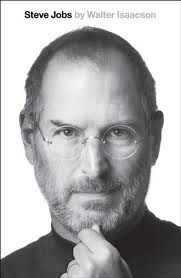
Steve Jobs by Walter Isaacson, a review

Thursday, October 27th, 2011

 [by J. Scott Shipman]

steve-jobs.jpeg

Steve Jobs by Walter Isaacson

Walter Isaacson, the acclaimed author of biographies of Benjamin Franklin and Albert Einstein, has produced a definitive and up-close biography of Steve Jobs. The book is a very readable 571 pages that took only a couple of days to read. Jobs approached Isaacson to write his bio in 2004, but Isaacson resisted until 2009 when  Jobs’ wife Laurene Powell “said bluntly, “If you’re ever going to do a book on Steve, you’d better do it now.”” Isaacson insists no restrictions were placed on him, in fact, Jobs and his wife facilitated access to many people who do did not hold Jobs in high regard—the man excited passions good and bad. I found it ironic that Jobs, a man who obsessed with control would willingly relinquish control in what will probably be the definitive biography of his life.

Isaacson offered early that his book is really about innovation. He offers: “At a time when the United States is seeking ways to sustain its innovative edge, and when societies around the world are trying to build creative digital-age economies, Jobs stands as the ultimate icon of inventiveness, imagination, and sustained innovation.” Given Apple’s growth, his point is well taken.

Isaacson clearly admires Jobs, but he does not spare the reader of Jobs volatile and brutal out-bursts directed at just about anyone he considered a “bozo” or worse. From the beginning, Jobs was a very difficult person to work with. He did not tolerate mediocrity and punished what he thought was mediocre thinking, often publicly. Isaacson offers some insights and ideas as to the cause of Jobs distinctly caustic personality, but most ring hollow. Jobs was a driven and passionate man, with very little empathy—even for family members. Isaacson suggests “people who were not crushed ended up being stronger” and many of the folks interviewed agreed—Jobs drove people to do things they didn’t know they could do. As one of Jobs colleagues Debi Coleman said, “You did the impossible, because you didn’t realize it was impossible.” So the folks he didn’t scare off, appear to have been inspired. Tim Cook, Jobs’ successor offered, “What I learned about Steve was that people mistook some of his comments as ranting or negativism, but it was really just the way he showed passion. So that’s how I processed it, and I never took issue personally.”

My favorite parts of the book were Isaacson’s liberal use of quotes from Jobs. Some quotes bristle with passion, and a few were profound. This one appealed to my notions on pattern cognition:

Your thoughts construct patterns like scaffolding in your mind. You are really etching chemical patterns. In most cases,  people get stuck in those patterns, just like grooves in a record, and they never get out of them.

Isaacson covers Jobs journey at Apple, NeXT, Pixar, and his triumphant return to Apple. I did not know much about Jobs at Pixar and found it interesting that Jobs was CEO at both companies simultaneously—and both companies had a “different” versions of Jobs. Isaacson says, “Pixar was a haven where Jobs could escape the intensity of Cupertino. At Apple, the managers often excitable and exhausted, Jobs tended to be volatile, and people felt nervous about where they stood with him….It was a Pixar that he learned to let other creative people flourish and take the lead.” Jobs was more hands-on at Apple I sense because he considered it his creation—essentially an extension of his person. I suspect Jobs viewed his role at Pixar as more that of a steward in comparison.

Jobs hated slide presentations (I agree—one great thing about Boyd & Beyond is the general ban on PowerPoint) and said, “People who know what they’re talking about don’t need PowerPoint.” There is a poignant passage towards the end where Jobs was meeting with his team of doctors and the doctor had a PowerPoint presentation. Jobs gently suggested the Apple Keynote program was better.

Jobs, despite his bristly exterior, reached deep in his Zen training and life experience (particularly after his cancer diagnosis) when he spoke at the 2005 Stanford commencement:

Remembering that I’ll be dead soon is the most important tool I’ve ever encountered to help me make the big choices of life. Because almost everything—all external expectations, all pride, all fear of embarrassment or failure—these things just fall away in the face of death, leaving only what is truly important. Remembering that you are going to die is the best way I know to avoid the trap of thinking you have something to lose. You are already naked. There is no reason not to follow your heart.  

We are a Apple/MacBook Pro family, we have iPhones, iPods, and the iPad on our wish list. Isaacson discusses one thing I’ve noticed with every Apple purchase; the thought put into packaging of the product. Apple packaging is patented and it shows. Jobs alter ego and head Apple designer Jonathan Ive, said, “Steve and I spend a lot of time on the packaging…I love the process of unpacking something. You design a ritual of unpacking to make the product feel special. Packaging can be theater, it can create a story.” I believe we have kept every box our Apple products arrived in—they are works of art.

This book will elicit the spectrum of emotions, there are parts where I was embarrassed or appalled at Jobs poor behavior, there were tender moments towards the end of his storied life that brought a tear to my eye. Isaacson has given us a valuable portrait of a man mathematician Mark Kac “called a magician genius, someone whose insights came out of the blue and require intuition more than mere mental processing power.”

Isaacson’s Steve Jobs comes with my highest recommendation.

NOTE: This is admittedly a different book review for this site. I’ll admit up front that I’m a fan of Jobs and his products—and I know many people hate him passionately and with good reason. I’m sharing this review because Jobs was an iconoclast very similar to John Boyd: people either loved him or hated him. Both men were driven, had poor people skills, and both left rich legacies in completely different areas, and are eminently interesting figures.

Request for Information from the Readership

Thursday, October 27th, 2011

Need some help with a project at work. 

Looking to assemble a fast-and-dirty reading list for laymen that deals with the following topics:

Social intelligence, Emotional self-regulation, Emotion and learning, De-escalation of conflict, Attention, Self-Efficacy

Interested in both academic (for reference) and middlebrow (for distribution) titles, particularly those that contain interpersonal strategies and organizational culture angles. Links to journal or magazine articles or whatever else you deem useful will also be appreciated.

Fire away, the more the better.

After you…

Monday, October 24th, 2011

[ By Charles Cameron — democracy, Tunis, Islamism, Ghannouchi ]

.

ghannouchi.jpg

From The GuardianTunisians flock to voting stations for first taste of democracy in 50 years, Tunis, 23 October 2011.

When An-Nahda’s leader, Rachid Ghannouchi, who recently returned from 22 years exile in London, arrived at his polling station to vote, followed by camera crews, he walked straight to the entrance. But he was jeered by crowds, who said: “The queue, the queue! Democracy starts there!” He swiftly took his place at the back, adding: “The people have a hunger for democracy.”

Here’s hoping…

*

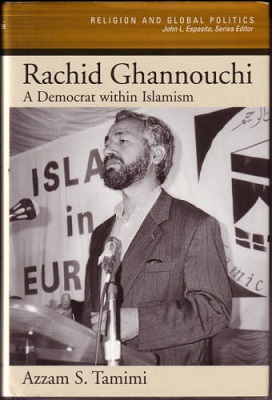
Book:  Azzam S. Tamimi, Rachid Ghannouchi: A Democrat within Islamism, OUP (2001).

A Multi-Disciplinary Approach?: Coerr’s The Eagle and the Bear Outline

Thursday, October 20th, 2011

Here is something for the learned readership to chew on.

As you are probably all aware, in the hard sciences it is common for research papers to be the product of large, multidiciplinary, teams with, for example, biochemists working with physicists, geneticists, bioinformatics experts, mathematicians and so on. In the social sciences and humanities, not so much. Traditional disciplinary boundaries and methodological conservatism often prevail or are even frequently the subject of heated disputes when someone begins to test the limits of academic culture

I’m not sure why this has to be so for any of us not punching the clock in an ivory tower.

The organizer of the Boyd & Beyond II Conference, Stan Coerr, a GS-15 Marine Corps, Colonel Marine Corps Reserve and Iraq combat veteran, several years ago, developed a very intriguing analytical outline of thirty years of Afghan War, which I recommend that you take a look at:

The Eagle and the Bear: First World Armies in Fourth World Insurgencies by Stan Coerr

the-eagle-and-the-bear-11.pdf

There are many potential verges for collaboration in this outline – by my count, useful insights can be drawn by from the following fields:

Military History
Strategic Studies
Security Studies
COIN Theory
Operational Design
Diplomatic History
Soviet Studies
Intelligence History
International Relations
Anthropology
Ethnography
Area Studies
Islamic Studies
Economics
Geopolitics
Military Geography
Network Theory

I’m sure that I have missed a few.

It would be interesting to crowdsource this doc a little and get a discussion started. Before I go off on a riff about our unlamented Soviet friends, take a look and opine on any section or the whole in the comments section.

More on Boyd & Beyond II and Boydian Theory

Wednesday, October 19th, 2011

Two posts of note:

USNI Blog (Lucien Gauthier) – Training Sailors to be Autodidactic

….The conference spent a lot of time on the first half of the OODA-Loop, Observing and Orienting.  At some point I became convinced that the type of Sailor we need is one that is a “situational autodidact”.  Major Marcus Mainz, USMC, during his presentation made the brilliant comment that “training is for the known, education is for the unknown” in this sense, the spirit in which we must educate our Sailors must be towards making them capable of educating their self as needed when the unknown presents itself to them.

….For Sailors to take greater advantage of their experiences, they need to actively question their actions.  By this, I mean that a person analyses a question more than they do a statement.  But, it has been my experience that when someone recants an experience they had, it is a rare thing to hear someone say anything in terms of ‘why’ they did something.  Much more often someone only tells the ‘what’ of their actions.  Think of the Socratic Method, where Socrates would answer his students questions with another question.  A Sailor who has internalized such a ‘Socratic process’ would be in a position to provide more cogent feedback as well as learn from their mistakes more often than we do today.

What I am saying is not that the training we offer Sailors falls short of its objectives as they stand today.  But, that the spirit of the training is not where it needs to be-we focus our objectives too much on acting rather than orienting.  The training our Sailors receive are based on concrete and testable objectives that can be measured, quantified and turned into metrics, that fit well into powerpoint.  We do no help Sailors to become autodidactic-we are not training them to become students of their environment, but rather students of their school house.

We start to approach training Sailors to be autodidacts of their environment in the Operational Risk Management training we receive (One thing about ORM:  It is Boyd’s OODA-Loop operationalized.  The Navy has totally ripped off Boyd, and yet we never mention his name outside of the Warfare Universities-shame on us).  We need more and deeper training on ORM and how this method applies to everything we do, whether we consciously realize it or not.  In giving this deeper level or ORM, we should also find Sailors able to be more articulate of the process they’ve gone through.  Thereby becoming able to better train others of their experiences….

Naval affairs is not my bailwick, but my understanding of following online discussions by experts in the field like General Robert Scales, is that Professional Military Education across all the services is a) in need of significant reform and b) is facing a future of restricted budgets and possible deep cuts. My only firsthand knowledge of PME comes from a brief stint in June at The Army War College, courtesy of Dr. Steve Metz. The AWC curriculum was explained to me in detail by Col. Bill Lord, and while they were hitting the right notes in terms of trying to inculcate a strategic epistemology, the time frame allowed for doing so is extremely compressed.

Fast TransientsBoyd’s Conceptual Spiral – New Edition

This is from Dr. Chet Richards as well as Chuck Spinney….

Download Conceptual Spiral (152 KB PDF), Boyd’s take on the origin and importance of novelty:

Novelty is not only produced by the practice of science/engineering and the pursuit of technology, it is also produced by the forces of nature, by our own thinking and doing as well as by others. Furthermore, novelty is produced continuously, if somewhat erratically or haphazardly. Now, in order to thrive and grow in such a world, we must match our thinking and doing, hence our orientation, with that emerging novelty. (28)

Adds the original page numbers, which may seem a little odd because for readability this edition spreads several of Boyd’s originals over two or even three pages.  All of these will have the same number.

We are wired to crave and be attracted to novelty, it sets us thinking and generates insights and stimulates our creativity.


Switch to our mobile site