zenpundit.com » nuclear

Archive for the ‘nuclear’ Category

Maxwell on North Korean Regime Collapse and Irregular Conflict

Thursday, December 2nd, 2010

Colonel David Maxwell, who has probably forgotten more about North Korea than I ever knew in the first place, has an insightful analytical piece up at SWJ Blog:

Irregular Warfare on the Korean Peninsula

….This paper is written with the concepts of “military misfortune” in mind. In Eliot Cohen and John Gooch’s seminal work on military failures, they determined that militaries are generally unsuccessful for three reasons: the failure to

learn, the failure to adapt, and the failure to anticipate. This paper will recommend that the ROK-US alliance learn from operations in Afghanistan and Iraq, adapt Irregular Warfare concepts to the security challenges on the Korean Peninsula and anticipate the collapse of the Kim Family Regime and the complex, irregular threats that collapse will bring.

The conventional wisdom would postulate that the worse case situation would be an attack by the north Korean military because surely the devastation and widespread humanitarian suffering as well as global economic impact would be on a scale that would far exceed any crisis that has occurred since the end of World War II. While that could very well be the case, there is little doubt about the military outcome of an attack by the north on the South and its allies and that would be the destruction of the north Korean People’s Army and the Kim Family Regime. Victory will surely be in the South’s favor; however, this paper will argue that the real worse case scenario comes from dealing with the aftermath; either post-regime collapse or post-conflict.

Maxwell’s operative assumptions are particularly good. I especially like:

….The fifth and final assumption is that while some planning has taken place to deal with north Korean instability and the effects of Kim Family Regime collapse, there has been insufficient preparation for collapse. Furthermore, in addition to planning for collapse, actiocan and should be taken prior to collapse in order to mitigate the conditions and deal with the effects of collapse of the Kim Family Regime. Unfortunately, despite some planning efforts tocounter specific irregular threats, the ROK, and the US in particular, has been distracted by the very real and dangerous threat of north Korean nuclear weapons and delivery capabilitiesproliferation of same while at the same time ensuring deterrence of an attack by the north. Deterrence is paramount and the nuclear problem is a critical international problem; however, successful deterrence over time will likely result in the eventual collapse of the regime and the associated security and humanitarian crises that it will bring.

In other words, not only are US and ROK policy makers not preparing for the most probable second and third order effects of a North Korean collapse scenario, but the status quo on the Korean penninsula represents a wicked problem that is essentially a trajectory toward a worst case scenario collapse.

Book Review: Magic and Mayhem by Derek Leebaert

Monday, November 22nd, 2010

Magic and Mayhem: The Delusions of American Foreign Policy From Korea to Afghanistan by Derek Leebaert

As I mentioned previously, I enjoyed Derek Leebaert’s earlier Cold War history, The Fifty Year Wound, so I was pleased to be sent a courtesy review copy of his latest work, Magic and Mayhem:The Delusions of American Foreign Policy from Korea to Afghanistan. Leebaert, a professor of government who teaches foreign policy at Georgetown university, does not disapoint; Magic and Mayhem is a lively and highly provocative excoriation of of the dysfunctional political culture of making foreign and national security policy in America.  While I found many fine points of disagreement with Leebaert in Magic and Mayhem, his broad themes constitute a healthy challenge to a dolorous status quo in Washington.

In Leebaert’s view, American foreign policy suffers from being crafted under two related evils: a culture of “magical thinking” and a cadre of professional alarmists, the “Emergency Men” who constitute a kind of self-appointed, adrenalin-addicted, national security ecclesia who exploit the magical thinking of the public and labor under its delusions themselves. It is this dual embrace of ends without a priori examination of means or ways and a lust for action that leads our foreign policy elite to embrace all manner of costumed charlatans with polished English language skills who are allegedly willing and able to be America’s “partner” in dangerous neignorhoods. From South Korean autocrats to African kleptocrats to figures of a more recent vintage. Leebaert writes:

Afghan president Hamid Karzai, with his Western-style technocrats and talk of democracy, was immensely appealing to Washington after the Taliban was ousted.  For more than seven years, reports the Times Dexter Filkins, Karzai was a “White House favorite – a celebrity in a flowing cape and dark grey fez” a dramatic outfit that he had designed himself but that had no origin in Afghani dress…..

….”We thought we had found a miracle man” moaned one diplomat. On closer inspection, the sorcerer proved unconvincing as the opium trade and corruption flourished.

I have always wondered where the hell that cape came from.

Leebaert takes aim at a wide variety of targets. I definitely do not agree with his assessments of everything and everyone who has caught his ire, but it is a list that is breathtaking in expanse; a parade of names and terms that includes, but is not limited to:

George Kennan
Douglas MacArthur
Paul Nitze
Detente
Robert McNamara
McGeorge Bundy
Peter Rodman
Brinkmanship
Donald Rumsfeld
COIN
Richard Holbrooke
Henry Kissinger
The CIA
NSC-68
John McCain
Arms Control
John F. Kennedy

Richard Nixon
Curtis LeMay
Defense intellectuals
Lyndon Johnson
Maxwell Taylor
Dick Cheney
Cyrus Vance
George W. Bush
Neocons
Oliver North
Revolution in military affairs
Richard Perle
Crisis management
MAD theory
Strategic/Security Studies
Walt Rostow
Wiliam Westmoreland
Robert Kennedy
Bernard Lewis
Thomas P.M. Barnett
Lawrence Summers
George Tenet
Robert Kaplan
Samuel Huntington
John Abizaid
Stan McChrystal
Barack Obama
David Ignatius
Thomas Friedman
David Brooks
US Public Diplomacy
Jimmy Carter
Michael O’Hanlon

That, by the way, was not comprehensive.

It would be a much shorter list to cite those statesmen of whom Leebaert approved – men like Henry Stimson, Dean Acheson, Matthew Ridgway, Omar Bradley, George Marshall, Dwight Eisenhower, George Schultz and Ronald Reagan. The book is not flawless. There are minor factual errors. Not every person or doctrine in Magic and Mayhem is considered in depth.  At times, Leebaert comes across as glib or superficial in his criticism, but predominantly, as with the cases of Kissinger or Rumsfeld, his bitter jeremiads are skewering their targets.

Leebaert argues for a considered retreat from policy alarmism and the cult of emergency, and for a reduction of ambitious American policy grandiosity that would flow from recognizing and respecting the agency of other nation’s leaders and peoples. Implicitly, a call not so much for isolationism, as for restraint and a sense of proportion, coupled with a dimunition of status and power for national security “celebrities” and the cottage industry of think tank consultancy for which they stand.

Magic and Mayhem is a book that was written to demystify shibboleths and smash idols.

Missile Defense Defense

Thursday, May 20th, 2010

I begin by stating I do not have the technical competence required to make an independent assessment here.

Recently, the NYT published an article quoting leading missile defense critic,  MIT Professor Ted Postol:

Review Cites Flaws in U.S. Antimissile Program

Mr. Obama’s announcement of his new antimissile plan in September was based on the Pentagon’s assessment that the SM-3, or Standard Missile 3, had intercepted 84 percent of incoming targets in tests. But a re-examination of results from 10 of those apparently successful tests by Theodore A. Postol and George N. Lewis, being published this month, finds only one or two successful intercepts – for a success rate of 10 to 20 percent.

Most of the approaching warheads, they say, would have been knocked off course but not destroyed. While that might work against a conventionally armed missile, it suggests that a nuclear warhead might still detonate. At issue is whether the SM-3 needs to strike and destroy the warhead of a missile – as the Pentagon says on its Web site.

“The system is highly fragile and brittle and will intercept warheads only by accident, if ever,” said Dr. Postol, a former Pentagon science adviser who forcefully criticized the performance of the Patriot antimissile system in the 1991 Persian Gulf war.

Naturally, the Pentagon disagreed with Dr. Postol, but their response was unusually blistering this time (and ignored by the Times):

Missile Defense Agency Responds to New York Times Article

….This sea-based interceptor missile is designed to intercept and destroy short to medium-range ballistic missiles using “hit to kill” technology, which means that the interceptor collides directly with the target missile or warhead, and destroys the target using only the force of the collision.  The allegation that target intercepts were reported as successful when they were not successful is wrong, and the data presented by the authors in the article is flawed, inaccurate and misleading.

In each successful intercept test the target missile was destroyed by the Aegis BMD/SM-3 system due to the extreme kinetic energy resulting from the “hit to kill” intercept.  In each instance, the mission objective of “hit to kill” of the unitary or separating target was achieved. 

Postol and Lewis apparently based their assessment on publicly released photos gleaned from a sensor mounted aboard the SM-3 and postulated what they perceived to be the interceptor’s impact point although they had no access to classified telemetry data showing the complete destruction of the target missiles, or subsequent sensor views of the intercept that were not publicly released so as not to reveal to potential adversaries exactly where the target missile was struck.

Actually, the publicly released videos, which can be seen at www.mda.mil/news/gallery_aegis.html, and from which the still photos were extracted, show infrared images from both interceptor and airborne sensors demonstrating the complete destruction of the target missiles.

All of the tests cited by the authors as “misses” were tests involving short-range unitary targets, when the warhead remains attached to the booster rocket.  These tests were correctly described by the Missile Defense Agency as successful intercepts, because they successfully intercepted the target.  Post-test analysis from collected telemetry showed that the interceptor’s kill vehicle impacted the target body or warhead within inches of the expected impact point that was calculated to maximize damage against a variety of warhead types.

….The authors of the SM-3 study cited only tests involving unitary targets, and chose not to cite the five successful intercepts in six attempts against separating targets, which, because of their increased speed and small size, pose a much more challenging target for the SM-3 than a much larger unitary target missile. They also did not mention the fact the system is successfully intercepting targets much smaller than probable threat missiles on a routine basis, and have attained test scores that many other Defense Department programs aspire to attain.

I mention all this because my amigo Shane Deichman, who like Postol, is a physicist and a former scientific adviser for the DoD (Postol for the Chief of Naval Operations, Deichman for JFCOM) and is currently working at the National Missile Defense Agency, felt that the rebuttal scored a direct hit on Postol’s claims about the system tests ( which might explain why it did not get cited by the NYT, though in fairness, the Times did quote the agency spokesman). I trust Shane’s judgment but I’m not able to expound on it, so he is cordially invited to add any comments here that he might wish that might further the reader’s (and my own) understanding.

Comments are, of course, open to all.

None Dare Call it a Rogue State

Wednesday, December 9th, 2009


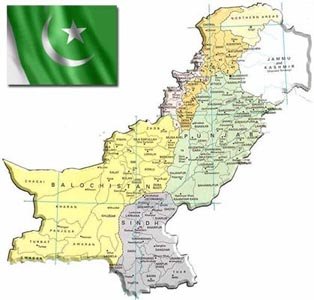
Reader Isaac, points to an excellent analytical overview of Pakistan’s national nervous breakdown at Dawn.com, by Nadeem F. Paracha. It is a lengthy but stupendous post with some 200 + comments:

Little monsters

There is nothing new anymore about the suggestion that over a span of about 30 odd years, the Pakistani military and its establishmentarian allies in the intelligence agencies, the politicised clergy, conservative political parties and the media have, in the name of Islam and patriotism, given birth to a number of unrestrained demons which have now become full-fledged monsters threatening the very core of the state and society in Pakistan.

A widespread consensus across various academic and intellectual circles (both within and outside Pakistan), now states that violent entities such as the Taliban and assorted Islamist organisations involved in scores of anti-state, sectarian and related violence in the country are the pitfalls of policies and propaganda undertaken by the Pakistani state and its various intelligence agencies to supposedly safeguard Pakistan’s ‘strategic interests’ in the region and more superficially, Pakistan’s own ideological interest.

….The 1980s and the so-called anti-Soviet Afghan jihad is colored with deep nostalgic strokes by the Islamists and the military in Pakistan. Forgetting that the Afghans would have remained being nothing more than a defeated group of rag-tag militants without the millions of dollars worth of aid and weapons that the Americans provided, and Zia could not have survived even the first MRD movement in 1981 had it not been due to the unflinching support that he received from America and Saudi Arabia, Pakistani intelligence agencies and its Afghan and Arab militant allies were convinced that it was them alone who toppled the Soviet Union.

The above belief began looking more and more like a grave delusion by the time the Afghan mujahideen factions went to war against one another in the early 1990s and Pakistan was engulfed with serious sectarian and ethnic strife. But the post-1971 narrative that had now started to seep into the press and in many people’s minds, desperately attempted to drown out conflicting points of views about the Afghan war by once again blaming the usual suspects: democracy, secularism and India.

Many years and follies later, and in the midst of unprecedented violence being perpetrated in the name of Islam, Pakistanis today stand more confused and flabbergasted than ever before.

The seeds of the ideological schizophrenia that the 1956 proclamation of Pakistan being an ‘Islamic Republic’ sowed, have now grown into a chaotic and bloody tree that only bares delusions and denials as fruit.

Read the rest here.

There has been an ocean of ink spilled about the Obama administration’s Hamlet-like deliberation over a war strategy for Afghanistan and on the implications of agreeing to 30,000 rather than the 40,000 new troops for the “Afghan Surge”, as Gen. McChrystal had originally requested. The 10,000 difference in boots is not the salient strategic point, though it is the one that excites political partisans on the Right, Left and anti-war Far Left. It also distracts us from debating our fundamental strategic challenge.

The horns of our dilemma is that our long time “ally” whom we have hitched ourselves to in a grand war effort against revolutionary Islamist terrorism is not our ally at all, but a co-belligerent with our enemy. By every policy measure that matters that causes the United States – justifiably in my view – to take a tough stance against North Korea and Iran, applies in spades to Islamabad. Yet none dare call Pakistan a rogue state.

It is the elephant in our strategy room – if the elephant was a rabid and schizophrenic trained mastodon, still willing to perform simple tricks for a neverending stream of treats, even as it eyes its trainer and audience with a murderous kind of hatred. That Pakistan’s deeply corrupt elite can be “rented” to defer their ambitions, or to work at cross-purposes with Pakistan’s perceived  “interests”, is not a game-changing event. Instead, it sustains and ramps up the dysfunctional dynamic we find ourselves swimming against.

We play a bizarre game, our leaders being more concerned about Pakistan’s “stability” than Pakistan’s own generals and politicians who egg on, fund and train the very militant Islamist groups spreading death and chaos inside Pakistan and beyond its borders. Why can we not find Osama bin Laden or Mullah Omar ? Because they are high value clients of the ISI which is no more likely to give them up than the KGB was to hand over Kim Philby.  

Until America’s bipartisan foreign policy elite grapple with the fact – and it is an easily verifiable, empirical, fact – that Pakistan’s government is in chronic pursuit of policies that destabilize Central Asia, menace all of Pakistan’s neighbors, generate legions of terrorists and risk nuclear war with India, no solutions will present themselves.

A strategy will only have a chance of success when it is grounded in reality.

Shlok Vaidya’s Singularity of Warfare

Thursday, October 8th, 2009

Nice.

Shlok posts up on the future of war in response to Lexington’s Green’s prospective speaking engagement:

The History and Future of Warfare

…..The history of warfare looks something like this cycle that repeats itself within the governance market – between an insurgent governance platform and the dominant platform of the time. Victory is gauged by market-share of each platform.

  1. Tribe vs. Tribe
  2. Tribe vs. State
  3. State vs State
    1. Marked by the invention of the nuke.
  4. Network vs State
    1. Where we are now. Networks are essentially information empowered tribes.
  5. Network vs. Network
    1. When the nation-state collapses into its component resilient communities and combats the networks that won.
    2. Insurgencies and private military corporations act as governance platforms.
  6. Small-Scale Networks vs Network
    1. Advanced information flows decreases mass requirements and increases decentralization.
    2. Trend continues until post-human age.
  7. Small-Scale Network vs Small-Scale Network
  8. Individual vs. Small-Scale Network
  9. Individual vs. Individual
  10. Post-human vs. Individual
    1. When the difference between man and machine is negligible.
  11. ? vs Post-Human

*Acceleration really takes off when the network barrier is broken.

I like the flow in the outline. Potential countervailing trends to Shlok’s model? Here’s a couple:

  • Aggressive migration/refugees-in-arms – think Hutu militiamen fleeing to the Congo from Tutsi rebels, but scaled up for a failing great or regional power.
  • Rogue nuclear events will cause a countervailing, centralizing, “circling the wagons” effect that will temporarily strengthen states and allow them to “take off the gloves” against networked opponents.

Switch to our mobile site