zenpundit.com » 2009 » July

Archive for July, 2009

Dems Proposing Bad Covert Ops Oversight Rules to Make Leaking Easier

Saturday, July 11th, 2009

The left wing of the left wing of the Democratic Party has long been hostile to America’s intelligence community, a position that goes back to the Cold war and is rooted in political opposition to American foreign policy, particularly anticommunist policies. The latest feuding between Speaker Nancy Pelosi and the CIA are the distracting and meaningless atmospherics that cover the substantive manuvering that goes on behind closed doors over the direction of American foreign policy.

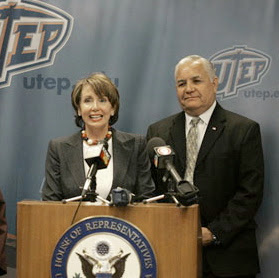
Democrats are now moving, through the use of proposed changes to the technical language on the statute governing executive branch notification of covert operations, to tie the hands of the president and move that power to every member of the two intelligence committees ( vastly enlarging the number of people who know the details of highly sensitive, ongoing, covert operations). This proposal was initiated by Chairman of the House Permanent Select Committee, Rep. Silvestre Reyes (D-TX), a close political ally of Speaker Pelosi: 
Sensitive Covert Action Notifications: Oversight Options for Congress

Legislation enacted in 1980 gave the executive branch authority to limit advance notification of especially sensitive covert actions to eight Members of Congress-the “Gang of Eight”-when the President determines that it is essential to limit prior notice in order to meet extraordinary circumstances affecting U.S. vital interests. In such cases, the executive branch is permitted by statute to limit notification to the chairmen and ranking minority members of the two congressional intelligence committees, the Speaker and minority leader of the House, and Senate majority and minority leaders, rather than to notify the full intelligence committees, as is required in cases involving covert actions determined to be less sensitive.In approving this new procedure in 1980, during the Iran hostage crisis, Congress said it intended to preserve operational secrecy in those “rare” cases involving especially sensitive covert actions while providing the President with advance consultation with the leaders in Congress and the leadership of the intelligence committees who have special expertise and responsibility in intelligence matters. The intent appeared to some to be to provide the President, on a short-term basis, a greater degree of operational security as long as sensitive operations were underway. In 1991, in a further elaboration of its intent following the Iran-Contra Affair, Congressional report language stated that limiting notification to the Gang of Eight should occur only in situations involving covert actions of such extraordinary sensitivity or risk to life that knowledge of such activity should be restricted to as few individuals as possible.In its mark-up of the FY2010 Intelligence Authorization Act, the House Permanent Select Committee on Intelligence (HPSCI) eliminated the Gang of Eight statutory provision, adopting instead a statutory requirement that each of the intelligence committees establish written procedures to govern such notifications. According to Committee report language, the adopted provision vests the authority to limit such briefings with the committees, rather than the President. In approving the provision, the Committee rejected an amendment that would have authorized the Committee Chairman and Ranking Member to decide whether to comply with a presidential request to limit access to certain intelligence information, including covert actions. The rejected provision stipulated that if the Chairman and Ranking Member of each of the intelligence committees were unable to agree on whether or how to limit such access, access would be limited if the President so requested. (Emphasis added by AT)

With Congress considering a possible change, this memorandum describes the statutory provision authorizing Gang of Eight notifications, reviews the legislative history of the provision, and examines both the impact of such notifications on congressional oversight as well as options that Congress might consider to possibly improve oversight.

[emphasis mine] 

The point behind this move is to deter the executive branch from using overt ops in the first place, which suits the objectives of members of Congress philosophically opposed to the IC and historic US foreign policy, but it does not actually *improve* Congressional oversight of the IC. The recent and future loud charges by House Democrats against the CIA are designed to justify this quiet power grab.

These proposed changes are designed to create a situation of arbitrary, conflict-ridden, uncertain yet expanded oversight of covert operations as the House and Senate Committees are likely to write different rules for their members and to disagree on breadth of notification. More people would have knowledge of very sensitive operations (we have to add staffers and key aides told by MoC against disclosure rules) with far less of the accountability for leaks by keeping notification to the “gang of eight”.

It will be much easier for any one member to kill any operation they disapprove of by leaking it with little fear of being caught and needing to make a political defense of their position on the covert operation. Even if a member of Congress is identified as having leaked information about a secret intelligence operation, the chances of being disciplined by the House or Senate are minimal unless the member is highly unpopular with their own party leaders or is enmeshed in another scandal and, thus, disposable. Forget being prosecuted, that will never happen.

No good intentions here, which is why this change was shrouded in committee obscurity by liberal Democratic House leaders rather than shouted by them at a high profile press conference.

Hat tip to AnalyticType.

Two Articles

Friday, July 10th, 2009

Both good but entirely unrelated.

Tom Barnett belts on out of the park at Esquire magazine:

What the Hell Is Really Going Down in Honduras?

….The primary charge was treason relating to Zelaya’s stubborn effort to mobilize popular support, through a non-binding poll, for a constitutional assembly. But the underlying suspicion was that the lame-duck and deeply unpopular (as in, sub-30-percent approval ratings) president was plotting to extend his personal rule with the strong encouragement of his new “oil daddy,” Venezuelan strongman Hugo Chavez, whose well-established blueprint has worked with political protégés elsewhere (e.g., Bolivia’s Evo Morales, Ecuador’s Rafael Correa).

Essentially, this Chavez scenario was a Pandora’s box that Honduras’s political elite refused to open. Why? Because after too many decades of nasty military dictatorship, Honduras, while still quite poor, had managed seven straight civilian transitions thanks to its 1982 constitution. So the Honduran legislature, which had previously ordered Zelaya’s arrest (but not his deportation), promptly voted him out of office and – following the constitution – selected its ranking member, Speaker Roberto Micheletti, as the interim president. Two key points to remember here: Martial law was never instituted, and the national elections, slated for November, are still a go. In effect, Zelaya’s removal from power was an impeachment without trial – a classic rush job that denied him his day in court even as he had already lost his battle with the country’s supreme court and displayed overt contempt for its rulings on his proposed poll.

From the Honduran military’s point of view, their actions broke no law, and since the military never assumed power, calling these events a “military coup” is completely misleading. From America’s point of view, it seems clear enough that Chavez-style politics has its limits, so overreactions are to be avoided. But from a national-security perspective, when your own Drug Enforcement Agency is telling you (as a Bush official did a year ago) that Chavez has become a “major facilitator” of the flow of Colombian cocaine to America, and when there are credible reports that Honduras, under Zelaya, has joined that network as a trans-shipment waypoint, there definitely needs to be some limits to your diplomatic efforts to reinstate this suddenly revered “pillar of democracy.”

I am in full agreement with Tom here about Mel Zelaya, who is the Rod Blagojevich of Latin America as well as a supplicating client of Hugo Chavez. The Obama administration, with the thrust coming from the State Department, has been too supportive of Zelaya’s outrageous behavior in an effort to avoid giving the Latin American left room to blame America for Zelaya’s removal. Now that moment has passed, it is time to distance the US from Zelaya and let him twist in the wind as OAS encouraged negotiations with the legitimate interim government in Honduras drag out for weeks or months

Chris Albon at War & Health has an excellent book review of Before My Helpless Sight (The History of Medicine in Context) by Leo van Bergen:

Leo van Bergen’s book, Before My Helpless Sight, is a history of suffering in World War I, a description the author readily admits: “At the roots of the book lies the question of what can happen to a soldier between the moment he steps onto a train or ship bound for the theatre of battle an the point at which he is evacuated wounded, or whether dead or alive, buried in the ground” (pg. 1). Needless to say, the book is not a light read.

….Van Bergen cannot be criticized on methodology. The book is impressively well researched (and cited), including qualitative and quantitative sources in numerous languages. Apart from the organization of the book itself, you see very little of the author in the pages. Readers are bounced from anecdotal accounts to descriptive statistics with little commentary or fanfare. This is not necessarily a negative, the sources speak for themselves. Their sheer, horrifying weight is ample to progress the book forward.

….However, in the light of the book’s contribution these issues are quickly forgotten. Before My Helpless Sight is a powerful counter to the innumerable discourses on WWI tactics and strategy. Van Bergen pulls back the curtains of glorious offensives and magnanimous generals, revealing the grim, muddy reality of life on the Western Front. It is a story of pus, rats, hunger, dirt, disease and madness. You do not know World War I before reading this book.

More and more, as passing time gives historians greater perspective, the Great War appears as a civilizational turning point for the West on the broad spectrum of human activity. WWI produced, really for the first time, a significant number of horrifyingly disfigured and maimed survivors, who would have perished from their wounds in, say, the Civil War or the Napleonic Wars. John Keegan writes, in his The First World War how postwar European governments resorted to segregating these most unfortunate of war invalids away from the eye of their publics and being at a loss how to deal with those soldiers  mentally shattered by “shell shock”, what we now recognize as PTSD.
Modern war as an industrial, mass-synchronized, 2GW meat grinder was so awful that the West turned to all kinds of stratagems to avoid a repeat of the Western Front – from political pacifism, isolationism and maginot lines to political revolution, blitzkrieg  tactics and technological innovations like the tank or airplane. None of them were a complete answer to the horrors born in 1914.

Strategic Communication, Science, Technology

Wednesday, July 8th, 2009

Blogfriend Matt Armstrong had an important post regarding The Strategic Communication Science and Technology Plan, April 2009. An excerpt:

The plan describes current efforts within the Department of Defense, the military services, the combatant commands and other agencies on SC. In total, these efforts could be linked together to form the foundation of an S&T thrust area for strategic communication. The report also includes a macro-analysis of capability gaps not being addressed by ongoing initiatives and lays out potential areas for future S&T investment.

While the request for the plan itself represents recognition from Congress that SC plays a critical role in the public and private response to current and emerging threats, it also highlights that there is much research and development already underway and many tools available to increase the government’s effectiveness in global engagement. The rub today is the need for strong leadership and coordination to ensure: 1) awareness of the long list of capabilities; 2) incorporating these capabilities into plans; and 3) participation by stakeholders across the US government, NGO’s, industry, and private citizens.

The S&T plan sorts current efforts into the following categories:

  • Infrastructure: Enabling and facilitating access to information from news to markets to vocational
  • Social Media: Knowledge Management, Social Media, and Virtual Worlds
  • Discourse: Analysis of radical and counter-radical messages and ideas
  • Modeling and Forecasting: Gaming and anticipating adversarial messages and ideas as well as our counters and pre-emptive measures
  • Collaboration: Increasing collaboration and training across and beyond Government
  • First Three Feet: Empowering, Equipping, Educating, and Encouraging media and others to exist and freely report on events for what they really are
  • Understanding: Develop country, culture, and regional expertise, including polling
  • Psychological Defense: Planning and capacity building for dealing with critical strains on society in peacetime and wartime

The interesting thing here for me is that “strong leadership” is lacking because the people spread across and outside government who have the shared awareness of technology, social media and national security at a level of sophistication where they could actually craft a strategic communication policy, are usually many levels removed from the appointee policy deciders for whom these variables are (usually) fuzzily understood.

To use an analogy, the chefs are valet parking cars outside while trying to get the manager of the restaurant to acknowledge their recipes. Or, maybe that there should be cooking going on in the kitchen if they want to have any customers. Or that the business is, in fact, a restaurant and not a nicely organized room full of tables.

Book Review: Engaging the Muslim World by Juan Cole

Wednesday, July 8th, 2009

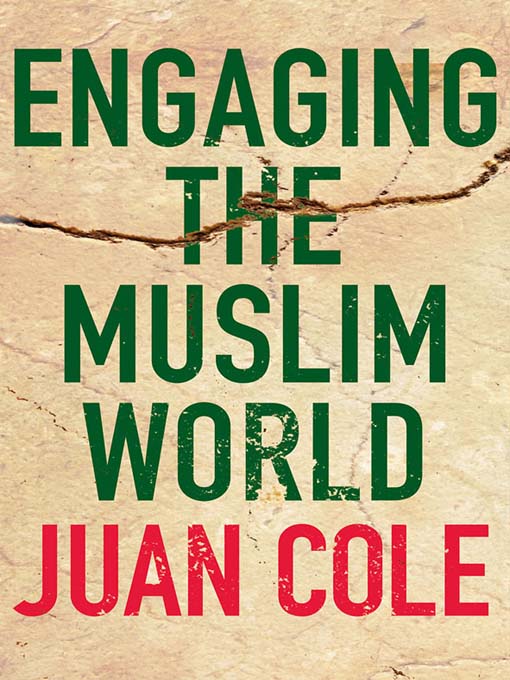
Engaging the Muslim World by Juan Cole

I recently finished reading Engaging the Muslim World by Juan Cole, the influential academic, well known liberal-left blogger of Informed Comment, past president of the Middle East Studies Association and occasional media talking head. Cole has written an intriguing book on contemporary foreign policy that is of special interest to those readers concerned with public diplomacy, the Muslim world, terrorism and the domestic politics of American foreign policy, particularly the war in Iraq. I will state straight off that there are arguments in this book presented by Cole that I profoundly disagree with, or, national security related assertions that I consider questionable; but in other instances, when Cole is concentrating on the nuances of the Arab-Muslim world’s political-cultural lens, he is an illuminating and insightful analyst from whom I have learned new things. 

Engaging the Muslim World is…well….engaging. I found Cole’s prose flowed smoothly, as if the author was talking to the reader across a table, and I had a hard time putting the book down, albeit I was frequently scribbling furiously in the margins. This is a polemical -policy book written by an academic for a lay audience and the reader’s reaction to Engaging the Muslim World will depend in part on their own worldview. Liberals will cheer more than they disagree with Cole, while conservatives and supporters of Israel are likely to reject many of the book’s normative assumptions long before they read the conclusions – but Cole also offers some prescriptive advice that center-right COIN and public diplomacy advocates will warmly embrace.

The book  is divided into six chapters. The first, “The Struggle for Islamic Oil:The Truth About Energy Independence” which deals with energy markets, the Cold War history of the Mideast, global warming, environmental policy, alternative fuel technologies and globalization, is a necessary effort to concisely account for the geoeconomic importance of Muslim oil producing states and the future of fossil fuel economies.  Cole argues – correctly, I suspect – that there will be no short or medium term substitutes for oil and gas until solar power technology is cost-efficient enough (and efficient in a physics sense) to compete with fossil fuels in the marketplace. Not being a scientist or an expert in energy market issues, I am poorly placed by professional background to evaluate Cole’s claims in these areas and will leave those to others.

That said, chapter one remains the odd man out. It smacks of having been  compacted by an editor out of two or more chapters and consequently has disparate issues jumbled together with insufficient explanation; as a whole, chapter one fits uncomfortably with the subsequent chapters which flow together naturally and thematically. On the other hand, the topic of oil can hardly be dispensed with either in a geopolitical discussion of the Mideast, so Cole was right to tackle it and the primary problem is really one of sequence, not subject matter.

Chapters two through six are the heart of Engaging the Muslim World, where Juan Cole articulates a theme of “Islam anxiety” permeating Western, particularly American, media and public opinion. Poorly informed about even the most basic information regarding the Muslim world, such as the differences between Shia and Sunnis, secular Baathist nationalists and Islamist radicals, quietists and the politically militant, Arabs and non-Arabs, Cole asserts that Westerners tend to lump Muslims of all shades of political belief, religiousity and nationality into a homogenous, vaguely mysterious but ever dangerous entity. Cole cites as one example, Egypt’s Sunni Muslim Brotherhood, which has foresworn violence and has members who sit in Egypt’s legislature, being lumped uncritically by American commentators with al Qaida and Hezbollah (which is a radical Shiite group).

A better way to understand violent Islamist extremists in relation to normal Muslims, in Cole’s view, would be to see them as analogous to our homegrown, violent, far-Right, white racist underground that produced Timothy McVeigh, who carried out the Oklahoma City bombing or as cult-like movements. While smaller in size than Islamist radicalism, the racist Right shares with violent Islamists the trappings of a fringe, ostracized, quasi-religious, political cult with a conspiratorial worldview that diverges sharply from the nation’s mainstream religious life. Violent Islamists often make themeslves as unpopular with their co-religioinists as do neo-Nazi extremists here, through actions that horrify society, such as the bloody massacre of Western tourists and Egyptian workers at  Luxor, Egypt.

Cole’s analogy with cults and racial extremists I think is a useful one. Radical Islamists are difficult to classify on a traditional political spectrum as their political behavior has definite similarities with those of the fascist and communist totalitarians of the 20th century, but will not fit smoothly with either, given Islamist religious extremism and the fanatical atheism or at least radically secular nature of the Bolsheviks and Nazis. The psychological overlap however is certain, something akin to the 19th century Anarchist-terrorists or what Eric Hoffer captured in his classic work, The True Believer.

On Israel and Iran, Cole bends over backwards, like a circus sideshow contortionist, to try and explain the lunacy (and Cole admits it is, at best, a crackpot worldview) of Ahmadinejad’s violently antisemitic statements about the Holocaust and Iran’s generally defiant behavior toward the international community while giving Israel no similar benefit of the doubt.  Cole argues that Ahmadinejad’s oft-stated “wipe Israel off of the map” is a deliberate mistranslation by the Western media. Ok, possibly so. I do not speak Farsi, so I’ll take Cole’s word here. If it is the case though, Ahmadinejad is well aware of how his repeated statement is being mistranslated by Reuters and AP, yet he keeps using it. Again and again. That is an ominous statement in itself.

This uneveness regarding Iran and Israel will no doubt enrage conservatives and delight progressives, but in fairness to Juan, I must say that despite his partiality toward Iran in his book, as a blogger he was very quick to denounce the obvious stealing of the recent election by Khameini-Ahmadinejad-IRGC and my perception is that Cole views the apocalyptic Mahdist tendency in Twelver Shiism that Ahmadinejad embraces as a kooky deviation from mainstream Shiism. That not just Ahmadinejad holds this belief dear, but also many influential figures in the Iranian security apparatus as well, is in my view, a cause for alarm.

Despite his politics, Cole concludes Engaging the Muslim World with a very pragmatic prescription for American public diplomacy for engaging Arabs and Muslims in a more effective manner than in the past eight or eighteen or eighty years. If I do not agree with every aspect, it is a good deal better than what the State Department and the rest of the USG is doing now:

Once I saw an Iraqi tribal leader interviewed on al-Jazeera. He said. “There is good and bad in America”. I was struck by how pragmatic and realistic his response was, and how different it was from so much of the fundamentalist vigilantee propaganda about the United States posted on radical internet bulletin boards. If Washington could reach out to all Muslims and bring them around to a more nuanced -and clear-view, in which America was not simply demonized, it would be a major accomplishment. The point is not that they should see the West through rose colored glasses, but that they should be willing to see the good and bad.

That would represent a step up by an order of magnitude.

Recommended Reading

Tuesday, July 7th, 2009

Top Billing! SWJRobert S. McNamara Dies at 93 and Information Counterrevolution by Adam Elkus.

Robert Strange McNamara was a seminal and highly controversial figure of the 1960’s who managed the unusual feat of being wrong on both sides of the Vietnam War issue. Aside from Vietnam, admittedly a very large event to set aside, McNamara had a transformative impact on the Pentagon as Secretary of Defense for both good and ill.  SWJ has an uber-round up on McNamara’s death and legacy.

Adam has a sharp analysis of social media tech and their uses or abuses during recent political upheavals, that goes against conventional wisdom. Take a look!

Outside the Beltway (Dave Schuler)- Is the World Smiling Back?

Dave gets to the heart of the problem that bedevils what passes for foreign policy analysis by most Americans – an egocentric belief that the US is the prime mover in the world and all other states simply react to what have done, are doing, will or will not do. That isn’t the case. As Dave illustrates with Russia, most states with any appreciable leverage and resources pursue their own interests – generally with greater focus and consistency than the United States can muster.

Scientific AmericanAre certain genders or body types better at the art of persuasion?

I’ll say.

Bruce KeslerVietnam Views Confuse Iran-Iraq Views and I’m A Lesbian

Bruce’s posts range from the seriously analytical to the bitingly polemical to those that are amusing, so I thought I would give you a couple of examples for the newer readers yet unfamiliar with Mr. Kesler ( who is not actually a lesbian BTW).

HNN –  Stalin’s Wars: An Interview with Professor Geoffrey Roberts

This one is a must read in a car crash sense. Professor Roberts is deeply invested in the steeply uphill – and most likely ideologically motivated- project of rehabilitating the historical reputation of Soviet dictator Joseph Stalin through an examination of Stalin as the warlord of the  20th century ( an intriguing perspective, and overdue). I have yet to read his book, Stalin’s Wars: From World War to Cold War, 1939-1953 , but from the buzz and this interview I’d say it’s a fascinating mix of getting some angles insightfully correct while being horrifyingly and disengenuously wrong on the bigger picture.


Progressive Historians (AndrewMc )What The Fourth of July Means

A. is right. I fear what might happen if the Constitution were put up for a vote today. In toto it might pass muster with approval in the low 50 % zone. If we went article by article, amendment by amendment, for voter approval, most of it would be voted down by large majorities of shortsighted partisans and ignorant, drive-by voters. I suspect that even the almost sacred 1st amendment, the touchstone of American liberty, might be a close call.

Does social complexity cause people to adapt and become smarter?  Hat tip to Andrew Sullivan.

Foreign PolicyThe Death of Macho

Twitteramigo Reihan Salam is wrong by about – I will wager – 180 degrees. Results of trends here in the medium term are likely counterintuitive and potentially nasty, if the trends are accurate.

That’s it.


Switch to our mobile site