zenpundit.com » politics

Archive for the ‘politics’ Category

Lexington Green and the Glenn Beck Show

Friday, September 3rd, 2010

My fellow Chicago Boyz blogger and co-author, Lexington Green, has hit the big time – as a story on the nationally broadcast Glenn Beck Program . Having written an incisive post on the strategic Boydian aspect of Beck’s recent rally at The Lincoln Memorial, Lex today discovered that his analysis would be read on the air by Beck himself:

Glenn Beck: This guy gets it

GLENN: All right. So this guy, Lexington Green, I’m assuming that’s not his real name, writes in Chicagoboyz.net: I think I see what Glenn Beck is doing.

I think this is the only guy that really gets it. The Glenn Beck rally is confusing people. Why? He is aiming far beyond what most people consider to be the goalposts. Using Boyd’s continuum for war, which, you are all for that one, right, Pat?

PAT: Sure. Boyd’s continuum? How many times have we talked about Boyd’s continuum?

GLENN: Okay. Well, let’s make it once. Material, intellectual, and moral. He is using for political change elections, institutions and culture. Beck sees correctly that the conservative movement has only had limited success because it’s good at Level 1, the elections, for a while. Weak at Level 2, institutions. And barely touched Level 3, culture. Talk radio and the tea party are Level 3 phenomena, popular outbreaks which are blowing back into politics. Someone who asks what the rally has to do with the 2010 election is missing the point. Beck is building solidarity and cultural confidence listen to this. This is it.

PAT: A smart guy…..

Agreed. 

Read the rest of the transcript or listen to the audio here.

I have never watched Glenn Beck on TV, except a brief snippet of his interview with Sarah Palin, but as a major media personality, it was very gracious of him to reach out and acknowledge Lexington Green. That level of exposure is something that has been a long time coming for Lex, and IMHO, it is richly deserved.

Having gotten to know Lex in the last few years well enough to call him a friend, and having been a guest a number of times at his book-lined home, I can attest that Lex’s keen intellect and depth of knowledge gives his writing the cultural verve that deserves a larger audience than our humble corner of the mil/strategy blogosphere. He’s one of those small minority of bloggers toiling out there who has the right stuff to play at a much higher level.

Congrats Mr. Green!
The Metacognitive Deficit is Symptomatic of an Epistemological Problem

Tuesday, August 31st, 2010

WARNING: RANT AHEAD! 

NYT Columnist David Brooks (via Metamodern):

A Case of Mental Courage

….Burney’s struggle reminds one that character is not only moral, it is also mental. Heroism exists not only on the battlefield or in public but also inside the head, in the ability to face unpleasant thoughts.

She lived at a time when people were more conscious of the fallen nature of men and women. People were held to be inherently sinful, and to be a decent person one had to struggle against one’s weakness.

In the mental sphere, this meant conquering mental laziness with arduous and sometimes numbingly boring lessons. It meant conquering frivolity by sitting through earnest sermons and speeches. It meant conquering self- approval by staring straight at what was painful.

This emphasis on mental character lasted for a time, but it has abated. There’s less talk of sin and frailty these days. Capitalism has also undermined this ethos. In the media competition for eyeballs, everyone is rewarded for producing enjoyable and affirming content. Output is measured by ratings and page views, so much of the media, and even the academy, is more geared toward pleasuring consumers, not putting them on some arduous character-building regime.

In this atmosphere, we’re all less conscious of our severe mental shortcomings and less inclined to be skeptical of our own opinions. Occasionally you surf around the Web and find someone who takes mental limitations seriously. For example, Charlie Munger of Berkshire Hathaway once gave a speech called “The Psychology of Human Misjudgment.” He and others list our natural weaknesses: We have confirmation bias; we pick out evidence that supports our views. We are cognitive misers; we try to think as little as possible. We are herd thinkers and conform our perceptions to fit in with the group.

But, in general, the culture places less emphasis on the need to struggle against one’s own mental feebleness. Today’s culture is better in most ways, but in this way it is worse

True, and kudos to David Brooks for calling attention to the deficit in metacognition. However, I suspect that there is more to this phenomena than decadence, ADHD and a handy internet connection. There’s a problem with our epistemology. To be specific, a common epistemological standard is fading from American life, giving license to demagogues and emboldening fools.

There are many possible causes. The decline of critical thinking, logic, history and science in the curricular standards of American public schools; the disappearance of liberal education and the excesses of postmodernism, deconstructionism, constructivism and crit theory in our universities; the dumbing down of the MSM into 7 second sound bite infotainment and partisan agitprop; political correctness and its fetishes of race and gender victimization and witch-hunting; the growing legitimization of magical thinking inherent in religious fundamentalism and secular equivalents in irrationality like “deep ecology” or crackpot conspiracy theories. All of these and more have combined to erode standards of public discourse to an ever lower common denominator.

John Adams once argued before a Massachusetts jury that “facts are stubborn things”. Today it is unlikely that such an appeal would work. Not only do many people believe that they are entitled to their own set of “facts” but that they can, if they wish, dispense with facts entirely, yet self-righteously insist that their deliberate ignorance should be given the same weight as an informed argument because they “have a right to their opinion” without anyone daring to ask them why they are so morally and intellectually retarded.

Where once intellectual embarrassment prevented outright lies or inane arguments from being made in respectable forums, the popular deference to the dignity of cranks puts tin-foil hatters and their OCD political convictions about Bush orchestrating 9/11 or Obama being a secret Muslim in the center of public debate instead being confined to off-center mimeographed pamphlets passed out at airports by glassy-eyed true-believers. We feel compelled as a society to politely entertain drivel that should never have been heard past a kitchen table with a three quarters empty bottle of whiskey on it.

The country needs to regain a common intellectual ground that eschews nonsense for what it is.

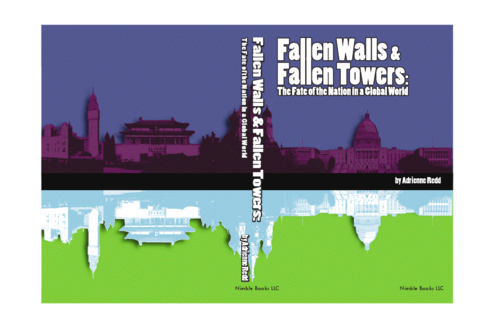
Fallen Walls and Fallen Towers by Adrienne Redd

Monday, August 30th, 2010

redd.png

Fallen Walls and Fallen Towers: The Fate of the Nation in a Global World by Adrienne Redd

I “met” Dr. Adrienne Redd some years ago through the kind offices of Critt Jarvis, which resulted in a wide-ranging and intermittent email discussion, sometimes joined by John Robb and others, of “virtual states”, “virtual nations”, “micropowers” and evolving concepts of sovereignty and statehood in international relations. It was an intellectually stimulating conversation.

Today, Dr. Redd is Nimble Books’ newest author, and she has just sent me a review copy of Fallen Walls and Fallen Towers, the culmination of approximately seven years of research and writing.  Redd investigates nothing less than the “fate of the state” and I am looking forward to reading her argument in detail.

To be reviewed here soon….

Grand Strategy and Morality II.

Tuesday, August 24th, 2010


After I wrote the post Grand Strategy and Morality, blogfriend T. Greer had a serious objection:

Grand Strategy, I submit, does not provide us with a moral purpose. Rather, grand strategy is the means we use to satisfy the demands of this purpose. You cannot have grand strategy without the purpose – but they are not one and the same. Purpose transcends individual statesmen. It is the work of peoples, not politicians. As I state later in the piece:

Greer cites his erudite essay on the subject, Dreaming Grand Strategy for the full explanatory argument ( here is Greer’s excerpt but you should read the whole thing):

In  Manifest Destiny and Mission in American History Frederick Merk states that the defining feature of the American polity has been its “sense of mission.” Americans, says he, have always been invested in the idea that their Republic served a great purpose. They could never delegate their destiny to the realpoliticking of the upper echelons of power. In times of crisis it is this sense of of purpose that has sustained the Republic, and in achieving national goals it is this sense of purpose that has acted as the unconscious guide of American statesmen and citizens alike. Strip away America’s mission, and you have stripped away America. And in doing so you have stripped away our grand strategy as well.

You will be hard pressed to find a strategy articulated and pursued by American statesmen that was not embedded in a larger sense of American purpose. The isolationism of the early 1800s was rooted in the conviction that America was creating “an Empire of Liberty”, untouched by the despotism of the old world. 50 years later the nation fulfilled its “Manifest Destiny” to “Extend the Area of Freedom” by expanding to the Pacific coast. Before Roosevelt could put “Germany First”, he needed to declare that his country was “The Arsenal of Democracy”.  Kennan’s policy of containment was reliant on the assurance that America was the true and only “Leader of the Free World.”

Phrases like “Manifest Destiny” and “Arsenal of Democracy” were not merely the rhetorical flourish used by canny politicians to justify the exercise of power. They were the reason power was exercised in the first place. These phrases were, in essence, bit-sized distillations of the mission and purpose Americans claimed for their nation. Containment only worked because the American populace believed that it was America’s mission to act as the Leader of the Free World. Cold War grand strategy was an outgrowth of this mission – a means to maintaining the mission’s end.

Purpose provides America with a vision. It prioritizes our interests, informs us of our enemies, and tells us what position we seek to hold on the international scene. A nation without a purpose is a nation without a grand strategy to achieve it.

I’m very sympathetic to much of what is in this post at Scholar’s Stage because we are grasping toward the same point: the relationship between grand strategy and moral purpose. Having reflected on T.Greer’s argument and my own prior post, here is my response:

  • While moral purpose is a constant variable in grand strategy generally, in specific historical cases it’s importance will vary significantly.
  • At times, Greer is right that grand strategy is embedded in a prexisting moral purpose. I certainly agree that that civilizational values and mores govern the nature of the grand strategies that societies will construct.
  • Greer’s essay, albeit persuasive, is too American-centric. The US among a handful of nations ( France, the former USSR, Imperial Japan, etc.) that requires a more explicit and rhetorically robust moral-ideological justification for a grand strategy than is typical. Some states only need a grand strategy that does not flagrantly contradict national moral principles, while other states require a grand strategy that champions them. Americans want America to be the “Citty on a hill”; others just want their country to survive with honor.
  • At other times, when realpolitik reigns, a successful grand strategy can ignite or act as a catalyst for a resurgence of moral purpose rather than be driven by it. Bismarck’s successful articulation of grand strategy went against prevailing elite opinion in the German states that was weighted heavily against Prussian domination of a united Germany, the military arguments of von Moltke’s grossgeneralstab and the preferences of Bismarck’s own monarch, King Wilhelm of Prussia. Bismarck’s wars of choice against Denmark, Austria-Hungary and France made Wilhem Kaiser and unleashed a ferocious dynamism of German nationalism whose consequences were to shake the world. 

My preference would be for strategic theory to be neat and clean, but history is a messy business.

Armstrong on “Making American Public Diplomacy Safe for Americans”

Tuesday, August 3rd, 2010

Blogfriend and public diplomacy expert Matt Armstrong of MountainRunner has a new op-ed at World Politics Review:

Reforming Smith-Mundt: Making American Public Diplomacy Safe for Americans

American public diplomacy has been the subject of many reports and much discussion over the past few years. But one rarely examined element is the true impact of the Smith-Mundt Act of 1948, which for all practical purposes labels U.S. public diplomacy and government broadcasting as propaganda. The law imposes a geographic segregation of audiences between those inside the U.S. and those outside it, based on the fear that content aimed at audiences abroad might “spill over” into the U.S. This not only shows a lack of confidence and understanding of U.S. public diplomacy and international broadcasting, it also ignores the ways in which information and people now move across porous, often non-existent borders with incredible speed and ease, to both create and empower dynamic diasporas.

The impact of the “firewall” created by Smith-Mundt between domestic and foreign audiences is profound and often ignored. Ask a citizen of any other democracy what they think about this firewall and you’re likely to get a blank, confused stare: Why — and how — would such a thing exist? No other country, except perhaps North Korea and China, prevents its own people from knowing what is said and done in their name.

But in hiding from the public, Congress, and even the rest of the government what the U.S. government says and does abroad, this imaginary separation between foreign and domestic audiences reduces awareness of the State Department’s effectiveness (as well as that of USAID and the Millennium Challenge Corporation), increases the cost of engagement while decreasing overall effectiveness, and limits accountability. Its negative impact on the State Department, in particular, helped propel the militarization of U.S. public diplomacy, as the Defense Department stepped in, clumsily, to fill gaps left by ineffectual or absent civilian efforts. Overall, Smith-Mundt is a lose-lose scenario for the American public and people around the world.

Read the rest here.


Switch to our mobile site

