zenpundit.com » Perception

Archive for the ‘Perception’ Category

None Dare Call it a Rogue State

Wednesday, December 9th, 2009
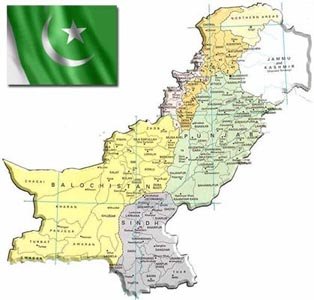
 

Reader Isaac, points to an excellent analytical overview of Pakistan’s national nervous breakdown at Dawn.com, by Nadeem F. Paracha. It is a lengthy but stupendous post with some 200 + comments:

Little monsters

There is nothing new anymore about the suggestion that over a span of about 30 odd years, the Pakistani military and its establishmentarian allies in the intelligence agencies, the politicised clergy, conservative political parties and the media have, in the name of Islam and patriotism, given birth to a number of unrestrained demons which have now become full-fledged monsters threatening the very core of the state and society in Pakistan.

A widespread consensus across various academic and intellectual circles (both within and outside Pakistan), now states that violent entities such as the Taliban and assorted Islamist organisations involved in scores of anti-state, sectarian and related violence in the country are the pitfalls of policies and propaganda undertaken by the Pakistani state and its various intelligence agencies to supposedly safeguard Pakistan’s ‘strategic interests’ in the region and more superficially, Pakistan’s own ideological interest.

….The 1980s and the so-called anti-Soviet Afghan jihad is colored with deep nostalgic strokes by the Islamists and the military in Pakistan. Forgetting that the Afghans would have remained being nothing more than a defeated group of rag-tag militants without the millions of dollars worth of aid and weapons that the Americans provided, and Zia could not have survived even the first MRD movement in 1981 had it not been due to the unflinching support that he received from America and Saudi Arabia, Pakistani intelligence agencies and its Afghan and Arab militant allies were convinced that it was them alone who toppled the Soviet Union.

The above belief began looking more and more like a grave delusion by the time the Afghan mujahideen factions went to war against one another in the early 1990s and Pakistan was engulfed with serious sectarian and ethnic strife. But the post-1971 narrative that had now started to seep into the press and in many people’s minds, desperately attempted to drown out conflicting points of views about the Afghan war by once again blaming the usual suspects: democracy, secularism and India.

Many years and follies later, and in the midst of unprecedented violence being perpetrated in the name of Islam, Pakistanis today stand more confused and flabbergasted than ever before.

The seeds of the ideological schizophrenia that the 1956 proclamation of Pakistan being an ‘Islamic Republic’ sowed, have now grown into a chaotic and bloody tree that only bares delusions and denials as fruit.

Read the rest here.

There has been an ocean of ink spilled about the Obama administration’s Hamlet-like deliberation over a war strategy for Afghanistan and on the implications of agreeing to 30,000 rather than the 40,000 new troops for the “Afghan Surge”, as Gen. McChrystal had originally requested. The 10,000 difference in boots is not the salient strategic point, though it is the one that excites political partisans on the Right, Left and anti-war Far Left. It also distracts us from debating our fundamental strategic challenge.

The horns of our dilemma is that our long time “ally” whom we have hitched ourselves to in a grand war effort against revolutionary Islamist terrorism is not our ally at all, but a co-belligerent with our enemy. By every policy measure that matters that causes the United States – justifiably in my view – to take a tough stance against North Korea and Iran, applies in spades to Islamabad. Yet none dare call Pakistan a rogue state.

It is the elephant in our strategy room – if the elephant was a rabid and schizophrenic trained mastodon, still willing to perform simple tricks for a neverending stream of treats, even as it eyes its trainer and audience with a murderous kind of hatred. That Pakistan’s deeply corrupt elite can be “rented” to defer their ambitions, or to work at cross-purposes with Pakistan’s perceived  “interests”, is not a game-changing event. Instead, it sustains and ramps up the dysfunctional dynamic we find ourselves swimming against.

We play a bizarre game, our leaders being more concerned about Pakistan’s “stability” than Pakistan’s own generals and politicians who egg on, fund and train the very militant Islamist groups spreading death and chaos inside Pakistan and beyond its borders. Why can we not find Osama bin Laden or Mullah Omar ? Because they are high value clients of the ISI which is no more likely to give them up than the KGB was to hand over Kim Philby.  

Until America’s bipartisan foreign policy elite grapple with the fact – and it is an easily verifiable, empirical, fact – that Pakistan’s government is in chronic pursuit of policies that destabilize Central Asia, menace all of Pakistan’s neighbors, generate legions of terrorists and risk nuclear war with India, no solutions will present themselves.

A strategy will only have a chance of success when it is grounded in reality.

Analysis of the Hasan Slide Presentation: Cameron at SWJ

Sunday, November 15th, 2009

Charles Cameron has been guest blogging here on radical Islamism and his last post was a preliminary look at the powerpoint presentation of Major. Nidal Malik Hasan, the shooter in the Ft. Hood massacre.  Charles promised a follow-up here but his next “post” that he submitted was a scholarly, 10,000 word, magnum opus!  We quickly decided that SWJ was a better venue for a doc of such a magnitude and Dave Dilegge took care of the rest.

I’ve read the paper twice. It’s a tour de force.

The Hasan Slide Presentation

Download the full article: The Hasan Slide Presentation (PDF)

There is no place as private as the interior of a human skull: the mind remains inviolate.

Words can reveal some of what goes on inside us, actions can speak some of our intents and passions forcefully, at times explosively. And yet there is no place more secret — and what a hint, a phrase, a gesture, a speech or an explosion cannot reveal, what even the best forensic examination can only label a probability, is the complex interweaving of thoughts half thought, doubts entertained, emotions pushing on through, and clashing, building at times to a perfect storm perhaps, with all doubts and constraints cast aside and the emotions unleashed in a blind and defining moment.

Major Nidal Malik Hasan MD MPH, a psychiatrist in the U.S. Army, has now been charged with multiple specifications of premeditated murder in the mass shooting at Fort Hood, under Article 188 of the Uniform Code of Military Justice.

Assuming that Major Hasan was in fact the shooter at Fort Hood and that, as alleged, he shouted “Allahu Akbar” during the event, the main question of fact and interpretation now would be whether Hasan was more an introvert under pressure whose “break” took the jihadist cry “Allahu Akbar” as its outlet, or a patient and long-standing lone wolf jihadist of the sort abu Musab al-Suri calls for (Jim Lacey, A Terrorist’s Call to Global Jihad, p. 19), or a wannabe with failed or actual al Qaeda connections, or an al Qaeda or related “soldier” under orders.

This analysis attempts to provide some leads in that inquiry, by a careful reading of the only substantial documentation we have from Major Hasan himself, which may throw light on his trajectory.

Guest Post: Speak the Languages, Know the Modes of Thought

Wednesday, November 4th, 2009

Charles Cameron, who has appeared here before, is the former Senior Analyst with The Arlington Institute and Principal Researcher with the Center for Millennial Studies at Boston University. He specializes in forensic theology, with a deep interest in millennial, eschatological and apocalyptic religious sects of all stripes.

Charles will be doing a new series of posts here at Zenpundit that will drill down into the important but often elusive religious-cultural connections that impact American national security and foreign policy issues.

Very pleased to have him aboard:

SPEAK THE LANGUAGES, KNOW THE MODES OF THOUGHT:

by Charles Cameron

SSgt. David Flaherty, currently deployed as the Zabul Provincial Reconstruction Team’s public information officer, is to be congratulated on speaking Pashto. But Wireds Danger Room comment, “The fact that this is considered newsworthy and exceptional — a U.S. military officer speaks one of the official languages of Afghanistan! — doesn’t reflect well on the national commitment to Afghanistan” is also to the point.

A couple of other recent items in the news about languages and translation at home and abroad should concern us.A report from the US Department of Justice on the FBI’s Translation Project was less than enthusiastic, not only finding that significant quantities of material collected in the Bureau’s highest-priority counter-terrorism and counter-intelligence collection categories were never evaluated, but that the number of translators inn the FBI pool had diminished since a 2005 audit, that in 2008 the FBI met its hiring goals for linguists in only 2 of its 14 critical languages, that security clearance and language proficiency training for a new linguist took 19 months before hiring could take place, and that 70 percent of the FBI’s own linguists in the field offices tested did not attend the FBIs required training course.

And retired and renowned Marine colonel Thomas X. Hammes was quoted in a recent piece on CBC News about allegations of “botched” translations in the Afghan theater leading NATO troops to faulty conclusions as saying, “We’re willing to spend hundreds of millions of dollars to make sure ice cream and steak is there, and I would trade all of that for my entire tour if I could have one decent translator. Many times I’d trade body armor for a translator.”I want to suggest, though, that there is another aspect to this business. I was reminded of it when reading the FBI complaint against Luqman Ameen Abdullah and others connected with the recent events in Detroit. The complaint includes the phrase, “Abdullah also said that thegovernment plots and plans against them so they need to plot and plan in return”. The complaint doesn’t mention it, but that’s an echo of the words of the Qur’an, 8.30:

 “And when those who disbelieve plot against thee (O Muhammad) to wound thee fatally, or to kill thee or to drive thee forth; they plot, but Allah (also) plotteth; and Allah is the best of plotters.”

What this suggests to me is that we need to be able to speak / read not only spoken or written languages of our sources, suspects, informants and opponents — but also the language or underlying logic of their thought. A close reading of the Detroit complaint’s text in association with that of the Qur’an gives us an understanding that Abdullah views his plotting as aligned with Allah’s. This in itself may not seems surprising, but it suggests a manner of reading that may prove fruitful in other occasions, and that’s the point I want to make.

Whatever the merits of the particular case of Luqman Abdullah — and I note that some respected analysts have their questions about that — it will be found to hold true in general that jihadist thought moves along Qur’anic pathways as surely as jihadist behavior parallels the behavior of Mohammed. A keen awareness of both will thus allow us to understand where the touching of familiar chords is most apt to stir the hearts of fellow believers, and hence strengthen the bonds of community and dedication between them.

When bin Laden retreated to the caves of Tora Bora, he was following in his Prophet’s footsteps, as Lawrence Wright masterfully showed in *The Looming Tower*. His spoken words often follow Qur’anic precedent in much the same way.Bin Laden’s address to the US just before the 2004 elections was a case in point for me. I read three translations (CNN, MEMRI, Al-Jazeera), none of which included the Qur’anic citation that headed the whole thing, and figured out what it must be from the repeated echoes in the text, notably “and just as you lay waste to our Nation, so shall we lay waste to yours”.

That put me very strongly in mind of Qur’an 2.194:

“For the prohibited month, and so for all things prohibited, there is the law of equality. If then any one transgresses the prohibition against you, transgress ye likewise against him. But fear Allah, and know that Allah is with those who restrain themselves.”

Okay, I could figure out that bin Laden had this passage in mind as I read the transcripts of his address — but it wasn’t until I saw ABC’s transcript that I could confirm that Bin laden did indeed reference that verse directly.

Which powerfully reinforces the idea that bin Laden views his jihad against the US in terms of measured reciprocity — a notion which should give us pause every time we take an action which we would not choose to have taken against us…

And how good are we at this kind of “reading in parallel” — both abroadand at home?

To return to the Detroit affair, as UCLA’s Jean Rosenfeld pointed out, the NYT report on the event contained the phrase “a faction of a group called the Ummah, meaning the Brotherhood” — a completely misleading
translation which might suggest ties with the Egyptian “Muslim Brotherhood” — when the plain meaning of “Ummah” is the transnational community of Muslims. The New York Times is our newspaper of record.

The Times, in turn, was likely paraphrasing the FBI’s own press release, which speaks of “part of a group which calls themselves Ummah (‘the brotherhood’)”. It’s notable, though, that there is no mention of the
“brotherhood” in the entire 45 pages of the actual FBI complaint,
written by those more closely involved with the investigation.

What the complaint itself does say is that the name “Ummah” was used as a cover for the movement’s real name, the “Dar-ul-Islam Movement“.

Okay, that’s a beginning…

And still our transcriptions of jihadist messages all too often omit religious content. Indeed, when the Joint Forces Command asked Jim Lacey to edit abu Musab al-Suri’s massive Call to Global Islamic Resistance for publication in English translation, he (rightly) produced a condensed version, but (wrongly, IMO) “also removed most of the repetitive theological justifications undergirding” al-Suri’s project.

[ Zen  ed.  Note: copy released to general public as A Terrorist’s Call to Global Jihad: Deciphering Abu Musab al-Suri’s Islamic Jihad Manifesto by Jim Lacey]

Lacey’s work is still a significant contribution, as I intend to detail in an upcoming review. But the omission of almost all trace of al-Suri’s significant messianic-Mahdist content, as you’d expect, leaves me wincing.

We need to be able to “read” jihad — this really shouldn’t need saying, eight years after 9/11, ten after Nairobi and Dar — against its Islamic background.

Always.

The Handbook of 5GW

Sunday, October 25th, 2009

Is coming.

Social Media as a Paradigm Shift

Saturday, August 29th, 2009

Hat tip to Critt Jarvis, social entrepreneur, conversational catalyst.


Switch to our mobile site

