zenpundit.com » media

Archive for the ‘media’ Category

A draft of what’s on my mind lately

Sunday, December 5th, 2010

by Charles Cameron
[ cross-posted from ChicagoBoyz ]

I’ve been thinking…

*

Reports, overstatements and underestimates

There are factual reports of violence and threats of violence, which are within the proper province of journalism and intelligence gathering.

There are also overstatements of such reports, generally resulting from paranoia, hatred, recruitment, or the desire to increase sales of advertising or munitions.

And there are understatements of such reports, generally resulting from sheer ignorance or a desire to be diplomatic.

*

Religious sanctions for violence

Similarly, there are factual reports of sanctions for violence in the scriptures, hagiographies and histories of various religions.

There are also overstatements of such reports, attributing to entire religions the beliefs and or activities of a significant subsection or outlier group of that religion

And there are understatements of such reports, avoiding the attribution of violence to religious beliefs regardless of whether the religious correlation is a “cover” for other motives or a sanction powerfully affecting the actions of those who respond to it.

*

Proportional and disproportionate responses

There are actions which represent a balanced and proportional response to threats or acts of violence, whether they be made at home or abroad, by the military or law enforcement, for reasons of just war or of security.

There are actions which present an unbalanced and disproportionate heightened response to acts of violence, into which category I would place both over-reactive military responses and over-reactive domestic security measures.

And there are inactions which are no less unbalanced as responses to acts or threats of violence, as with political wool-gathering or appeasement, bureaucratic failures to implement realistic information sharing and dot-connection within the IC, or public aversion to factual news or intelligent, nuanced analysis.

*

Ideals, kumbaya and skepticism

There are honest statements of aspiration for peaceable outcomes to current and future conflicts.

There are versions of such aspirations which naively overlook the very real correlations between religious sanctions and violence.

And there are skeptical aversions to such aspirations, which no less naively overlook the very real differences which are present between the most angry, the most terrified, the most politically driven, the most financially interested and the most generous members of any and every religious and irreligious viewpoint.

*

Let’s talk…

It is useful to bear these distinctions of category in mind, and to make accurate appraisals of one’s information inputs in terms of which categories they fall under, and how much trust one should therefore place in them.

There: it was on my mind and I have said it.

This is, as my title indicates, a first draft. I hope it will spark some interesting conversations, and lead to further insight and refinement…

RESTREPO on Television this Monday

Monday, November 29th, 2010

An important announcement from my colleague, Lexington Green:

Lexington Green – (1) RESTREPO Monday, 11/29/10 at 9PM ET/PT; (2) Maj.Gen. Scales on Small Unit Dominance

This is the television premier of this extraordinarily film. I wrote about seeing this film here.

Restrepo chronicles the deployment of a platoon of U.S. soldiers in Afghanistan’s Korengal Valley. The movie focuses on a remote 15-man outpost, Restrepo, named after a platoon medic who was killed in action. It was considered one of the most dangerous postings in the U.S. military. This is an entirely experiential film: The cameras never leave the valley; there are no interviews with generals or diplomats. The only goal is to make viewers feel as if they have just been through a 94-minute deployment. This is war, full stop. The conclusions are up to you.

I highly recommend this film to all of our readers.

An information page for Restrepo is here, including video.

RESTREPO, an award winning documentary, was based on (or more precisely, closely related to) the book WAR by Sebastian Junger, which told the story of the war against the Taliban in the Korengal Valley, waged by the soldiers of the 2nd Platoon of Battle Company.

I previously reviewed WAR here and the movie RESTREPO here.

What the Dickens? Symbolic details in Inspire issue 3

Sunday, November 21st, 2010

by Charles Cameron
.
It’s easily missed. It’s part of the “small print” that most small-format paperbacks carry on the copyright page:

The sale of this book without its cover is unauthorized. If you purchased this book without a cover, you should be aware that it was reported to the publisher as “unsold and destroyed.” Neither the author nor the publisher has received payment for the sale of this “stripped book.”

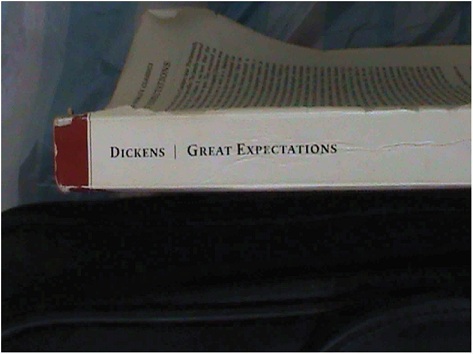
Here’s the picture that AQAP took of the copy of Dickens’ novel Great Expectations they inserted into one of their bombs recently – which they then published in issue 3 of their English language magazine Inspire:

Dickens

And here’s the explanation that accompanies that photo, in a piece titled “The Objectives if Operation Hemorrhage” by their “Head of the Foreign Operations Team”:

This current battle fought by the West is not an isolated battle but is a continuation of a long history of aggression by the West against the Muslim world. In order to revive and bring back this history we listed the names of Reynald Krak and Diego Diaz as the recipients of the packages. We got the former name from Reynald de Chatillon, the lord of Krak des Chevaliers who was one of the worst and most treacherous of the Crusade’s leaders. He fell into captivity and Salahuddeen personally beheaded him. The name we used for the second package was derived from that of Don Diego Deza, the Inquisitor General of the Spanish Inquisition after the fall of Granada who along with the Spanish monarchy supervised the extermination and expulsion of the Muslim presence on the Iberian Peninsula employing the most horrific methods of torture and done in the name of God and the Church. Today we are facing a coalition of Crusaders and Zionists and we in al Qaeda of the Arabian Peninsula will never forget Palestine. How can we forget it when our motto is: “Here we start and in al-Aqsa we meet”? So we listed the address of the “Congregation Or Chadash”, a Gay and Lesbian synagogue on our one of our packages. The second package was sent to “Congregation B’nai Zion”. Both synagogues are in Chicago, Obama’s city.
.
We were very optimistic about the outcome of this operation. That is why we dropped into one of the boxes a novel titled, Great Expectations.

They may not have read the book or seen the movie, as Ibn Siqilli comments at the link above, but they do have long memories and/or a taste for history, and they are indeed sending signals with small details like the fictitious names of their addressees.

*

This is in line with one of the basic premises of Islamic thought: that the world we inhabit is a world of ayat or symbols (the singular is ayah, and the word is also used to refer to the verses of the Qur’an, each of which is viewed as a symbolic utterance). Here, for instance, is a passage from Fazlun Khalid’s paper, Islam and the Environment, from the website of Jordan’s Royal Aal al-Bayt Institute for Islamic Thought:

The Qur’an refers to creation or the natural world as the signs (ayat) of Allah, the Creator, and this is also the name given to the verses contained in the Qur’an. Ayat means signs, symbols or proofs of the divine. As the Qur’an is proof of Allah so likewise is His creation. The Qur’an also speaks of signs within the self and as Nasr explains, “… when Muslim sages referred to the cosmic or ontological Qur’an … they saw upon the face of every creature letters and words from the cosmic Qur’an … they remained fully aware of the fact that the Qur’an refers to phenomena of nature and events within the soul of man as ayat … for them forms of nature were literally ayat Allah”. As the Qur’an says, “there are certainly signs (ayat) in the earth for people with certainty; and in yourselves. Do you not then see?” (Adh-Dhariat, 51:20, 21).

*

BTW, I don’t think Penguin (or, for that matter, Charles Dickens) got paid for that book… whatever their expectations may have been.

Infinity Journal

Monday, November 15th, 2010

Military consultant and ardent Clausewitzian, Wilf Owen contacted me today to alert me to the launch of Infinity Journal, “a peer-review electronic journalzine dedicated to the study and discussion of strategy “:

Infinity Journal views strategy as the use of any or all instruments of power to secure political objectives. IJ is concerned mainly – though not exclusively – with the use of force. Strategy must both pursue policy objectives and be viable via tactics. Beyond that there are no sacred cows within the pages of the Infinity Journal.

Critically, and beyond doubt, is the fact that the practice and application of strategy has life and death outcomes for people living in the world today. The fate of nations and peoples still rests in the realm of strategy and as such, it is a vitally important area of study.

Infinity Journal aims to make the discussion of strategy accessible to the widest possible audience, because today strategy is widely misunderstood not only by the layman but also by students, senior soldiers and politicians. Therefore, we aim to keep rigid language and complexity to minimum and comprehensible language and simplicity to a maximum. 

Wilf has an impressive line-up of current and future issue contributors including TX Hammes, Martin van Creveld, John Mackinlay, Colin Gray and many other strategists, soldiers, academics and “students of war” who share a deep interest in strategy. 

An excerpt, from Col. TX Hammes in the current issue of Infinity Journal, available online (registration is free!):

Assumptions – A Fatal Oversight

….In short, in every plan there will be key factors that are unknown to the planners. For instance, we can’t know for certain how a population will react to a U.S. invasion or how much of the international development assistance promised at a conference will actually be delivered. However, to continue planning, the planners must make an educated guess – an assumption – about such key unknowns. While some may see this as a bureaucratic process of little value, recent events show assumptions are central to all planning. For instance, General Tommy Franks assumed the Iraqi government would remain in place after we removed Saddam. Thus Iraqis would deal with the problems of getting their nation back on its feet after the war. And because they would, the United States could invade with a much smaller force than that recommended by the previous CentCom Commander, General Anthony Zinni. In contrast, Zinni assumed the government would collapse and he would need large number of U.S. forces (380,000) to provide security and services.[v] This single, unexamined assumption dramatically altered the war plan.

Check it out.

Kilcullen

Saturday, October 30th, 2010

On the BBC:

Hat tip to SWJ Blog.


Switch to our mobile site