I’m going to shut down this blog for the foreseeable future.
My career and workload have evolved significantly since the recession hit, and I just find that I can’t justify the time and effort required to keep the blog running. Other opportunities/responsibilities beckon, and that array doesn’t value/support this endeavor, so while I’ve enjoyed it, this is simply an adjustment I need to make.
I will keep the site up for now.
I will continue to keep writing at places that can pay. I just realize that I’ve come to the end of a career model that says I can play LoneWolf@eponymous.com and make that work. A bit sad, as it’s been fun, but as someone who hates to repeat himself and loves to always move onto the next experience/model, I likewise enjoy the pressure to reinvent myself. I just can’t move down that path while simultaneously maintaining the old one–not enough hours in the day….
Sad to see Tom shut down his fine blog but I respect his motivations. Furthermore, while Dr. Barnett always had his detractors on the margin, it is undeniable that he and his ideas about grand strategy had a significant impacton both the public and the policy elite where “the Brief” from The Pentagon’s New Map enjoyed a cult status for a number of years. It was Tom more than any other “thought leader”, whose globetrotting briefing sessions brought military theory and strategy to a general public confused about the tumults of the post 9-11 world.
I’d like to take a moment and thank Dr. Barnett for several acts of kindness over the years, for the friends I have met as a result of sharing a common interest in his work and the stimulating exchanges we have had from time to time that still influence my thinking on strategy and policy. There’s no doubt in my mind that we will still be hearing from Tom in op-eds, magazines, journals, books for years to come.
A new photonic chip that works on light rather than electricity has been built by an international research team, paving the way for the production of ultra-fast quantum computers with capabilities far beyond today’s devices.
Future quantum computers will, for example, be able to pull important information out of the biggest databases almost instantaneously. As the amount of electronic data stored worldwide grows exponentially, the technology will make it easier for people to search with precision for what they want.
An early application will be to investigate and design complex molecules, such as new drugs and other materials, that cannot be simulated with ordinary computers. More general consumer applications should follow.
I bet.
I’m no computer geek, but I know a bit about economics. Quantum computing represents a moment of comparative advantage for the nation(s) that pioneers it akin to Great Britain being first with the Industrial Revolution. The first use for the world’s first lab functional quantum computer is to apply it’s power in other fields where innovation is stymied by previously intractable math problems, thus permitting a burst of patentable breakthroughs or discoveries that lead to applied scientific and commercial uses. The second use of the quantum computer’s power will be put towards solving problems related to optimizing quantum computing itself, both in terms of refining the systems and assembling arrays.
Advantages of this nature tend to be self-reinforcing and synergistic. The state that accrues these downstream spillover benefits of quantum computing in rapid succession could potentially leapfrog over everyone else to a degree not seen in centuries.
Jeremy O’Brien, director of the UK’s Centre for Quantum Photonics, who led the project, said many people in the field had believed a functional quantum computer would not be a reality for at least 25 years.
“However, we can say with real confidence that, using our new technique, a quantum computer could, within five years, be performing calculations that are outside the capabilities of conventional computers,” he told the British Science Festival, as he presented the research
The upside of holding this kind of technological advance back from the commercial domain in order to “lock in” comparative advantage until the nearest quantum computing rival has gotten close, but not yet reached, operational use, will be overwhelming.
Don’t you feel great that the corporatist Bush administration was indifferent to venture capital start-ups, explicitly hostile to basic science research and xenophobic toward top-notch H1-B and foreign grad student talent while the Obama administration is explicitly hostile to start-ups and enamored of pouring scarce billions into rustbelt legacy industries, outdated infrastructure projects and oligarchic Wall Street paper shufflers instead of the high tech and VC sectors?
Everyyear I make an effort to increase my reading of books during the summer months. Inevitably, I fail at completing whatever overambitious reading list that I compose while somehow finding time to read other books that were never on the list. This year was no exception.
Starting this weekend, I am going to be reviewing all the books I did read from late May to early September. It was an eclectic collection and I hope to complete this series of posts by mid-September. A few reviews that have already appeared in this time period will be re-posted to make the series complete.
Readers are free to offer comments and recommendations about their own favorite summer books or their idiosyncratic reading habits as the series rolls along……
I “met” Dr. Adrienne Reddsome years ago through the kind offices of Critt Jarvis, which resulted in a wide-ranging and intermittent email discussion, sometimes joined by John Robband others, of “virtual states”, “virtual nations”, “micropowers” and evolving concepts of sovereignty and statehood in international relations. It was an intellectually stimulating conversation.
Today, Dr. Redd is Nimble Books’newest author, and she has just sent me a review copy of Fallen Walls and Fallen Towers, the culmination of approximately seven years of research and writing. Redd investigates nothing less than the “fate of the state” and I am looking forward to reading her argument in detail.
I don’t know whether the mutiny is actually against the White House or the ISAF command or both. All I’ve been able to piece together is that after fortifying themselves with rum and the battle cry, ‘We’re nobody’s poodle!‘ the New York Times editorial board gave the heave-ho to NATO’s march to the rear in Afghanistan.
So this is a very strange turn of events and worthy of examination.The mutiny might have started earlier but as near as I can figure it began June 11. On that date the New York Times reported on a version of what transpired during Karzai’s dispute with two officials….
….State Department spokesman P.J. Crowley, who evidently had not gotten the memo about the mutiny by the time of his June 25 press briefing, only poured fuel on the fire started by the mutineers:
QUESTION: … the New York Times today reported that the Pakistan army has offered to mediate for peace talks with the Taliban and also with the Haqqani network. Is the offer with you?MR. CROWLEY: Well, as we’ve said many times, this is an Afghan-led process, but obviously there are discussions going on between Afghan officials and Pakistani officials, and we certainly want to see ways in which Pakistan can be supportive of this broader process.
QUESTION: Do you see the Haqqani network coming – sharing power with the Afghan Government? Do you support that?
MR. CROWLEY: We have been very clear in terms of the conditions that any individual or any entity need to meet in order to have a constructive role in Afghanistan’s future: renouncing violence, terminating any ties to al-Qaida, and respecting the Afghan constitution. Anyone who meets those criteria can play a role in Afghan’s future.
The White House, more alarmed by the Times mutiny than Crowley’s foot-in-mouth replies, scrambled to do damage control. Yesterday Democratic Senator Dianne Feinstein and a toady in the GOP camp, Republican Senator Lindsey Graham, were packed off to Fox News Cable’s Sunday show to give assurances that if General Petraeus needed more time to win the war in Afghanistan he had it.Leon Panetta was also dispatched to the Sunday morning TV network circuit, which receives close attention here in the nation’s capital. So it came to pass that Panetta made his first appearance on American network television since he became director of the CIA. He appeared on ABC’s “This Week” and faced questions from Jake Tapper, who soon turned discussion to the June 24 Times report:
The problem for the Obama administration is that if the generally incurious and poorly informed American public ever grasped the nature and an accurate record of Pakistan’s ongoing sponsorship the Taliban, Pakistan would quickly become an object of hatred in the eyes of US voters which, with the right visceral image, could quickly turn passive disquiet into righteous rage. My read, and it is just an informal sense, is that frustrations with the war are building into a dangerous powder keg beneath a placid surface of widespread anxiety and concern for the well-being of the troops.
A mass-casualty act of terror on American soil traced back to Pakistan, or some grisly image broadcast from the Afghan battlefield could unleash a political tsunami.
Zenpundit is a blog dedicated to exploring the intersections of foreign policy, history, military theory, national security,strategic thinking, futurism, cognition and a number of other esoteric pursuits.


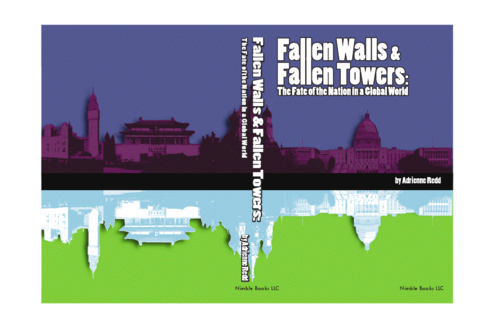
 by Adrienne Redd

