zenpundit.com » IC

Archive for the ‘IC’ Category

The al-Masri Dialogue

Tuesday, February 9th, 2010

Charles Cameron, in his latest guest post here, penned a beautiful essay regarding the ongoing exchanges between Australian counter-terrorism scholar Leah Farrall and Abu Walid al-Masri, an adviser to the Taliban and an experienced strategist of Islamist insurgency. Farrall has translated and posted this dialogue on her blog, All Things Counter Terrorism, which has received much attention, commentary and criticism in the blogosphere and on private listservs and quasi-official bulletin boards.

Generally, I leave this sort of subject to Charles, since he has the academic expertise to drill down to a granular level of Islamic theology and Islamist ideology, but al-Masri is an intriguing figure and his public conversation with Farrall is a novelty worth investigating. It would be hard to imagine during the Cold War, an open media debate between a Western CI official and a Soviet spymaster still engaged in espionage in the field ( Kim Philby hurled public jermiads it is true, but that was in retirement in Moscow and only after his long-suffering KGB handlers had managed to get his severe alcoholism under control). In that spirit, I want to offer a few observations.

While there is artifice present, as al-Masri is consciously speaking to a multiplicity of audiences in his remarks, the idea that we should therefore dismiss the dialogue with Farrall, as some suggest, is an error. There is also posturing in purely intra-Islamist-debates on which we eavesdrop and, frankly, within our own arguments inside government and out. We learn from what people do and do not do, from what they say and what is left unsaid. Being able to speak to multiple audiences is a constraint, as well as an advantage, as it shapes the parameters of the premises to be employed and the extent to which the underlying logic can be permissably extrapolated. To quote a Zen saying, if you wish to fence in a bull, give him a large meadow. 

The constraints, if correctly discerned, are illuminating and are analytically useful in constructing our own tactical responses and message strategy (assuming someone can convince the State Department bureaucracy that IO and public diplomacy are important and persuade Congressional leaders to fund such activities with more than pocket change). They are also useful in helping to understand the worldview and governing paradigms of our opponents in more complex and nuanced manner than reflexively saying “they hate our freedoms”. Well, many jihadi types do in fact, viscerally hate our freedoms or deny that democracy is a legitimate form of government in an abstract sense, much the same way they casually disparage Hindus as “cow worshippers” or Thais as “crazy Buddhists”; however those loose attitudes and spasms of hostility are not akin to operational principles or strategic doctrines.

For that, we have to dig deeper into the politico-religious motivations of violent Islamists and listen closely to what our enemies are saying – particularly when they are making an effort to speak to us directly, as al-Masri is doing, his determination to score propaganda points in his little elicitation dance with Farrall notwithstanding. Americans are not very good at listening and our elites are deeply uncomfortable with the entire subject of religion, tending to view pious expressions of Christianity with contempt and Islam as a completely taboo subject. There is a strong preference in government and academia for analytical models of terrorism or insurgency that dwell on DIME spectrum variables because these fit in the personal comfort zones and the educational, social and professional experiences of the American elite. This would be a perfect approach if al Qaida’s leadership were composed of Ivy League alumni and Fortune 500 CEOs.

Economics and military force are always factors in geopolitical conflict, the war of terror included, but until Islamist extremists oblige us by becoming secular Marxist revolutionaries waving little red books, it would behoove us to look with greater scrutiny at the curiously reified religious ideology with which they justify or eschew courses of action to themselves. Our own strategies might be more focused and effective if the operators across our intelligence, military, diplomatic and law enforcement agencies had something approaching a shared understanding of violent Islamism and if they could communicate this understanding along with the benefit of their experience and current intelligence to help political leaders shape American policy.

Books For a Near Future Review

Thursday, January 21st, 2010

Complicit: How Greed and Collusion Made the Credit Crisis Unstoppable by Mark Gilbert

Inside Cyber Warfare: Mapping the Cyber Underworld by Jeffrey Carr

Received courtesy review copies of two books that will serve to “stretch” my knowledge base and increase my cognitive map.

Mark Gilbert is a financial columnist and bureau chief for Bloomberg News in London and he has written a hard hitting deconstruction of the great credit collapse and crisis bail-out of 2008-2009. Gilbert is telling a story of breathtaking risk assumption, regulatory capture, academic hubris, central bankers as naked emperors and unrepentant banksters who have learned nothing and forgotten nothing from the crisis. My personal background in credit issues is rooted solidly in the dustily agrarian economic history of the 19th century and the painful transition from yeoman “book debt” to gold standard dollars, so I look forward to broadening my understanding of modern financial systems from reading Complicit.

I will probably review Complicit in a cross-blog conjunction with Lexington Green, who also has a copy in his possession.

Jeffrey Carr is the CEO of GreyLogic and a researcher, presenter and consultant on issues related to cybersecurity, hacking, cyberterrorism and asymmetric conflicts in virtual domains. Carr offers a cohesive and compact look at the major problems and players in the uncertain crossroads of national security and cyberspace. Non-geeks (like myself) will appreciate Carr’s focus in Inside Cyber Warfare on the connection to the worlds of intelligence, law enforcement, international law and military operations and doctrine. As an added bonus, the foreword is by Lewis Shepherd, another blogfriend and the former Senior Technology Officer of the DIA.

Originally, I had wanted to review Inside Cyber Warfare before last Christmas, so now that I have the book, I will move it to the top of my titanic reading pile.

None Dare Call it a Rogue State

Wednesday, December 9th, 2009


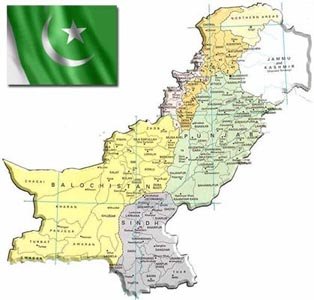
Reader Isaac, points to an excellent analytical overview of Pakistan’s national nervous breakdown at Dawn.com, by Nadeem F. Paracha. It is a lengthy but stupendous post with some 200 + comments:

Little monsters

There is nothing new anymore about the suggestion that over a span of about 30 odd years, the Pakistani military and its establishmentarian allies in the intelligence agencies, the politicised clergy, conservative political parties and the media have, in the name of Islam and patriotism, given birth to a number of unrestrained demons which have now become full-fledged monsters threatening the very core of the state and society in Pakistan.

A widespread consensus across various academic and intellectual circles (both within and outside Pakistan), now states that violent entities such as the Taliban and assorted Islamist organisations involved in scores of anti-state, sectarian and related violence in the country are the pitfalls of policies and propaganda undertaken by the Pakistani state and its various intelligence agencies to supposedly safeguard Pakistan’s ‘strategic interests’ in the region and more superficially, Pakistan’s own ideological interest.

….The 1980s and the so-called anti-Soviet Afghan jihad is colored with deep nostalgic strokes by the Islamists and the military in Pakistan. Forgetting that the Afghans would have remained being nothing more than a defeated group of rag-tag militants without the millions of dollars worth of aid and weapons that the Americans provided, and Zia could not have survived even the first MRD movement in 1981 had it not been due to the unflinching support that he received from America and Saudi Arabia, Pakistani intelligence agencies and its Afghan and Arab militant allies were convinced that it was them alone who toppled the Soviet Union.

The above belief began looking more and more like a grave delusion by the time the Afghan mujahideen factions went to war against one another in the early 1990s and Pakistan was engulfed with serious sectarian and ethnic strife. But the post-1971 narrative that had now started to seep into the press and in many people’s minds, desperately attempted to drown out conflicting points of views about the Afghan war by once again blaming the usual suspects: democracy, secularism and India.

Many years and follies later, and in the midst of unprecedented violence being perpetrated in the name of Islam, Pakistanis today stand more confused and flabbergasted than ever before.

The seeds of the ideological schizophrenia that the 1956 proclamation of Pakistan being an ‘Islamic Republic’ sowed, have now grown into a chaotic and bloody tree that only bares delusions and denials as fruit.

Read the rest here.

There has been an ocean of ink spilled about the Obama administration’s Hamlet-like deliberation over a war strategy for Afghanistan and on the implications of agreeing to 30,000 rather than the 40,000 new troops for the “Afghan Surge”, as Gen. McChrystal had originally requested. The 10,000 difference in boots is not the salient strategic point, though it is the one that excites political partisans on the Right, Left and anti-war Far Left. It also distracts us from debating our fundamental strategic challenge.

The horns of our dilemma is that our long time “ally” whom we have hitched ourselves to in a grand war effort against revolutionary Islamist terrorism is not our ally at all, but a co-belligerent with our enemy. By every policy measure that matters that causes the United States – justifiably in my view – to take a tough stance against North Korea and Iran, applies in spades to Islamabad. Yet none dare call Pakistan a rogue state.

It is the elephant in our strategy room – if the elephant was a rabid and schizophrenic trained mastodon, still willing to perform simple tricks for a neverending stream of treats, even as it eyes its trainer and audience with a murderous kind of hatred. That Pakistan’s deeply corrupt elite can be “rented” to defer their ambitions, or to work at cross-purposes with Pakistan’s perceived  “interests”, is not a game-changing event. Instead, it sustains and ramps up the dysfunctional dynamic we find ourselves swimming against.

We play a bizarre game, our leaders being more concerned about Pakistan’s “stability” than Pakistan’s own generals and politicians who egg on, fund and train the very militant Islamist groups spreading death and chaos inside Pakistan and beyond its borders. Why can we not find Osama bin Laden or Mullah Omar ? Because they are high value clients of the ISI which is no more likely to give them up than the KGB was to hand over Kim Philby.  

Until America’s bipartisan foreign policy elite grapple with the fact – and it is an easily verifiable, empirical, fact – that Pakistan’s government is in chronic pursuit of policies that destabilize Central Asia, menace all of Pakistan’s neighbors, generate legions of terrorists and risk nuclear war with India, no solutions will present themselves.

A strategy will only have a chance of success when it is grounded in reality.

Guest Post: Charles Cameron on Farrall and al-Masri

Tuesday, October 27th, 2009

By Charles Cameron

Something veeery interesting is breaking in the blogosphere: Leah Farrall is talking with Abu Walid al-Masri.

Leah Farrall blogs with verve and insight. She has been a “senior Counter Terrorism Intelligence Analyst with the Australian Federal
Police and the organization’s al Qaeda subject matter expert” who served as “senior Intelligence Analyst in the AFP’s Jakarta Regional
Cooperation Team (JRCT) in Indonesia and at the AFP’s Forward Operating Post in response to the second Bali bombings”. She’s now working on here PhD thesis on “Al Qaeda and militant salafist jihad”.

One of the leading figures in the interwoven tales of Al Qaida and the Taliban is Abu Walid al-Masri, who also blogs. According to his West Point CTC bio, Abu Walid fought for eleven years as a muj against the Soviets in Khost, Afghanistan, where he “gained a reputation as a skilled and pragmatic strategist and battlefield tactician”. He criticized bin Ladin’s 1991 decision to relocate AlQ to the Sudan, and was an early member of Mullah Omar’s circle. He also served as a reporter for Al-Jazeera, and (as the profile puts it) ended up wearing “several hats: Taliban propagandist, foreign correspondent, and al-Qa’ida trainer and strategist.” He strongly opposed 9/11.

In his early writings, he quoted Lenin, Mao, and Sun Tzu — and his writings have been extensive. Leah writes that in her view:

“….his work (12 books in all plus articles) was the most comprehensive and accurate of all memoirs or first hand accounts of al Qaeda and more broadly the history of Afghanistan since the Soviet invasion. I reached this conclusion after literally spending years and years cross checking his work with other accounts and all manner of sources, from both sides, for use in my thesis…”

And now for the drama:

As Leah notes with understandable excitement, Abu Walid has begun to respond to her blog posts with his own.

Readers of Zenpundit already know the power of multi-blogger conversations, and indeed it was one such conversation that gave rise to the Boyd Roundtable book that Zen himself edited.

This engagement between Leah and Abu Walid takes things a step further — two enemies, one an intel analyst and the other an insurgent strategist, are now holding a debate in public across the blogs.

That’s an interesting conversation to watch in its own right — and I trust Leah will bring Abu Walid’s side of it across into English. It is
also, it seems to me, an historic moment in the use of cyberspace.

*

Postscript:

Leah on Abu Walid responding to her blogging:

Text of Abu Walid’s response in Arabic — Leah notes she hopes to put up an English digest, if not a full translation, shortly:

It’s worth noting that there’s a somewhat similar conversation developing between some UK-based Sunni Salafist supporters of the Baluch action and western analyst-bloggers:

Again, it’s fascinating if you’re interested in web-based discourse, and with a nice Mahdist strand in there to please little old me.

I hope to pick up on that aspect with a post here shortly.

And then there’s blogger friend John Robb, who has recently been emailed by the Nigerian Henry Okah, whom Robb considers “hands down the most innovative and successful guerrilla entrepreneur in the world today”:

The Father of Sovietology

Sunday, September 13th, 2009

Great piece of intellectual history here by Dr. David Engerman, writing in Humanities on Philip Mosley, who was to Cold War Sovietology what Vannevar Bush was to the Manhattan Project:

The Cold War’s Organization Man How Philip Mosely helped Soviet Studies moderate American policy

When Winston Churchill ominously announced in March 1946 that an “Iron Curtain had descended over Europe,” the United States government employed around two dozen experts on the Soviet Union and even fewer on Central and Eastern Europe. Two years later, after a steady drumbeat of Cold War crises, the young Central Intelligence Agency employed thirty-eight Soviet analysts, only twelve of whom spoke any Russian. The few university-based Russia specialists varied tremendously in intellect and energy; only a handful were willing and able to contribute to shaping policy. How could American officials chart a foreign policy without knowing what was going on inside the Soviet Union, let alone inside the Kremlin? As Geroid Tanquary Robinson, head of the USSR analysis for wartime intelligence and the founding director of Columbia’s Russian Institute, put it, “Never did so many know so little about so much.”

Into this breach stepped a handful of scholars, including Philip Edward Mosely, the man who would become the most influential Sovietologist of the Cold War. He lacked the name recognition and elegant writing style of the diplomat George Kennan, whose 1947 “X” article introduced the concept of containment to the world. Nor could he rival the publication record and scholarly reputation of Harvard professor Merle Fainsod, whose 1953 book How Russia Is Ruled introduced generations of readers to Soviet politics. And Mosely was nowhere near as colorful a character as the economic historian Alexander Gerschenkron, whose 1952 essay on “economic backwardness” remains a subject of debate into the twenty-first century. Mosely’s contributions to the development of Soviet Studies have received little attention. But in a field of study that emphasized its practical application to policymaking, no one else was so adept at working the lines of influence and power that connected America’s campuses and its capital.

Read the rest here.

Hat tip to Meredith Hindley.


Switch to our mobile site