zenpundit.com » reading

Archive for the ‘reading’ Category

The Controversial CTC Report

Friday, January 25th, 2013

The Center for Combating Terrorism at West Point released a report on domestic terrorism that raised hackles for a number of reasons. Despite the dismissals of liberal political pundits, the reasons for objections to the CTC report are legitimate but they did not need to arise in the first place and might have been avoided with a slightly different editorial approach or appropriate caveats (I just finished reading the report, which is primarily focused on the usual suspects). Here’s why I think the normally well-regarded CTC stumbled into a hornet’s nest:

First, in this foray into domestic terrorism analysis, the center chose to concentrate only on the threat of violence of the Far Right while ignoring other threats coming from the Far Left, infiltration by criminal insurgent networks from Mexico, notably the ultraviolent Zetas whose reach has stirred gang violence in Chicago and Islamist terrorism, either homegrown “lone wolves” or from foreign infiltration or subversion. In itself, this is understandable if the CTC plans a series of reports with a separate focus on different domestic threats; but without that context, it is a myopic analytic perspective, particularly given the demonstrated capabilities of various AQ affiliates or just south of the border, the criminalinsurgency of  the narco-cartels. Had all of these been addressed in one omnibus report, any complaints from conservatives were likely to have been muted or nonexistent. This is not to say that the radical American Far Right does not have a violent threat potential of it’s own worth studying; it does and it is real. But available evidence indicates it to be the least organized, least operationally active and least professionally competent in terms of terrorist “tradecraft” of the three.

The second and most problematic aspect of the report is an intellectually sloppy definition of a dangerous “antifederalist movement”  where noxious concepts like “white supremacy” and wacko conspiracy theories are casually associated with very mainstream conservative (or even traditionally bipartisan !) political ideas – coincidentally, some of the same ideas that contemporary “big government” liberal elites tend to find irritating, objectionable or critical of their preferred policies. Part of the equation here is that American politics are evolvng into a very bitterly partisan, “low trust” environment, but even on the merits of critical analysis,  these two passages are ill-considered and are largely responsible for most of the recent public criticism of the CTC:

….The antifederalist rationale is multifaceted, and includes the beliefs that the American political system and its proxies were hijacked by external forces interested in promoting a “New World Order” (NWO) in which the United States will be absorbed into the United Nations or another version of global government.  They also espouse strong convictions regarding the federal government, believing it to be corrupt and tyrannical, with a natural tendency to intrude on individuals’ civil and constitutional rights.  Finally, they support civil activism, individual freedoms, and self government

….In contrast to the relatively long tradition of the white supremacy racist movement, the anti-federalist movement appeared in full force only in the early to mid-1990s, with the emergence of groups such as the  Militia of Montana and the Michigan Militia. Antifederalism is normally identified in the literature as the “Militia” or “Patriot” movement. Anti-federalist and anti-government sentiments were present in American society before the 1990s in diverse movements and ideological associations promoting anti-taxation, gun rights, survivalist  practices,and libertarian ideas 

This is taxonomic incoherence, or at least could have used some bright-line specifics ( like “Posse Commitatus” qualifying what was meant by “anti-taxation” activists) though in some cases, such as “libertarian ideas” and “civil activism”, I’m at a loss to know who or what violent actors they were implying, despite being fairly well informed on such matters.

By the standard used in the first paragraph, Glenn Greenwald, Ralph Nader and the ACLU would also be considered “far right antifederalists”. By the standards of the second, we might be in physical danger from Grover Norquist,  Congressman John Dingell and Penn Jillette. No one who opposed the recent increases in income tax rates, dislikes gun-control or thought the DOJ may have abused it’s power in the prosecution of Aaron Swartz or in their stubborn refusal to prosecute Bankster racketeering is likely to welcome a report under the auspices of West Point that juxtaposes such normal and perfectly valid American political beliefs with neo-Nazism. A move that is simply going to – and quite frankly, did – gratuitously irritate a large number of people, including many in the defense and national security communities who are a natural “customer base” for CTC reports.

As I said previously, this could easily have been completely avoided with more careful use of language, given that 99% the report has nothing to do with mainstream politics and is concerned with actors and orgs with often extensive track records of violence. As the CTC, despite it’s independence, is associated so strongly with an official U.S. Army institution, it needs to go the extra mile in explaining it’s analysis when examining domestic terrorism subjects that are or, appear to be, connected to perfectly legitimate participation in the political process. This is the case whether the subject is on the Left or Right – few activists on the Left, for example, have forgotten the days of COINTELPRO and are currently aggrieved by the activities of Project Vigilant.

I might make a few other criticisms of the report, such as the need for a better informed historical perspective, but that is hardly what the recent uproar was about.
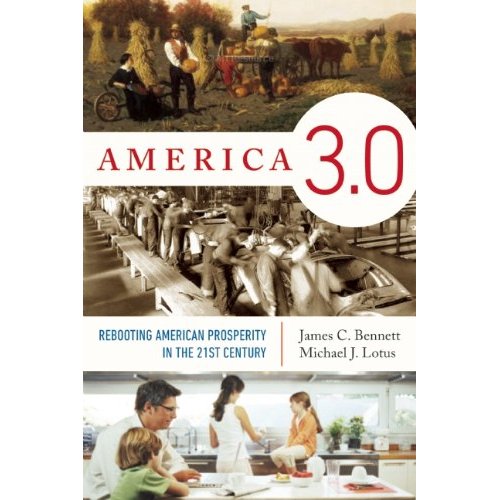
New Book: America 3.0 — Now Available for Pre-Order

Thursday, January 3rd, 2013

Re-posting this from Chicago Boyz blog on behalf of Lexington Green and James Bennett who have a new book coming out in May:

America 3.0 — Now Available for Pre-Order 

As previously announcedJim Bennett and Mike Lotus (a/k/a Lexington Green), have co-authored a book:

America 3.0: Rebooting American Prosperity in the 21st Century – Why America’s Greatest Days Are Yet to Come.

The book is currently in the hands of our publisher, Encounter Books and editing is underway.

There is now an Amazon pre-order page for the book.

All such early orders would be very greatly appreciated.

The book is coming out in May. Promotional plans are chugging away. Any ideas anyone may have would be very much appreciated, and can be left in the comments on this post or future posts related to the book.

A friend asked for a three sentence summary. This is what I came up with:

America’s greatest days are yet to come. Just as the world of family farms and small businesses, America 1.0, gave way to the industrialized world of big cities, big business, big labor unions and big government, America 2.0, we are now moving into a new world of immense productivity, rapid technological progress, greater scope for individual and family-scale autonomy, and a leaner and strictly limited government. The cultural roots of the American people go back at least fifteen centuries, and make us individualistic, enterprising, and liberty-loving, equipping us to prosper in the upcoming America 3.0.

We will be posting frequently in the months ahead (both here and on the book’s own blog) about the America 3.0 and its arguments, and how the themes in the book relate to current events, to efforts to devise a long term strategy for the political Right in America, or to other writers or books which interest us or influenced us.

We anticipate setting up a Facebook and Twitter account for the book as well.

Stand by!

Looking forward to this one!

New Books

Wednesday, January 2nd, 2013


Picked up some new books during the holidays…..

Socrates: Ironist and Moral Philosopher by Gregory Vlastos

I just finished two books on Socrates, I.F. Stone‘s  The Trial of Socrates and Socrates: A Man for Our Times by Paul Johnson, about which I am in the process of writing a lengthy post. Despite the many divergences between the books and their authors, both relied upon and recommended the scholarship of the late Gregory Vlastos, with Johnson specifically citing this analytic biography for high praise.

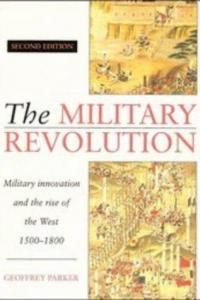
The Military Revolution: Military Innovation and the Rise of the West by Geoffrey Parker  

Military historian Geoffrey Parker published this important book back when I was an undergraduate ( he was teaching at the University of Illinois at the time) and I recall reading it in the library when I was supposed to be researching Anglo-American WWII diplomacy with the Salazar regime instead. I consider it a “must have” text for those interested in strategy and military affairs and…now I have a copy.

Antifragile: Things that Gain From Disorder by Nassim Nicholas Taleb

One of the  “must read” books for 2013. I watched Taleb kick around some of the concepts in Antifragile on his Facebook page and then observed friends like co-blogger Scott Shipman and Dr. Terry Barnhart comment as they started reading shortly after the book’s release. There are many things in Antifragile (including, it seems, a fair piece on the epistemic deficiencies of Socrates) and this is a book to read with care – not least because I intuitively agree with a number of Taleb’s arguments which means reading with a critical eye will require more effort.

Makers: The New Industrial Revolution by Chris Anderson 

This book is somewhat outside the norm for me. Anderson is the former editor-in-chief of WIRED and the author of The Long Tail, which is a book you should read if you don’t understand what a Pareto curve explains and economically could imply in the real world. Makers is about the desktop manufacturing revolution that many see emerging, such as blogfriend John Robbthat could have economy-shaking effects (provided vested interests do not effectively strangle this revolution in it’s crib).

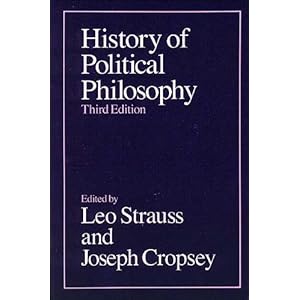
The History of Political Philosophy by Leo Strauss and Joseph Cropsey

The long deceased and formerly obscure University of Chicago political philosopher Leo Strauss was elevated in the past decade in parts of the American Left into a bizarre kind of mystical bogeyman figure. An imperialist ghost who orchestrated the invasion of Iraq from beyond the grave and from whose cranium the Neoconservatives were born, fully grown and armed with think tank sinecures and contracts with FOXnews. Strauss was none of those things but he was a respected scholar in the Chicago tradition; this weighty tome of a book received a further endorsement from Lexington Green, which tipped the scales for me.

New Book: The Violent Image by Neville Bolt

Friday, December 14th, 2012

The Violent Image by Neville Bolt 

Columbia University Press just sent me a review copy of The Violent Image, by Dr. Neville Bolt of King’s College vaunted War Studies Department.  Initially, I was amused by the colorful book jacket, but flipping through, it belies a very weighty, heavily footnoted, academic exploration of the iterative relationship between propagandistic imagery and insurgency. Even a casual perusal indicates that The Violent Image is a book many readers of ZP will  like to  get their hands on.

From the jacket:

….Neville Bolt investigates how today’s revolutionaries have rejuvenated the nineteenth century “ptopaganda of the deed” so that terrorism no longer simply goads states into overreacting, thereby losing legitimacy. Instead the deed has become a tool to highlight the underlying grievances of communities

A small sampling of some of the section titles:

Strategic Communications:the State
Strategic Communications: the Insurgent
Networks in Real and Virtual Worlds
Images as Weapons
POTD as Insurgent Concept of Operations
Anonymity and Leaderless Revolutions
The Arab Uprisings and Liberation Technology
POTD as Metaphor

Endnotes run slightly over 90 pages and the bibliography tips the scales at 50, for those interested in such things.

Looking forward to reading this and seeing how Bolt presents his case.

Congratulations!!

Tuesday, December 4th, 2012

To Lexington Green and James Bennett, for finishing their new book, America 3.0 – due out (I think) in 2013 published by Encounter Books.

A political vision for an era desperately short on imagination and needing statecraft of inspiration.


Switch to our mobile site