zenpundit.com » christianity

Archive for the ‘christianity’ Category

On the felicities of graph-based game-board design: thirteen

Friday, December 21st, 2018

[ by Charles Cameron — the Trinity and National Security, Game Boards and Mathematics, Japanese wave patterns, Maestro Harding on the interconnectedness of “all branches of human knowledge and curiosity, not just music” — plus Blues Clues at the tail end ]
.

Not only have the last couple of days been riotous in Washington, with more news to track than I have eyes to see, but today, still reeling under the weight of Mattis‘ resignation, McConnell‘s statement in support and other matters, I found myself with a richesse of board-game and graph-related delights.

**

Trinitarian NatSec:

Followers of this searies will be familiar with the Trinitarian diagram juxtaposed here with its equivalents from classical Kabballah and Oronce Fine:

That little triptych is from my religion and games avenues of interest, but of course I’m also interested in matters of national security, as befits Zenpundit, the strategy & creativity blog. You can imagine my surprise and delight, then, in coming across a natsec version of the trinity diagram, in a tweet from Jon Askonas.

Here’s my comparison:
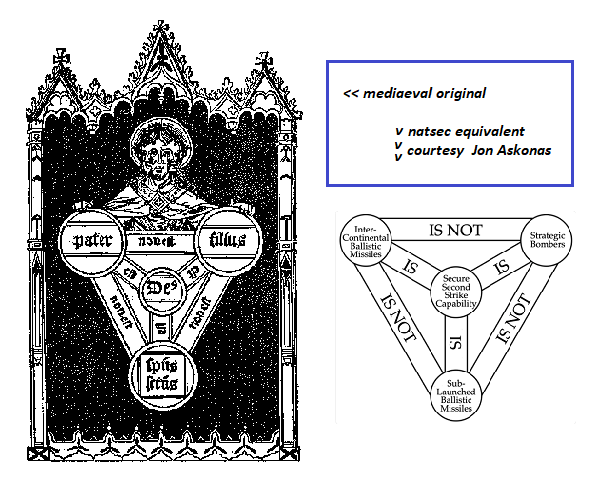
My own attention was first drawn to the Trinitarian diagram as a result of reading Margaret Masterman‘s brilliant cross-disciplinary work, “Theism as a Scientific Hypothesis”, which ran in four parts in a somewhat obscure and difficult to find journal, Theoria to Theory, Vol 1, 1-4, 1966-67.

See:

  • Margaret Masterman, George Boole and the Holy Trinity
  • Margaret Masterman’s “Theism as a Scientific Hypothesis”
  • **

    Game Boards and Mathematics:

    I could hardly fail to be intrigued by Calli Wright‘s piece titled The Big List of Board Games that Inspire Mathematical Thinking, eh? And look, the first game they show is a graph-based board game, Achi:

    Dara also looks somewhat relevant.

    **

    Japanese wave designs:

    Again, those familiar with my games will know of my juxtaposition of Von Kármán with Van Gogh as a DoubleQuote — but let me quote from an earlier post, Sunday’s second surprise — the Van Gogh DoubleQuote:

    Here’s the Von Kármán / Van Gogh DQ, which I value in light of Hermann Hesse‘s Glass Bead Game as a clear bridge between one of the crucial dualities of recent centuries — the needless and fruitless schism between the arts and sciences, which has given rise not only the rantings of Christopher Hitchens and his less elegant disciple Bill Maher, but to such other matters as the Papal condemnation and “forgiveness” 359 years later of Galileo Galilei, Charles Babbage‘s Ninth Bridgewater Treatise, Andrew White‘s A History of the Warfare of Science With Theology in ChristendomW, and CP Snow‘s The Two Cultures:

    karman gogh

    And finally, here’s an ugraded version of the other DQ of mine that seeks to bridge the arts and sciences — featuring Hokusai‘s celebrated woodblock print, The Great Wave off Kanagawa (upper panel, below) and Jakob aka nikozy92‘s fractal wave, which I’ve flipped horizontally to make its parallel with the Hokusai clearer (lower panel) — Jakob‘s is a much improved version of a fractal wave compared with the one I’d been using until today:

    SPEC-DQ-Hokusai-fractal v 2.0 minikozy92

    That brings me to the Met’s marvelous offering, to which J Scott Shipman graciously pointed me:

    Here’s where you get the collection:

  • You Can Now Download a Collection of Ancient Japanese Wave Illustrations for Free
  • Rich pickings!

    **

    Maestro Harding and the Glass Bead Game:

    Finally, I’ve been delighted today to run across a couple of vdeos of my nephew, Maestro Daniel Harding, conducting the Swedish Radio Symphony Orchestra some years back in programs exploring the interplay of mathematics and other disciplines and music:

    and:

    Daniel is not working the graph-based angle that my games explore, but his thinking here is pleasantly congruous with my own. His work with the SRSO has, he says in the first video here, “to do with all branches of human knowledge and curiosity, not just music — because everything is connected”.

    You can’t get much closer in spirit to Hesse‘s Glass Bead Game than that!

    **

    Earlier in this series:

  • On the felicities of graph-based game-board design: preliminaries
  • On the felicities of graph-based game-board design: two dazzlers
  • On the felicities of graph-based game-board design: three
  • On the felicities of graph-based game-board design: four
  • On the felicities of graph-based game-board design: five
  • On the felicities of graph-based game-board design: six
  • On the felicities of graph-based game-board design: seven
  • On the felicities of graph-based game-board design: eight
  • On the felicities of graph-based game-board design: nine
  • On the felicities of graph-based game-board design: ten
  • On the felicities of graph-based game-board design: eleven
  • On the felicities of graph-based game-board design: twelve
  • **

    BTW:

    NatSec, yes, and a DoubleQUote. Too good to miss. Thanks again to John Askonas..
    Next notables, metaphors and bright ideas included

    Sunday, December 9th, 2018

    [ by Charles Cameron — next in the long series beginning with sports and game metaphors, and extending to include miscellaneous memorable items — nb, includes a Tibhirine section, Jim Gant pls note ]
    .

    Here’s a DoubleQuote in images of considerable interest, from David Metcalfe — with the esteemed William Dalrynple DoubleQuoting goddesses in Kerala:

    **

    Ancilliary to my interest in mapping complex realities..

    **

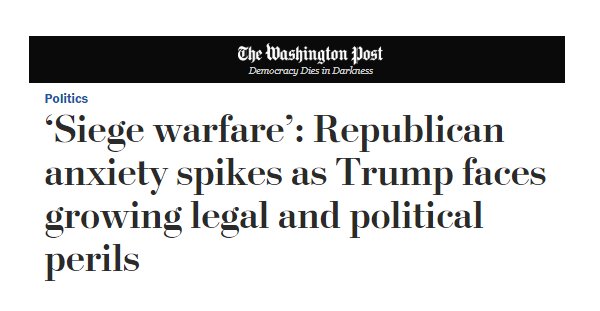
    First “siege warfare” metaphor:

    **

    Something to read alongside John Kiser‘s superb The Monks of Tibhirine: Faith, Love, and Terror in Algeria :

    I would be most happy to publish any comments John Kiser has on Kyle Orton‘s blog post, Algeria’s ‘Years of Blood’: Not Quite What They Seem on ZP should he or Jim Gant notice this somewhat obscure entry..

    **

    Good grief:

    Key comment:

    I will explain all in due course but for now all I want to say is be VERY careful when dabbling in spirituality, it’s not something to mess with.

    **

    And how’s this?

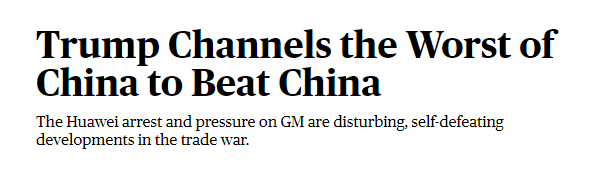
    Trump Channels the Worst of China to Beat China

    A double ouroboros, methinks: the Worst of China to Beat China, arguably, and self-defeating, axiomatically, no?

    **

    Venkatesh Rao, Quiver Doodles:

    I don’t know if this is still true, but I once read about exploited workers in the ship-breaking industry who were worked so hard, and paid so little, they could not even afford to buy enough calories to sustain themselves. They were slowly starving to death. I call this phenomenon entropic ruin, a generalization of the idea of gambler’s ruin to open-ended games that can be non-zero-sum and need not involve gambling. In this case, it’s a deterministic death march. If you systematically consume fewer calories than you expend long term, you will die a premature death.

    Via John Kellden

    **

    Did Venkatesh mention “the idea of gambler’s ruin“? How about nuns’ ruin as a subset?

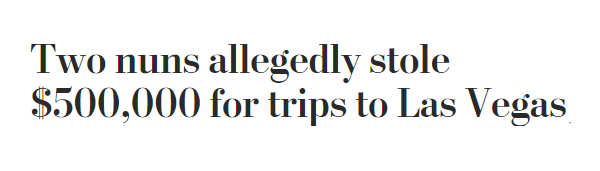
    Two nuns allegedly stole $500,000 for trips to Las Vegas

    We do know that they had a pattern of going on trips, we do know they had a pattern of going to casinos, and the reality is, they used the account as their personal account,” Marge Graf, an attorney representing St. James, told a group of parents at a meeting last Monday night, according to the Beach Reporter.”

    **

    Mask dancers, Bhutan:

    21 Breathtaking Photos Of Isolated Tribes From All Around The World

    The dancers are gorgeous, but look to the left and see the monasteries perched on plateaus in a towering rock-face..

    I’m pretty sure “isolated tribes” are of particular interest about now because of the evangelical boundary-pusher killed (martyred? now there’s a koan) because he hoped to bring the gospel to Andaman tribal peoples whose isolation is protected by the Indian government.. see my tweet:

    **

    A whole lot more..

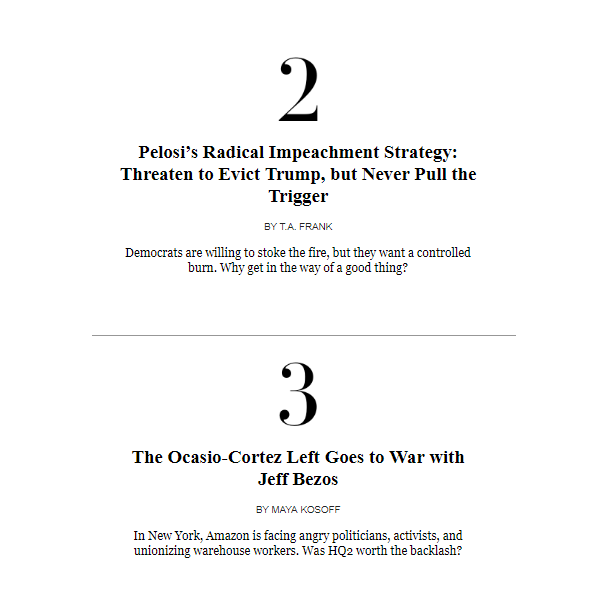
    This Nancy Pelosi chyron, for instance:

    Which brings me to #2 below:

    — with #3 also deserving a metaphor-mention..

    And we might as well go for the revolt chyron here:

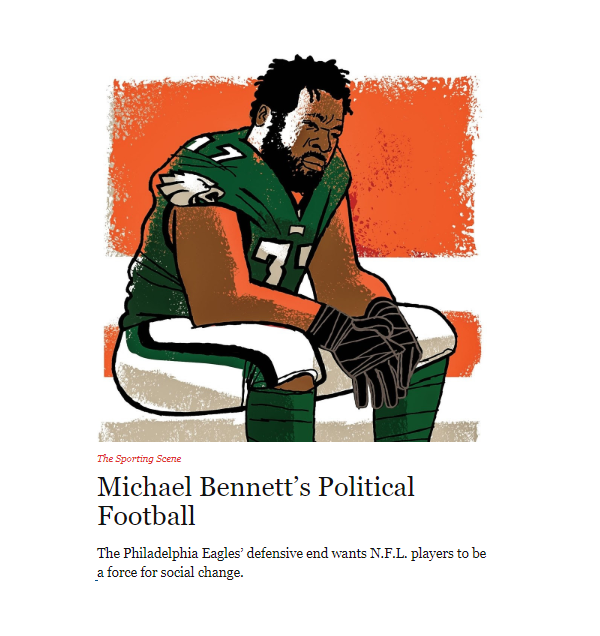
    And that in turn allows for a splendid graphic with both metaphorical and real resonance..

    **

    That should be enough. I’ll collect further items of interest in the comments section.

    Start of the Christian Church Year

    Sunday, December 9th, 2018

    [ by Charles Cameron — the chief benefit of observing a liturgical calendar is found in the subtle modulations in rhythm across the year it affords the observant faithful ]
    .

    In terms of the Catholic, Anglican and Lutheran Churches — but not yet, I think, the Orthodox — this is the first Sunday in the season of Advent, a period of expectation of the coming of the Christ Child, and of his Second Coming at the end of days, and marks the start of the liturgical Year in their calendars.

    Here’s JS Bach, bringing us a Cantata for the First Sunday in Advent, and thus a fitting opening to the season:

    **

    Zenpundit wishes its Christian readers a Happy New Year!

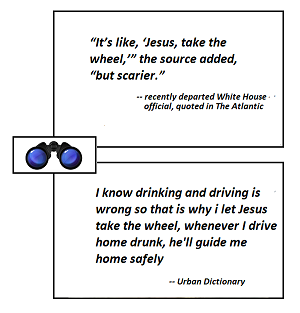
    Jesus, take the wheel

    Friday, December 7th, 2018

    [ by Charles Cameron — despair or certain hope? ]
    .

    **

    Under the headline The White House Has No Plan for Confronting the Mueller Report, we read (upper panel):

    An Urban Dictionary entry captures the sense of helplessness..

    **

    Carrie Underwood‘s song, from which the phrase “Jesus, take the wheel” is drawn, uses driving too fast and spinning out of control on black ice as its example of a situation where that prayer arises, setting the scene with the despairing line:

    she was running low on faith and gasoline

    In her despair, she finds surrender:

    Jesus, take the wheel
    Take it from my hands
    ‘Cause I can’t do this on my own
    I’m letting go
    So give me one more chance
    And save me from this road I’m on
    Jesus, take the wheel

    The car comes to rest on the shoulder of the road, and —

    And for the first time in a long time
    She bowed her head to pray
    She said I’m sorry for the way
    I’ve been living my life
    I know I’ve got to change
    So from now on tonight

    Jesus, take the wheel..

    Listen:

    **

    For reasons outside my control, when I first played this song it was followed automatically and much to my surr[prise by this, from Handel, and apt for the season:

    Perhaps there’s an answer here to the White House staffers’ despair — speaking of the Christ child, Handel, quoting Isaiah, instructs us:

    And the government shall be upon his shoulders

    The government..

    Romero: conservative, archbishop, radical, martyr, pop saint, Saint

    Friday, October 19th, 2018

    [ by Charles Cameron — Pope Francis recently canonized him — this is my belated tribute ]
    .

    **

  • The Economist, El Salvador’s most famous martyr, Óscar Romero, is canonised
  • The Atlantic, What Óscar Romero’s Canonization Says About Pope Francis
  • **

    He was already a popular saint. For years the faithful have congregated every Sunday for mass by his tomb in the crypt of the cathedral in San Salvador, inspired by the man they called San Óscar or San Romero de América. Now it is official. On October 14th in Rome, Archbishop Óscar Arnulfo Romero was canonised, almost 40 years after he fell to a gunman’s bullet while finishing a private mass at a chapel that is today a site of pilgrimage. He had recited the 23rd Psalm: “Yea, though I walk through the valley of the shadow of death, I will fear no evil.”

    As the archbishop read the Gospel, the assassins pulled up to the chapel. As he raised the consecrated bread and wine, the gunman fired a shot to the heart.

    **

    The Economist’s graphic, above, gets it wrong. It’s not the struggle, signified by the familiar raised, clenched fist that grabs the halo of sanctity, it’s the diminutive (humble) figure in clerical garb, his hands holding a cross and giving a blessing on whom the halo descends, as noted by Pope Francis.

    The theological and political twists and turns of Romero’s life are succinctly presented in my heading, with further details in the two articles.

    What I have wanted to illuminate here, however, is the sacramental nature of the arch bishop’s martyrdom, assassinated while saying Mass. Cavanaugh has an entire, brilliant book, Torture and Eucharist: Theology, Politics, and the Body of Christ demonstrating torture in S America as the inverse of sacrament, the attempt to wipe out all traces of the body of Christ present in those who receive it in the Eucharistic sacrament, and the martyrdom of Romero is a summation and eloquent proof of Cavanaugh’s thesis.

    **

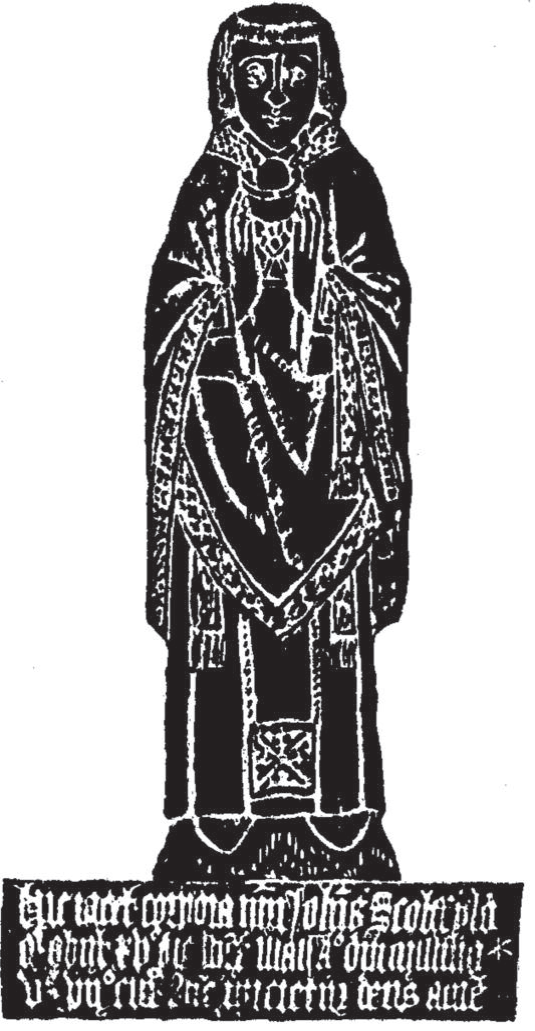
    As I mentioed here before, in Of sacrifice and martyrdom, I have a particular interest in eucharistic martyrs, ghaving served Mass often enough, kneeling on the paving-stones of the lady chapel of Brightwell church near Wallingford, Berks — or is it now Oxon?

    There in the Lady Chapel, embedded in one of those stones, is the brass of a priest of Brightwell, who too was assassinated while saying Mass.

    The brass might as well be illustrating the holy death of Saint Oscar Romero, archbishop and martyr.

    **

    Oscar Romero, ora pro nobis.


    Switch to our mobile site