zenpundit.com » history

Archive for the ‘history’ Category

Updating the Apocalypse

Tuesday, May 15th, 2012

[ by Charles Cameron — four shifts in apocalyptic thinking, us & them, sacred and secular ]
.


.

Every time something significant happens in Europe or the Middle East, those who have worked out their apocalyptic timelines ahead of time have to make appropriate adjustments.

1.

Today, the Christian apocalyptic writer Joel Richardson took note of recent events in Europe in a piece entitled The Collapse of the Euro = The Collapse of the Euro-Centered End-Time Perspective? and asked:

as the collapse of the Euro monetary unity appears to loom over all of us, how will such an global earthquake affect the popular, but equally collapsing Euro-centered perspective on the end times?

Joel may be onto something, we may be on the verge of a major shift in Christian end times emphasis — away from Europe and towards Joel’s Islamic Antichrist theory, as explored in his book The Islamic Antichrist: The Shocking Truth about the Real Nature of the Beast and his forthcoming Mideast Beast: The Scriptural Case For an Islamic Antichrist.

2.

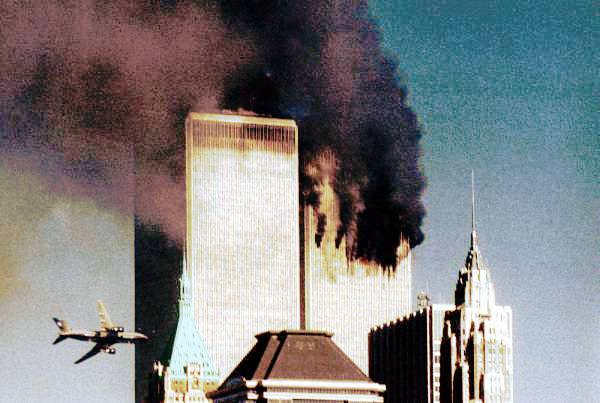
I’ve put a screen shot at the top of this post from an end times video featuring Europe as the evil empire and the Pope as Antichrist – it’s a brilliant graphic pairing that illustrates the older theory visually and viscerally, and should you so wish, you can watch the whole thing here. Note also the comment from SyriacBoy10 below the video:

In the Bible and the Quran, it is said that the Antichrist will come from Europe which is expected to be in this generation due to the signs and global disasters.

Just what place names in scriptures might refer to just what places or entities in modern or far future times is always a matter of interpretation — as Joel himself neatly demonstrated with a variety of “biblical” maps in his Prophezine post Where is Magog, Meshech and Tubal?

And for that matter, is our Coptic friend speaking of the Antichrist in the Qur’an, or the Dajjal? The two are commonly inflated, which gets a bit confusing after a while…

3.

And here’s Joel on failed predictions of the EU as the pivotal demonic empire of the last days in prophecy:

Nearly 20 years ago, I intently watched as a very popular Christian television prophecy teacher declared, “The present formation of the European Union is literally the fulfillment of Bible prophecy right before our eyes!”

According to this teacher, the creation of the European Union represented a biblically prophesied revived Roman Empire. Because the last-days empire of the Antichrist, as described in the books of Daniel and Revelation, is portrayed as a 10-nation alliance, this teacher confidently declared that when the number of EU member states reached 10, this would signal the imminent return of Jesus Christ.

Soon, the number of EU member states reached the magic number 10, just as this teacher had predicted. Then the number reached 11, and then 12. Soon there were 20. Today there are 27 member states. The teacher’s very confident predictions failed.

4.

As it happens, I correspond with Joel on occasion and like the man, despite our holding very different theological opinions. In particular, I like to quote this passage from his description of an interview he gave on NPR:

I explained to my host that unless a supernatural man bursts forth from the sky in glory, there is absolutely nothing that the world needs to worry about with regard to Christian end-time beliefs. Christians are called to passively await their defender. They are not attempting to usher in His return. Muslims, on the other hand, are actively pursuing the day when their militaristic leader comes to lead them on into victory. Many believe that they can usher in his coming.

I’d be interested to know what GEN Boykin would make of that…

5.

All in all, I see four trends in apocalyptic thinking at the present time.

First, there’s a trend, suggested by Joel Richardson in his articles linked above, away from an earlier Eurocentric focus of end times interpretation, and towards his own view of Islam – and of the Mahdi (awaited by many Muslims) as Antichrist.

Second, there’s a trend noted by another occasional correspondent of mine, Julie Ingersoll, in one of her two recent articles on Kirk Cameron in Religion Dispatches – more precisely, a theological shift:

from the larger premillennialist evangelical world that he depicted in Left Behind to the postmillennialist dominion theology of the Reconstructionists.

Third, It seems to me that there’s a trend away from the “soon expectation” of the Mahdi of President Ahmadinejad in Iran, as the Supreme Jurisprudent, Khamenei, withdraws his support from his President and Ahmadinejad enters his lame duck phase…

And finally, there are mild signs that apocalyptic itself and religious motives more generally are slowly entering the discourse of the strategically minded, including those whose secular worldviews have hitherto all too often led them to dismiss both religious and apocalyptic drivers as irrational and unserious.

Columbia’s upcoming Hertog Global Strategy Initiative with its focus this year on Religious Violence and Apocalyptic Movements, which I mentioned recently, is one such sign – another is the attention paid to Khorasan — a name with strong Mahdist associations — in a post at the Long Wars Journal today.

6.

Luckily, we have Richard Landes‘ massive, brilliant Heaven on Earth: The Varieties of the Millennial Experience to educate us in the bewildering profusion of forms, both secular and sacred, that millennial hopes and fears can take.

And with Israel’s departing Shin Beth chief calling PM Netanyahu “messianic” – using the same term Netanyahu used for Ahmedinajad – it’s about time, too.

Book Review: The Hunt for KSM

Monday, May 14th, 2012

The Hunt for KSM: Inside the Pursuit and Takedown of the Real 9/11 Mastermind by Terry McDermott and Josh Meyer 

I received a review copy of The Hunt for KSM from  Hachette Book Group and was pleased to see that the authors, Terry McDermott and Josh Meyer, are investigative journalists, one of whom, Meyer, has extensive experience reporting on terrorism, while McDermott is also the author of the 9-11 highjackers book, Perfect Soldiers. So, I was looking forward to reading this book. My observations:

  • In the matter of style, McDermott and Meyer have opted to craft a novel-like narrative of their research, which makes The Hunt for KSM a genuine page-turner. While counterterrorism wonks used to a steady diet of white papers may become impatient with the format, they already know a great deal about operational methods of Islamist terror groups and the general public, who are apt to be engaged by the story, do not. While enjoying the yarn about Khalid Sheikh Mohammed, the villain behind 9-11 and his downfall, the general reader picks up a great deal of important information.
  • McDermott and Meyer deserve kudos for their fair and balanced handling of Pakistan – and I say this as a severe critic of the Pakistanis. While pulling no punches about the perfidy of Pakistan’s elite, the ties of the ISI and their religious extremist parties to terrorist groups including al Qaida, they give credit where credit is due to Pakistanis who made the difference in assisting the United States and it’s investigators in tracking down KSM and his AQ associates . “Colonel Tariq” of the ISI, in particular stands out as a courageous and sympathetic figure.
  • Khalid Sheikh Mohammed emerges in the story as a master adversary, part Bond villain, part sinister clown, who confounded the efforts of the FBI and the CIA for years with his prodigious ability to organize and orchestrate geographically diverse terrorist networks, fundraising, logistical support, bombings and murder like a one-man KGB while remaining as elusive as a ghost. His abilities, daring, good fortune and defiant resilience in captivity are impressive enough in McDermott and Meyer’s telling that they unfortunately tend to overshadow the fact that KSM is an enthusiastic mass-murderer. A facet that comes out to it’s true ghastly extent only in their description of KSM personally beheading kidnapped reporter Daniel Pearl.
  • The bureaucratic bungling and stubborn infighting of the FBI and CIA, with assistance from the DoD and Bush administration on particularly stupid decisions related to the interrogation and reliance upon torture while excluding AQ experts and experienced KSM case investigators from talking to KSM, makes for a profoundly depressing read. It contrasts poorly with the dedication and sacrifice demonstrated by law enforcement agents Frank Pellegrino, Matt Besheer, Jennifer Keenan and those who aided them.

The Hunt for KSM closes with Khalid Sheikh Mohammed as he is at the present time, on trial at Guantanamo Bay, a story with a climax but not yet an epilogue.

Well written, concise yet dramatic, The Hunt for KSM is warmly recommended.

Announcement: “Legacies of the Manhattan Project” May 12-13

Tuesday, May 8th, 2012

From blogfriend Cheryl Rofer as well as Molly Cernicek and Susan Voss at Nuclear Diner, – an event for those interested in nuclear weapons, science, Cold War diplomatic history, national security, strategic theory and American strategists:

Nuclear Diner Teams With Santa Fe Institute To Bring You Legacies of the Manhattan Project 

Next weekend, May 12-13, at the Santa Fe Institute, a hand-picked group of physicists, historians, social scientists, systems theorists, and writers will examine the long-term legacies of the Manhattan Project in a timely discussion of an important event in world history that still influences science and society today. Harold Agnew, who was part of the historic effort to develop the first atomic bomb, will participate in the discussion.

SFI is collaborating with the Nuclear Diner to bring the discussion to you live on Twitter. You can participate before, during, and after by searching for the hashtag #bomblegacy or following @nucleardiner. Before the event, you can also leave questions at Nuclear Diner and the Facebook event page. If you “like” the Facebook page, you will get updates throughout the week and continuing information after the workshop.

The group will discuss new information, review original records, and mine the memories of project participants to present a case study in conflict from an important period in scientific history.

More about the Santa Fe Institute working group, including biographies of the participants and discussion topics, here.

Many of SFI’s founders were senior fellows at Los Alamos National Laboratory. As the Institute has emerged as a leader in complexity science, particularly in working toward a theory of conflict in human and animal societies, the Manhattan Project has become an important case study for understanding conflict. The project’s history also illustrates the occasional tension between pure theoretical research and applied science.

Photo: Harold Agnew holding the core of the Nagasaki bomb.

An excellent opportunity for students, grad students, historians and practitioners in various fields to participate here via twitter.

Educating Divided Minds for an Illiberal State

Friday, May 4th, 2012

Adam Elkus had well-constructed argument about the Thomas Friedman-Andrew Exum exchange:

Education and Security

Andrew Exum’s has a useful critique of Thomas Friedman’s recent piece. In a nutshell, Friedman makes the old argument that the US could buy friendship and allegiance by giving Middle Easterners more education and scholarship opportunities. To this, Exum has a rather terrific rejoinder:

“I am a proud graduate of the American University of Beirut, but do you know who else counted the AUB as their alma mater? The two most innovative terrorists in modern history, George Habbash and Imad Mughniyeh. U.S. universities and scholarship programs are nice things to do and sometimes forge important ties between peoples and future leaders, but they can also go horribly wrong and do not necessarily serve U.S. interests. There is certainly no guarantee a U.S.-style education leads to greater tolerance or gender and social equality.”

Habbash and Mughniyeh are hardly alone. Diego Gambetta and Steffen Hertog famously observed an distinct overrepresentation of scientists, engineers, and other highly educated professionals in both violent and nonviolent groups with illiberal ideologies. Gambetta and Hertog make an argument that the black-and-white mindset of certain technical groups correlate well with extremist ideologies, but I am unfamiliar with how this has been academically received so I won’t endorse their claims. To be sure, a look at 20th century history would also reveal a significant confluence of intellectuals in the humanities and social sciences being involved in either state or non-state illiberal movements. 

Indeed, the problem here may be the imbalance of educational systems that produce divided minds, where lopsided cultures of thought interact with enough disturbed individuals with a will to power. Stalin demonstrated what Communism looked like when a former Orthodox seminarian presided over a police state run by engineers; Mao one-upped him with Communism as the mystical rule of an all-powerful poet.

One of the more unfortunate trends among many bad ideas currently advertised as “education reform” is the denigration of the humanities and the reduction or elimination of the arts and history in public schools in favor of excessive standardized testing of rote skills and reasoning at the lowest levels of Bloom’s taxonomy, mostly due to Federal coercion. That this has become particularly popular with GOP politicians (though many elitist Democrats echo them) would have appalled erudite conservatives like William F. Buckley and Russell Kirk or old school libertarians who would have seen nationalization of k-12 education policy as worse than the status quo.

In an effort to appear genuinely interested in improving education, some politicians couple this position with advocacy for STEM, as the teaching of science has also been undermined by the NCLB regime and a grassroots jihad by religious rights activists against the teaching of evolution in high school biology classes. While STEM in and of itself is a good thing and better science instruction is badly needed, STEM is no more a substitute for teaching the humanities well than your left hand is a substitute for your right foot.

The modes of thinking produced by quantitative-linear- closed system-analytical reductionist reasoning and qualitative-synthesizing-alinear-imaginative -extrapolative are complementary and synergistic. Students and citizens need both. Mass education that develops one while crippling the other yields a population sharing a deeply entrenched and self-perpetuating lacunae, hostile and suspicious of ideas and concepts that challenge the veracity of their insular mental models. This is an education that tills the soil for intolerance and authoritarianism to take root and grow

Education should be for a whole mind and a free man.

History Will Judge Only if We Ask the Right Questions

Wednesday, April 18th, 2012

Thomas Ricks of CNAS recently had a historically-minded post at his Best Defense blog at Foreign Policy.com:

What Tom would like to read in a history of the American war in Afghanistan 

I think I’ve mentioned that I can’t find a good operational history of the Afghan war so far that covers it from 2001 to the present. (I actually recently sat on the floor of a military library and basically went through everything in its stacks about Afghanistan that I hadn’t yet read.)

Here are some of the questions I would like to see answered:

–What was American force posture each year of the war? How and why did it change?

–Likewise, how did strategy change? What was the goal after al Qaeda was more or less pushed in Pakistan in 2001-02?

–Were some of the top American commanders more effective than others? Why?

–We did we have 10 of those top commanders in 10 years? That doesn’t make sense to me. 

–What was the effect of the war in Iraq on the conduct of the war in Afghanistan?

–What was the significance of the Pech Valley battles? Were they key or just an interesting sidelight?

–More broadly, what is the history of the fight in the east? How has it gone? What the most significant points in the campaign there?

–Likewise, why did we focus on the Helmand Valley so much? Wouldn’t it have been better to focus on Kandahar and then cutting off and isolating Oruzgan and troublesome parts of the Helmand area?

–When did we stop having troops on the ground in Pakistan? (I know we had them back in late 2001.) Speaking of that, why didn’t we use them as a blocking force when hundreds of al Qaeda fighters, including Osama bin Laden, were escaping into Pakistan in December 2001?

–Speaking of Pakistan, did it really turn against the American presence in Afghanistan in 2005? Why then? Did its rulers conclude that we were fatally distracted by Iraq, or was it some other reason? How did the Pakistani switch affect the war? Violence began to spike in late 2005, if I recall correctly — how direct was the connection?

–How does the war in the north fit into this?

–Why has Herat, the biggest city in the west, been so quiet? I am surprised because one would think that tensions between the U.S. and Iran would be reflected at least somewhat in the state of security in western Afghanistan? Is it not because Ismail Khan is such a stud, and has managed to maintain good relations with both the Revolutionary Guard and the CIA? That’s quite a feat. 

Ricks of course, is a prize winning journalist and author of best selling books on the war in Iraq, including Fiasco and he blogs primarily about military affairs, of which Ricks has a long professional interest and much experience.  Ricks today is a think tanker, which means his hat has changed from reporter to part analyst, part advocate of policy. That’s fine, my interest here are in his questions or rather in how Ricks has approached the subject.

First, while there probably ought to be a good “operational history” written about the Afghan War – there’s a boatload of dissertations waiting to be born – I think that in terms of history, this is the wrong level at which to begin asking questions. Too much like starting a story in the middle and recounting the action without the context of the plot, it skews the reader’s perception away from motivation and causation.

I am not knocking Tom Ricks. Some of his queries are important – “What was the effect of the war in Iraq on the conduct of the war in Afghanistan?”  – rises to the strategic level due to it’s impact and the light it sheds on national security decision making during the Bush II administration, which I suspect, will not look noble when it is revealed in detail because it almost never is, unless you are standing beside Abraham Lincoln as he signs the Emancipation Proclamation.  Stress, confusion, anger and human frailty are on display. If you don’t believe me, delve into primary sources for the Cuban Missile crisis sometime.  Or the transcripts of LBJ and NIxon. Exercise of power in the moment is uncertain and raw.

But most of the questions asked by Ricks were “operational” – interesting, somewhat important, but not fundamental. To understand the history of our times, different questions will have to be asked in regard to the Afghan War. Here are mine for the far off day when documents are declassified:

What was the evolution of the threat assessment posed by Islamist fundamentalism to American national security by the IC from the Iranian revolution in 1979 to September 11, 2001?  Who dissented from the consensus? What political objections or pressures shaped threat assessment?

What did American intelligence, military and political officials during the Clinton, Bush II and Obama administrations know of the relationship between the ISI and al Qaida and when did they know it?

What did American intelligence, military and political officials during the Clinton, Bush II and Obama administrations know of the relationship between Saudi intelligence, the House of Saud and al Qaida and when did they know it?

What did American intelligence, military and political officials during the Clinton, Bush II and Obama administrations know of the relationship between the Taliban and al Qaida and when did they know it?

In the aftermath of 9-11, how did Saudi leverage over global oil markets effect American strategic decision making?

In the aftermath of 9-11, how did Pakistani nuclear weapons effect American strategic decision making?

In the aftermath of 9-11, how did the “Iraq problem”  effect American strategic decision making?

In the aftermath of 9-11, how did nuclear terrorism threat assessments effect American strategic decision making?  Did intelligence reports correlate with or justify the policy steps taken?

Who made the call on tolerating Pakistani sanctuaries for al Qaida and the Taliban and why?

Was there a net assessment of the economic effects of a protracted war in Afghanistan or Iraq made and presented to the POTUS? If not, why not?

Why was a ten year war prosecuted with a peacetime military and a formal declaration of war eschewed?

How did the ideological convictions of political appointees in the Clinton, Bush II and Obama impact the collection and analysis of intelligence and execution of war policy?

Who made the call for tolerating – actually financially subsidizing – active Pakistani support for the Taliban’s insurgency against ISAF and the Government of Afghanistan and why?

What counterintelligence and counterterrorism threat assessments were made regarding domestic Muslim populations in the United States and Europe and how did these impact strategic decisions or policy?

What intelligence briefs or other influences caused the incoming Obama administration to radically shift positions on War on Terror policy taken during the 2008 campaign to harmonize with those of the Bush II administration?

What discussions took place at the NSC level regarding the establishment of a surveillance state in the “Homeland”, their effect on our political system and did any predate September 11, 2001 ?

What were the origins of the Bush administration’s  judicial no-man’s land policy regarding “illegal combatants” and “indefinite detention”, the recourse to torture but de facto prohibition on speedy war crimes trials or capital punishment?

The answers may be a bitter harvest.


Switch to our mobile site