zenpundit.com » Perception

Archive for the ‘Perception’ Category

The Controversial CTC Report

Friday, January 25th, 2013
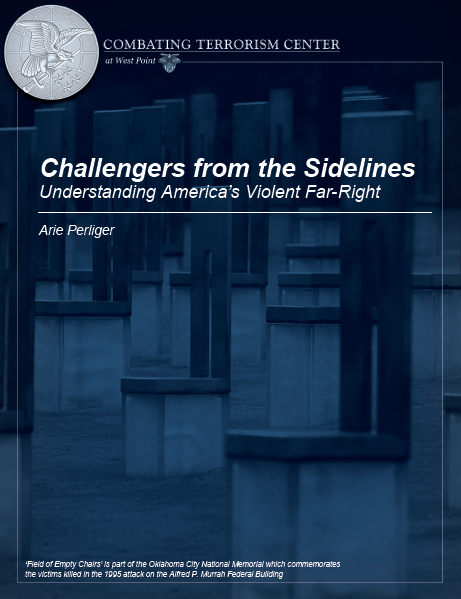
The Center for Combating Terrorism at West Point released a report on domestic terrorism that raised hackles for a number of reasons. Despite the dismissals of liberal political pundits, the reasons for objections to the CTC report are legitimate but they did not need to arise in the first place and might have been avoided with a slightly different editorial approach or appropriate caveats (I just finished reading the report, which is primarily focused on the usual suspects). Here’s why I think the normally well-regarded CTC stumbled into a hornet’s nest:

First, in this foray into domestic terrorism analysis, the center chose to concentrate only on the threat of violence of the Far Right while ignoring other threats coming from the Far Left, infiltration by criminal insurgent networks from Mexico, notably the ultraviolent Zetas whose reach has stirred gang violence in Chicago and Islamist terrorism, either homegrown “lone wolves” or from foreign infiltration or subversion. In itself, this is understandable if the CTC plans a series of reports with a separate focus on different domestic threats; but without that context, it is a myopic analytic perspective, particularly given the demonstrated capabilities of various AQ affiliates or just south of the border, the criminalinsurgency of  the narco-cartels. Had all of these been addressed in one omnibus report, any complaints from conservatives were likely to have been muted or nonexistent. This is not to say that the radical American Far Right does not have a violent threat potential of it’s own worth studying; it does and it is real. But available evidence indicates it to be the least organized, least operationally active and least professionally competent in terms of terrorist “tradecraft” of the three.

The second and most problematic aspect of the report is an intellectually sloppy definition of a dangerous “antifederalist movement”  where noxious concepts like “white supremacy” and wacko conspiracy theories are casually associated with very mainstream conservative (or even traditionally bipartisan !) political ideas – coincidentally, some of the same ideas that contemporary “big government” liberal elites tend to find irritating, objectionable or critical of their preferred policies. Part of the equation here is that American politics are evolvng into a very bitterly partisan, “low trust” environment, but even on the merits of critical analysis,  these two passages are ill-considered and are largely responsible for most of the recent public criticism of the CTC:

….The antifederalist rationale is multifaceted, and includes the beliefs that the American political system and its proxies were hijacked by external forces interested in promoting a “New World Order” (NWO) in which the United States will be absorbed into the United Nations or another version of global government.  They also espouse strong convictions regarding the federal government, believing it to be corrupt and tyrannical, with a natural tendency to intrude on individuals’ civil and constitutional rights.  Finally, they support civil activism, individual freedoms, and self government

….In contrast to the relatively long tradition of the white supremacy racist movement, the anti-federalist movement appeared in full force only in the early to mid-1990s, with the emergence of groups such as the  Militia of Montana and the Michigan Militia. Antifederalism is normally identified in the literature as the “Militia” or “Patriot” movement. Anti-federalist and anti-government sentiments were present in American society before the 1990s in diverse movements and ideological associations promoting anti-taxation, gun rights, survivalist  practices,and libertarian ideas 

This is taxonomic incoherence, or at least could have used some bright-line specifics ( like “Posse Commitatus” qualifying what was meant by “anti-taxation” activists) though in some cases, such as “libertarian ideas” and “civil activism”, I’m at a loss to know who or what violent actors they were implying, despite being fairly well informed on such matters.

By the standard used in the first paragraph, Glenn Greenwald, Ralph Nader and the ACLU would also be considered “far right antifederalists”. By the standards of the second, we might be in physical danger from Grover Norquist,  Congressman John Dingell and Penn Jillette. No one who opposed the recent increases in income tax rates, dislikes gun-control or thought the DOJ may have abused it’s power in the prosecution of Aaron Swartz or in their stubborn refusal to prosecute Bankster racketeering is likely to welcome a report under the auspices of West Point that juxtaposes such normal and perfectly valid American political beliefs with neo-Nazism. A move that is simply going to – and quite frankly, did – gratuitously irritate a large number of people, including many in the defense and national security communities who are a natural “customer base” for CTC reports.

As I said previously, this could easily have been completely avoided with more careful use of language, given that 99% the report has nothing to do with mainstream politics and is concerned with actors and orgs with often extensive track records of violence. As the CTC, despite it’s independence, is associated so strongly with an official U.S. Army institution, it needs to go the extra mile in explaining it’s analysis when examining domestic terrorism subjects that are or, appear to be, connected to perfectly legitimate participation in the political process. This is the case whether the subject is on the Left or Right – few activists on the Left, for example, have forgotten the days of COINTELPRO and are currently aggrieved by the activities of Project Vigilant.

I might make a few other criticisms of the report, such as the need for a better informed historical perspective, but that is hardly what the recent uproar was about.

Foust on “False Fears of Autonomous Weapons”

Friday, December 21st, 2012

Hat tip for a strong recommendation from Adam Elkus:

Josh Foust has a very sensible piece up about the seemingly endless furor about “killer drones” (we never called our warplanes “Killer F-16’s” or guided weapons “killer cruise missiles”).

The false fear of autonomous weapons 

….Many of the processes that go into making lethal decisions are already automated. The intelligence community (IC) generates around 50,000 pages of analysis each year, culled from hundreds of thousands of messages. Every day analysts reviewing targeting intelligence populate lists for the military and CIA via hundreds of pages of documents selected by computer filters and automated databases that discriminate for certain keywords.

In war zones, too, many decisions to kill are at least partly automated. Software programs such as Panatir collect massive amounts of information about IEDs, analyze without human input, and spit out lists of likely targets. No human could possibly read, understand, analyze, and output so much information in such a short period of time.

Automated systems already decide to fire at targets without human input, as well. The U.S. Army fields advanced counter-mortar systems that track incoming mortar rounds, swat them out of the sky, and fire a return volley of mortars in response without any direct human input. In fact, the U.S. has employed similar (though less advanced) automated defensive systems for decades aboard its navy vessels. Additionally, heat-seeking missiles don’t require human input once they’re fired – on their own, they seek out and destroy the nearest intense heat source regardless of identity.

It’s hard to see how, in that context, a drone (or rather the computer system operating the drone) that automatically selects a target for possible strike is morally or legally any different than weapons the U.S. already employs.

Yep.

Most of the anti-drone arguments are a third hand form of opposition to US foreign policy or Counterterrorism policy for a variety of reasons, sometimes tactical and strategic, but mostly just political. Saying you are against inhuman drone strikes sounds a hell of a lot better than honestly saying that you would be against any kind of effective use of military force by the US against al Qaida and the Taliban in any and all circumstances. I can’t imagine Human Rights Watch would be happier if the US were using F-16’s and B-52’s instead.

Or commandos with small arms for that matter.

Two Cheers for the State?

Wednesday, December 12th, 2012

An excellent post from Adam Elkus – strongly recommended!

The State Problem In National Security Policy

….The report makes a lot of comments about the rise of individual autonomy, the empowering of regional network-cities, and technology’s acceleration of the power of non-state actors. Wired interpreted part of this as signaling a decline of the statewhich has been a popular theme since Martin van Creveld’s work on theTransformation of War. I think that is an accurate characterization of the parts of the 2030 report that talk about the empowerment of non-state actors and the rise of international networks. I’m less interested in the report, though, than in the general narrative of state decline in national security policy discourse.

We’ve heard that states are in decline, and both benign and malign networks and private actors are on the rise. This isn’t a new theme—if you look back a few decades the rise of multinational corporations and the multilaterals prompted a similar debate about sovereignty and power in the modern world. The state-centric defense practitioner is enjoined to move beyond caring about states and embrace a new reality.

…. What we have been dealing with, however, is an unfortunate tendency to write the non-state actor and transnational network out of the last few centuries of history. But he (or she) stubbornly refuses to go away. We can talk about some of the reasons why this might be the case in the international environment but it is also worth talking about why we often assume much more coherence and cohesion in our domestic environment than reality may justify.

….In Charles Tilly’s book Democracy, he argues that four processes are necessary to create and sustain a democratic state: the growth of state capacity by suppressing alternative sources of power, the reduction of categorical inequalities, and the integration of strong tie-based trust networks into public life. Warlords and kingpins that predate make it difficult for rights to be guaranteed. Categorical inequality lessens the ability of the people to meaningfully control their own destiny. And strong trust networks that cannot express themselves in political and social life also have the potential for predation and the erosion of state authority. Tilly casts these processes as never-ending in scope, and states are capable of backsliding on any one of them.

Very rich food for thought.

Trust networks are an interesting way to look at broader social networks and discern, at times, the presence of modularity (and therefore specialized skills, capacities, knowledge etc.) within a looser network structure (weak ties and links vs. highly interconnected sets of hubs with strong ties). We tend to graph these things in simple diagrams, like concentric circles with “al Qaida hard core” in the center, but really, they are more akin to clumping or clotting or uneven aggregation within a less dense field of connections.

Adam is also right that the irregular, the illegal, the tribal, the secret society, the rebellious peasant was largely ignored by nationalistic  historians in the late 19th and early to mid 20th century – and when they came back in vogue in the 1960’s with revisionist, labor, social, cultural etc. schools of historians, they tended to groan under the heavy yoke of dogmatic Marxist class analysis and then later the radical academic obsessions with race, gender and sexual orientation “oppression”. Too seldom, were these people and their doings found to be interesting in themselves so much as puppets for a very tortured, abstract passion play to exorcise demons and pursue petty grudges against other scholars.

In any event, Adam is worth reading in full.


Reforming Intelligence vs.Intelligent Reforms

Wednesday, December 5th, 2012

The intense behind the scenes lobbying on behalf of prospective candidates to replace General David Petraeus as Director of the CIA and the ongoing furor over Ambassador Rice’s “talking points” on Benghazi, have spilled over into op-eds quietly urging that the vacancy be used as an opportunity for reforms of the IC and CIA. This is not unexpected – the churn of ” IC reform” tends to be cyclical, free of institutional or historical memory and useful for distracting the media from genuine problems – but it is also true that the situation could bear improvement.

One of the smarter observations was by former star analyst Nada Bakos in Foreign Policy:

…..In light of this, what should the DNI’s role be in the intelligence community, if not disseminating a coordinated intelligence product? The CEO of a company is typically the one planning strategy, interfacing with board members, stockholders, and consumers. A CEO doesn’t typically write the chief financial officer’s year-end summary or the marketing director’s strategy — instead, he views both products from 25,000 feet to ensure the company is on steady footing. The DNI should have a similar role: rather than replicating work, it should focus on reviewing the source material from the various agencies and collaborating to ensure all of the information has been reviewed. In the case of the Benghazi talking points, the intelligence community all had a role in editing the talking points once passed from the CIA. Other points of view make sense, but in the immediate aftermath of something like Benghazi, the arrival of new (and possibly conflicting information) is likely to confuse, not improve, the product. It is best to leave the dissemination, in the immediate aftermath, in the hands of the agency that owns the source of the information and is in the business of disseminating intel products — in this case the CIA.

As with the recent and somewhat ironic leaking that the Pentagon is going to overrun the Earth with hordes of DIA covert agents [i.e. 90% of new money and personnel will probably feed the CONUS based DIA bureaucracy as a budget protection strategy] when an agency or entity can get political authorities to grant them incursions into another bureaucracy’s turf, it is because that bureaucracy has ceased doing it’s job so long ago everyone has just accepted that it will never change.

The Bakos piece contrasts well with the politicized bullshittery being offered in The New York Times. Here are some of my favorite bits of harmful nonsense:

….The United States has over 280 diplomatic posts worldwide. They are working on drug interdiction, arms control negotiations, border security, counterterrorism, access to energy and trade, implementing sanctions, fair trade and the like. Intelligence helps diplomats recognize everything from cheating on agreements to social unrest and surprise attack. And it helps them make decisions that lower the risks and consequences of war.

The new director should rededicate the C.I.A. to supporting these diplomatic operations.

Right. Each ambassador should get to play amateur Station Chief and fritter away extremely scarce intel resources on pet projects because, you know, the State Department has done such an awesome job on it’s own core missions the past decade or so, and….uh…wait….

….The best way to ensure the intelligence process can both produce the best analysis possible, free from political and policy influence, and that covert operations are smart and legal is to ensure the director is an independent actor not subject to political pressure. Making the job a 10-year appointment, which will cross the lines of elections, offers a way to reduce the risk of politicization.

Shorter Bruce Reidel: The DCIA should be able to delay or refuse the President’s order to do covert ops so the US will do far fewer of them and in maximum risk-averse fashion.

No.

You de-politicize the DCIA by not having new presidents fire old DCIAs because they were appointed by an administration from the other party, a practice begun not by Ronald Reagan as Bruce Reidel mistakenly believes, but by his predecessor, Jimmy Carter. The idea that the DCIA who is expected to oversee the most sensitive covert missions (i.e. those intended to have strategic or political effects) should be “independent” of the President is some form of really poor Constitutional theorizing. What happens when an “independent” DCIA launches covert ops *against* the wishes of a President?

Here are a few ideas that would be useful to keep in mind, if “reform” of the IC and CIA is actually desired and isn’t merely a stalking horse for smuggling in a different set of  foreign policy preferences unsupported by the wider American public (which I suspect much of the recent noise is):

It isn’t a choice between a “Militarized” CIA and a CIA that does HUMINT collection:

The CIA is supposed to do both covert action and intel collection and always did. Period. The true anomaly is the comatose period after the Church-Pike Hearings bloodied the CIA on Capitol Hill and created a deeply risk-averse generation of CIA managers, who, it must be said, did not exactly bend over backwards in the 1990’s to unleash a legion of deep cover operatives and agents of influence. The “militarized CIA” meme is utter B.S. from folks who dislike armed drones and kinetic tactics and lost that policy argument two years ago.

Drones and nefarious celebrity generals are not what prevents the CIA from more robust intel collection effort – only CIA management prevents better HUMINT collection by not prioritizing it and increasing the number of CIA personnel in overseas postings.

The Director of the CIA, alone or in combination with the DNI, is not the solution:

What is required is an engaged and active Chief Executive willing to spend time and political capital making the IC work for his administration the way it should and the way he needs. This may mean firing the recalcitrant, the resistant and the risk-averse and taking heat from The Washington Post and The New York Times when their favorite “senior official” sources start screaming bloody murder on background to undermine their DCIA and DNI.

Top talent in the DCIA chair, one with real gravitas on the Hill if possible, will be important but that person will still need the full backing of the President and key members of Congress or nothing will change.

“Clandestinity” and Strategic intel are more important than “Reportage”:

Senior officials in any administration like to get IC  briefs that edge out the media on breaking events and bring them details they can’t find in their own, usually very extensive, personal networks or from the bureaucracies and agency experts they themselves oversee.  The CIA in particular has catered to this demand as, it must be said, they are obligated to do.

The problem is that in economic terms, the marginal value of “secret” information over what information is available in the open media in an emerging crisis is not going to be very great unless the CIA has made substantial investments in clandestine networks in the crisis area over a period of years or decades to acquire “strategic” intel, or at least a formidable position to uncover some.

Pouring ever greater resources into near real time “reportage” and being a slightly spooky version of CNN makes such long-term, clandestine investments by the CIA less likely, less deep and less influential in shaping emerging events. Much like having a .357 magnum when someone is crawling through your bedroom window at 3 am, when a crisis erupts overseas, America either has a robust clandestine network on location or it does not.

Congress has a key role and usually abdicates it in favor of grandstanding or rearranging deck chairs:

The IC will work better with consistently active oversight done with a minimum of partisan rancor and an avoidance of any new legislation that features a new (and usually more complex) org chart. It’s important -sometimes delicate operations and lives depend on our politicians behaving and speaking with discretion. If there are important objectives for national security for the IC to accomplish, nothing sends that message better than the administration and key members of the intelligence committees acting in concert to make a policy succeed.

I’m not holding my breath on that last one.

Congratulations!!

Tuesday, December 4th, 2012

To Lexington Green and James Bennett, for finishing their new book, America 3.0 – due out (I think) in 2013 published by Encounter Books.

A political vision for an era desperately short on imagination and needing statecraft of inspiration.


Switch to our mobile site
