zenpundit.com » primary loyalties

Archive for the ‘primary loyalties’ Category

Robb Throws Down the Gauntlet

Sunday, January 17th, 2010

To the legacy society of the nation-state and the hierarchical transnational corporation:

MILESTONE

….It’s time to up the ante and move onto the next phase:  the birth and rapid growth of new societal networks.*  This is going to be a fun ride!

* As in, new societal networks that can outcompete (trounce evolutionarily) all existing status quo organizational forms  (this should not be confused with the diminutive form of ‘social networking,’ as in Facebook and Twitter).

Long term, I think this is correct and that Robb is, as usual,  ahead of the curve on what will become the zeitgeist in the next few decades ( I will add that this evolutionary path appears to be happening much faster than I had considered, by at least 15-20 years). The movement in the 21st century will be toward networked civilizations on one end of the spectrum that will be pretty nice places to be and on the other, a kind of emergent, hypermobile, barbarism where life is hell on Earth. 

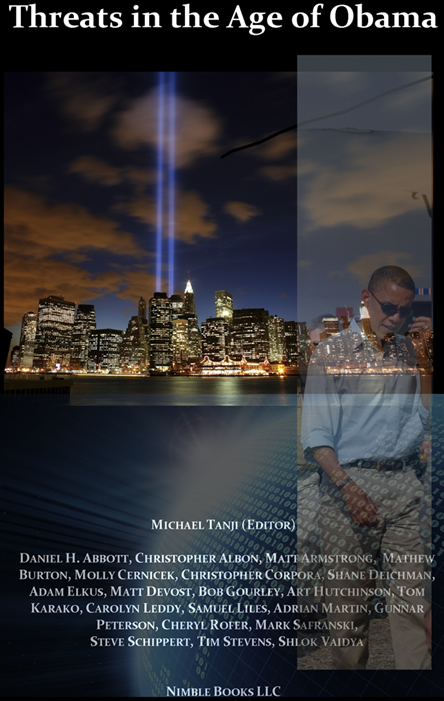
The proper response for existing institutions is to swing their resources, their mass and their remaining legitimacy behind the triumph of the former and gracefully adapt and acclimate rather than be disintegrated by the latter. I considered this in the essay ” A Grand Strategy for a Networked Civilization” that I wrote for Threats in the Age of Obama (p.208):

….Nation-states in the 21st century will face a complex international ecosystem of players rather than just the society of states envisioned by traditional Realpolitik. If the predictions offered by serious thinkers such as Ray Kurzweill, Fred Ikle or John Robb prove true, then  technological breakthroughs will ensure the emergence of “Superempowered Individuals”[1] on a sizable scale in the near future.  At that moment, the reliance of the State on its’ punitive powers as a weapon of first resort comes to an end.  Superemepowered individuals, separatist groups, insurgents and an “opting-out” citizenry will nibble recalcitrant and unpopular states to death, hollowing them out and transferring their allegiance elsewhere.

While successful states will retain punitive powers, their primary focus will become attracting followers and clients in whom they can generate intense or at least dependable, loyalty and leverage as a networked system to pursue national interests.  This represents a  shift from worldview of enforcement  to one of empowerment, coordination and collaboration. States will be forced to narrow their scope of activity from trying to supervise everything  to  flexibly providing or facilitating core services, platforms, rule-sets and opportunities – critical public goods – that the private sector or social groups cannot easily replicate or replace.  Outside of a vital core of activity, the state becomes an arbiter among the lesser, interdependent, quasi-autonomous, powers to which it is connected.”

In other words, America and our “leaders” need a Boydian strategy and a ruthless commitment to honest clarity and sacrifice in order to weather the transition and retain some relevance. This is what makes the current cultural trend toward a political economy of oligarchy among the elite so worrisome. Their careerist self-interest and class values will push them to make all the wrong choices at critical junctures.

Stocking Stuffers……

Saturday, December 12th, 2009

In a burst of raw self-interest – and also a little love for my blogfriends – these books make nifty gifts for any war nerd or deep thinker on your Christmas list:

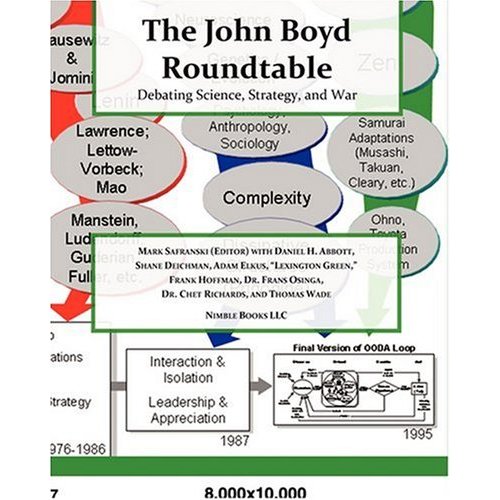
The John Boyd Roundtable: Debating Science, Strategy, and War – Mark Safranski (Ed.)


Threats in the Age of Obama – Michael Tanji (Ed.)

Great Powers: America and the World After Bush – Thomas P.M. Barnett

Brave New War: The Next Stage of Terrorism and the End of Globalization – John Robb

Science, Strategy and War: The Strategic Theory of John Boyd – Frans Osinga


The Genius of the Beast: A Radical Re-Vision of Capitalism  by Howard Bloom

Intelligence and How to Get It: Why Schools and Cultures Count  by Richard Nisbett

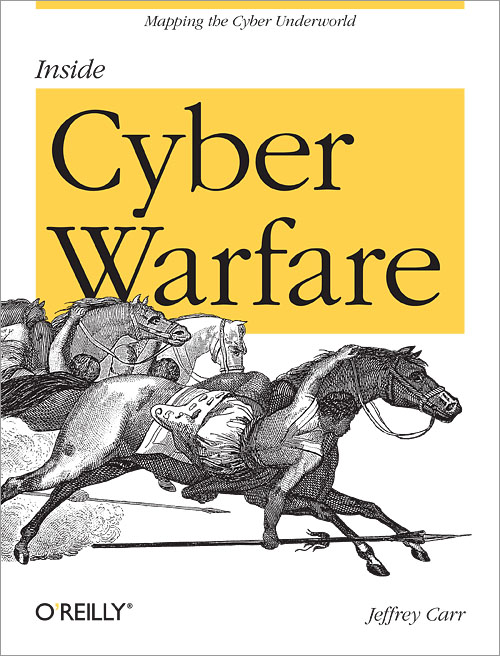
Inside Cyber Warfare: Mapping the Cyber Underworld  by Jeffrey Carr

This Is for the Mara Salvatrucha: Inside the MS-13, America’s Most Violent Gang  by Samuel Logan

Full Disclosure:

In copmpliance with new Federal regulations of dubious Constitutional merit, I hearby declare ZP does not accept money for publishing reviews or any paid advertising. Courtesy review copies were extended to me by authors or publishers acting on behalf of Sam Logan, Tom Barnett and Jeff Carr. I edited the first book in this post and was a contributing author to the second one. All of the books, with the exception of Cyber Warfare have been the subject of prior reviews or posts at ZP.

None Dare Call it a Rogue State

Wednesday, December 9th, 2009


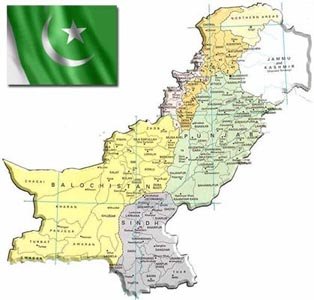
Reader Isaac, points to an excellent analytical overview of Pakistan’s national nervous breakdown at Dawn.com, by Nadeem F. Paracha. It is a lengthy but stupendous post with some 200 + comments:

Little monsters

There is nothing new anymore about the suggestion that over a span of about 30 odd years, the Pakistani military and its establishmentarian allies in the intelligence agencies, the politicised clergy, conservative political parties and the media have, in the name of Islam and patriotism, given birth to a number of unrestrained demons which have now become full-fledged monsters threatening the very core of the state and society in Pakistan.

A widespread consensus across various academic and intellectual circles (both within and outside Pakistan), now states that violent entities such as the Taliban and assorted Islamist organisations involved in scores of anti-state, sectarian and related violence in the country are the pitfalls of policies and propaganda undertaken by the Pakistani state and its various intelligence agencies to supposedly safeguard Pakistan’s ‘strategic interests’ in the region and more superficially, Pakistan’s own ideological interest.

….The 1980s and the so-called anti-Soviet Afghan jihad is colored with deep nostalgic strokes by the Islamists and the military in Pakistan. Forgetting that the Afghans would have remained being nothing more than a defeated group of rag-tag militants without the millions of dollars worth of aid and weapons that the Americans provided, and Zia could not have survived even the first MRD movement in 1981 had it not been due to the unflinching support that he received from America and Saudi Arabia, Pakistani intelligence agencies and its Afghan and Arab militant allies were convinced that it was them alone who toppled the Soviet Union.

The above belief began looking more and more like a grave delusion by the time the Afghan mujahideen factions went to war against one another in the early 1990s and Pakistan was engulfed with serious sectarian and ethnic strife. But the post-1971 narrative that had now started to seep into the press and in many people’s minds, desperately attempted to drown out conflicting points of views about the Afghan war by once again blaming the usual suspects: democracy, secularism and India.

Many years and follies later, and in the midst of unprecedented violence being perpetrated in the name of Islam, Pakistanis today stand more confused and flabbergasted than ever before.

The seeds of the ideological schizophrenia that the 1956 proclamation of Pakistan being an ‘Islamic Republic’ sowed, have now grown into a chaotic and bloody tree that only bares delusions and denials as fruit.

Read the rest here.

There has been an ocean of ink spilled about the Obama administration’s Hamlet-like deliberation over a war strategy for Afghanistan and on the implications of agreeing to 30,000 rather than the 40,000 new troops for the “Afghan Surge”, as Gen. McChrystal had originally requested. The 10,000 difference in boots is not the salient strategic point, though it is the one that excites political partisans on the Right, Left and anti-war Far Left. It also distracts us from debating our fundamental strategic challenge.

The horns of our dilemma is that our long time “ally” whom we have hitched ourselves to in a grand war effort against revolutionary Islamist terrorism is not our ally at all, but a co-belligerent with our enemy. By every policy measure that matters that causes the United States – justifiably in my view – to take a tough stance against North Korea and Iran, applies in spades to Islamabad. Yet none dare call Pakistan a rogue state.

It is the elephant in our strategy room – if the elephant was a rabid and schizophrenic trained mastodon, still willing to perform simple tricks for a neverending stream of treats, even as it eyes its trainer and audience with a murderous kind of hatred. That Pakistan’s deeply corrupt elite can be “rented” to defer their ambitions, or to work at cross-purposes with Pakistan’s perceived  “interests”, is not a game-changing event. Instead, it sustains and ramps up the dysfunctional dynamic we find ourselves swimming against.

We play a bizarre game, our leaders being more concerned about Pakistan’s “stability” than Pakistan’s own generals and politicians who egg on, fund and train the very militant Islamist groups spreading death and chaos inside Pakistan and beyond its borders. Why can we not find Osama bin Laden or Mullah Omar ? Because they are high value clients of the ISI which is no more likely to give them up than the KGB was to hand over Kim Philby.  

Until America’s bipartisan foreign policy elite grapple with the fact – and it is an easily verifiable, empirical, fact – that Pakistan’s government is in chronic pursuit of policies that destabilize Central Asia, menace all of Pakistan’s neighbors, generate legions of terrorists and risk nuclear war with India, no solutions will present themselves.

A strategy will only have a chance of success when it is grounded in reality.

Schippert on COIN as an Exit not a Strategy

Friday, December 4th, 2009

Steve Schippert, my national security amigo from Threatswatch.org, scored an op-ed in The Washington Times. He’s not happy.

Counterinsurgency incoherence: President Obama prefers an Exit Strategy to Victory

In war, and particularly in an Afghanistan counterinsurgency effort, there are always three sides to the coin: the good, the bad and the ugly. This is especially true in President Obama’s new Afghanistan strategy, finally announced to the American public Tuesday from a West Point backdrop.

The prescribed influx of much-needed American warriors onto the battlefield is clearly and rightly the good. And the good can withstand the bad, a Taliban enemy in the absence of reliable partners in the Afghan and Pakistani governments.

But the glimmering light of the good will surely be eclipsed by the ugly, an incoherence of strategy beneath the surface sheen of a surge. The devil is always in the details.

….For a counterinsurgency effort to succeed, the willing partners aren’t in Kabul or Islamabad, no matter the demands made upon each. Rather, they reside in the villages and towns spread through the provinces of Afghanistan. Winning over the local leaders will strengthen our position and ultimately lead to the Afghan people demanding better governance from Kabul.

This requires – in both word and deed – clear demonstration of presence and resolve, not in intellectual arguments for an exit strategy. There are no exits for the Afghans we seek to defend in parallel with our own security and interests.

Read the rest here.

Arm the tribes. Where there are no tribes, create loyalist paramilitaries from whatever networks are at hand for district and village self-defense. A heavily Tajik and Uzbek Afghan National Army will never fight the Taliban half as eagerly as Pushtun villagers defending their own homes and fields.

Guest Post: The Duel of Ali ibn Abu Talib with Amru ibn Abd Wudd

Monday, November 30th, 2009

Charles Cameron has been guest blogging here in a series on radical Islamism and terrorism. A former researcher with the Center for Millennial Studies at Boston University, his most recent essay, an analysis of the powerpoint presentation of Ft. Hood shooter Nidal Malik Hasan, appeared in the Small Wars Journal.

The Duel of Ali ibn Abu Talib with Amru ibn Abd Wudd:an old story of Muslim chivalry, told in refutation of today’s jihadists.

By Charles Cameron

*i*
 
Joseph Campbell was a comparative mythographer whose most celebrated book, *The Hero with a Thousand Faces*, famously provided George Lucas with the narrative stages found in the hero stories of the world’s cultures, and thus with the series of events that would forge a hero and Jedi warrior out of the raw material of young Luke Skywalker. In other books, he more than once tells the story of the samurai — a warrior with a precursor to the Jedi code — who was spat upon in battle:

His overlord had been killed, and his vow was, of course, absolute loyalty to this lord. And it was his duty now to kill the killer. Well, after considerable difficulties, he finally backs this fellow into a corner, and he is about to slay him with his *katana*, his sword, which is the symbol of his honor. And the chap in the corner is angry and terrified, and he spits on the samurai, who sheathes his sword and walks away. Now why did he do that? He did that because this action made him angry, and it would have been a personal act to have killed that man in anger, and that would have destroyed the whole event

It’s a powerful little nugget of a story, and in Campbell’s explanation of what was going on, we may even find a hint of where Lucas may have picked up the idea of the Force. Campbell writes:

This is a mythological attitude. You are acting not in terms of your individual, personal life but with the sense of yourself as the priest,so to say, of a cosmic power which is operating through you, which we all are in circumstances, and the problem is to balance yourself against that and have a personality at the same time

The thing is, Campbell may have been misremembering the source of his story. It’s true that such tales sometimes crop up in more than once culture, sometimes traveling the caravan routes from one place to another, or emerging perhaps, as Carl Jung suggests, from some dream logic deep in the heart of our humanity — but I have only seen thisstory told, and told repeatedly, within Islamic culture. It is in fact the story of the Duel of Ali ibn Abu Talib with Amru ibn Abd Wudd.
 
 
*ii*
 
In the month of Shawwal 7 AH / 627 CE, the Muslims fought in the Battle of the Trench against a confederation of tribes at war with them. During the battle, Ali ibn Abu Talib encountered one of the chiefs of Quraysh, Amru ibn Abd Wudd, renowned for his bravery and strength, as well as his reputation as a formidable wrester within Arabia; he was said to be the equivalent of a thousand horseman. When he managed to traverse the Trench with a party of men, he challenged the Muslims to a duel of swords. Ali asked Prophet Muhammad to permit him to accept the challenge, but Prophet Muhammad refused his offer, simply stating that he was the formidable Amru. With no one accepting Amru’s taunts to duel, Ali’s insisted for permission to duel for the third time. This time, the Prophet accepted, and gave him the famed sword, Dhul-Fiqar, and supplicated for his success. Ali asked Amru to accept Islam, but he refused and preferred to fight Ali.
 
Towering over his opponent, the more experienced and stronger Amru hammered blows on Ali’s shield and clashed with his sword. Ali then dropped his sword and shield to the ground; he leapt to grab Amru’s throat, and kicked him off balance. Amru crashed to the ground, with Ali now towering over him: “Know, O Amru, that victory and defeat depend upon the will of Allah. Accept Islam! Thus not only will your life be spared, but you will also enjoy the blessings of Allah in this life and the next.” At this suggestion, Amru spat into Ali’s face, fully expecting death. Ali rose calmly from Amru’s chest, wiped his face, and stood a few paces away, gazing solemnly at his adversary. “Know, O Amru, I only kill in the way of Allah and not for any private motive. Since you spat in my face, my killing you now may be from a desire for personal vengeance. So I spare your life. Rise and return to your people!”
 
For Amru, to live now would be to live as the vanquished after having tasted victory on the battlefield all his life. He lunged at Ali as he walked away. With enough time to lift his sword and shield, Ali prepared for the fresh assault. Amru’s devastating blow shattered Ali’s shield, inflicting a shallow cut to Ali’s temple. As the second blow rose, Ali swept Dhul-fiqar and decapitated Amru. The Muslims praised Allah. After killing of Amru ibn Abd Wudd, Imam Ali had the gap in the trench which Amru had breached blocked, and took his post at that point with the intention of confronting anyone who might try to cross the trench. They too, would encounter Amru’s fate should they have tried.
 
When Imam Ali returned from the battlefield, the Messenger of Allah received him and said: “The fighting of Ali ibn Abu Talib with Amru ibn Abd Wudd is greater in measure than the actions of my people until the Day of Resurrection.” Ali ensured that the precious chain of armour, adorned with hung-gold rings, which Amru had worn during their duel, was returned to Amru’s sister of the Bani Amir, so that it would not be thought that Ali had killed him in greed of this precious chain coat.
 
 
*iii*
 
I have drawn this telling of the tale from the Islamic think tank Ihsanic Intelligence’s remarkable work, “The Hijacked Caravan: Refuting Suicide Bombings as Martyrdom Operations in Contemporary Jihad Strategy“, which describes it as illustrating the importance of a chivalric code within Islam — the section in question begins, “The concept of chivalry [futuwwa] is at the forefront of Jihad” — with “the model of Imam Ali as constituting the prime example of chivalry”.

As the authors of “The Hijacked Caravan” note, this tale can be found in the *Mathnawi*, the great epic of the thirteenth century Sufi poet Rumi— himself born in the environs of Balkh, Afghanistan (it would have been Khorasan back then) — currently (somewhat paradoxically) America’s best-selling poet:
 

In a battle against the unbelievers Ali got the upper hand against a certain champion. He quickly raised his sword and was hurrying to kill him. But the man spat in Ali’s face, who was the pride of every prophet and every saint; He spat upon a face before which the beautiful face of the full moon bows low at the place of prostration. At that moment, Ali threw aside his sword and slowed down in his fight against him. That brave warrior … said, “You raised your sharp sword against me: for what reason did you throw it aside and quit fighting me? Ali said, Since a motive other than God entered my heart in the holy war, I deemed it right to sheathe the sword.

Mathnawi I: 3721 adapted

Ali comments on the struggle (jihad) in which he is engaged at the crucial moment, “The sword of my restraint has struck the neck of my anger” — identifying it as the “greater jihad” against one’s own evil
tendencies, which here (as in the well-known hadith) clearly supersedes the “lesser jihad” of the physical fight against the enemies of Islam.
 
 
*iv*
 
I have, however, also found this story in one other place where a Muslim is presenting a public case against the contemporary jihadist world-view.
 
The novelist and screenwriter Kamran Pasha was particularly delighted to join the writing team on the Showtime series, *Sleeper Cell*, because it would give him an opportunity to represent how mainstream Muslims scholars think about those verses in the Qur’an that are commonly used to support the actions of Al-Qaida — and about their version of Islam in general.
 
Kamran wrote the episode, “The Scholar”, and based the Islamic moderate scholar Sheikh Zayd Abdal Malik on the real-life figure of the Yemeni judge, al-Hitar, who challenges captured jihadists to a theological duel with the words “If you can convince us that your ideas are justified bythe Koran, then we will join you in your struggle — but if we succeed in convincing you of our ideas, then you must agree to renounce violence.”

At the beginning of the episode, Abdal Malik is spat upon by an imprisoned extremist. He calmly removes his glasses, wipes his face, replaces his glasses, picks up his copy of the Qur’an, kisses it reverently and begins his task of persuasion… Towards the end of the same episode, now on a lecture tour of America, he quotes the hadith about the greater and the lesser jihad:

The holy Prophet — sallallahu ‘alaihi wa sallam — said that war against the unbelievers is the lesser jihad. The greatest jihad is to battle your own soul, to fight the evil within yourself.

He is then asked, “So, who is a true holy warrior, then?” and replies,”The Prophet’s cousin Ali” – at which point he tells the story of the duel.
 
Kamran Pasha’s own wish in re-telling this story can be deduced from another comment placed in the mouth of his chivalric and heroic Islamic scholar, shortly before he is assassinated: “I will issue a fatwa against the murdering devils who have hijacked our beloved Islam.”
 
This episode is in some sense Pasha’s own unofficial fatwa, and the story of the duel of Ali ibn Abu Talib with Amru ibn Abd Wudd holds a central place in his argument, as it does in The Hijacked Caravan.

Kamran Pasha blogs. His post on Major Hasan and the Fort Hood shooting includes the comments of a friend of his, a recent Muslim convert also stationed at Fort Hood, who had prayed alongside Hasan at the mosque that morning. It is a post that repays reading. Kamran has received death threats for his stance against jihadist ideology, which he pillories in his novel Mother of the Believers while describing the Khawarij, extremists in the early days of Islam — one of whom assassinated Ali ibn Abu Talib.

Ali ibn Abu Talib, who forgave his killer. Ali ibn Abu Talib – whose blood flows in his direct descendant Kamran Pasha’s veins

Switch to our mobile site