zenpundit.com » magic

Archive for the ‘magic’ Category

Recep Tayyip Erdogan and the poetry of names

Tuesday, July 26th, 2016

[ by Charles Cameron — a bridge & burial ground in Turkey, an Oregon creek & road, all named for death ]
.

There’s a certain power to names. Ursula LeGuin described it best, perhaps, when she wrote:

He saw that in this dusty and fathomless matter of learning the true name of every place, thing, and being, the power he wanted lay like a jewel at the bottom of a dry well. For magic consists in this, the true naming of a thing.

**

I included that quote in my post Indistinguishable from magic? six days ago, little realizing I would need it again so soon, but here we are: a dark magical DoubleTweet:

That’s the more positive of the pair — less so, I think, is this:

**

A couple of other notes from the poster of that second tweet:

  • The term “traitor” is still very loosely used in Turkey; some day may come, all those accusing eachother of treason might lie side by side..
  • Istanbul Metropolitan Mayor had announced the will to construct the Traitors’ Cemetary some days ago “for all to spit on when passing by”
  • **

    When my Lakota mentor, Wallace Black Elk, came to teach a class in the building and ceremonial use of the stone people’s lodge (“sweat lodge”) at what was then Southern Oregon State College in Ashland, Oregon, the route to the site where we performed the rituals on Dead Indian Creek went along the clearly marked Dead Indian Road. Wallace always got a chuckle out of that.

    But then, Wallace was glad Columbus told Queen Isabella he was en route for India, not Turkey — “Full-Blooded Turkey I’d be,” he’d say, “Native Turkey Movement, Bureau of Turkey Affairs..”

    The road, though not perhaps the creek, has now been renamed:

    Dead Indian Road

    Indistinguishable from magic?

    Wednesday, July 20th, 2016

    [ by Charles Cameron — a primer on some undercurrents in mind ]
    .

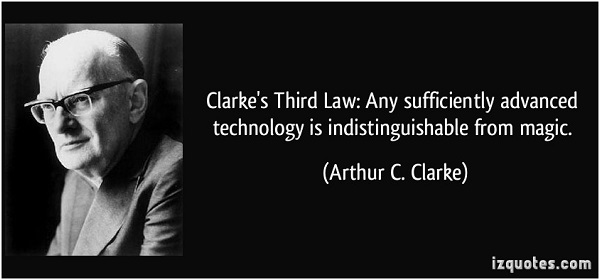
    I’ve been thinking about Clarke’s Third Law:

    quote-clarke-s-third-law-any-sufficiently-advanced-technology-is-indistinguishable-from-magic-arthur-c-clarke-219641

    This may hold true if you mean by it that someone in possession of sufficiently advanced tech can generally persuade less “sophisticated” folk that the use of that tech amounts to “magic”, but no student or practitioner of an authentic magical tradition will easily credit such an idea — where’s the contagion? where’s the sympathy? — where’s the true name?

    **

    Concerning the nature of magic:

    Sir JG Frazer, The Golden Bough:

    Thus far we have been considering chiefly that branch of sympathetic magic which may be called homoeopathic or imitative. Its leading principle, as we have seen, is that like produces like, or, in other words, that an effect resembles its cause. The other great branch of sympathetic magic, which I have called Contagious Magic, proceeds upon the notion that things which have once been conjoined must remain ever afterwards, even when quite dissevered from each other, in such a sympathetic relation that whatever is done to the one must similarly affect the other.

    Ursula LeGuin, A Wizard of Earthsea:

    He saw that in this dusty and fathomless matter of learning the true name of every place, thing, and being, the power he wanted lay like a jewel at the bottom of a dry well. For magic consists in this, the true naming of a thing.

    and furthermore:

    Years and distances, stars and candles, water and wind and wizardry, the craft in a man’s hand and the wisdom in a tree’s root: they all arise together. My name, and yours, and the true name of the sun, or a spring of water, or an unborn child, all are syllables of the great word that is very slowly spoken by the shining of the stars. There is no other power. No other name.

    **

    A contemporary example, and an historical antecedent:

    Magic and Medicine from the Ozarks, 272: Nails:

    Nails have been used in Ozark folk healing and magic in a variety of ways. There’s a belief among Hillfolk that the object that hurt the individual was just as important to the healing process as the medicine put onto the wound. Knife blades, bullets, and nails were often treated with healing salves and plants alongside the puncture or cut itself. Rusty nails were added to tonics to prevent tetanus or to treat illnesses like tuberculosis. Water made from soaking new nails was seen as a sure treatment for anemia and iron deficiencies, and sometimes the sickness itself could be taken off the patient and nailed to a tree. Nails were driven into footprints to deal lethal blows to foes and witches alike. Coffin and gallows nails were carried by Hillfolk as an amulet to ward of certain venereal diseases.

    The Works of Francis Bacon, Lord Chancellor of England, Vol. 2, ed. Montague:

    It is constantly Received, and Avouched, that the Anointing of the Weapon, that maketh the Wound, wil heale the Wound it selfe. In this Experiment, upon the Relation of Men of Credit, (though my selfe, as yet, am not fully inclined to beleeve it,) you shal note the Points following; First, the Ointment .. is made of Divers ingredients; whereof the Strangest and Hardest to come by, are the Mosse upon the Skull of a dead Man, Vnburied; And the Fats of a Boare, and a Beare, killed in the Act of Generation. These Two last I could easily suspect to be prescribed as a Starting Hole; That if the Experiment proved not, it mought be pretended, that the Beasts were not killed in due Time; For as for the Mosse, it is certain there is great Quantity of it in Ireland, upon Slain Bodies, laid on Heaps, Vnburied. The other Ingredients are, the Bloud-Stone in Powder, and some other Things, which seeme to have a Vertue to Stanch Bloud; As also the Mosse hath…. Secondly, the same kind of Ointment, applied to the Hurt it selfe, worketh not the Effect; but onely applied to the Weapon..

    **

    Implications for analysts:

    For anyone interested in the analogical and contagious workings of the human mind, I cannot recommend too highly the Mountain Man Traditional Healing blog, which is both fascinating and instructive. So-called (and so disparaged) “magical thinking” may not occupy much space in the thought of secular analysts, but it is central to many and varied cultural traditions, some of which have real consequences in national Security and other “realistic” realms..

    Recommended Reading—Summer 2016

    Monday, July 11th, 2016

    [by J. Scott Shipman]

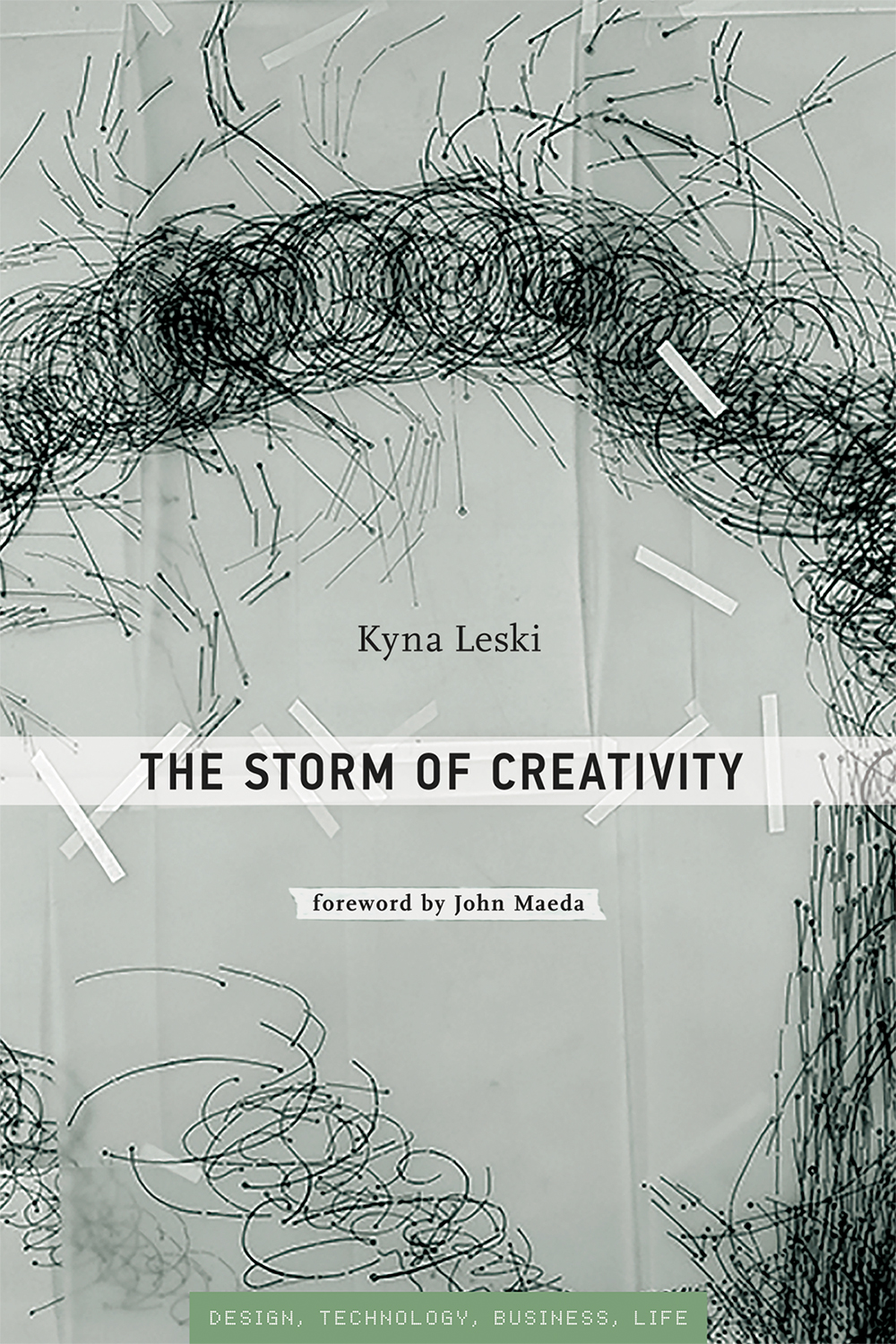
    Storm of Creativity2017

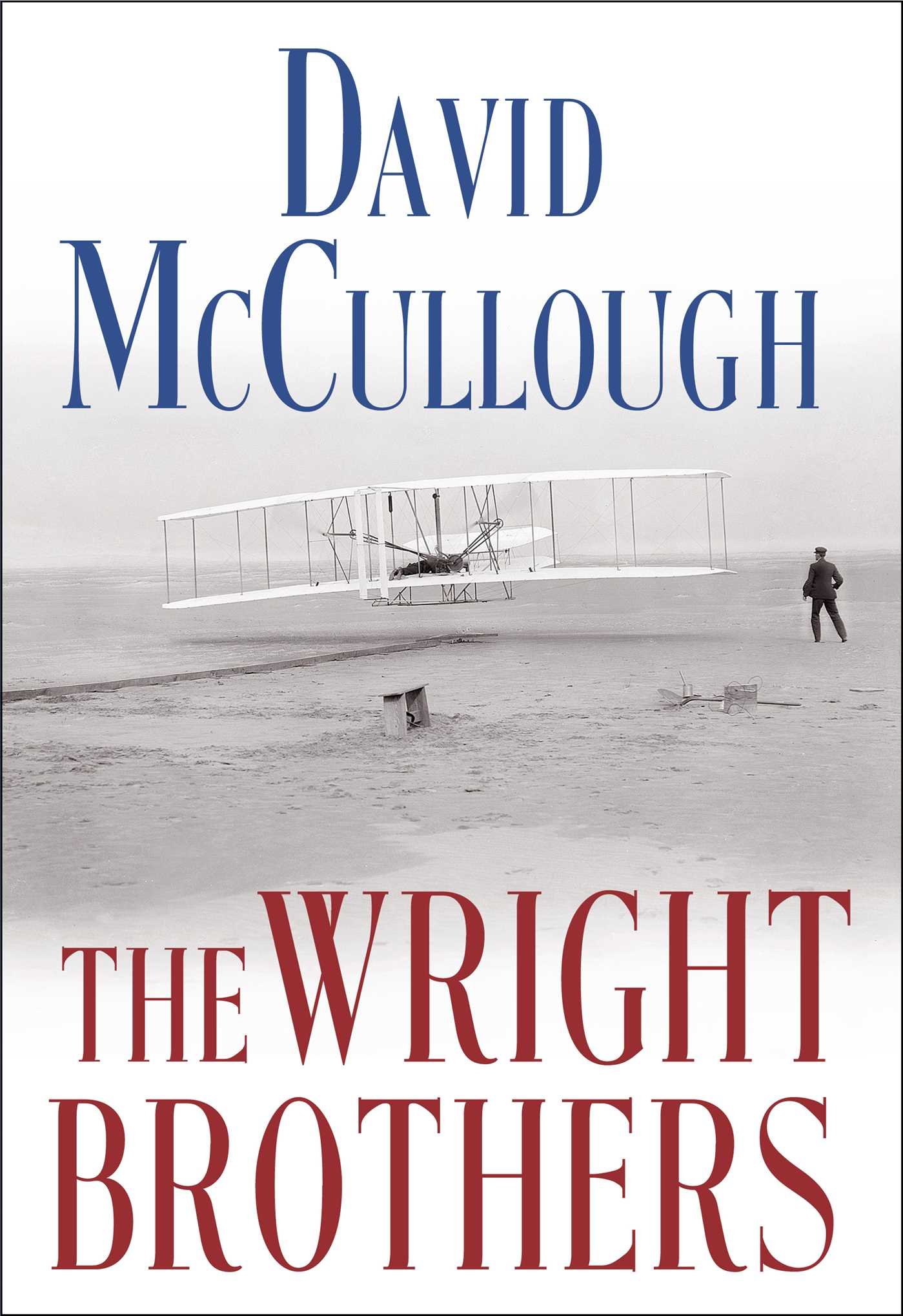
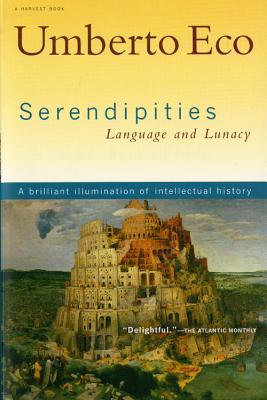
    wright-brothers-biographyserendipities

    Paradisejssundertow

    white horsewashington


    The Storm of Creativity, by Kyna Leski

    2017 War With Russia, by General Sir Richard Shirreff

    The Wright Brothers, by David McCullough

    Serendipities, Language and Lunacy, by Umberto Eco

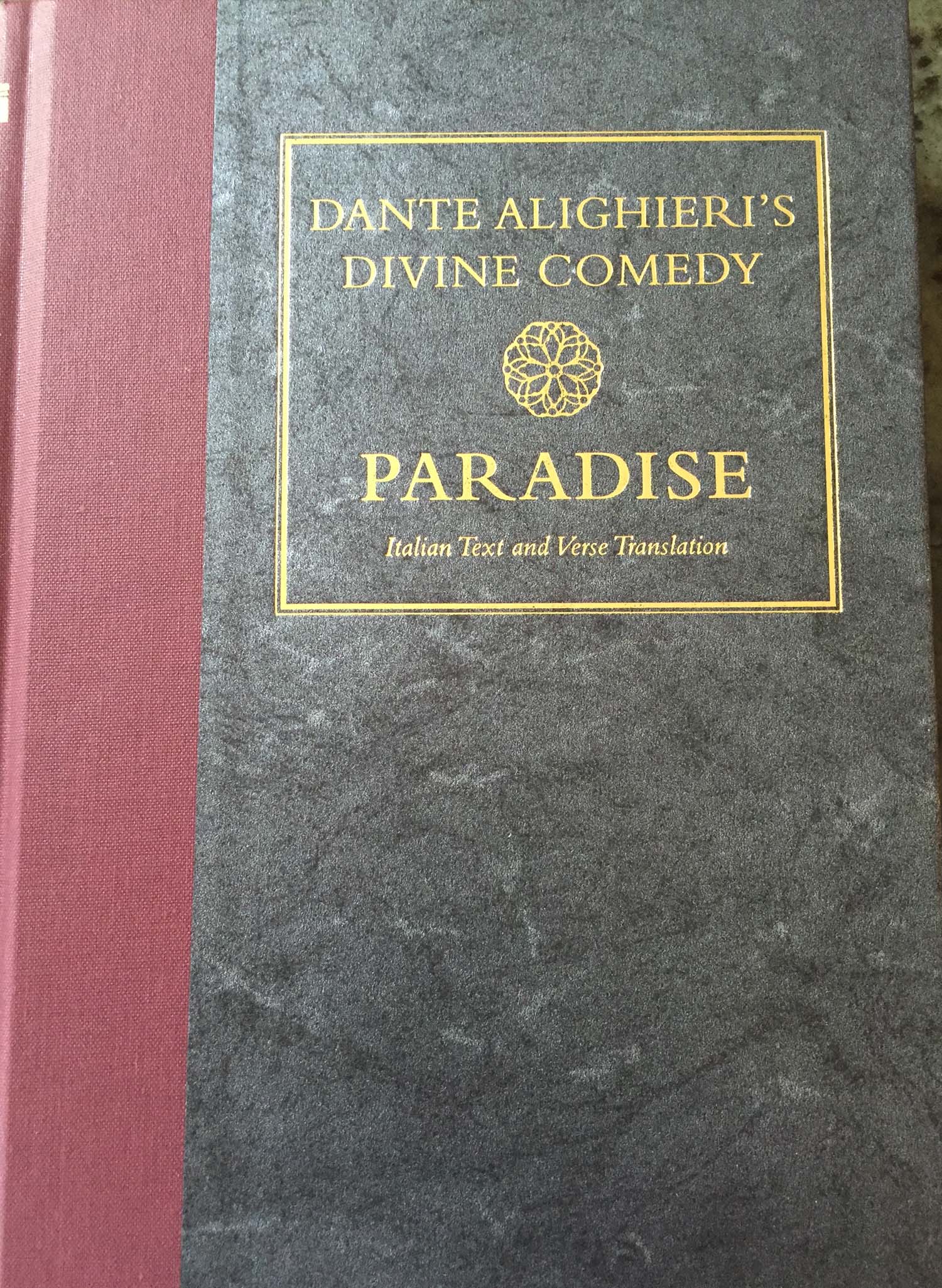
    Paradise, Dante Alighieri, translated by Mark Musa

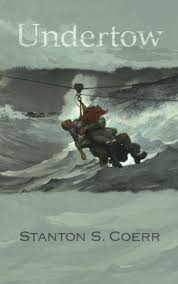
    Undertow, by Stanton S. Coerr

    The White Horse Cometh, by Rich Parks

    Washington The Indispensable Man, by John Thomas Flexner

    This list starts the first week of May, so perhaps the title should be Spring/Summer. Most of these books are quick reads and all are recommended.

    I picked up Ms. Leski’s book at an MIT bookshop on a business trip in early May and read on the train ride home. Books on creativity are ubiquitous, but Ms. Leski takes an interesting approach by describing the creative process using the metaphor of a storm. Several ZP readers will find of interest.

    2017 was recommended by a friend. The author was the Deputy Supreme Allied Commander Europe and the book focuses on a Europe/NATO response to a Russian invasion of the Baltics. Written in a Tom Clancy-like style, the plot is fast-paced even though the good general provides sometimes provides detailed insights into the inner workings of NATA and the North Atlantic Council (this is one of the values of the book—bureaucracy writ-large).

    David McCullough’s Wright Brothers delivers an approachable and human accounting of the first men of powered flight. Some reviews on Amazon complain McCullough lifts and uses too many quotes to tell the story. At times the quotes were distracting, but not enough to prevent the enjoyment of the story of two brothers who changed the world. This book was a gift otherwise I probably would not have read.

    Serendipities is a short book, but was a long read for me. Eco explains how language and the pursuit of the perfect language has confounded thinkers since time immemorial. He refers to Marco Polo’s unicorn (also used in his Kant and the Platypus which is excellent) explaining how language is often twisted to meet a preconceived notion or idea. The first couple of chapters were quite good, chapters three and four did not hold my interest or were over my head. The closing chapter was good enough to convince me I’ll need to read this little book again. (My Eco anti-library has been growing of late.)

    Eco’s book led me to reread Musa’s excellent translation of Paradise. My son gave me the deluxe edition with parallel Italian and English, plus commentary. Eco referenced Canto 26 and 27, and I enjoyed the break so much I read the whole thing!

    Undertow is my good friend Stan Coerr’s second book of poetry.  His first book Rubicon was a moving collection of poetry of men at war. Undertow deals more with the heart and is quite good, too. You won’t be disappointed.

    White Horse is also a book by an old friend, Rich Parks (we’ve known each other since the mid-80’s). White Horse is self-published and in places it shows, but the overall story is quite good for a first book (I’ve already told him his book would make an excellent screenplay.). The plot is quick and entertaining even if a bit unbelievable, but the story is fiction. Rich is following up with a sequel in August in 2016 and I’ll be reading it, too.

    Mr. Flexner’s Washington was a gift, too. In this quick biography Washington is made approachable and human. And when I say “quick,” I mean quick…Trenton and Princeton took one chapter compared to David Hackett Fischer’s Washington’s Crossing which took up a standalone book. If someone were looking for a first Washington biography, this would be a good place to start.

    This isn’t the conclusion of my summer reading, but a pretty good start.What are  you reading this summer?

    Announcing ! BLOOD SACRIFICES

    Wednesday, May 25th, 2016

    [by Mark Safranski / “zen“]
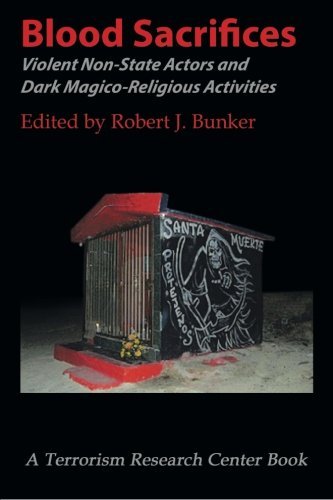
    Blood Sacrifices: Violent Non-State Actors and Dark Magico-Religious Activities edited by Robert J. Bunker

    I’m very pleased to announce the publication of Blood Sacrifices, edited by Robert J. Bunker, to which Charles Cameron and I have both contributed chapters. Dr. Bunker has done a herculean job of shepherding this controversial book, where thirteen authors explore the dreadful and totemic cultural forces operating just beneath the surface of irregular warfare and religiously motivated extreme violence.

    We are proud to have been included in such a select group of authors and I’m confident that many readers of ZP will find the book to their liking . If you study criminal insurgency, terrorism, hybrid warfare, 4GW, apocalyptic sects, irregular conflict or religious extremism, then the 334 pages of Blood Sacrifices has much in store for you.

    Available for order at Amazon

    Turchin on Human Sacrifice and Society

    Tuesday, April 12th, 2016

    [by Mark Safranski / “zen“]

    Last week I posted on Human Sacrifice and State-Building, which focused on research findings published in Nature regarding the role of human sacrifice in establishing hierarchical societies. My interest was primarily in the way the gory practices of ISIS today seem to mirror this dynamic from prehistoric, ancient and chiefdom societies. Bogfriend T. Greer helpfully alerted me to the fact that noted scholar and cultural evolutionist, Peter Turchin also blogged regarding this research and took a critical posture.  Turchin, also addressed human sacrifice to some degree in his latest book, Ultrasociety, which has been on my list to read for his take on the role of warfare but which I have yet to do.

    Turchin’s reasons for blogging this article are different from mine, so I suggest that you read him in full as I intend to comment only on selected excerpts:

    Is Human Sacrifice Functional at the Society Level?

    An article published this week by Nature is generating a lot of press. Using a sample of 93 Austronesian cultures Watts et al. explore the possible relationship between human sacrifice (HS) and the evolution of hierarchical societies. Specifically, they test the “social control” hypothesis, according to which human sacrifice legitimizes, and thus stabilizes political authority in stratified class societies.

    Their statistical analyses suggest that human sacrifice stabilizes mild (non-hereditary) forms of social stratification, and promotes a shift to strict (hereditary) forms of stratification. They conclude that “ritual killing helped humans transition from the small egalitarian groups of our ancestors to the large stratified societies we live in today.” In other words, while HS obviously creates winners (rulers and elites) and losers (sacrifice victims and, more generally, commoners), Watts et all argue that it is a functional feature—in the evolutionary sense of the word—at the level of whole societies, because it makes them more durable.

    There are two problems with this conclusion. First, Watts et al. do not test their hypothesis against an explicit theoretical alternative (which I will provide in a moment). Second, and more important, their data span a very narrow range of societies, omitting the great majority of complex societies—indeed all truly large-scale societies. Let’s take these two points in order.

    Turchin is correct that study focuses on Austronesian islanders in clan and tribal settings and that’s a pretty narrow of a base from which to extrapolate. OTOH, the pre-Cortez estimated population of the Aztec empire begins at five million on the low end. Estimates of the population of Carthage proper, range from 150,000 to 700,000. That’s sufficiently complex that the Mexica and Carthaginians each established sophisticated imperial polities and yet both societies remained extremely robust practitioners of human sacrifice at the time they were conquered and destroyed.

    Maybe a more useful approach than simply expanding the data set would be to ask why human sacrifice disappears earlier in some societies than in others or continues to be retained at high levels of complexity?

    An alternative theory on the rise of human sacrifice and other extreme forms of structural inequality is explained in my recent book Ultrasociety ….

    ….Briefly, my argument in Ultrasociety is that large and complex human societies evolved under the selection pressures of war. To win in military competition societies had to become large (so that they could bring a lot of warriors to battle) and to be organized hierarchically (because chains of command help to win battles). Unfortunately, hierarchical organization gave too much power to military leaders and their warrior retinues, who abused it (“power corrupts”). The result was that early centralized societies (chiefdoms and archaic states) were  hugely unequal. As I say in Ultrasociety, alpha males set themselves up as god-kings.

    Again, I have not read Ultrasociety, but the idea that war would be a major driver of human cultural evolution is one to which I’m inclined to be strongly sympathetic. I’m not familiar enough with Turchin to know if he means war is”the driver” or “a major driver among several” in the evolution of human society.

    Human sacrifice was perhaps instrumental for the god-kings and the nobles in keeping the lower orders down, as Watts et al. (and social control hypothesis) argue. But I disagree with them that it was functional in making early centralized societies more stable and durable. In fact, any inequality is corrosive of cooperation, and its extreme forms doubly so. Lack of cooperation between the rulers and ruled made early archaic states highly unstable, and liable to collapse as a result of internal rebellion or conquest by external enemies. Thus, according to this “God-Kings hypothesis,” HS was a dysfunctional side-effect of the early phases of the evolution of hierarchical societies. As warfare continued to push societies to ever larger sizes, extreme forms of structural inequality became an ever greater liability and were selected out. Simply put, societies that evolved less inegalitarian social norms and institutions won over and replaced archaic despotisms.

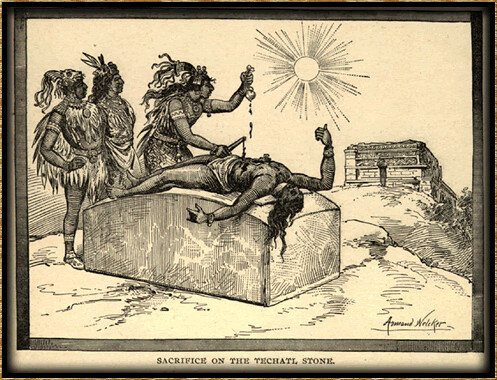
    The question here is if human sacrifice was primarily functional – as a cynically wielded political weapon of terror by elites – or if that solidification of hierarchical stratification was a long term byproduct of religious drivers. It also depends on what evidence you count as “human sacrifice”. In the upper Paleolithic period, burial practices involving grave goods shifted to include additional human remains along with the primary corpse. Whether these additional remains, likely slaves, concubines or prisoners slain in the burial ritual count as human sacrifices in the same sense as on Aztec or Sumerian altars tens of thousands of years later may be reasonably disputed. What is not disputed is that humans being killed by other humans not by random violence or war but purposefully for the larger needs of a community goes back to the earliest and most primitive reckoning of what we call “society” and endured in (ever diminishing) places even into the modern period.

    This also begs the question if burial sacrifices, public executions of prisoners and other ritualistic killings on other pretexts conducted by societies of all levels of complexity are fundamentally different in nature from human sacrifices or if they are all subsets of the same atavistic phenomena binding a group through shared participation in violence.

    ….The most complex society in their sample is Hawaii, which is not complex at all when looked in the global context. I am, right now, analyzing the Seshat Databank for social complexity (finally, we have the data! I will be reporting on our progress soon, and manuscripts are being prepared for publication). And Hawaii is way down on the scale of social complexity. Just to give one measure (out of >50 that I am analyzing), polity population. The social scale of Hawaiian chiefdoms measures in the 10,000s of population, at most 100,000 (and that achieved after the arrival of the Europeans). In Afroeurasia (the Old World), you don’t count as a megaempire unless you have tens of millions of subjects—that’s three orders of magnitude larger than Hawaii!

    Why is this important? Because it is only by tracing the trajectories of societies that go beyond the social scale seen in Austronesia that we can test the social control hypothesis against the God-Kings theory. If HS helps to stabilize hierarchical societies, it should do so for societies of thousands, tens of thousands, hundreds of thousands, millions, tens of millions, and so on. So we should see it persist as societies grow in size.

    Well, human sacrifice persisted into the classical period of Greece and Rome, though becoming infrequent and eventually outlawed, though only during the last century of the Roman republic. That’s a significant level of complexity, Rome having become the dominant power in the Mediterranean world a century earlier. Certainly human sacrifice did not destabilize the Greeks and Romans, though the argument could be made that it did harm Sparta, if we count Spartan practices of infanticide for eugenic reasons as human sacrifice.

    What muddies the waters here is the prevalence of available substitutes for human sacrifice – usually animal sacrifice initially – that competed and co-existed with human sacrifice in many early societies for extremely long periods of time. Sometimes this readily available alternative was sufficient to eventually extinguish human sacrifice, as happened with the Romans but other times it was not, as with the Aztecs. The latter kept their maniacal pace of human sacrifice up to the end, sacrificing captured Spanish conquistadors and their horses to the bloody Sun god. Human sacrifice did not destabilize the Aztecs and it weakened their tributary vassals but the religious primacy they placed on human sacrifice and the need to capture prisoners in large numbers rather than kill them in battle hobbled the Aztec response to Spanish military assaults.

    Comments? Questions?


    Switch to our mobile site