zenpundit.com » Islam

Archive for the ‘Islam’ Category

On the felicities of graph-based game-board design: twelve

Friday, March 23rd, 2018

[ by Charles Cameron — Cambridge Analytica and Guardian logos, HipBone Game boards ]
.

A while back, I posted a series of pieces about the felicities of graph-based game-board design. This piece picks up from that series, with a bit of a refresher, and a pointer to the Cambridge Analytica logo.

First, the question arises of what graphs are. A graph, from a mathematical point of view, consists of nodes and edges: nodes are, in this diagram, the red circles, and edges are the lines connecting them:

We know a great deal about the mathematics of graphs, but they underlya vasst repertoire of modern systems, including — for an extreme. complex instance — the design of washing machines:

**

Back at least to medieval times, graphs can be found with concepts assigned to their nodes and the reasons connecting those conceptts assigned to their edges. These thre show one Jewish (Kabbalistic) conceptual graph, one graph of the four elements and their relaations, and a Christian ttrinitarian graph:

I have usedsc similar conceptual graphs as the boards of my HipBone Games. SHown herear ethree of my boards, together with a spiffy board by my friend and colleagues Cath Styles for her Sembl games:

**

All the above, to show you why all usees of graphs are potentially of interest to me, and why I am particularly interested in the Cambridge Analytica logo (left, below), which offers a graph in the shape of the human brain, and the logo the Guardian devised (right, below), to give visual continuity to their articles about Cambridge Analytica;

I think you can see how the Guardian logo would make a fine HipBone game board for teen Agatha Christie -type games.

**

Hey, on complexity — which graphs and diagrams are better at than “linear” verbal explanations — there’s this — not a graph! — from another post of mine — wow!:


Shaping strategy — Constant turbulence and disruption

**

Earlier in this series:

  • On the felicities of graph-based game-board design: preliminaries
  • On the felicities of graph-based game-board design: two dazzlers
  • On the felicities of graph-based game-board design: three
  • On the felicities of graph-based game-board design: four
  • On the felicities of graph-based game-board design: five
  • On the felicities of graph-based game-board design: six
  • On the felicities of graph-based game-board design: seven
  • On the felicities of graph-based game-board design: eight
  • On the felicities of graph-based game-board design: nine
  • On the felicities of graph-based game-board design: ten
  • On the felicities of graph-based game-board design: eleven
  • DoubleTweeting moolah

    Thursday, March 8th, 2018

    [ by Charles Cameron — somewhere between Lietaer, Bitcoin and a leisure-driven future ]
    .

    Please note, I am not using moolah in the sense in which Arthur Conan Doyle used it in A Desert Drama:

    The squat lieutenant, the moolah, and about a dozen Dervishes surrounded the prisoners.

    **

    There’s a quality of surprise to the two tweeted stories that follow, which highlights our usual acceptance of the idea that money is value. Consider:

    And then, from a different angle:

    **

    Conan Doyle again:

    But I am ordered to gather you together, for the moolah is coming to convert you all.

    Getting religion, forgetting circumcision

    Thursday, March 8th, 2018

    [ by Charles Cameron — some characteristicc lacunae in journalisti praxis ]
    .

    As you know, I used to work for Lapido Media, which in turn used to be a media-eductional outlet that emphasized the major role of religion(s) in world affairs, so often overlooked by typically skeptical, secular journos.

    Get religion is a fine site with a similar purpose, and today it has a fine article titled With Russia all over U.S. news map right now, how fares its huge Orthodox Church? For instance:

    In addition to politics, there’s a historic religious turnabout in Russia that stateside reporters could well develop through interviews with the experts. The dominant Orthodox Church, which managed to survive Communist terror and regained freedom, has latterly emerged as a strategic prop for Putin’s Kremlin.

    If that election day peg doesn’t work for your outlet, another signal event comes July 17. That’s the Orthodox feast day of the doomed final czar, Nicholas II, and his family, shot to death by Bolshevik revolutionaries in 1918 and canonized by the national church in 2000 as saints and “passion-bearers.”

    **

    It’s not just journos who forget / don’t get religion — pols in the extreme north do it, too. How else explain this header from Iceland: Iceland male circumcision ban: MP behind plan ‘didn’t think it was necessary to consult’ Jewish and Muslim groups, amid growing anger. The subhead is (from my POV) idf anytbing even more mind-boggling:

    ‘I don’t see it as a religious matter,’ insists Silja Dögg Gunnarsdóttir

    What does Silja Dögg Gunnarsdóttir imagine the origin of the practice was?

    **

    What else do journos tend to miss?

    Well, there’s female obits, for onr thing — although things may be improving in that regard. Here’s a New York Times’ obit, belated but in a good faith effort to catch and patch up: 1932-1963 Sylvia Plath –A postwar poet unafraid to confront her own despair. It begins:

    She made sure to spare the children, leaving milk and bread for the two toddlers to find when they woke up. She stuffed the cracks of the doors and windows with cloths and tea towels. Then she turned on the gas.

    And it quotes her poetry:

    Dying
    Is an art, like everything else.
    I do it exceptionally well.
    I do it so it feels like hell.

    Okay, it’s International Women’s Day 2018.

    Thank you, Anemona Hartocollis and the NYT editors. We mourn you, Mrs easily forgotten behind your husband Hughes.

    Anti-Muslim converts to Islam — Enantiodromia!

    Sunday, January 28th, 2018

    [ by Charles Cameron — balancing explanations — psychological, sociological, anthropological ]
    .

    Carl Jung‘s definitions of enantiodromia read:

    In the philosophy of Heraclitus it [enantiodromia] is used to designate the play of opposites in the course of events—the view that everything that exists turns into its opposite….

    I use the term enantiodromia for the emergence of the unconscious opposite in the course of time. [CW 6, 708 & 709]

    **

    There could hardly be a clearer set of instances of this individual psychological principle than this, as reported by David A Graham in the strong>Atlantic yesterday:

    The Strange Cases of Anti-Islam Politicians Turned Muslims
    Three recent incidents seem to highlight a quirk of sociology.

    More details:

    Last fall, Arthur Wagner was part of something remarkable: His political party, the anti-Islam, anti-immigrant Alternative für Deutschland, entered the Bundestag, becoming the first far-right party in the body since the 1950s. This year, Wagner has done something even more [ .. ]remarkable: He has converted to Islam and left AfD.

    Even stranger, Wagner is not the first person to leave a far-right, anti-Islam party in Europe and become a Muslim. Arnoud van Doorn, a member of Geert Wilders’s Dutch Freedom Party—which is another far-right, anti-Islam party—left it in 2011, converted to Islam in 2012, and soon after made hajj, the pilgrimage to Mecca Muslims are obliged to make at least once in their lifetimes. And in 2014, Maxence Buttey, a local councillor for the National Front (FN), France’s analogous far-right party, converted to Islam and was suspended from the party committee.

    In the United States, a grisly story made headlines last year when an 18-year-old former neo-Nazi in Tampa who said he had converted to Islam confessed to killing two (apparently still) neo-Nazi roommates, though that case is so grotesque, and the use of violence so far from mainstream Muslim practice, that it defies comparison to the European examples. (The suspect also shouted a nonsensical, non-Muslim phrase.)

    In all cases, the shift from anti-Muslim to Muslim is counterintuitive.

    The same article quotes friend JM Berger, commenting after the Charlotesville shootings —

    The process and structure of radicalization and extremism are the same in different kinds of movements, even when the content of the extremist belief is different (such as with neo-Nazis and jihadists)

    — all this as part of a sociological explanation of conversions to and from extremisms.

    **

    The sociological explanations are well-represented by these paras:

    There seem to be some people who are joiners, eager to become part of larger groups. Almost everyone will know someone like this, perhaps someone who is constantly searching for new social groups or joining new organizations, or perhaps even a spiritual seeker-type who flirts with a succession of faiths. The cliche about the “zeal of the convert” exists for a reason.

    According to Michael Hogg’s uncertainty-identity theory, people seek to reduce questions about who they are, where they fit in the world, and how people view them. “One way to satisfy this motivation is to identify with a group (a team, an organization, a religion, an ethnicity, a nation, etc.) a process that not only defines and locates oneself in the social world but also prescribes how one should behave and how one should interact with others,” Hogg writes.

    I don’t think these sociological explanations really conflict with Jung’s theory of enantiodromia, but the latter seems more exact – “turning into the opposite” rather than “showing a propensity for eextremes” — because in my view, Jung’s version hits the mark so exactly.

    I’m too fatigued to fisk Graham’s article more extensively, but my main point is that enantiodromia is “closer in” than the sociological motive, focusing in the indiviual rather than the group.

    **

    Issues of this kind crop up quite frequently. IMO we need some kind of useful understandings of the boundaries between anthropology and sociology, and of the complex relations of both with psychology.

    The Passion for Freedom Quartet

    Sunday, January 14th, 2018

    [ by Charles Cameron — slyly smiling ]
    .

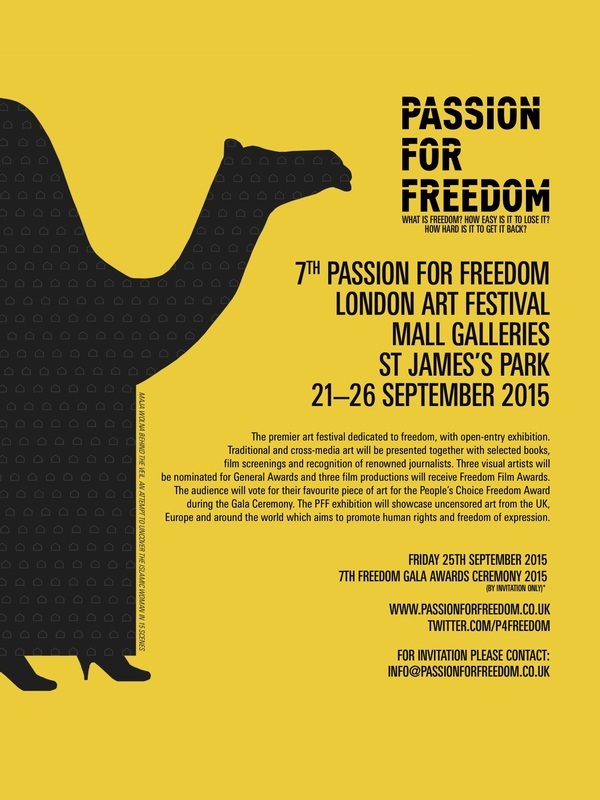
    London had an exhibit titled Passion for Freedom:

    **

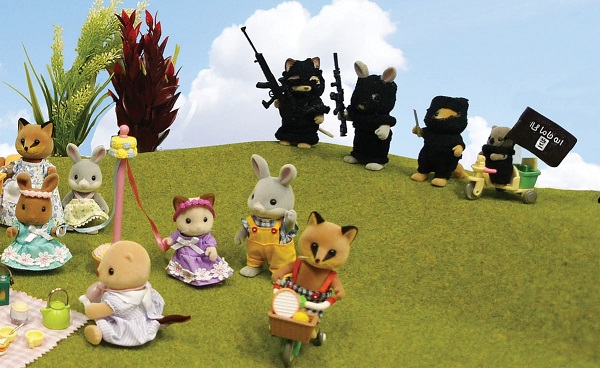
    The idea was to support freedom of speech. But then some rabbit and squirrel toys from the blissful land of Sylvania were encroached upon by the ISIS-flag-waving MICE-IS terrorists, and the British police felt the tableaux showing them —

    — might be problematic, so they intervened, freezing the free speech in its tracks:

    In Isis Threaten Sylvania, rabbits, mice and hedgehogs go about their daily life, sunning themselves on a beach, drinking at a beer festival or simply watching television, while the menacing figures of armed jihadis lurk in the background. “Far away, in the land of Sylvania, rabbits, foxes, hedgehogs, mice and all woodland animals have overcome their differences to live in harmonious peace and tranquility. Until Now,” reads the catalogue note. “MICE-IS, a fundamentalist Islamic terror group, are threatening to dominate Sylvania, and annihilate every species that does not submit to their hardline version of sharia law.”

    The decision to remove the work from Passion for Freedom came after the Mall Galleries consulted the police, who raised “a number of serious concerns regarding the potentially inflammatory content of Mimsy’s work”. The gallery cited a clause in the exhibition contract which allowed it the right to request removal of an artwork.

    The Guardian, Artwork showing Sylvanian Families terrorised by Isis banned from free speech exhibition

    **

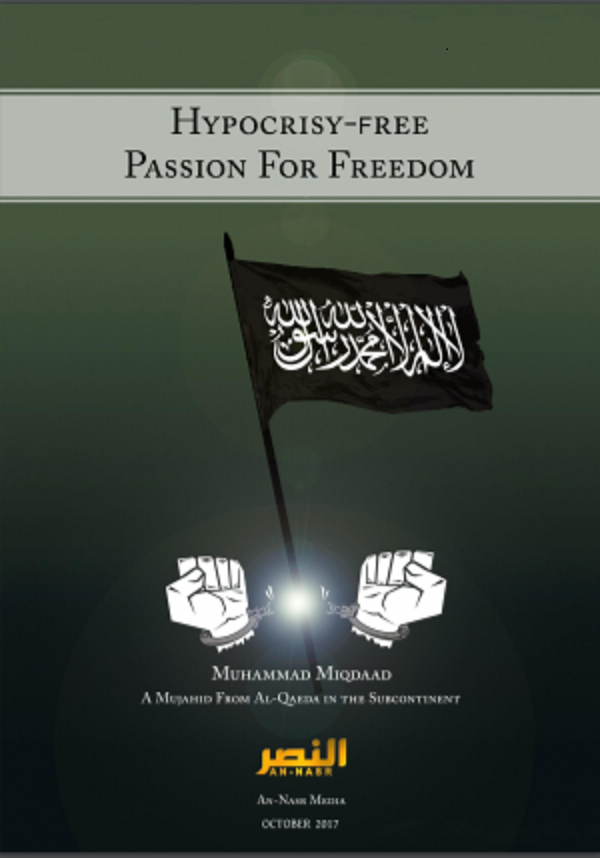
    Of course, ISIS can’t afford to let a bunch of MICE-IS clowns represent them without some come-back, so today Jihadology, Aaron Zelin‘s brilliant counter-terrorism website, brought news of ISIS-in-India’s response: a thirteen-page theological wallop named, appropriately enough, Passion for Freedom

    — In this ponderous tome, Muhammad Miqdaad asserts:

    Passion for freedom is an innate nature of Human beings. There is a hunger for freedom inside us; no sane person will accept others’ slavery willingly. For freedom, we’ve fought wars in all ages; so this is the case today and will remain the same in the future.

    The citizens of Sylvania would no doubt agree.

    **

    And so their story, disallowed from featuring in a freedom of speech exhibit, has now been liberated, and may be purchased as a baby book:

    **

    Let Freedom Ring!


    Switch to our mobile site