zenpundit.com » globalization

Archive for the ‘globalization’ Category

Question……

Thursday, February 24th, 2011

We have been hearing a great deal about the “leaderless” Libyan resistance to Gaddafi. To a lesser degree, we heard similar things about Egypt when protestors failed to coalesce behind Elbareidi as Egypt’s national savior, but it was muted, perhaps due to the prominence of Wael Ghonim, an influential figure to whom western reporters and audencies could relate. Ghonim, however, was not a “leader” in the same sense as say, Nehru, Walesa or Yeltsin.

Are these revolts really of a different political character or do their “leaders” in this panopticonic global environment just have the sense to stay the hell out of sight?

Wikistrat Launch!

Monday, January 24th, 2011

Blogfriend Thomas P.M. Barnett’s partnership with Wikistrat, where he is Chief Analyst, to provide clients and subscribers with strategic advice and assessment of geopolitical affairs has had their official launch.

Exciting launch of our Wiki, coupled with a new CoreGap bulletin

Greetings from the Wikistrat Team,

Today we have launched the internet’s very first Global Strategic Model on a private and interactive wiki.

Join our subscribers and take advantage of the launch offer: a 50% discount off the regular price.  Sign up now before our regular prices return over the weekend. 

For a taste of what you’ll be getting, here is a video of Tom discussing content from the bulletin as well as a download link to the abridged PDF version.

See you on the wiki!

CEO Joel Zamel

CTO Daniel Green and

Chief Analyst Thomas P.M. Barnett of WIKISTRAT

There is a link for a PDF download on Tom’s post of the latest CoreGap Bulletin that I could not embed here, so I encourage you to go there and check it out.

I have had some email convos with Wikistrat CEO Joel Zamel and can attest that Wikistrat has an energetic team and is determined to make a splash in terms of being an influencer of opinion makers and corporate movers and shakers.

Tom Barnett’s Communique to the Barbarians

Wednesday, November 24th, 2010

” A communication: magnificently our great Emperor soothes and pacifies China and the foreign countries, regarding all with the same kindness. If there is profit, then he shares it with the peoples of the world; if there is harm, then he removes it on behalf of the world. This is because he takes the mind of heaven and earth as his mind.”                                      – Lin Zixu

I am no Sinologist, so I am interested in how professional China-watchers interpret this signal. Here’s my two cents:

Dr. Thomas P.M. Barnett teamed up with two highly-regarded (inside Chinese elite circles) pundits John Milligan-Whyte and Dai Min to offer a “grand strategic rebalancing” of the Sino-American relationship for the 21st century, which ran in The People’s Daily, the official newspaper of the Central Committee of the Communist Party of China. Agree or disagree with the particulars, an impressive and timely move on Tom’s part.

An excerpt – but you should really read the whole thing:

….When agreed upon by the presidents of both nations through an “executive agreement” not subject to U.S. Senate ratification, it will promote U.S. economic recovery, increase U.S. exports to China, create 12 million US jobs, balance China-US trade as well as reduce U.S. government deficits and debt. Furthermore, it will stabilize the U.S. dollar, global currency and bond markets. It will also enable reform of international institutions, cooperative climate change remediation, international trade, global security breakthroughs as well as facilitate the economic progress of developed and developing economies, the stabilization and rebuilding of failed states and security of sea transport. The essence of the grand strategy is that the United States and China will balance their bilateral trade and never go to war with each other, and the US will refrain from seeking regime change and interference in China’s internal affairs with regard to Taiwan, Tibet, Xinjiang, the Internet, human rights etc. and China will continue its political, legal, economic and human rights reforms.The Taiwan situation will be demilitarized by an informal U.S. presidential moratorium on arms transfers to Taiwan, China’s reduction of strike forces arrayed against it, a reduction of U.S. strike forces arrayed against China and ongoing joint peacekeeping exercises by U.S., Chinese and Taiwan militaries.The strategic uncertainty surrounding nuclear program in Democratic People’s Republic of Korea (DPRK) will be de-escalated by the U.S. eschewing DPRK regime change goals and China ensuring that DPRK adopt policies along the lines of Deng Xiaoping’s economic reforms and terminate its nuclear weapons program. China, U.S., South Korean and other military forces will together ensure maritime safety in the Yellow Sea….

Read more: Thomas P.M. Barnett’s Globlogization – Thomas P.M. Barnett’s Globlogization – New China-U.S. grand strategy proposal, as published in People’s Daily Online

Publication in The People’s Daily does not imply that this blue sky missive is Chinese policy, but it would never have appeared without the sanction of some important figures in China’s government and Communist Party. I am not up to speed on elite Chinese politics, but historically, the Central Committee of the CCP was a much more integrated body of elite decision makers in the sense of mixing PLA generals, state bureaucrats and Party bigwigs than was the Soviet Cenntral Committee, which served in the post-Stalin era to cement CPSU dominance over the military and KGB. 

Set aside the merits of this “rebalancing” for later, as some points have not a hope in hell of seeing the light of day,and focus on what it means that the article has appeared at all.

First, I read this as a Mongolfier kind of trial balloon, a plausibly deniable rough draft of a Shanghai Communique 2.0 where Chinese rulers lay out their internal consensus “red line” vital interests and what they will put on the table in return, without any risk of “losing face”.

Secondly, while most of the critical noise will be over the security-military relationship, Taiwan and the total omission of Japan (!), I find the economics the most interesting section. Never before in history have two great powers with so little in common, who were not allies, so deeply entangled themselves in each others economies, basically to the point of no return. This piece tells me China’s leaders realize that a path of confrontation with America or pursuing beggar-thy-neighbor trade policy indefinitely, will mean the destruction of a generation of painfully accumulated surplus wealth, held largely in dollars and treasury securities. China’s elite would rather “double-down” on their bet on America instead of attempting to painfully wrench themselves free and cut their losses by cashing in devalued chips.

That concern is the apex of realism – a good variable to see at a time when nationalistic hubris and hypersensitivity have increasingly been on display in China’s foreign relations with great powers and weak neighbors alike. That kind of realism, other countries can do business with.

What are your thoughts?

ADDENDUM:

Tom has added his briefing slides
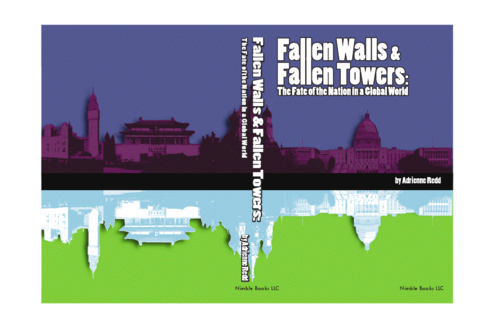
Fallen Walls and Fallen Towers by Adrienne Redd

Monday, August 30th, 2010

redd.png

Fallen Walls and Fallen Towers: The Fate of the Nation in a Global World by Adrienne Redd

I “met” Dr. Adrienne Redd some years ago through the kind offices of Critt Jarvis, which resulted in a wide-ranging and intermittent email discussion, sometimes joined by John Robb and others, of “virtual states”, “virtual nations”, “micropowers” and evolving concepts of sovereignty and statehood in international relations. It was an intellectually stimulating conversation.

Today, Dr. Redd is Nimble Books’ newest author, and she has just sent me a review copy of Fallen Walls and Fallen Towers, the culmination of approximately seven years of research and writing.  Redd investigates nothing less than the “fate of the state” and I am looking forward to reading her argument in detail.

To be reviewed here soon….

Armstrong on “Making American Public Diplomacy Safe for Americans”

Tuesday, August 3rd, 2010

Blogfriend and public diplomacy expert Matt Armstrong of MountainRunner has a new op-ed at World Politics Review:

Reforming Smith-Mundt: Making American Public Diplomacy Safe for Americans

American public diplomacy has been the subject of many reports and much discussion over the past few years. But one rarely examined element is the true impact of the Smith-Mundt Act of 1948, which for all practical purposes labels U.S. public diplomacy and government broadcasting as propaganda. The law imposes a geographic segregation of audiences between those inside the U.S. and those outside it, based on the fear that content aimed at audiences abroad might “spill over” into the U.S. This not only shows a lack of confidence and understanding of U.S. public diplomacy and international broadcasting, it also ignores the ways in which information and people now move across porous, often non-existent borders with incredible speed and ease, to both create and empower dynamic diasporas.

The impact of the “firewall” created by Smith-Mundt between domestic and foreign audiences is profound and often ignored. Ask a citizen of any other democracy what they think about this firewall and you’re likely to get a blank, confused stare: Why — and how — would such a thing exist? No other country, except perhaps North Korea and China, prevents its own people from knowing what is said and done in their name.

But in hiding from the public, Congress, and even the rest of the government what the U.S. government says and does abroad, this imaginary separation between foreign and domestic audiences reduces awareness of the State Department’s effectiveness (as well as that of USAID and the Millennium Challenge Corporation), increases the cost of engagement while decreasing overall effectiveness, and limits accountability. Its negative impact on the State Department, in particular, helped propel the militarization of U.S. public diplomacy, as the Defense Department stepped in, clumsily, to fill gaps left by ineffectual or absent civilian efforts. Overall, Smith-Mundt is a lose-lose scenario for the American public and people around the world.

Read the rest here.


Switch to our mobile site

